What we do is costly! Your support will help us dig more stories.
Yes, I'm Interested!Ignorance isn't always bliss | Don't stay foolish.
Keep informed | Read our news and analysis.
Over the past few decades, institutional dysfunction and massive dissatisfaction with political establishments are characterising democracies throughout the world, whether they are emerging, established, or majoritarian, and regardless of system, i.e., parliamentary or presidential.
In the US, the UK, and Germany, growing popular discontent has been accompanied by increasing political polarisation. Meanwhile, in countries such as Venezuela and Turkiye, opposition parties, constitutional institutions, and the media have faced mounting challenges, about democratic accountability and institutional resilience.
In emerging democracies such as Nepal and Bangladesh, entrenched political cultures coupled with weak institutional capacity, alongside the politicisation of regulatory bodies, has undermined effective governance. When institutions fail to adapt or evolve to collective societal demands, they risk becoming dysfunctional and losing public legitimacy.
The interaction between political systems and the broader socioeconomic environment further complicates democratic consolidation. Rapid globalisation, rising public debt resulting from popular but unsustainable spending, economic mismanagement followed by prolonged economic stagnation, have set them apart. When established political institutions deviate from their intended objectives, populist leaders often emerge during periods of crisis challenging the legitimacy of the political establishment.
Similarly, the democratic system goes through challenges vis-à-vis societal values, priorities, and worldviews, which are always evolving. The very effectiveness and their democratic strength are measured by the system's capacity to understand changing trends internally and externally. When the political elite fail to understand and deliver based on public demand, functional trajectory recedes, causing disappointment among the public. It is notable that some democracies have crumbled in recent years because these regimes have fallen short in delivering socioeconomic goods to their citizens, which has led people to embrace antidemocratic politicians who undermine democracy.
Institutions, encompassing formal as well as informal belief systems, are stable, and valued with recurring patterns of behavior. Notably, past institutional designs are particularly crucial in shaping today’s behavior. Institutional change therefore emerges from the interplay between external influences and internal political development. Understanding this relationship is essential to explaining why some democracies consolidate their institutions while others remain vulnerable to political instability and democratic erosion.
In his influential work ‘Political Development and Political Decay’, Francis Fukuyama examines the relationship between state capacity, political institutions, and the rule of law. He argues institutions are built when the state is capable of providing public goods and safeguarding the rule of law to strengthen the political system from external and internal threats. However, Fukuyama saw challenges within the system when institutional ethos are challenged by partisan interest and elite capture, leading to dysfunction.
Similarly, political scientist Kenneth Bollen conceptualises democracy in terms of the ‘the extent to which the political power of the elite is minimised and that of the nonelite is maximised’, meaning how political power is distributed between elites and non-elites. Although political institutions are shaped by different actors constituting voluntary association to solve collective problems, the political process of the crucial juncture impacts the institutions in such a way that they remain accessible for some, while distant for others.
Nepal’s democratic transition and institutional fragility
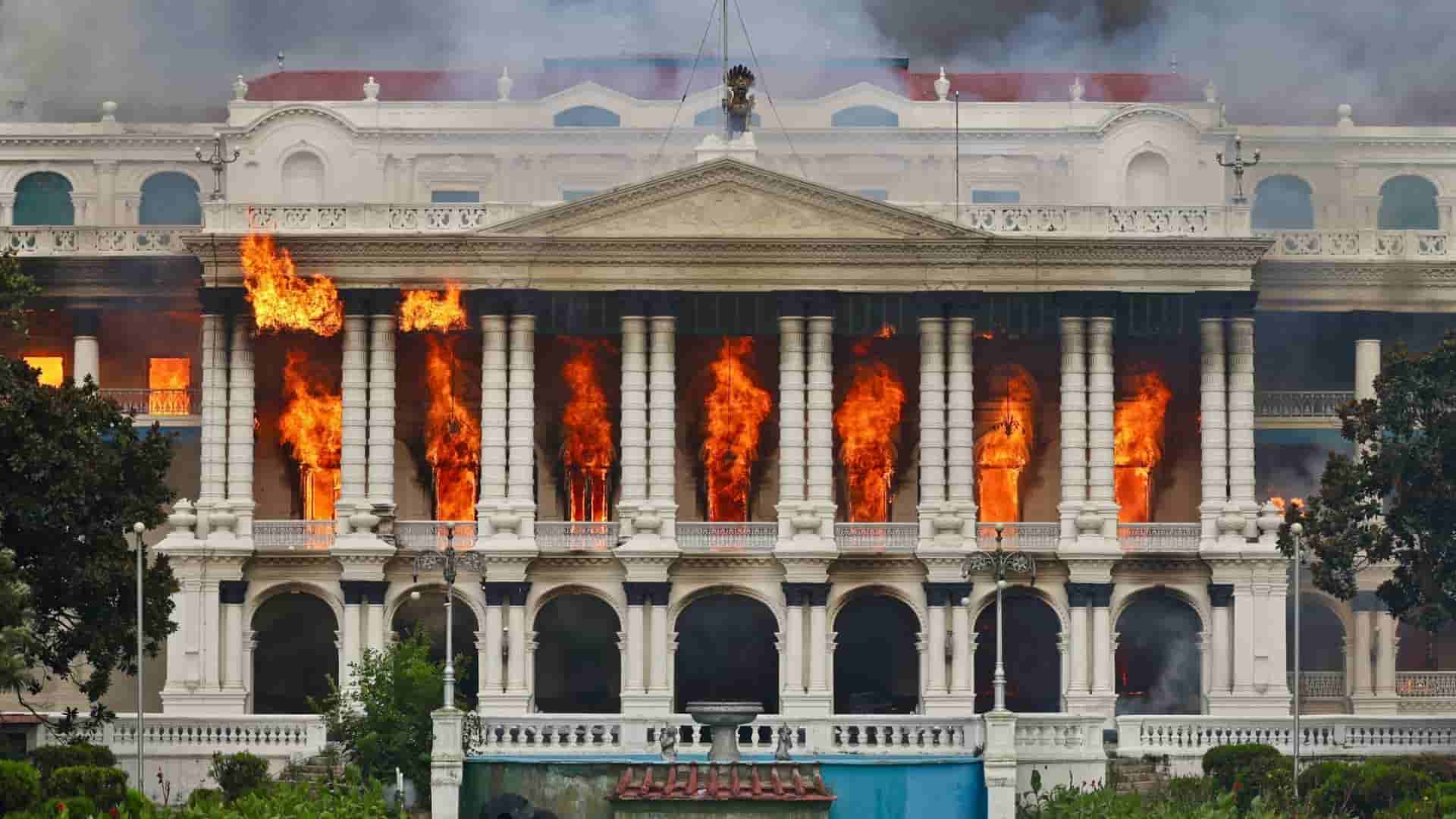
Last September, the state’s inability to manage a mass protest, and prevent a confrontation between demonstrators and security forces culminated into a violent episode changing the political course of the country. Subsequent transfer of power to an interim government led by Sushila Karki and the commitment to hold elections on the proposed date helped establish a pathway towards political stability following the breakdown of the previous government.
Nepal's recurring mass uprisings and popular movements, evident across successive generations since 1951, reflect persistent structural weaknesses within its political institutions. Despite successive political transformations, the consolidation of state capacity has progressed unevenly. State-building efforts after the end of Maoist insurgency and Monarchy in the late 2000s have evolved relatively slower since the political culture of each regime marginalised the agenda of durable and functioning institutions. Internally, contentious politics and instability eclipsed governance consolidation during this period.
Political Scientist Samuel P. Huntington argues that traditional political systems are prone to instability while adopting modernisation. While political development is achieved when institutions are stable and functional, rapid political mobilisation that advances faster than institutional capacity can cause political instability. From this perspective, Nepal’s persistent problem with institutionalisation stems from the system's inability to align political mobilisation with the development of institutional capacity. Effective institutions require a long-term plan and compliance to remain effective. Unlike advanced democracies, institutional change is repeated in countries like Nepal due to political uncertainty.
These weaknesses are compounded by patronage politics, personalised leadership, and the limited autonomy of public institutions. Free and fair elections cannot guarantee reform within a political system. A judicial system, plagued with procedural irregularities, cannot check and balance the separation of powers. Similarly, an executive branch with weak public service delivery and administrative capacity, may find it difficult to enforce laws effectively. The dissolution of elected parliaments by executive authorities in recent years has also posed pertinent questions about national stability.
The September uprising and the crisis of political legitimacy
The underlying causes of the September events were considerably deeper: it was more structural and institutional. They included public frustration with corruption, political impunity, economic insecurity, limited opportunities, and the perceived inability of established political parties to deliver meaningful reform. Against the backdrop of globalisation and changing public expectations, the state failed to respond adequately to citizens' demands for accountable governance.
The power sharing arrangement between the two largest parties, CPN (UML) and Nepali Congress further illustrated the limitations of an established political order increasingly disconnected from changing public sentiment. They failed to acknowledge the rise of new political parties and leaders, a consequence of divided public opinion over the status quo.
Youths’ concern over the political system’s neglect became particularly costly for the previous regime that rendered it ineffective. When frequent changes in political structure and system had limited impact on the everyday lives of the people, the electoral outcomes increasingly reflected public dissatisfaction with established parties. Of course, misinformation and social media influence also played a significant role in exacerbating what unfolded in September and the subsequent election.
The subsequent electoral success of the Rastriya Swatantra Party (RSP) introduced both opportunities and risks for Nepal’s democratic future. Should the government perform effectively, accompanied by intra-party equilibrium, political instability is less likely.
Conversely, factionalism, weak internal party democracy, and personalised decision-making could undermine public confidence and reproduce the institutional weaknesses associated with previous governments, or even worse. This the new leaders must understand. The entirety of their political strategies, governance and means should not be at the cost of institutions.
These concerns extend beyond the functioning of the RSP government to the broader challenges of Nepal’s federal system. Despite the constitutional adoption of federalism, weak institutionalisation, incomplete devolution of power, and persistent centralised governance force a reevaluation of shortcomings in Nepal’s post-federalism process. Similarly, policy instability and deep kleptocratic practices within the system have caused difficulty in consolidating federalism. The daunting challenge ahead is therefore twofold: to ensure meaningful autonomy for provincial leadership and establish fiscal clarity and arrangements that assists in decision-making in the provinces. Without these reforms, a change in national political leadership may do little to address Nepal’s democratic and federal institutions.
However, more concerningly, the working style of the new government, particularly Prime Minister Balen Shah and his Home Minister Sudan Gurung, in contrast to the mountains of challenges that lie ahead, has posed serious questions about our democratic functionality, especially given the formidable challenges that lie ahead. Their populist and personalised approach, characterised by symbolic performances, and a narrow concentration of power, has already sown disillusionment among the people whose collective memory is largely influenced by the September uprising last year. Rather than advancing meaningful reform, such a leadership style risks provoking conflict and deepening political divisions.
As a relatively new political force, Shah and his government are discovering the complexities of structural and cultural processes that have shaped the contemporary political system, regardless of its forms. However, they must realise institution building is a work in progress. These reforms and the functioning of governance should adhere to the law with maximum accountability.
Institutions cannot function effectively when the public don’t use the political institutions they were created to serve. They additionally require compliance, and trust. At the same time, the challenge for politicians is to make the public use common institutions properly, and ensure their longevity. Democracies dysfunction with the erosion in solidarity. Some studies demonstrate democratic dysfunction occurs when institutions succumb to highly polarised groups and personalised politics alongside weak devolution between central and regional governments.
The institutionalisation of democracy and the state apparatus ultimately depends on the interaction between political culture, institutional design, and the behavior of political stakeholders. Similarly, strengthening governance at the grassroots level, upholding the rule of law, and reinforcing the separation of powers are essential to democratic consolidation. If the public demand, as articulated during September events last year goes unacknowledged, Nepal risks prolonged political stagnation, institutional crisis and further political decay. Unprecedented fallout from the September events have bestowed unparalleled wisdom for institution-building.
Read More Stories

Nepal needs to repeat to brand itself
Last year Nepal's goods exports jumped 81.8% to NRs 277.03 billion. That is...

Banking stocks gain momentum as dividend season begins
Dividend announcements by banks and financial institutions (BFIs) for fiscal year 2025/26 have...

Market ends pre-dashain trading on a positive momentum
The Nepal Stock Exchange (NEPSE) rose by 8.24 points (0.31%) on the last...