What we do is costly! Your support will help us dig more stories.
Yes, I'm Interested!Ignorance isn't always bliss | Don't stay foolish.
Keep informed | Read our news and analysis.
us presidency | immigration policy | inflation | war | ukraine | ai
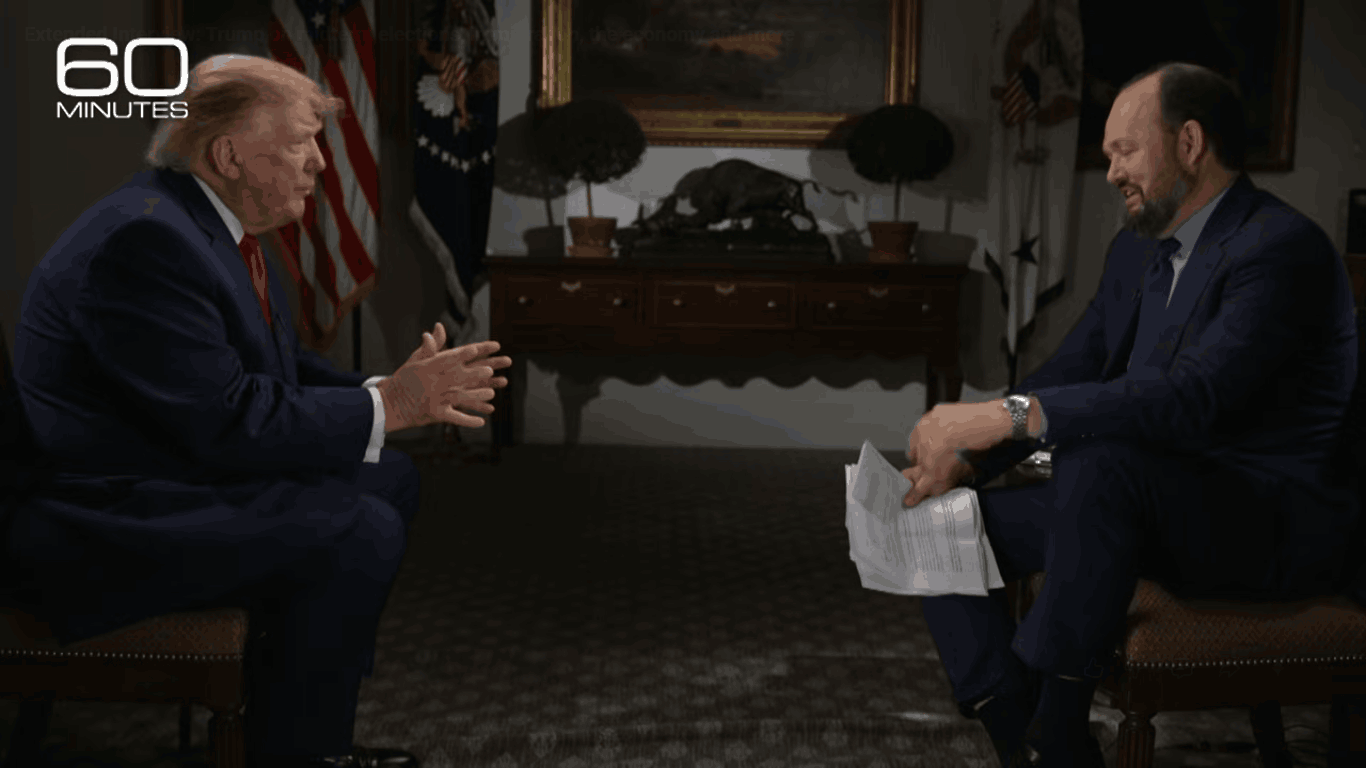
US President Donald Trump has acknowledged that his administration's handling of the Iran war, rising living costs and immigration enforcement may have contributed to the Republican Party's significant defeats in the 2026 midterm elections, while suggesting that he could soften his deportation policies and pursue bipartisan immigration reform.
In an extensive interview with CBS News columnist Ross Douthat, published Sunday evening, Trump offered his assessment of the Republican losses, defended his military decisions in Iran and Ukraine, promoted his economic record and addressed questions about artificial intelligence, presidential succession, personal wealth and his political legacy.
The interview revealed a president who remained unapologetic about his major policy decisions but appeared willing to reconsider some aspects of his domestic agenda following the electoral setback.
Iran war and rising fuel prices blamed for Republican losses
Reflecting on the midterm results, Trump initially argued that Republican candidates struggled because he himself was not on the ballot, despite campaigning extensively on their behalf.
He claimed that his personal popularity and large campaign rallies had not translated into votes for Republican candidates.
However, he acknowledged that voters were dissatisfied with the war in Iran and the increase in gasoline prices that followed the conflict.
“They didn't like the war. They didn't like the fact that gasoline went up,” Trump said, noting that fuel prices had risen from approximately $1.85 per gallon in Iowa to between $3.50 and $4.
Trump also identified growing public opposition to Israel as another factor affecting Republican electoral prospects.
His comments largely echoed an assessment previously offered by Vice President JD Vance, who attributed the Republican defeat to the Iran conflict and its political consequences.
Asked whether he agreed with Vance’s analysis, Trump said he did, although he maintained that the decision to attack Iran was necessary to prevent the country from acquiring nuclear weapons.
He described the military campaign as a victory and insisted that Iran’s nuclear capabilities had been severely damaged.
Trump also said he was not seeking to escalate the conflict further, expressing confidence that Tehran would eventually negotiate an agreement with Washington.
“I would do it again,” he said, defending the decision to attack Iranian nuclear facilities.
He claimed that the United States had been close to reaching an agreement with Iran before the midterm elections and suggested that the electoral outcome had temporarily strengthened Tehran's negotiating position.
Trump signals possible shift in deportation policy
In one of the most significant moments of the interview, Trump acknowledged that his administration’s aggressive immigration enforcement policies may have gone too far.
While defending his record on border security, Trump admitted that deportations involving undocumented immigrants who have lived in the United States for years, maintained employment and contributed to their communities had created political difficulties.
“I think it might be too tough, yeah,” Trump said when Douthat asked whether his deportation policy had been excessively harsh.
The president distinguished between undocumented immigrants accused of serious crimes and those who have established lives in the United States, including workers employed in hotels, restaurants, landscaping companies and other industries.
He suggested that the administration could negotiate with Democrats to establish some form of legal status for long-term undocumented residents who have committed no serious crimes.
Trump described immigration as an area where bipartisan cooperation might be possible following the Republican electoral defeat.
He also claimed that several Democratic politicians had already contacted him about potential cooperation.
The remarks represent a notable acknowledgment of the political complications surrounding his immigration agenda, which had been a central feature of his presidency.
Nevertheless, Trump maintained his tough position against immigrants accused of murder, rape, drug trafficking and other serious offenses, while continuing to criticise sanctuary-city policies. Meanwhile, Sunday’s promotion of immigration hardliner Stephen Miller to a top White House position signals that its aggressive deportation agenda is likely to remain firmly in place.
Trump defends economic record despite voter dissatisfaction
Despite repeated questions about the cost of living, inflation and public dissatisfaction with the economy, Trump insisted that his administration had delivered historically strong economic results.
He pointed to job creation, unemployment figures, stock market performance, manufacturing investment and rising retirement account values as evidence of economic progress.
Trump blamed what he described as poor communication and unfavorable media coverage for the disconnect between economic indicators and public perceptions.
“I think it was bad messaging,” he said, acknowledging that his administration had failed to communicate its economic achievements effectively.
He also argued that Americans would begin to recognise the benefits of his policies over the coming months as new factories and industrial projects became operational.
However, Douthat challenged the president's emphasis on stock market performance and retirement savings, noting that many Americans remain concerned about everyday expenses and do not necessarily benefit directly from rising financial markets.
Trump also blamed the Democratic electoral gains for a significant decline in the stock market following the election, claiming that approximately $3 trillion in market value had been lost.
AI competition with China takes priority over regulatory concerns
Trump strongly defended his administration's support for artificial intelligence, which he repeatedly referred to as “super intelligence.”
He argued that the United States must maintain its lead over China in the development of advanced AI systems, describing the competition as critical to America’s economic and strategic future.
According to Trump, Chinese President Xi Jinping is deeply committed to the technology, and losing the competition would place the United States at a significant disadvantage.
Trump dismissed much of the concern surrounding the potential dangers of advanced AI, arguing that the risks were manageable and that government oversight could address irresponsible behavior.
He said he was open to some regulatory safeguards but opposed restrictions that could undermine America’s competitive position.
“I don't mind guardrails,” Trump said, emphasising that the United States should not fall behind China.
He also claimed that major AI data centers were being required to develop their own electricity-generating capacity, with excess power potentially contributing to the national electricity grid.
The discussion also touched on concerns that AI could eventually eliminate large numbers of jobs. Trump rejected the idea that a future in which people no longer need to work would necessarily be desirable.
Trump stands by Hegseth but hints at Cabinet changes
Asked whether he planned to make personnel changes following the Republican defeat, Trump acknowledged that some changes were likely.
“I love my Cabinet. I think they’re good. But I'll be doing maybe a few changes,” he said.
Douthat specifically questioned him about Defense Secretary Pete Hegseth, whose position had attracted criticism.
Trump expressed confidence in Hegseth, defending his leadership by pointing to the administration's military operations in Iran and Venezuela.
He praised American military personnel, commanders and equipment, describing the operations as major successes.
Trump also claimed that the United States had effectively defeated Iran militarily and that its naval and air capabilities had been destroyed.
He did not identify which Cabinet officials might be replaced.
Trump names Vance and Rubio among potential Republican successors
Looking ahead to the 2028 presidential election, Trump indicated that he might endorse a Republican candidate but stopped short of committing to support anyone.
He praised Vice President JD Vance and Secretary of State Marco Rubio, describing the latter as an excellent official performing a strong job.
Trump also suggested that several senators could emerge as potential presidential contenders.
However, he argued that the MAGA movement could survive beyond his own political leadership because its central principles, strong borders, military strength and economic prosperity, could continue to attract supporters.
He also suggested that his endorsement would carry considerable influence in determining the next Republican presidential nominee.
Trump rejects corruption allegations involving family business
The interview also featured a contentious exchange about Trump's personal wealth and potential conflicts of interest involving World Liberty Financial, a cryptocurrency company associated with his family.
Douthat questioned why the president continued to hold an ownership interest in a company whose investors reportedly included individuals connected to the United Arab Emirates.
He argued that similar business arrangements involving the family of a Democratic president would likely have prompted accusations of corruption from Trump and his supporters.
Trump rejected the comparison, saying he knew little about the company's operations and that his sons managed the family’s business interests.
He also defended the management of his broader investment portfolio, arguing that financial institutions handled investments without his direct involvement.
When pressed on why he would not divest from the cryptocurrency business to eliminate potential conflicts of interest, Trump argued that his sons should not be expected to suspend their business activities simply because he was president.
The exchange highlighted continuing questions about the intersection of Trump's political responsibilities and his family's commercial interests.
Ukraine war: Trump predicts peace deal but offers few details
On the war in Ukraine, Trump maintained that a peace agreement was close and attributed the continued fighting largely to the personal hostility between Russian President Vladimir Putin and Ukrainian President Volodymyr Zelenskyy.
He announced that an important series of meetings involving the conflict was scheduled to take place over several days, expressing confidence that the war could end soon.
Trump again claimed that the conflict would never have started had he remained president.
However, he acknowledged that Ukraine would likely emerge with a different territorial configuration, suggesting that a peace settlement could involve territorial concessions.
Asked whether he trusted Putin more than Zelenskyy, Trump declined to answer directly.
He also defended his approach to military assistance, arguing that his administration was selling American weapons to European countries, which then supplied them to Ukraine, rather than providing military assistance without compensation.
The president also addressed concerns about the Starlink satellite system's role in Ukraine's military operations, saying he had not personally ordered any reduction in service but acknowledged that he had significant authority over matters involving the United States.
Trump says he may issue extensive pardons before leaving office
Discussing his presidential legacy, Trump said he expected to issue a substantial number of pardons before leaving office.
He also suggested that he believed a president could potentially pardon himself, although he did not say he intended to exercise that power.
Trump defended his previous pardons of individuals convicted in connection with the January 6, 2021, Capitol attack, arguing that many had been treated unfairly.
When Douthat specifically asked whether those who attacked police officers deserved clemency, Trump acknowledged that some had engaged in violent conduct but continued defending the broader group.
The president also maintained that Washington, D.C., had become substantially safer under his administration, citing a claimed decline in crime.
Read More Stories
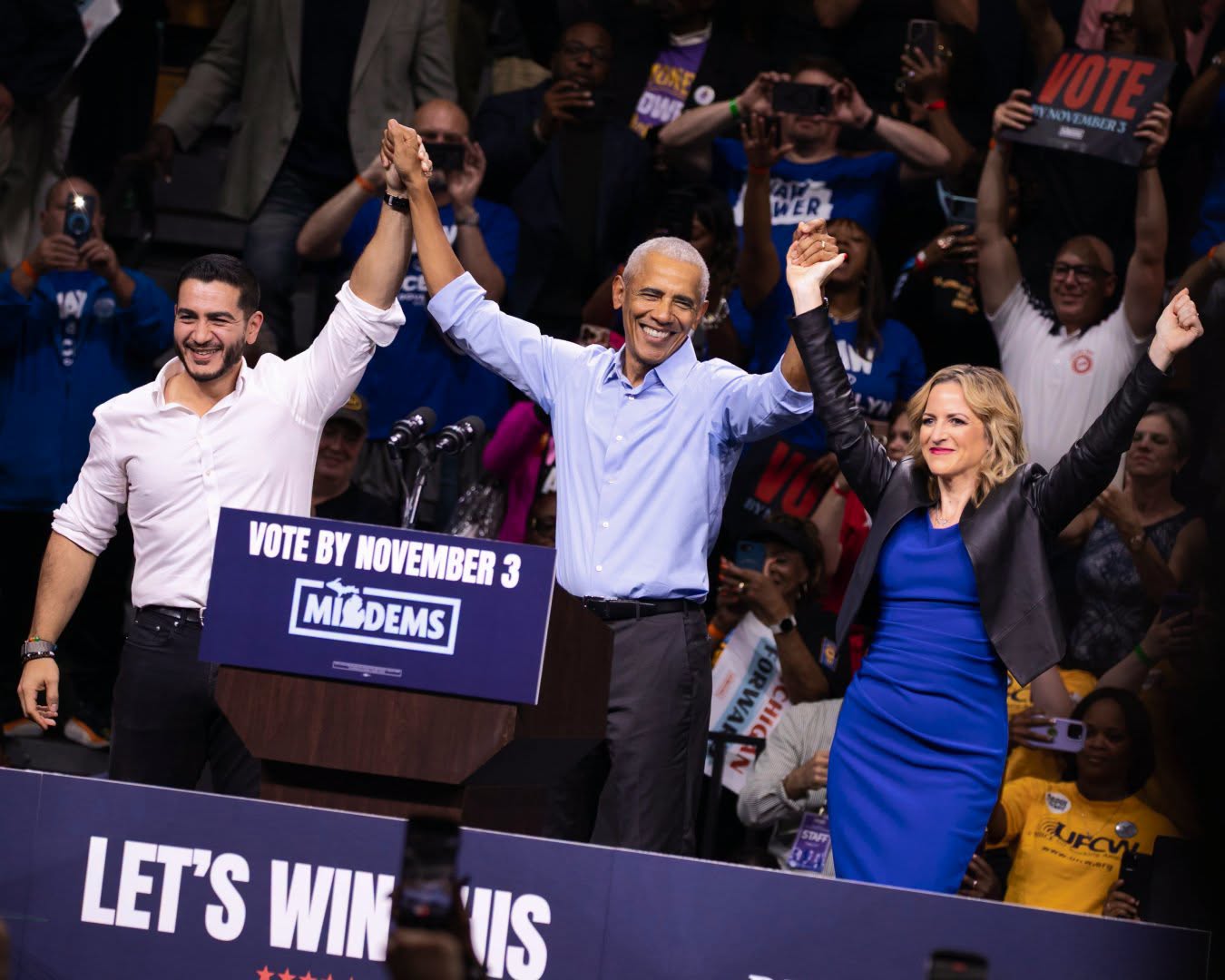
Democrats win control of Congress in midterms, dealing Trump major setback
Democrats have won control of both chambers of the United States Congress in...

Nepal to present US$17 billion infrastructure projects at December summit
Nepal will present infrastructure projects with a combined estimated value of US$17 billion...

NEPSE edges higher as trading activity slows ahead of Tihar
The Nepal Stock Exchange (NEPSE) rose by a modest 2.64 points (0.10%) on...