What we do is costly! Your support will help us dig more stories.
Yes, I'm Interested!Ignorance isn't always bliss | Don't stay foolish.
Keep informed | Read our news and analysis.
Corruption Case | Land Swap Scandal | Ministerial Cabinet | anti-corruption agency
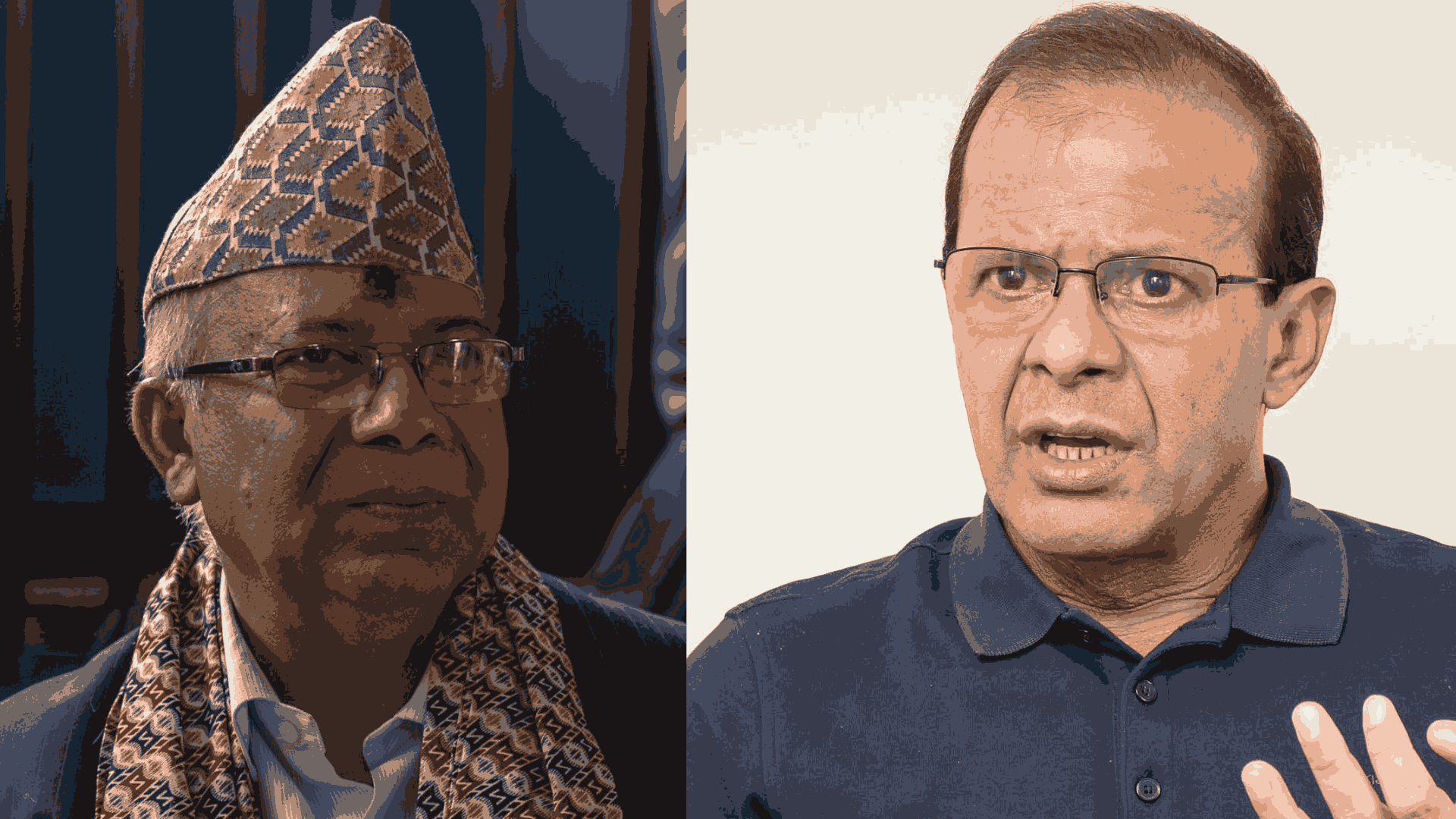
The Commission for the Investigation of Abuse of Authority (CIAA) has filed a corruption case against former prime minister Madhav Kumar Nepal, Nepali Congress leader and former minister Minendra Rijal, and 95 others over an alleged illegal land transaction that caused a loss of NRs 734.96 million to the state.
The anti-graft body filed the case at the Special Court on Tuesday, accusing government officials, company directors and other individuals of facilitating the sale and exchange of land belonging to Rijal Canning and Company in violation of conditions attached to its exemption from the statutory landholding ceiling.
The CIAA alleges that the company sold two valuable plots in Biratnagar, Morang, which were liable for government confiscation, and acquired comparatively cheaper land in Banigama, also in Morang. It has sought recovery of NRs 734.96 million, along with fines, imprisonment and confiscation of the disputed properties.
How the land transaction unfolded
The case centres on land that Rijal Canning and Company was permitted to hold beyond the statutory ceiling on the condition that it would establish and operate a fruit-processing industry.
The company received the exemption in 1975 (2032 BS), covering land in Morang and Sunsari. However, according to the CIAA, the company failed to use the land for the stipulated industrial purpose, making the additional holdings liable for confiscation.
The government had decided to confiscate the land in 1992 (2048 BS). Despite this, subsequent administrative and political decisions enabled the company to pursue the sale and exchange of its Biratnagar properties.
In 2009, the company sought permission to exchange two plots in Biratnagar Metropolitan City-3 for land in the then Banigama Village Development Committee. The proposed transaction involved approximately 2.9 hectares of land.
According to the CIAA, the company eventually purchased land in Banigama for around NRs 1.2 million while selling the Biratnagar plots for approximately NRs 83.8 million.
The anti-graft body has assessed the value of the Biratnagar land at NRs 734.96 million, treating that amount as the loss caused to the state because the properties should have been confiscated rather than transferred through the transaction.
Cabinet decisions and the role of Madhav Nepal
The CIAA investigation traces the transaction to a series of decisions taken during Madhav Nepal’s premiership.
On December 1, 2009, the Council of Ministers, led by Nepal, initiated the process of allowing the company’s directors to sell the land, forwarding the matter for consideration through the relevant parliamentary committee.
The proposal subsequently went through the Cabinet’s Social Committee, coordinated by then minister Minendra Rijal.
The CIAA alleges that the committee’s decisions helped remove policy restrictions that had prevented industrial establishments from selling land held beyond the statutory ceiling.
On December 31, 2009, the committee decided to suspend the Working Policy Regarding Exemption for Industrial Establishments to Hold Land Beyond Maximum Ceiling, 2005. The decision paved the way for the proposed sale and exchange.
Nepal has been named as a principal defendant over his role as prime minister when the decisions were made. Rijal has also been charged over his role as the Social Committee coordinator and his involvement in the decision-making process.
The CIAA maintains that the decisions were taken despite the company’s failure to fulfil the conditions under which it had received the landholding exemption.
Who are the other defendants?
The 97 defendants include former government officials, company directors, land administration officials and individuals accused of facilitating or benefiting from the transaction.
The CIAA has categorised the defendants according to their alleged roles. Forty-six, including Nepal and Rijal, have been listed as directly involved in the alleged offence. Others have been named for recovery of the claimed loss or confiscation of properties linked to the transaction.
Among the former officials named are former land reform minister Dambar Shrestha, former chief secretary Madhav Prasad Ghimire, former secretary Chhabiraj Panta and several other senior bureaucrats.
Some of the individuals named in the case have died. Their legal heirs have been included for the purpose of recovering the alleged losses, rather than on allegations that they personally participated in the decisions.
The CIAA has also sought confiscation of land subsequently transferred to various individuals, companies and institutions.
A second corruption case against former PM Nepal
The latest prosecution is the second corruption case against Nepal involving land transactions and exemptions from the statutory landholding ceiling.
In June 2025, the CIAA filed a corruption case against Nepal and 92 others over alleged irregularities involving land acquired by Patanjali Yogpeeth and Ayurveda Company Nepal in Kavrepalanchok.
That case concerned the purchase and subsequent sale of land acquired under an exemption from the landholding ceiling. The CIAA sought recovery of NRs 185.8 million in that case.
Nepal was released on bail of NRs 3.5 million by the Special Court. He denied wrongdoing.
The two cases involve separate land transactions, but both raise questions about the use of Cabinet decisions and landholding exemptions to facilitate private land transactions.
What happens next?
With the filing of the charge sheet, the case moves to judicial proceedings at the Special Court.
The court will examine the CIAA’s allegations, evidence and claims against the defendants before determining criminal liability. The commission has sought prison sentences, fines and recovery of the alleged losses, as well as confiscation of the properties linked to the transaction.
The case also raises questions about the accountability of political officeholders and government officials involved in decisions that affect public assets, particularly when such decisions are made through collective Cabinet and ministerial processes.
Neither the filing of the charge sheet nor the inclusion of individuals as defendants establishes their guilt. Their liability will be determined through the judicial process.
Read More Stories

Trump concedes Iran war and deportation policy hurt republicans in midterm elections
US President Donald Trump has acknowledged that his administration's handling of the Iran...
Democrats win control of Congress in midterms, dealing Trump major setback
Democrats have won control of both chambers of the United States Congress in...

Nepal to present US$17 billion infrastructure projects at December summit
Nepal will present infrastructure projects with a combined estimated value of US$17 billion...