What we do is costly! Your support will help us dig more stories.
Yes, I'm Interested!Ignorance isn't always bliss | Don't stay foolish.
Keep informed | Read our news and analysis.
US Midterm Elections 2026 | Congressional Control Win | Democrats | Republicans | Prez Donald Trump
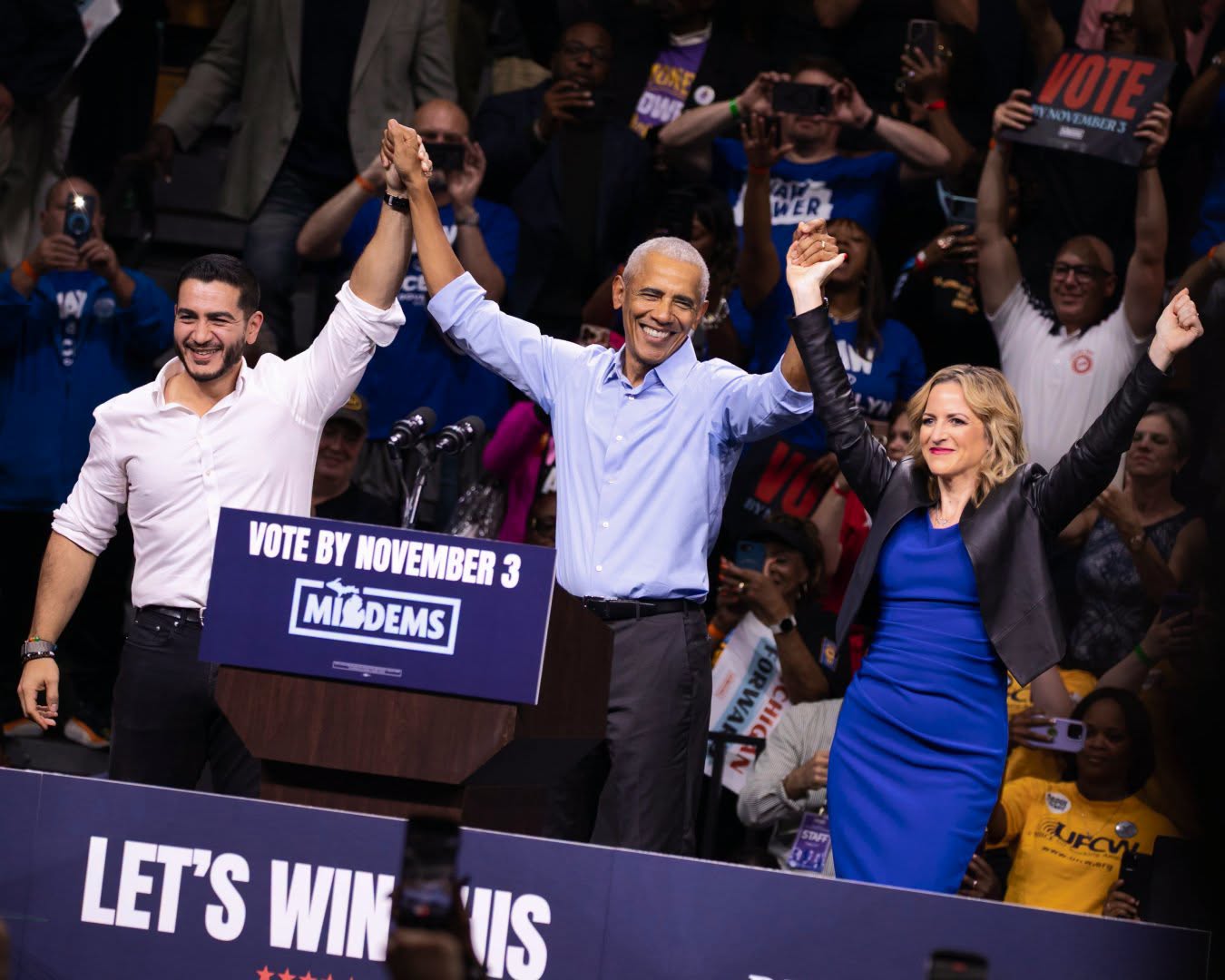
Democrats have won control of both chambers of the United States Congress in the November 3 midterm elections, making significant gains in Republican strongholds and delivering a major setback to President Donald Trump halfway through his second term.
The party secured a majority in the Senate after flipping at least seven Republican-held seats, including in traditionally conservative states such as Texas, Kansas, Iowa, Ohio and South Carolina. It also won at least 30 seats previously held by Republicans in the House of Representatives, according to preliminary tallies.
Democrats have secured at least 54 seats in the 100-member Senate, against Republicans’ 44, with two races still uncalled. In the House, Democrats have won at least 233 of the 435 seats, against Republicans’ 138, while several races remain uncalled. A party needs 51 seats for a Senate majority, or 50 if the vice-president can break a tie, and 218 seats for a majority in the House.
The results mark the first time during Trump’s second presidency that Republicans will have to contend with a Democratic-controlled Congress in both chambers.
The victories came amid widespread voter dissatisfaction with the administration’s handling of the economy, rising living costs, the war with Iran and concerns about government accountability. Democrats also made significant gains among younger voters and in constituencies that had supported Trump in the 2024 presidential election.
The outcome gives Democrats greater power to scrutinise the administration, investigate its actions and obstruct parts of Trump’s legislative agenda. It also raises questions about how the party will use its new congressional majority to challenge the president’s domestic and foreign policies during the final two years of his term.
How US midterm elections work
Midterm elections are held every four years between presidential elections, halfway through a president’s four-year term. They do not determine who becomes president. Instead, voters elect members of Congress, the federal legislature, as well as governors and other state and local officials in many states.
Congress has two chambers: the House of Representatives and the Senate. All 435 seats in the House are contested every two years. Members represent congressional districts, with the number of districts allocated to each state according to its population.
Senators serve six-year terms, with roughly one-third of the 100 seats contested every two years. Each state elects two senators, regardless of its population. In the 2026 midterms, 35 Senate seats were up for election.
The party that wins a majority in either chamber controls its leadership and much of its legislative agenda. A congressional majority can influence federal spending, pass legislation, scrutinise government agencies and investigate the administration.
Midterms are also widely seen as a referendum on the sitting president’s performance. The president remains in office regardless of the outcome, but losing control of Congress can make it considerably harder to advance legislation and secure approval for appointments.
Voters turn against Republicans
The results reflect a broad shift in voter support across demographic and geographic groups. Republicans lost ground in states and congressional districts that had backed Trump comfortably in 2024, suggesting that dissatisfaction with the administration extended beyond traditional Democratic constituencies.
The economy was a central factor. The Associated Press Voter Poll, which surveyed voters across all 50 states, found that inflation and the cost of living weighed heavily on voting decisions. Nearly nine in ten voters said the cost of living was a major or crucial factor in their vote. The poll also found that about two-thirds believed Trump’s policies had made the economy worse.
Government corruption and the state of democracy were also prominent concerns. About seven in ten voters said Congress was not doing enough to provide checks and balances on the president, according to the poll.
Younger voters also backed Democrats by a substantial margin. An early analysis by Tufts University’s Center for Information and Research on Civic Learning and Engagement (CIRCLE) found that 66 per cent of voters aged 18 to 29 supported Democratic candidates for the House of Representatives, compared with 31 per cent who backed Republicans.
CIRCLE estimated youth turnout at 27 per cent, matching its early estimate for the 2022 midterms and making it the second-highest youth turnout in a midterm election in the past three decades. The estimate is preliminary, has a margin of error of two percentage points and is expected to be updated when voter-file data become available in 2027.
The findings suggest a return to the strong Democratic preference among young voters seen in previous midterm elections, after the party’s advantage narrowed in 2024. However, the economy and healthcare were the leading concerns among young voters, according to CIRCLE, followed by the war with Iran. The findings do not establish that any single issue determined their vote.
Democrats face a divided mandate
The results have strengthened competing factions within the Democratic Party, which remains divided over its political direction and the extent of the changes voters expect.
Progressive candidates made significant gains in several races, while moderate Democrats also won competitive seats and flipped Republican-held districts. Both groups can point to the results as evidence that their approach can attract voters.
The new congressional leadership will have to reconcile these differences while pursuing shared priorities, including addressing living costs, healthcare affordability and the administration’s use of executive power.
Democratic leaders have indicated that they intend to use their majority to investigate the Trump administration and increase congressional oversight. However, the party’s ability to turn its electoral gains into legislation will be constrained by the president’s veto power and the possibility of legislative deadlock.
The election also does not amount to an unqualified endorsement of the Democratic Party. The AP Voter Poll found that many voters who backed Democratic candidates remained dissatisfied with the party, suggesting that opposition to Trump and his policies was a significant factor in the results.
Gaza and the future of US support for Israel
The election could also intensify debate over Washington’s longstanding military and diplomatic support for Israel, particularly amid continuing criticism of its war in Gaza.
Several Democratic candidates who won seats campaigned on restricting or conditioning military assistance to Israel. The party’s takeover of Congress could lead to greater scrutiny of arms transfers, hearings on Israeli military operations and attempts to attach conditions to future assistance.
However, support for Israel has historically been bipartisan, and Democratic administrations have played a central role in establishing the relationship. President Harry Truman, a Democrat, recognised Israel in 1948. In 2016, the administration of Barack Obama agreed to a 10-year military assistance framework worth $38 billion, covering 2019 to 2028.
The Biden administration maintained that assistance after the Hamas-led attacks of October 7, 2023, even as its continued weapons transfers faced growing criticism over Israel’s military campaign in Gaza.
The Congressional Research Service, a non-partisan research agency of the US Congress, estimates that the United States had provided Israel with $174 billion in bilateral assistance and missile-defence funding since the Second World War, in current dollars, as of May 2025.
The election therefore does not signal an automatic change in US policy towards Israel, nor does it guarantee an end to the war in Gaza. It does, however, give lawmakers seeking to reconsider military assistance a stronger platform from which to challenge the existing bipartisan consensus.
Trump retains control over foreign policy
Despite the change in congressional control, Trump retains broad authority over US foreign policy and military operations. Democrats can investigate the administration, influence funding and seek to restrict military assistance, but they cannot independently dictate presidential decisions on overseas conflicts.
The war with Iran is likely to remain an immediate point of contention. Democratic lawmakers have repeatedly challenged the administration’s decision to launch military action without congressional authorisation and are expected to press for greater oversight of the conflict.
They are also likely to push for renewed support for Ukraine and closer relations with European allies. This means a Democratic-controlled Congress should not necessarily be interpreted as a broader rejection of US military involvement abroad. The party could oppose Trump’s approach to Iran while supporting military assistance to Ukraine and seeking restrictions on arms transfers to Israel.
The election has consequently changed the balance of power in Washington without transferring control of the executive branch. Whether the new Congress can translate voter dissatisfaction into lasting policy changes will depend on its ability to maintain unity, secure support across party lines, and challenge a president who retains significant constitutional powers.
Read More Stories

Nepal to present US$17 billion infrastructure projects at December summit
Nepal will present infrastructure projects with a combined estimated value of US$17 billion...

NEPSE edges higher as trading activity slows ahead of Tihar
The Nepal Stock Exchange (NEPSE) rose by a modest 2.64 points (0.10%) on...

NEPSE closes 12.95 points lower
The Nepal Stock Exchange (NEPSE)lost 12.95 points on Thursday closing at 2,652.58 points....