What we do is costly! Your support will help us dig more stories.
Yes, I'm Interested!Ignorance isn't always bliss | Don't stay foolish.
Keep informed | Read our news and analysis.
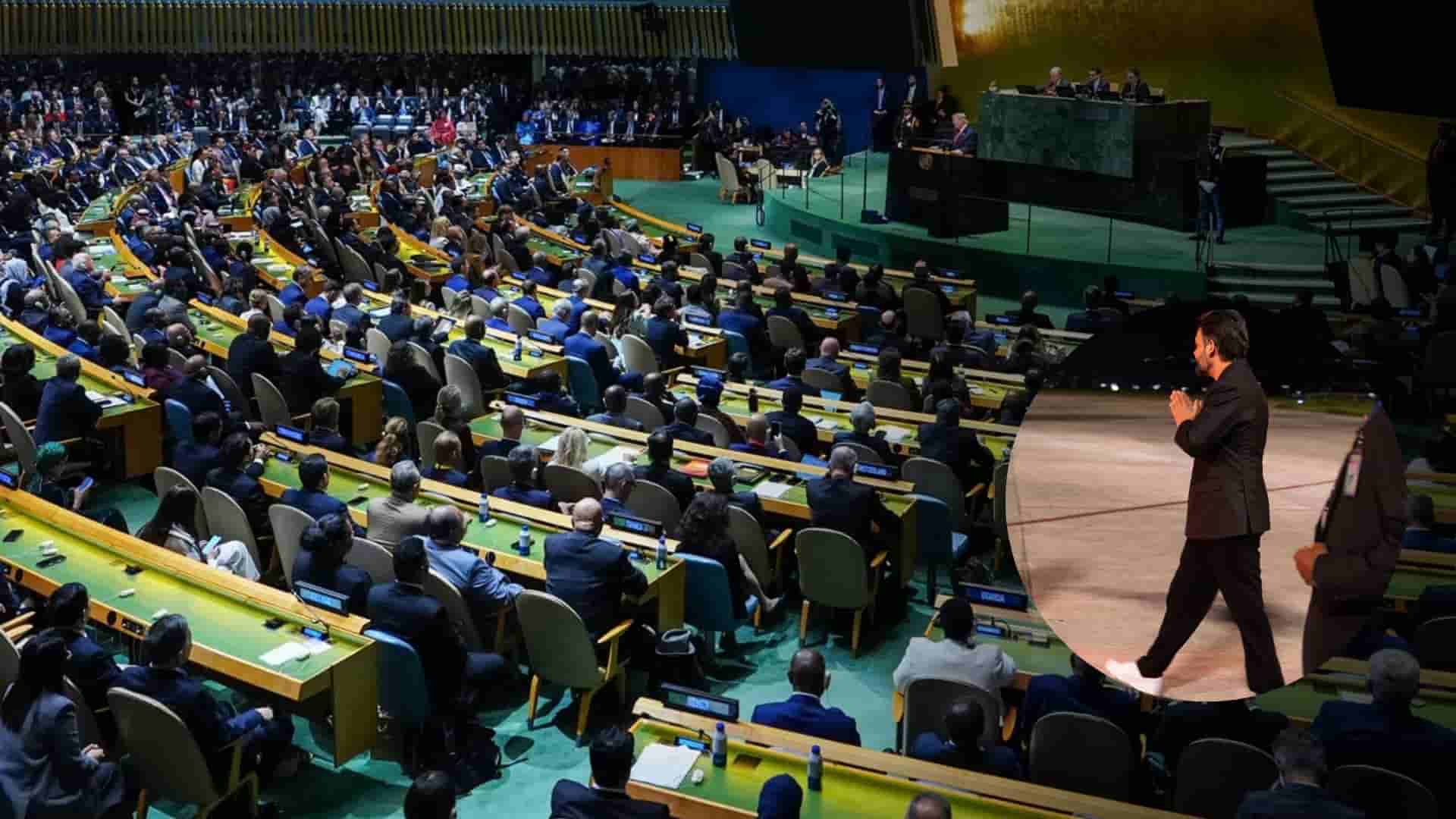
When Prime Minister Balendra Shah took office in March, he was expected to stay home.
On April 30, Rastriya Swatantra Party General Secretary Bhoop Dev Shah had revealed in a Kantipur Fireside interview that the prime minister would not undertake foreign trips for at least a year, saying he would first focus on domestic issues and development. Analysts termed the approach a cautious focus on domestic priorities.
The United Nations General Assembly was therefore not expected to become Shah’s first foreign engagement.
But the Bhotekoshi disaster changed the context.
On August 26, floods along the Bhotekoshi River system caused extensive destruction in Rasuwa, Nuwakot, Dhading and other downstream areas, affecting homes, roads, bridges, hydropower facilities and other infrastructure. The Foreign Ministry has described the disaster as causing huge loss of life, widespread displacement and extensive damage.
The government’s Rapid Damage and Needs Assessment puts the damage at about $1.8 billion and the loss at about $883 million. It estimates that another $4.78 billion will be required for reconstruction, including $57.67 million for short-term recovery and reconstruction and $4.71 billion for longer-term reconstruction. The government says a comprehensive Post Disaster Needs Assessment is still being undertaken to determine the full extent of loss and damage.
In rupee terms, NDRRMA’s preliminary assessment puts the disaster’s total damage and loss at more than NRs 408.28 billion, while reconstruction and rehabilitation will require about NRs 723.32 billion.
Those figures have given Nepal a fresh case to take to the international stage.
From the Bhotekoshi to New York
Shah’s attendance at the UNGA was not initially the plan.
As of September 3, Foreign Minister Shishir Khanal was expected to lead Nepal’s delegation, but lawmakers, ministers and RSP leaders were increasingly pushing for Shah to personally present Nepal’s case before world leaders. Later, Shah’s decision to attend came amid growing public pressure after the Bhotekoshi disaster.
The Foreign Ministry formally announced Shah as the head of Nepal’s delegation on September 11, saying the UNGA would provide an opportunity to present the government’s priorities and seek continued international cooperation and support.
Shah left Kathmandu on September 22, travelling to New York via Doha.
According to the itinerary issued by the Prime Minister’s Office, he is scheduled to leave Doha for New York on September 23. After arriving, he will visit Nepal’s Permanent Mission to the UN, where he will receive briefings from the foreign secretary, Nepal’s permanent representative to the UN, Nepal’s acting ambassador to the US and Nepal’s consul general in New York.
On September 24, Shah will meet UN Secretary-General António Guterres before addressing the General Assembly. He is scheduled to leave New York for Doha on September 25 and arrive in Kathmandu on September 26.
The General Assembly address will be the centrepiece of his visit.
What will Shah say?
That is the question attracting attention in New York.
Media reports suggested that Shah’s scheduled address had generated considerable interest among diplomats there. A Nepali diplomat told the paper that there was curiosity about his presence and what he would say, particularly following his rise to power after last year’s September protests and violence.
The speech is expected to focus on climate action, climate justice and compensation for climate-related losses, particularly in the wake of the Bhotekoshi disaster. Shah is also expected to highlight the vulnerability of low-carbon-emitting countries and the concerns of mountain nations.
The Foreign Ministry has already laid out the government’s intended message.
At its September 11 briefing, the ministry said Nepal would draw international attention to the repeated loss of lives and property caused by climate change and disasters. It said Nepal would highlight that its contribution to global greenhouse-gas emissions is negligible, even as it continues to face the adverse effects of climate change.
The ministry said Shah would call for climate justice, including immediate and appropriate compensation through mechanisms such as the Fund for Responding to Loss and Damage. It also said Nepal would appeal to developed countries to provide accessible and concessional technology and climate finance for climate-resilient infrastructure, climate-smart agriculture and capacity building.
The Bhotekoshi disaster gives those demands a concrete backdrop.
Nepal’s preliminary assessment has already recorded US$1.8 billion in damage and US$883 million in loss. But the government has not yet put a final monetary figure on loss and damage itself. The PDNA is still underway.
That distinction matters.
The US$2.68 billion obtained by adding the preliminary damage and loss figures is not the same as Nepal’s final loss-and-damage claim. The US$4.78 billion figure is the estimated reconstruction requirement.
Parliament wants a stronger case
Lawmakers have also been weighing in on what Shah should raise.
On September 22, lawmakers urged the prime minister to present issues including climate justice, mountain conservation, disaster management and international cooperation at the UNGA. They also called for international support for the relief and rehabilitation of people affected by the Bhotekoshi disaster.
Lawmakers highlighted the vulnerability of mountain communities and the need to bring the effects of climate change on Nepal to international attention. Their demands broadly mirror the government’s stated agenda: climate justice, international support, mountain vulnerability and disaster recovery.
More than 500 suggestions
There has also been unusual interest in what Shah should say.
Media reports suggest Shah has received more than 500 emails and suggestions through various channels about issues he should raise with the international community.
His speech has also gone through a wider drafting process. Officials at the Ministry of Foreign Affairs, with the foreign secretary and joint-secretary-level officials, prepared the initial draft. The ministry sought suggestions from stakeholders, while Shah’s secretariat separately sought input from people with experience in climate policy and in preparing speeches for former prime ministers.
Among those who provided written suggestions were climate and environment expert Dr Popular Gentle Bhusal, climate and natural-resource expert Dr Bimal Raj Regmi, and RSP leader Dr Aranico Panday. Nepali Congress leaders Bishwa Prakash Sharma and Bhishmaraj Aangdembe also met Shah and offered suggestions.
The Foreign Ministry then incorporated suggestions into the draft and revised it in consultation with Shah and his secretariat. After Foreign Minister Khanal reviewed the text, it was sent to Nepal’s Permanent Mission to the UN in New York for English-language and diplomatic review.
The speech is expected to run for around 14 minutes.
A short visit, a long list of expectations
Shah’s first major international appearance comes with a long list of issues to address.
He will speak about Nepal’s political transition and his government’s priorities. He is expected to highlight Nepal’s contribution to UN peacekeeping. But the Bhotekoshi disaster and climate justice are expected to take central stage.
For Shah, the challenge is to connect the disaster at home with a broader international argument: a country with a negligible contribution to global emissions is facing increasingly severe climate-related risks and is seeking access to finance, technology and support for losses and reconstruction.
The government has the preliminary numbers to make that case: $1.8 billion in damage, $883 million in loss and $4.78 billion in estimated reconstruction needs. On September 24, Shah will have the UN podium to put those numbers and demands before the international community.
He will have to make that case against the backdrop of the violence in September last year, the current Bhotekoshi disaster, which will be a real test of his response, and his promise to build a $100 billion economy over the next five years. What matters now is not simply what Nepal wants to say, but how Shah chooses to make the case and how will he deliver.
Read More Stories

Nepal needs to repeat to brand itself
Last year Nepal's goods exports jumped 81.8% to NRs 277.03 billion. That is...

Banking stocks gain momentum as dividend season begins
Dividend announcements by banks and financial institutions (BFIs) for fiscal year 2025/26 have...
Nepal’s challenge of building strong democratic institutions
Over the past few decades, institutional dysfunction and massive dissatisfaction with political establishments...