What we do is costly! Your support will help us dig more stories.
Yes, I'm Interested!Ignorance isn't always bliss | Don't stay foolish.
Keep informed | Read our news and analysis.
Nepal at UNGA 2026 | High Level Week | Fund for Responding to Loss and Damage
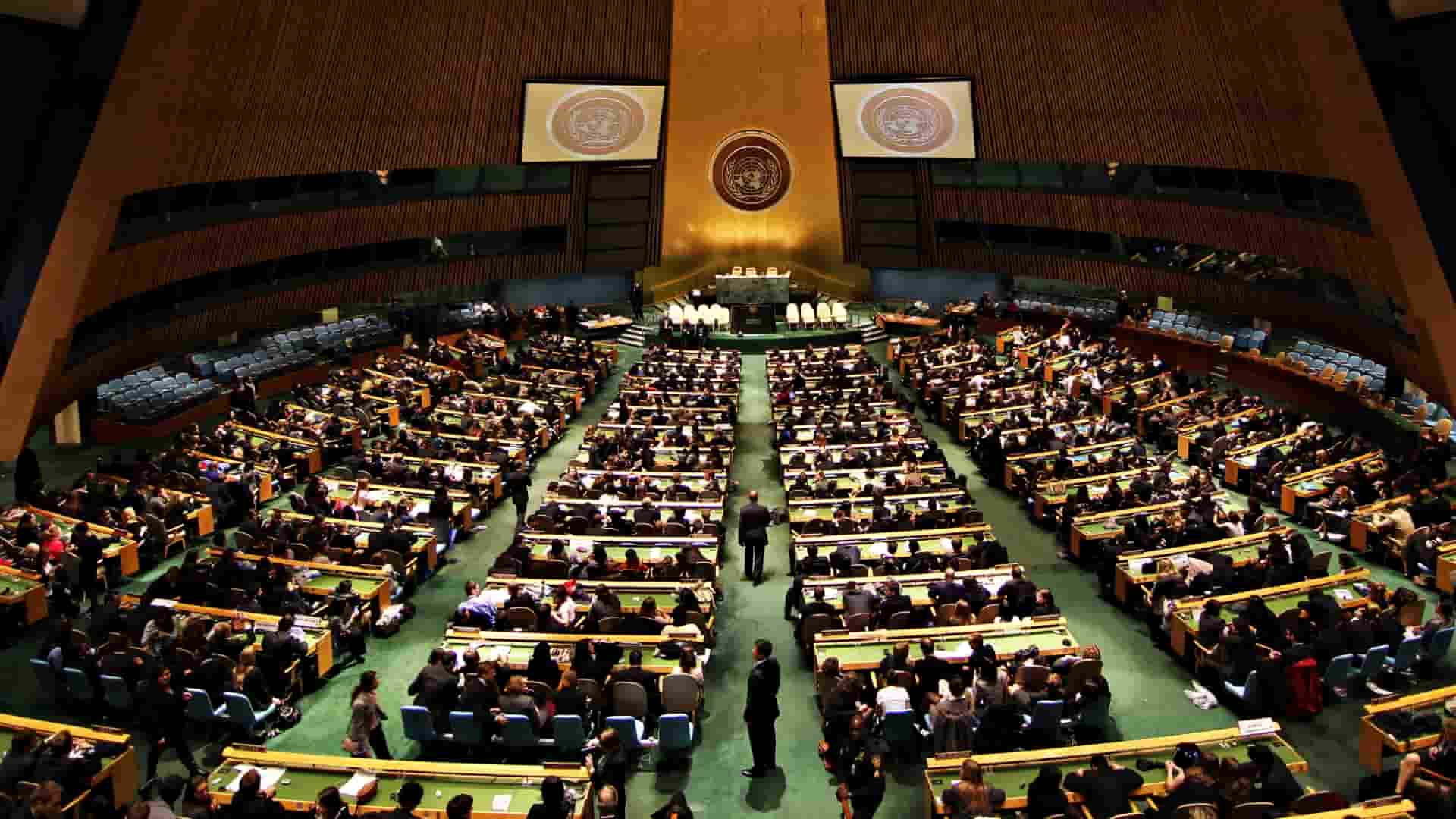
Prime Minister Balendra Shah is leaving for New York on September 22 to lead Nepal’s delegation to the High-Level Week of the 81st session of the United Nations General Assembly (UNGA).
Shah is scheduled to address the General Debate on September 24 and meet United Nations Secretary-General António Guterres during his stay. Shah will return to Kathmandu on September 26, the Ministry of Foreign Affairs said on Friday.
Foreign Minister has already left for New York, travelling ahead of Shah's delegation on September 20. He will participate in high-level meetings, side events and ministerial-level engagements and hold bilateral meetings with foreign counterparts and other dignitaries.
What exactly is the UNGA, and why does Nepal’s participation matter?
The United Nations General Assembly is the UN’s main policymaking and deliberative body. All 193 UN member states are represented in it, with each country having one vote.
The Assembly provides a forum for countries to discuss international issues covered by the UN Charter. It also takes important decisions for the UN, including approving its budget, electing non-permanent members of the Security Council and appointing the Secretary-General on the recommendation of the Security Council.
The UN General Assembly is an annual session of the UN’s 193 member states, not a single meeting held in September.
Its regular session opens in September and continues through the year, with member states considering issues through the Assembly’s plenary and six main committees.
When people refer to “UNGA” in September, however, they usually mean the period when heads of state, heads of government and other senior officials gather at UN headquarters in New York for the High-Level Week and the General Debate.
The 81st session formally opened on September 8. Its General Debate runs from September 22 to 26 and on September 28.
What is the General Debate?
The General Debate is the high-profile part of UNGA that brings world leaders and other senior representatives to the General Assembly podium. Countries present their positions and priorities on international issues.
The UN describes it as the annual meeting at the beginning of the General Assembly session where member states express their views on major international issues. The theme of the 81st General Debate is “Restoring trust, managing transformation: A United Nations that delivers for all.”
This does not mean every issue raised in a speech becomes a UN decision.
The speeches are political and diplomatic statements. Countries use them to explain their priorities, appeal for international cooperation, respond to global developments and put particular issues before the international community.
Alongside the General Debate, the High-Level Week contains numerous separate meetings and events on issues ranging from climate change and development to pandemic preparedness and sea-level rise.
What is Nepal’s message this year?
The government has made the climate crisis and its consequences for the country a central part of its planned UNGA message.
In a September 11 briefing, the Ministry of Foreign Affairs said Shah would draw international attention to the loss of life and property Nepal has repeatedly suffered from climate-related disasters.
The government is particularly highlighting the devastating August 26 Bhote Koshi flood in Rasuwa. Foreign Secretary Amrit Bahadur Rai said the disaster had again demonstrated Nepal’s vulnerability to the climate crisis.
Nepal also plans to emphasise the contrast between its relatively small contribution to global greenhouse-gas emissions and its exposure to climate impacts.
What does Nepal want from the international community?
According to the Foreign Ministry, Shah is expected to raise several related demands.
The stated priorities include financing and technology for climate-resilient infrastructure, climate-smart agriculture and capacity development.
Nepal also intends to highlight its environmental contribution, including its forest cover, Himalayan region and river systems, as part of its argument for greater international recognition of the country’s role in environmental protection.
Why is the Bhote Koshi flood relevant to UNGA?
The timing is significant for Nepal.
The August 26 disaster caused extensive damage along the Bhote Koshi and downstream areas. The government has made the disaster part of its international appeal for support.
The Foreign Ministry’s September 11 briefing said a Rapid Damage and Needs Assessment estimated about $1.8 billion in damage and $883 million in losses, with approximately $4.78 billion needed for reconstruction. The government said a more comprehensive Post Disaster Needs Assessment was also being undertaken.
Nepal is therefore taking the disaster to an international forum not only as a humanitarian issue but as part of its broader argument about climate vulnerability, loss and damage and the need for climate-resilient development.
Nepal is also organising a climate event
Nepal will host a UNGA side event titled “Sagarmatha to the Sea: A Call to Action for a Climate-Resilient Future.”
The event is scheduled for September 25 and will be led by Foreign Minister Shishir Khanal, as Shah is scheduled to return to Kathmandu on September 26.
According to the Foreign Ministry, the event will focus particularly on the effects of global climate change in the Himalayan region and the destructive consequences arising from them, with the aim of drawing international attention to the issue.
The UN’s High-Level Week itself also includes a separate high-level meeting on climate action and the just transition on September 23, as well as a meeting on the threats posed by sea-level rise on September 24.
What will Foreign Minister Shishir Khanal do?
Khanal’s programme is broader than Shah’s General Debate speech.
The Foreign Ministry says he will participate in ministerial-level meetings involving the Least Developed Countries, Landlocked Developing Countries, Non-Aligned Movement and G77 and China, among others.
He will also participate in UN high-level discussions and side events and hold bilateral meetings with counterparts from neighbouring and other countries and with senior UN officials.
So Nepal’s UNGA participation is not limited to the prime minister’s speech. Shah will deliver the country’s principal high-level political message, while Khanal will conduct ministerial-level diplomacy alongside the wider UNGA programme.
Who from Nepal has addressed the UN General Assembly before?
Nepal has regularly sent senior political leaders to the General Assembly.
Among the prime ministers whose addresses are recorded in the UN’s official General Debate records are Madhav Kumar Nepal in 2009, Baburam Bhattarai in 2011, Sushil Koirala in 2014 and KP Sharma Oli in 2018.
Earlier Nepali governments have also participated in the Assembly through foreign ministers and other senior representatives.
Shah’s appearance will therefore continue a long-standing practice of Nepali heads of government using the General Debate to present Nepal’s priorities to the international community.
The substance of those speeches has varied with the country’s circumstances. For example, Koirala’s 2014 address included a call for additional climate financing for vulnerable countries and highlighted the disproportionate effects of climate change on countries that had contributed relatively little to the problem.
Does the UNGA make laws for Nepal?
Not in the same way that Nepal’s sovereign Parliament makes domestic laws.
The General Assembly adopts resolutions and decisions on matters within its mandate. It makes recommendations to member states on many international issues, while certain decisions, such as those concerning the UN’s own budget and institutional arrangements, have specific authority under the UN Charter. A speech by a prime minister does not itself create a new international obligation for Nepal.
The Assembly’s significance is primarily diplomatic and political: it allows a country to state its position before representatives of nearly every UN member state, seek international cooperation and build support around particular issues.
So, what is PM Shah actually attending?
In simple terms, Prime Minister Shah is not travelling to New York for one “UNGA meeting”. He is attending a week of high-level diplomacy centred on the UN General Assembly. His main scheduled appearance is the General Debate on September 24, where he will present Nepal’s position. He is also scheduled to meet Secretary-General Guterres.
At the same time, Foreign Minister Khanal and other members of the Nepali delegation will take part in ministerial meetings, bilateral discussions and side events.
For Nepal, this year’s participation comes with a particularly clear message: the country wants the international community to pay greater attention to the climate risks facing the Himalayas and to provide support for loss and damage, climate finance, technology and climate-resilient development.
Read More Stories

Nepal needs to repeat to brand itself
Last year Nepal's goods exports jumped 81.8% to NRs 277.03 billion. That is...

Banking stocks gain momentum as dividend season begins
Dividend announcements by banks and financial institutions (BFIs) for fiscal year 2025/26 have...
Nepal’s challenge of building strong democratic institutions
Over the past few decades, institutional dysfunction and massive dissatisfaction with political establishments...