What we do is costly! Your support will help us dig more stories.
Yes, I'm Interested!Ignorance isn't always bliss | Don't stay foolish.
Keep informed | Read our news and analysis.
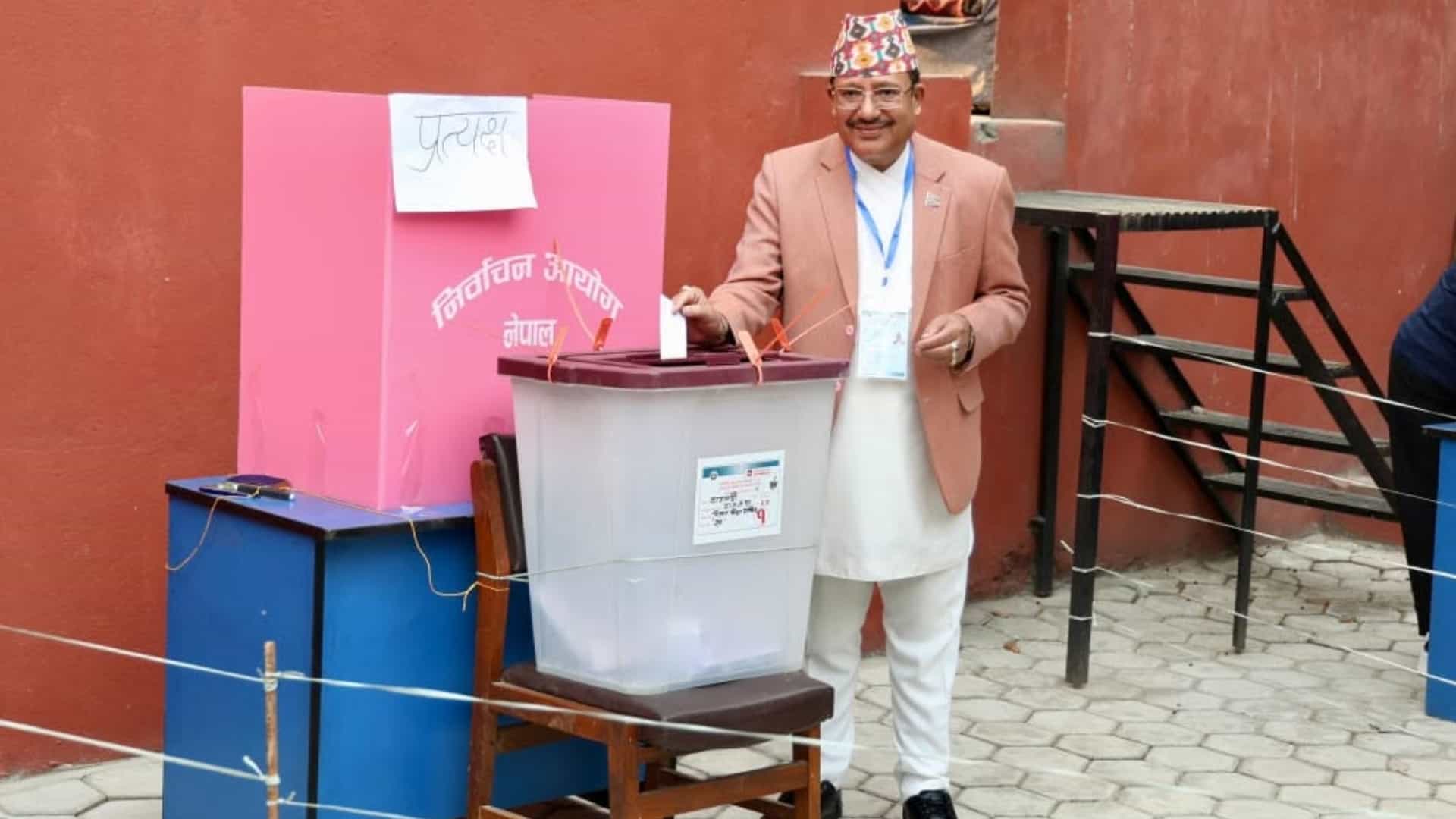
When Balendra Shah resigned as mayor of Kathmandu Metropolitan City to contest the March 5 House of Representatives election, the city’s top elected post became vacant. Bharatpur Metropolitan City and Dharan Sub-metropolitan City faced the same situation after their mayors, Renu Dahal and Harka Sampang, also resigned to contest the federal election.
Months later, those posts remain vacant.
The same is true of dozens of other local and provincial seats across the country. But the legal and political consequences of the delay are not the same at the two levels.
For local governments, the opportunity to hold by-elections has effectively passed. For provincial assemblies, vacant seats remain to be filled even though the assemblies still have more than a year left in their terms.
The question, therefore, is no longer why vacant seats have not been filled. It is why the government allowed the process to drift for so long, even as the Election Commission (EC) repeatedly raised the issue.
A wave of vacancies after the federal election
The vacancies followed a predictable political calculation.
Ahead of the March 5 election, provincial lawmakers across the country resigned from their elected positions to seek seats in the federal Parliament.
In Madhesh, Rahbar Ansari left Parsa 1(A), where he had been elected from the then CPN (Maoist Centre), to contest the federal election from Bara 4 for the Rastriya Swatantra Party. He won and is now a federal lawmaker and chair of the House Industry, Commerce, Labour and Consumer Welfare Committee.
Former Madhesh chief minister Satish Kumar Singh resigned from Saptari 2(A) to contest Saptari 2. Former provincial Speaker Ram Chandra Mandal left Dhanusha 1(B) for Dhanusha 1, while former minister Bharat Prasad Sah resigned from Mahottari 1(B) to seek a federal seat from Mahottari 4. All three failed to win their House contests.
The phenomenon was not confined to Madhesh.
In Bagmati, six provincial lawmakers resigned to contest the federal election. They included former ministers and senior provincial politicians. In Lumbini, four provincial lawmakers similarly left their seats. Lawmakers from Koshi and other provinces also gave up provincial positions in pursuit of federal office.
The outcomes varied. Some won federal seats. Others lost. One of the more unusual cases was that of Kundan Raj Kafle, who resigned from his Dolakha 1(A) provincial seat but ultimately did not receive his party’s ticket to contest the House election. But regardless of the outcome, their provincial constituencies were left vacant.
The March election resolved the federal vacancies and produced a new House. It did not resolve the provincial ones.
Local elections are now around the corner
At the local level, the situation has become increasingly difficult to reverse through by-elections.
Local representatives were elected in May 2022, and their five-year terms expire in May 2027. The Local Election Act requires the next local election to be held two months before the term expires.
The EC is now preparing for local elections in March rather than May. The commission has said it is working towards holding the election in the second week of March, although the government has yet to formally announce the date.
That means the window for filling many of the current local vacancies has effectively closed.
Under the law, a by-election for a local post can be held only when more than one year remains in the term. By May 2026, that threshold had passed. In May, at least 13 local posts, including mayoral, deputy mayoral, rural municipality chairperson and vice-chairperson, and ward chairperson positions, were vacant.
The commission had warned that conducting a by-election would require months of preparation, making it difficult to justify an election for a local representative who would serve for only a short period before the regular election.
That is why Kathmandu, Bharatpur, Dharan and other local levels are now effectively waiting for the regular local elections. But that explanation does not apply in the same way to provincial assemblies.
Provincial seats are a different matter
The provincial assemblies are scheduled to complete their five-year terms in November 2027. That leaves considerably more time than remains for the local governments. The Constitution therefore provides a different threshold.
Article 176(8) requires a vacant provincial assembly seat to be filled through a by-election when more than six months remain in the assembly’s term, using the same electoral system through which the seat was originally filled.
The Provincial Assembly Member Election Act contains a similar provision. Yet provincial constituencies have remained vacant.
By April, the EC counted 17 vacant provincial seats. The figure subsequently rose, with vacancies reported across several provinces.
The vacancies have not been concentrated in a single region or political party. They have affected Koshi, Madhesh, Bagmati, Gandaki, Lumbini and Sudurpaschim, with the number and distribution changing as new vacancies arose.
This makes the issue more than a collection of individual politicians changing jobs. It is a question of whether voters in those constituencies will have an elected representative for the remaining period of their provincial assembly's term.
Why did the government not move?
The EC has repeatedly pointed to the government as the necessary starting point.
In April, the commission said the government had not initiated discussions about holding by-elections for the vacant positions. The commission said it needed government support for resources, security and other preparations. By May, the commission had informed the government that provincial by-elections were necessary, but had received no response.
The government has faced a crowded electoral calendar. The House election took place on March 5. Local elections are now being prepared for early 2027, while regular provincial elections are expected later that year.
Holding separate by-elections costs money and requires the mobilisation of the same state machinery needed for regular elections.
Those are legitimate administrative considerations. But they do not entirely explain the difference between local and provincial vacancies.
For local governments, the legal deadline for a by-election passed as the regular election approached. For provincial assemblies, the constitutional window remained open.
What happens to representation in the meantime?
A vacant elected post does not mean that the institution stops functioning.
At the local level, existing officials can continue to exercise responsibilities under the law. In Kathmandu, for example, Deputy Mayor Sunita Dangol has been performing the mayoral duties following Shah’s resignation. But an acting official is not the same as a representative elected by the constituency for the remainder of the term.
The same distinction applies to provincial assemblies.
A provincial assembly can continue to legislate and deliberate despite vacancies. But voters in a constituency whose representative has resigned no longer have a directly elected member speaking for that constituency inside the assembly.
This is particularly important when the vacancy was created not because voters rejected their representative, but because the representative chose to seek another office.
A symptom of a larger federalism problem?
The vacant seats also raise a broader question about how the three-tier federal system works in practice.
Provincial governments have long complained about incomplete transfers of powers, personnel and resources from the federal government. The State of Federalism report has similarly pointed to continuing weaknesses in administrative and fiscal devolution.
The by-election episode adds another dimension: political representation itself can move upward more easily than institutional attention moves downward.
A provincial lawmaker can resign and seek a federal seat. A federal election can be organised and completed. But the provincial constituency left behind can remain vacant for months. That pattern is visible across the country, rather than being confined to Madhesh or any particular party.
In Bagmati, former provincial ministers left their constituencies. In Lumbini, provincial lawmakers did the same. In Madhesh, former ministers, a former Speaker and other provincial politicians sought federal office. In other provinces, lawmakers also made the same calculation.
Some succeeded in making the jump. Some did not. The constituencies they left behind share one thing: they have not received a new elected representative.
Two elections, two different answers
The government’s handling of the vacancies has therefore produced two different situations.
At the local level, voters are now waiting for the regular election. The one-year threshold means by-elections are no longer a practical option for posts whose terms expire in May 2027.
At the provincial level, voters are waiting despite a constitutional mechanism that still provides for by-elections. It means the continuing provincial vacancies cannot simply be explained as the unavoidable consequence of Nepal approaching its next election cycle.
The government can still decide how and when to initiate the process, subject to the constitutional and legal framework. The EC has already raised the issue.
Months after the politicians who held those seats moved on to the federal contest, however, the constituencies they represented remain in limbo.
For Kathmandu, Bharatpur, Dharan and other local governments, the next elected representatives are likely to arrive with the regular local elections early next year.
For vacant provincial constituencies, the question is more immediate: will voters get to choose replacements before the current provincial assemblies reach the end of their terms?
And beneath that question lies a larger one for Nepal’s federal experiment: when political opportunity pulls representatives towards Kathmandu, who ensures that the institutions and constituencies they leave behind do not become an afterthought?
Read More Stories

Nepal needs to repeat to brand itself
Last year Nepal's goods exports jumped 81.8% to NRs 277.03 billion. That is...

Banking stocks gain momentum as dividend season begins
Dividend announcements by banks and financial institutions (BFIs) for fiscal year 2025/26 have...
Nepal’s challenge of building strong democratic institutions
Over the past few decades, institutional dysfunction and massive dissatisfaction with political establishments...