What we do is costly! Your support will help us dig more stories.
Yes, I'm Interested!Ignorance isn't always bliss | Don't stay foolish.
Keep informed | Read our news and analysis.
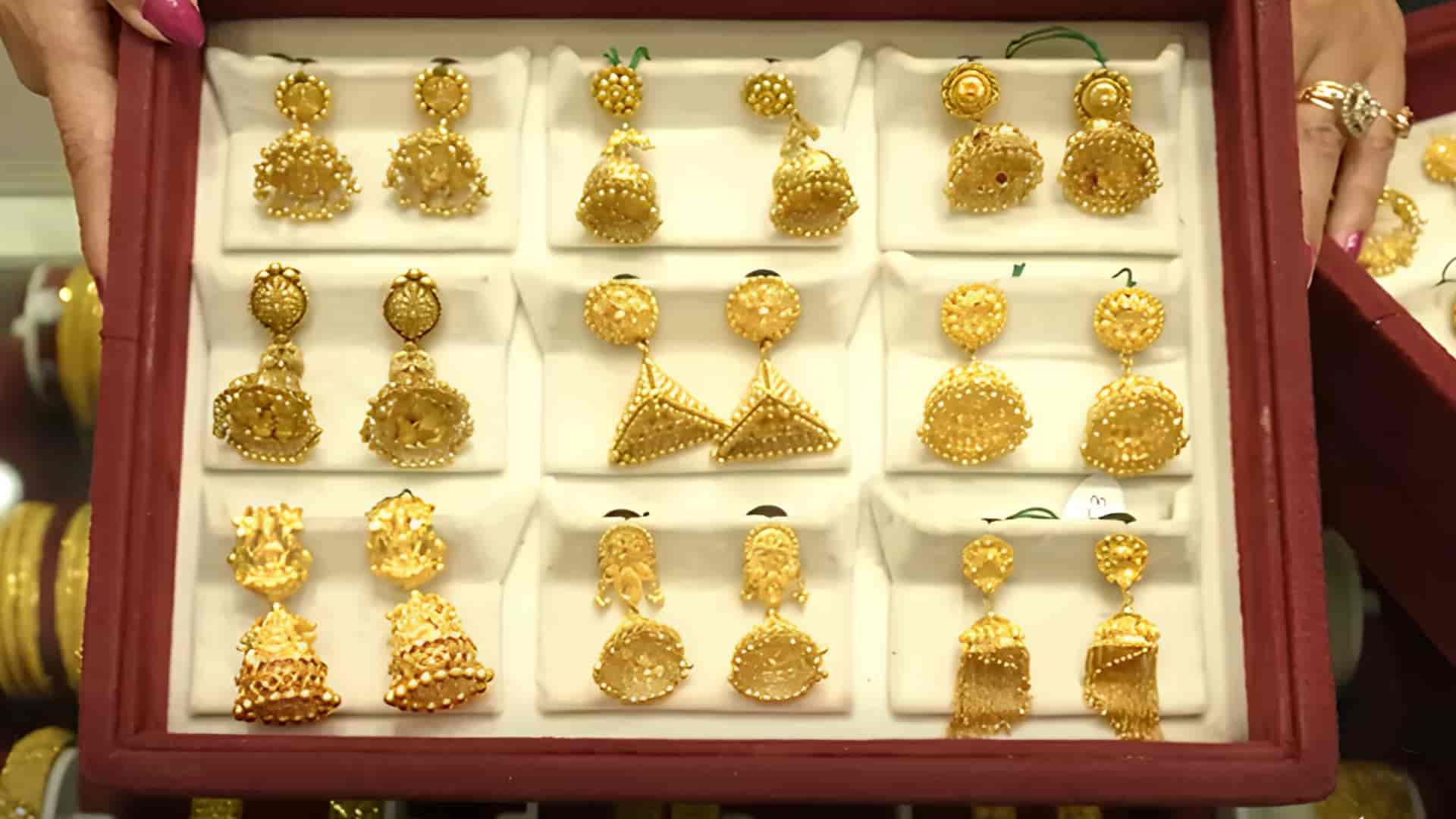
Gold reached historic highs on January 29, 2026, with international spot gold climbing to $5,594.82 per troy ounce, while Nepal recorded an all-time high of NRs 339,300 per tola.
However, gold has since late November experienced a significant correction. International prices briefly fell below $3,500 on November 25, reaching a 15-month low, before recovering to $3,591.37 per ounce on November 26. Fine gold traded at NRs 242,800 per tola on the same day, down by NRs 96,500 from its January peak.
The decline has raised questions about gold’s traditional role as a safe-haven asset. Although concerns over government debt, currency depreciation and geopolitical tensions continue to support gold’s long-term appeal, changing monetary conditions and investor behaviour have put significant pressure on prices.
What drove the rally, why the fall now?
During the COVID-19 pandemic, low interest rates and heightened economic uncertainty drove gold prices above $2,000 per ounce. In the post-pandemic period, persistent inflation, geopolitical tensions, rising government debt concerns, and central banks’ efforts to diversify their reserves have further fueled the recent surge in gold prices.
In 2025, global gold demand reached a record 5,002 tonnes, says the World Gold Council, supported by central bank purchases of 863 tonnes and gold ETF inflows of 801 tonnes.
However, several factors are now putting pressure on gold:
First, rising interest rates and a stronger US dollar. Since gold does not generate interest income, higher interest rates and bond yields make fixed-income investments relatively more attractive. A stronger US dollar also makes gold more expensive for international buyers, potentially reducing demand.
Second, changing investor behaviour and liquidity needs. During periods of financial uncertainty, investors may sell gold to raise cash, realise profits or cover losses in other markets. They may also shift their investments towards interest-bearing assets that offer regular returns.
Read also:
Nepal’s gold sector squeezed by quotas, taxes and smuggling
This was evident during the recent market correction, when investors sold gold alongside declining technology stocks. Some investors had also borrowed money to finance their gold positions. As prices fell, leveraged investors faced pressure to unwind their positions, accelerating the decline.
Third, crude oil prices, which have indirect influence through inflation and monetary policy. Higher energy prices can increase inflationary pressure, encouraging central banks to maintain higher interest rates. Conversely, falling crude oil prices could help ease inflation and reduce expectations of further monetary tightening. However, gold and crude oil do not necessarily move in the same direction.
Finally, speculative activity and profit-taking have also contributed to the recent correction. Following a strong rally, investors began selling their holdings to secure profits.
These factors explain how gold can experience a correction even when geopolitical risks and economic uncertainty remain high.
Attention now turns to US monetary policy
The US Federal Reserve’s December meeting could be an important driver in the coming days. The Fed maintained its benchmark interest rate at 3.75%–4.00% in October, but persistent inflation has increased expectations of another rate hike.
According to CME FedWatch probabilities reported by Investing.com on November 24, markets expected a 25-basis-point increase with a 96.4% probability and a 50-basis-point increase with a 3.6% probability. A 25-basis-point hike would raise the rate to 4.00%–4.25%.
For Nepali investors, the decision is important as changes in US interest rates can influence international and domestic gold prices. However, since a rate hike is already widely expected, the Fed’s guidance on future monetary policy may have a greater impact on gold prices. These probabilities reflect market expectations, not confirmed decisions. Updated probabilities are available through the CME FedWatch Tool.
Changing global gold demand and supply
Additionally, global gold demand and supply trends continue to provide important insights into the factors influencing gold prices. According to the World Gold Council’s Q3 2026 Gold Demand Trends report, global gold demand declined by 1% year-on-year to 1,369 tonnes, although its total value increased by 22% to $188 billion.
Central banks purchased 321 tonnes, while jewellery consumption stood at 313 tonnes, bar and coin investment at 268 tonnes and gold ETF inflows at 211 tonnes.
Higher prices reduced consumer affordability, causing jewellery demand to fall by 17% and bar and coin investment by 19%. Meanwhile, central bank purchases and ETF inflows continued to support the market.
On the supply side, mine production increased by 3% to 1,071 tonnes, while recycled gold supply declined by 8% to 314 tonnes.
Overall, the figures suggest that gold’s recent correction is not solely driven by weakening demand alone. While higher prices have affected consumer purchases, continued central bank buying and ETF inflows indicate that investment demand remains resilient.
So what’s the technical outlook
Gold prices may remain volatile, with $3,450–$3,900 per ounce as the key trading range. A break below or above these levels could signal the next price direction, says a treasury head of a commercial bank.
The outlook will depend largely on the US Federal Reserve's interest rate decision, inflation, bond yields and global investment demand. While central bank purchases continue to support gold in the long term, higher interest rate expectations may put pressure on prices in the short term.
For now, investors should remain cautious as the market has yet to show a clear direction.
Domestic factors shaping Nepal’s gold market
Gold prices in Nepal are shaped not only by international market movements and exchange rates but also by customs duties and domestic taxes.
The government has revised gold import customs duties several times in recent years. The rate increased from 15% to 20% in May 2024, was reduced to 10% in November 2024 following India's reduction of import duty to 6%, and was raised again to 20% in the fiscal year 2026/27 budget.
These changes have had a direct impact on domestic prices. On November 25, 2024, gold prices dropped by NRs 15,900 per tola following the duty reduction. Conversely, after the duty was raised to 20% in May 2026, prices increased from NRs 290,600 to NRs 311,100 per tola.
The government has also replaced the 2% Luxury Fee on gold and jewellery with a 0.5% Skill Promotion Fee under the latest budget. The new fee also applies to silver and silver jewellery.
Meanwhile, despite declining global jewellery consumption, Nepal is witnessing stronger seasonal demand driven by the wedding season and falling gold prices. Daily domestic gold demand has exceeded 50 kg, compared with the daily import quota of 25 kg, a Newroad-based gold jeweller shared with the_farsight.
On the contrary, gold imports have fallen sharply in the current fiscal year. The imports fell 77% in the first four months of the current fiscal year, with the country importing 211 kg worth NRs 4.22 billion. During the same period last year, imports stood at 902 kg worth NRs 15.72 billion.
The sharp decline in formal imports, alongside strong domestic demand, has also raised questions about the possibility of increased reliance on informal supply channels. Recent gold seizures have further highlighted concerns over smuggling and illegal trading networks. In October, police seized 21.75 kg of gold in Upper Bhangal, Budhanilkantha, Kathmandu, and arrested three Chinese nationals. Another seizure last week involved 2.35 kg of gold. Further investigations are examining possible links to organised crime and money laundering, highlighting concerns over illegal gold trading networks.
Read More Stories
Stronger rupee cuts public debt by NRs 43 billion, but borrowing continues to rise
Nepals public debt declined slightly during the first four months of the fiscal...

Trade deficit widens to NRs 669 billion despite 43% surge in exports
Nepals export performance has improved significantly in the first four months of the...
NEPSE drops 10.9 points, ending three-day winning streak
The Nepal Stock Exchange (NEPSE) declined by 10.90 points (0.41%) on Thursday, closing...