What we do is costly! Your support will help us dig more stories.
Yes, I'm Interested!Ignorance isn't always bliss | Don't stay foolish.
Keep informed | Read our news and analysis.
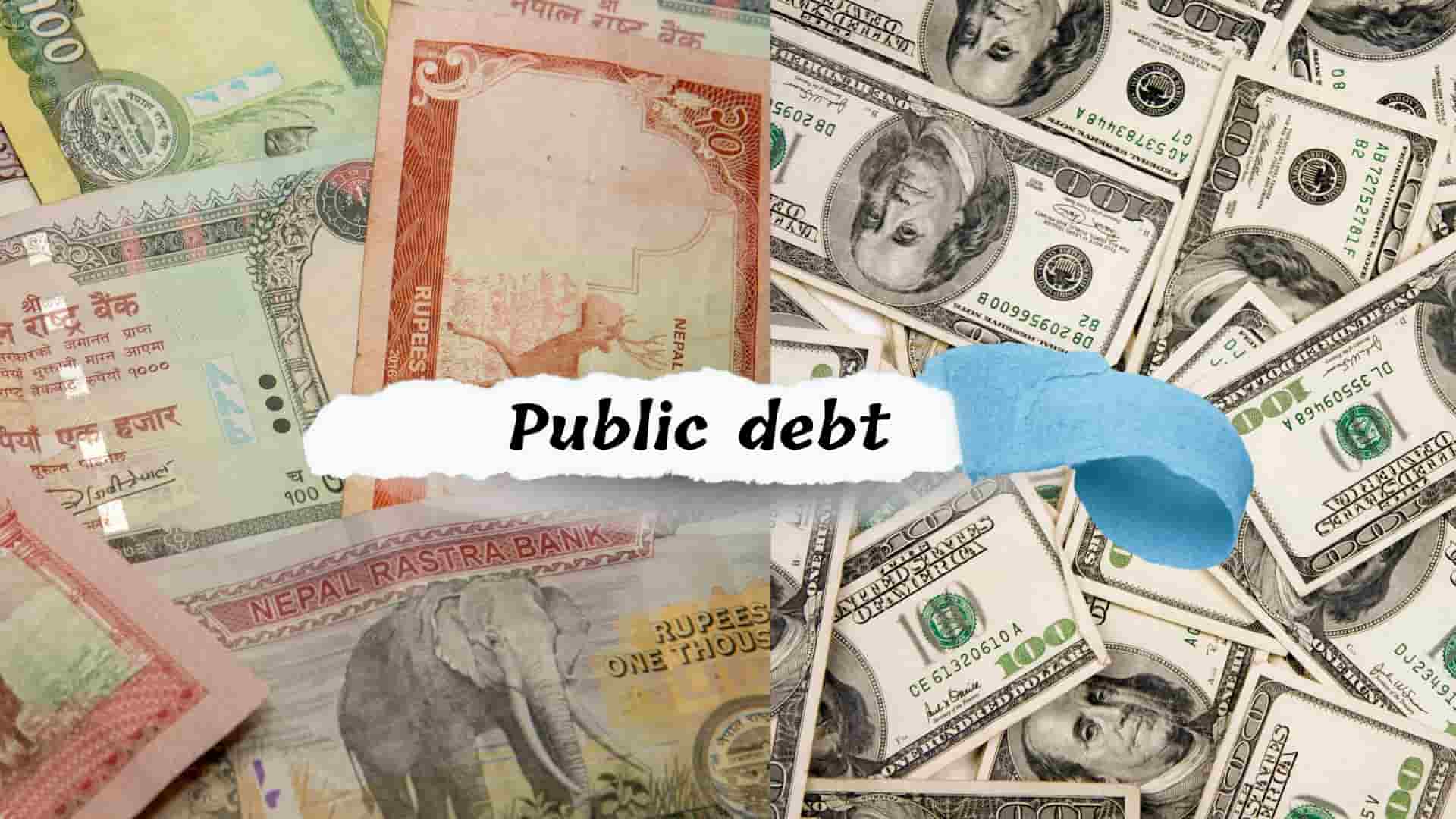
Nepal’s public debt declined slightly during the first four months of the fiscal year 2026/27, but the reduction was largely driven by the appreciation of the Nepali rupee against foreign currencies rather than any significant improvement in the government’s borrowing position.
According to the Public Debt Management Office (PDMO), outstanding public debt stood at NRs 2.975 trillion by mid-November 2026, down from NRs 2.9817 trillion at the end of FY 2025/26. This represents a decline of NRs 6.58 billion.
However, the government borrowed NRs 153.85 billion during the review period and repaid NRs 117.32 billion in principal, which should have increased outstanding debt by NRs 36.53 billion.
The difference was offset by exchange-rate gains. The appreciation of the Nepali rupee reduced the rupee value of external debt by approximately NRs 43.11 billion, more than compensating for the additional borrowing.
The US dollar’s selling rate declined from NRs 154.32 at the end of the previous fiscal year to NRs 147.88 in the review period, reducing the amount of Nepali rupees required to account for foreign currency liabilities.
Nepal’s external debt is denominated in several currencies, including the US dollar, Special Drawing Rights (SDR), Japanese yen and Chinese yuan. SDR accounts for the largest share, at 72.63%, while the US dollar represents 19.53% of external debt.
The trend reverses the situation in FY 2025/26, when the depreciation of the Nepali rupee increased the reported value of external debt by approximately NRs 167 billion. Combined with NRs 135 billion in additional borrowing, the exchange-rate impact pushed total public debt up by nearly NRs 300 billion.
Meanwhile, the government has already mobilised 23.37% of its annual borrowing target of NRs 658.28 billion. Of the NRs 153.85 billion raised by mid-November, NRs 125 billion came from domestic borrowing and NRs 28.85 billion from external sources.
The debt-servicing burden remains substantial. The government spent NRs 140.94 billion on principal and interest payments during the first four months, equivalent to 33.73% of its annual allocation of NRs 417.88 billion. Interest payments alone amounted to NRs 23.62 billion.
As of mid-November, public debt accounted for 45.08% of Nepal's GDP, with external debt representing 52.93% of the total and domestic debt accounting for 47.07%.
Nepal's public debt has more than doubled from NRs 1.43 trillion in FY 2019/20, raising concerns about the effectiveness of borrowing and the government’s growing repayment obligations.
The National Natural Resources and Fiscal Commission has urged the government to avoid using domestic borrowing for recurrent expenditure and prioritise productive investments that generate employment, strengthen economic activity and expand future revenue.
Read More Stories
Trade deficit widens to NRs 669 billion despite 43% surge in exports
Nepals export performance has improved significantly in the first four months of the...

The changing economics of gold: Why are prices falling, what lies ahead
Gold reached historic highs on January 29, 2026, with international spot gold climbing...
NEPSE drops 10.9 points, ending three-day winning streak
The Nepal Stock Exchange (NEPSE) declined by 10.90 points (0.41%) on Thursday, closing...