What we do is costly! Your support will help us dig more stories.
Yes, I'm Interested!Ignorance isn't always bliss | Don't stay foolish.
Keep informed | Read our news and analysis.
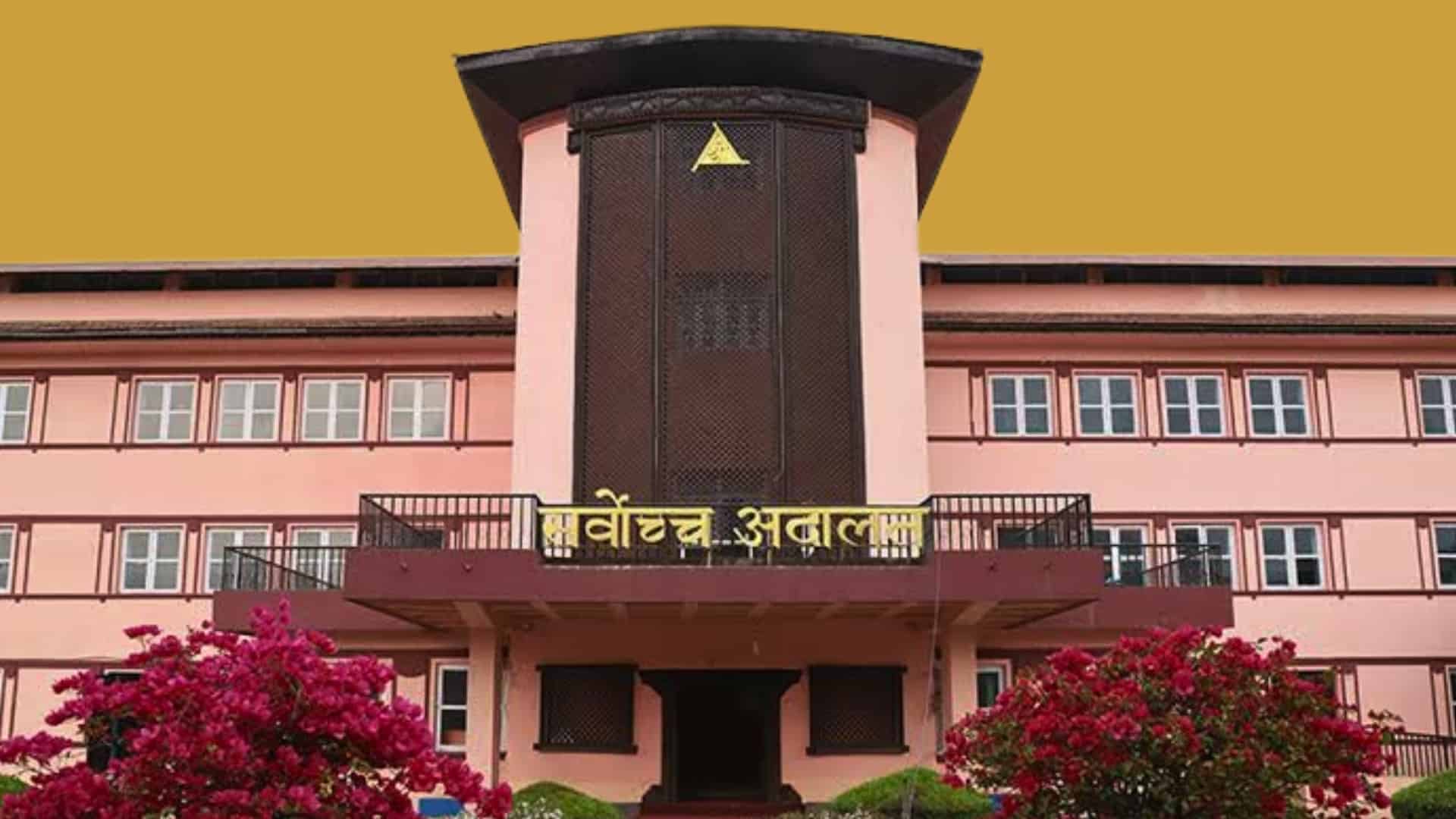
The Supreme Court has ruled that lawmakers cannot be given discretionary control over public funds to select, allocate or implement development projects in their electoral constituencies, holding that such arrangements violate the constitutional separation of powers and amount to a serious deviation from legislative authority.
In a detailed judgment in a case registered on June 11, 2024 concerning a proposed constituency development fund in Madhesh Province, a division bench of senior-most Justice Sapana Pradhan Malla and Justice Sunil Kumar Pokharel said lawmakers’ constitutional roles are limited principally to legislation, oversight and representation. Direct involvement in project selection, budget allocation and implementation, it said, would take lawmakers into the domain of the executive.
The petition was filed challenging an alleged decision of the Madhesh Province Cabinet to provide development plans worth NRs 50 million to each directly elected provincial assembly member and NRs 15 million to each proportional-representation member for projects in their respective constituencies.
In December 24, the court, however, dismissed the writ petition on procedural grounds because it could not establish that the Madhesh Province Cabinet had actually taken the decision alleged by the petitioner.
Because the challenged decision itself could not be established, the court said there was no basis to issue an order quashing it.
But rather than stopping there, the bench undertook an extensive examination of whether lawmakers could constitutionally be given such powers in the first place.
Legislature cannot assume executive functions
The Supreme Court said Nepal's constitutional system is based on the separation of state power among the legislature, executive and judiciary, with checks and balances between them.
At the federal and provincial levels, Parliament and provincial assemblies are primarily responsible for making laws and overseeing the executive. The court identified three core parliamentary functions: legislative, oversight and representative.
Those functions, it said, do not include directly implementing development programmes.
The court drew a distinction between Parliament's power to approve the government's budget and a lawmaker's personal authority to spend public money.
While Parliament has a constitutional responsibility to approve public expenditure and scrutinise how the executive uses public funds, that does not mean individual lawmakers can themselves select projects and spend the approved funds.
Allowing lawmakers to make development plans, allocate funds at their own discretion and implement those plans would, according to the judgment, undermine the constitutional system of checks and balances.
“Those who approve the budget cannot also spend it”
The court warned that giving lawmakers direct control over development funds would create a serious conflict of interest.
Lawmakers approve budgets and subsequently scrutinise government expenditure. If they themselves become involved in selecting and implementing projects, they could end up monitoring expenditure in which they were personally involved.
Such an arrangement, the court said, would be contrary to the principles of natural justice and could compromise the independence of parliamentary oversight.
The judgment stressed that the legislature's role is to question government decisions, examine expenditure, assess implementation and hold the executive accountable, not to replace the executive in carrying out those functions.
Constituency is an electoral unit, not a development unit
The court also rejected the notion that an electoral constituency can be treated as an administrative unit for development delivery.
According to the judgment, the “constituency” contemplated by the Constitution is essentially a territorial unit created for political representation. It is not an independent administrative or service-delivery unit.
The court referred to comparative constitutional jurisprudence, including a decision of Kenya's Supreme Court, which similarly treated a constituency as an electoral unit rather than a mechanism for delivering government services.
The implication for Nepal is significant: the fact that a lawmaker is elected from a particular constituency does not, by itself, give that lawmaker an executive mandate to administer development projects in that area.
Local development belongs to government institutions
The court further linked the issue to Nepal's federal structure.
The Constitution distributes state power among the federal, provincial and local governments and gives local governments important authority over local development and planning.
Against that constitutional framework, the court said, giving federal or provincial lawmakers separate funds to implement local infrastructure projects could encroach upon the jurisdiction of local governments.
Development projects, it said, should be implemented through established governmental and administrative institutions rather than through individually controlled funds placed at the disposal of lawmakers.
The judgment warned that constituency funds could create parallel structures, duplicate responsibilities and weaken the institutional autonomy of local governments.
Lawmakers can identify needs, but not control the money
The court examined international practices to distinguish between a lawmaker's representative role and an executive role.
It referred to India's Members of Parliament Local Area Development Scheme, noting that Indian lawmakers may recommend development projects but do not themselves exercise direct financial or executive authority over the funds.
The court also referred to an Indian Supreme Court ruling which treated lawmakers' role in such schemes as essentially recommendatory, while leaving project approval, implementation and expenditure to executive authorities.
The principle, according to the Supreme Court, is that lawmakers may raise the needs of their constituencies and recommend priorities, but the actual execution of projects must remain with the competent executive authorities.
Implementing laws is the executive's responsibility
The judgment placed particular emphasis on the point at which legislative authority ends and executive authority begins.
The legislature makes laws. Once laws and budgets have been approved, their implementation belongs to the executive, subject to parliamentary oversight.
The court referred to comparative jurisprudence from the Philippines, where courts have held that allowing legislators to participate directly in implementing or enforcing laws can violate the separation of powers.
Applying the same constitutional principle, Nepal's Supreme Court said lawmakers cannot enter the implementation stage merely by establishing constituency development programmes under another name.
Discretionary funds raise conflict-of-interest concerns
The court also considered the issue from the perspective of constitutional morality.
Members of Parliament are expected to exercise financial oversight over the executive and public funds. If the same lawmakers become direct allocators and users of those funds, the court said, the arrangement creates an inherent conflict of interest.
A lawmaker who selects a project, allocates money and participates in implementation would potentially be required to scrutinise the same project and expenditure later in the capacity of a legislator.
The court said this could weaken accountability, financial discipline and institutional integrity.
The ruling also raises equality concerns
The judgment additionally considered the distinction between directly elected and proportional-representation lawmakers.
The proposed Madhesh scheme would have allocated substantially larger amounts to directly elected members than to proportional-representation members.
The court noted that such differentiation could raise questions under the constitutional guarantee of equality, particularly because Nepal's proportional-representation system has been an important mechanism for ensuring representation of women, Dalits and other historically underrepresented communities.
Although the court did not need to decide that issue conclusively because the alleged Cabinet decision itself was not established, it included the issue within its broader constitutional analysis of constituency development funds.
Development funds could weaken the role of Parliament
The court also expressed concern that lawmakers' involvement in small development projects could divert them from their primary parliamentary responsibilities.
Instead of concentrating on legislation, national policy and scrutiny of government, lawmakers could become involved in the selection of local roads, buildings, irrigation projects, drinking-water schemes and other small infrastructure projects.
The court stressed that lawmakers are representatives and policymakers, not contractors, project managers or distributors of state resources.
It also warned that discretionary constituency funds could encourage patronage politics by linking electoral support to the distribution of public resources.
Court issues warning for future budgets
The most consequential part of the judgment is the court's direction for the future.
Although the Madhesh Province petition was dismissed because the alleged Cabinet decision could not be verified from the official record, the court made clear that the procedural dismissal does not provide constitutional legitimacy to constituency development funds.
The court said the constitutional principles explained in the judgment must guide future budget formulation and government programmes.
Read More Stories
Inside Nepali Congress’s 15th General Convention
The Nepali Congress began debating its political and organisational direction for the next...

NEPSE continues downtrend, sheds another 20 points, turnover drops to NRs 3.27 billion
The stock market extended its decline on Monday, with the Nepal Stock Exchange...
National Medical College residents’ protest widens into scrutiny of PG programme
A dispute between postgraduate resident doctors and the administration of National Medical College...