What we do is costly! Your support will help us dig more stories.
Yes, I'm Interested!Ignorance isn't always bliss | Don't stay foolish.
Keep informed | Read our news and analysis.
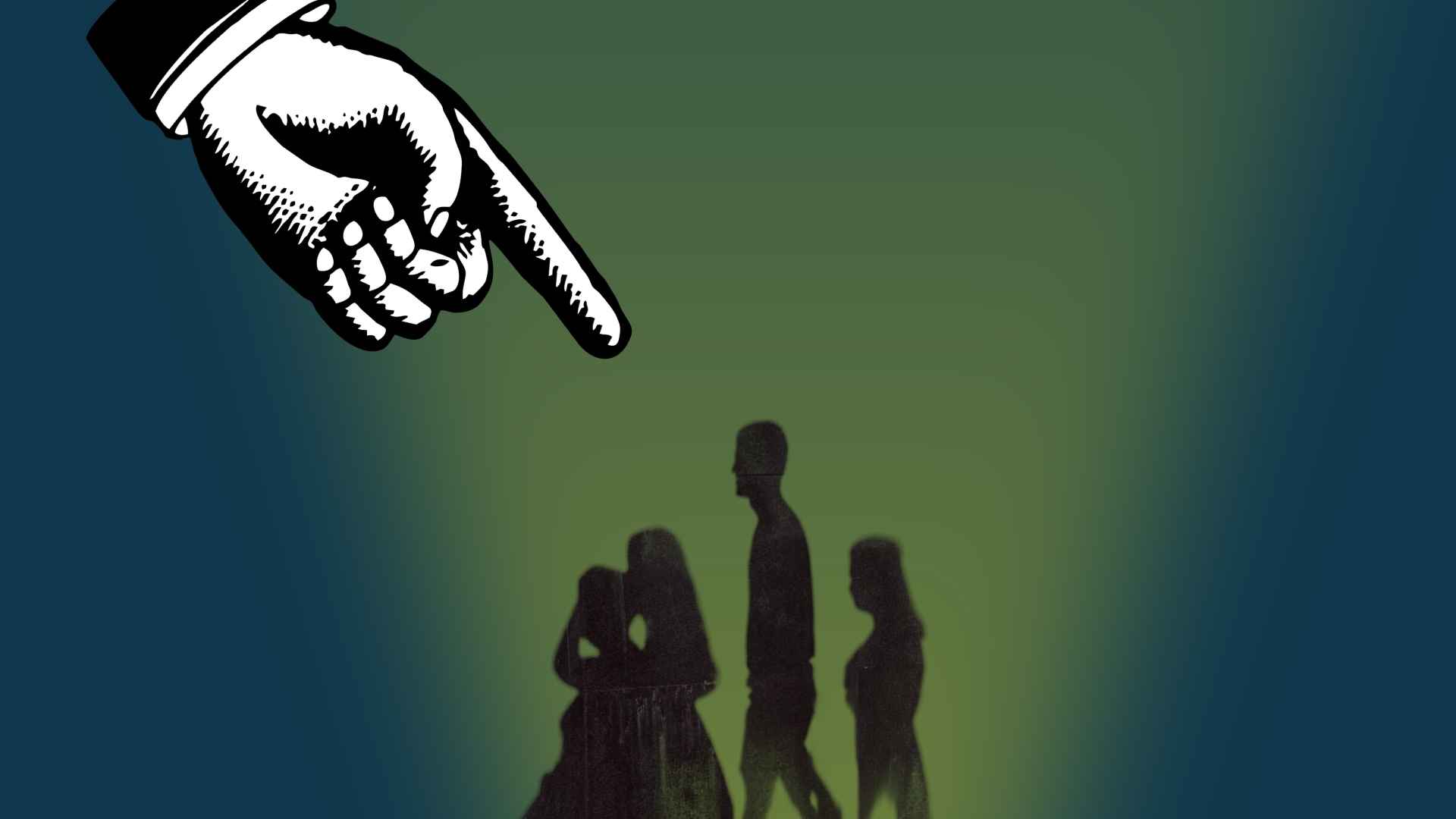
“A nation should not be judged by how it treats its highest citizens, but its lowest ones.” The quote from Mandela poses a serious litmus test for Nepali society on metrics of progress, poverty agenda and merit. This is an unusual and rare literary occasion to examine the state's judgment on citizens at lowest levels.
The attitudes and treatment of the state towards the poor is shaped by the general attitude of voters in the country and reflected in government. Government policies and decisions are often reflective of the prevailing ideas of the population. Low income people occupy a significant space in society without formal and meaningful participation in politics. The poor of the nation can either receive too much or too little attention. In both cases, they expose the poor population to large political discussions without their consent. As such, the poor have less political autonomy due to the lack of representation in governance.
Around 20% of Nepal’s population live below the poverty line. While the recent wealth disclosures of politicians in April reinforced public perceptions of elitist and ruling social class. Daily livelihood decisions affecting low-income families are made by people with no lived experiences of their reality. Politics for the poor, even in democratic processes, can feel hierarchical and authoritative. The political climate may also be shaped by governments that blame poverty on the poor.
In April, around 15 days before PM Balen Shah began his eviction campaign, Home Minister Sudan Gurung, quoted the cliché, later standing as a prophecy to the state’s treatment of poverty. Gurung said, “being born poor is not your fault, but dying poor is.” The statement was tone-deaf, failing to consider structural dimensions of material deprivation for social mobility. The technique had one intention, blame the poverty on the poor. The particular technique shifts responsibility for poverty eradication from the government to the low-income population themselves.
Many governments widely use the narrative promoting an anti-poor climate where poverty is treated as a consequence of human choice. Some political climates can discourage poverty as phenomena of material and economic deprivation on purpose. Such an anti-poor agenda is purposefully set by governments to shift the housing crisis, rent problems and unemployment to the fault of the public. The reflection and changes are directed outwards.
Can the government be solely responsible for solving state poverty? No. The government is, however, responsible for ‘policy windows’. Policy windows are brief, viable and ripe times where policy can solve problems through interventions. During a government tenure, many policy windows especially may emerge for low income individuals and marginalised groups. However, the governments may choose to close these windows to shift their accountability. In the current context, the policy windows appear to be neglected, shut or demolished on purpose. The actions and policies of the current government are reflective of similar choices and policies that reflect an anti-poor sentiment.
Where does anti-poor sentiment come from?
The sudden anti-poor sentiment did not fall from the sky. Emotions such as strong hostility towards one economic group is not natural. Social media comments are increasingly filled with arbitrary responses, mockery and hatred to critical situations such as self-immolation and forced loss of habitat. The hatred has been cultivated in a lab grown environment through propaganda, algorithmic trends and populist politics. It stems from and is sustained by encouragement, support and celebration of the rest of the population.
In his influential work, Agendas, Alternatives, and Public Policies (1984), political scientist John W. Kingdon argued that the general political mood of a nation affects public policies. What Kingdon argued in context of a relatively wealthy nation applies to Nepal’s public. Over the past few decades, it has experienced significant progress in poverty reduction alongside the expansion of its middle class. The proportion of the population living in poverty declined from approximately 42% in 1996 to 20% in 2023, while the middle class has grown substantially during the same period.
As the middle class grows, the population by standard expectations should act with benevolence. In Nepal, however, resentment towards people who haven’t acquired social mobility is visible and vocal. The said empowerment of the middle class, considered to be the backbone of a stronger economy, has instead set a strong projection of hate towards the low-income families. The poor, both by people and government, are led in a situation where they are encouraged to accrue wealth and move upwards while simultaneously facing dispossession and public vilification.
When landless people were labeled as ‘Hukum-basis’, the discourse reflected both resentment and envy. Many people were concerned on how the poor could afford rent or earn above what they expected while high earners were renting legally. The discourse shifted from questions of land rights and encroachment to ‘why can’t we’ and scrutinising the poor themselves.
The distinction between middle and upper class against the poor class has become a powerful political narrative. The former is often associated with legal, formal and civilised in comparison to landless communities, considered as encroachers, illegal and uncivilised. It asks a serious question: what is the basis of legitimacy?
The country has often witnessed situations where people accused of serious crimes, including corruption and violence have continued to hold social or political influence, while marginalised groups face intense scrutiny. Why are landless people expected to prove their moral fitness when discussing poverty and wealth. Are we looking for answers for wealth in the wrong social class while wealthier groups are rarely questioned about the social systems that enable extreme levels of inequalities?
In contrast, conditions of the holding centres and the treatment of people inside the centres are reported to be below acceptable living standards, with people surviving on noodles and lacking education facilities. Even the language used reflects this anti-poor sentiment. The home of the poor is the holding centre, instead of resettlement homes, while the residence of others as homes. The languages such as encroachers, squatters, Hukumbasis and holding centers are derogatory and dehumanising, many of us using them unconsciously.
The normalisation of state power
The anti-poor mood in Nepal has emerged rapidly. The 1997 movie Balidan had a beautiful song: “Garib ko chameli sundiney koi chhaina,” signifying collective solidarity against injustice. The song which commemorated the poor was played in rallies and political gatherings. Within a few decades, we have moved from Balidan to practising bulldozer urbanism. The representation of the poor has steadily diminished. The parliamentarians discuss pay raises, social media and big budgets. No substantive obligation has been made towards Sustainable Development Goal 1: ending poverty.
The problem with state-inflicted violence as soft power is not new. We saw a massive crackdown based on state power in September last year. The incident has left many scarred by police brutality. After 10 months and a new government, the police continue to use unjustified force towards the public, mainly vulnerable communities.
Majid Ansari, a lawyer advocating for landless people’s right inside holding centres, faced intimidation, detention and injuries from police personnel. What unfolded against Ansari raises serious questions about due process in Nepal. The right to free speech and protection from state violence are fundamental liberties in any democracy. The federal democratic republic of Nepal suppressing criticism is an early warning of a shift towards a less democratic republic. The state has repressed and used force on multiple occasions to reinstate power. Now it plans to charge fines above the living means for minor traffic violations, which is not surprising. None of such practices have occurred in a legal vacuum.
The reaction of the population in support of such fascist tendencies is sinister and ominous. In April, crowds gathered at Tundikhel as the government worked on verifying identification of the landless community. What should have been a private and dignified administrative process became a spectacle, reflecting a broader erosion of empathy. Following such dishonor and public shaming, two people took their lives in the next few days.
The voyeurism that ensued towards the pain of others is a symptom of an anti-poor mood. The mood features heavy desensitisation towards the pain of others, and alienation from sympathy. This is not far from the truth for the current Nepali public, who are encouraging and aiding the anti-poor climate. This strong resentment will eventually be self-defeating to the watcher of the violence. A society that becomes indifferent to the suffering of its poorest citizens ultimately diminishes itself.
Soon the policies will haunt the middle classes. Only then, the political climate might shift. There is no overnight remedy for instilling sensitivity in the newly uplifted middle class. Until the brief revelation, we are in the mood for eliminating the poor, not poverty. The policies are supporting it, and people are clapping. So far, the anti-poverty campaign has removed homes of 2,600 families in the Kathmandu valley and accounts for three deaths in total. For a nation to progress and prosper, a selective preference towards high income individual curving policies and punishment towards their needs is a direct renunciation from duties towards low-income and vulnerable groups. If the poor, even in punishment, are compelled to face humiliation, we need to reevaluate our value systems.
Read More Stories

Nepal needs to repeat to brand itself
Last year Nepal's goods exports jumped 81.8% to NRs 277.03 billion. That is...

Banking stocks gain momentum as dividend season begins
Dividend announcements by banks and financial institutions (BFIs) for fiscal year 2025/26 have...
Nepal’s challenge of building strong democratic institutions
Over the past few decades, institutional dysfunction and massive dissatisfaction with political establishments...