What we do is costly! Your support will help us dig more stories.
Yes, I'm Interested!Ignorance isn't always bliss | Don't stay foolish.
Keep informed | Read our news and analysis.
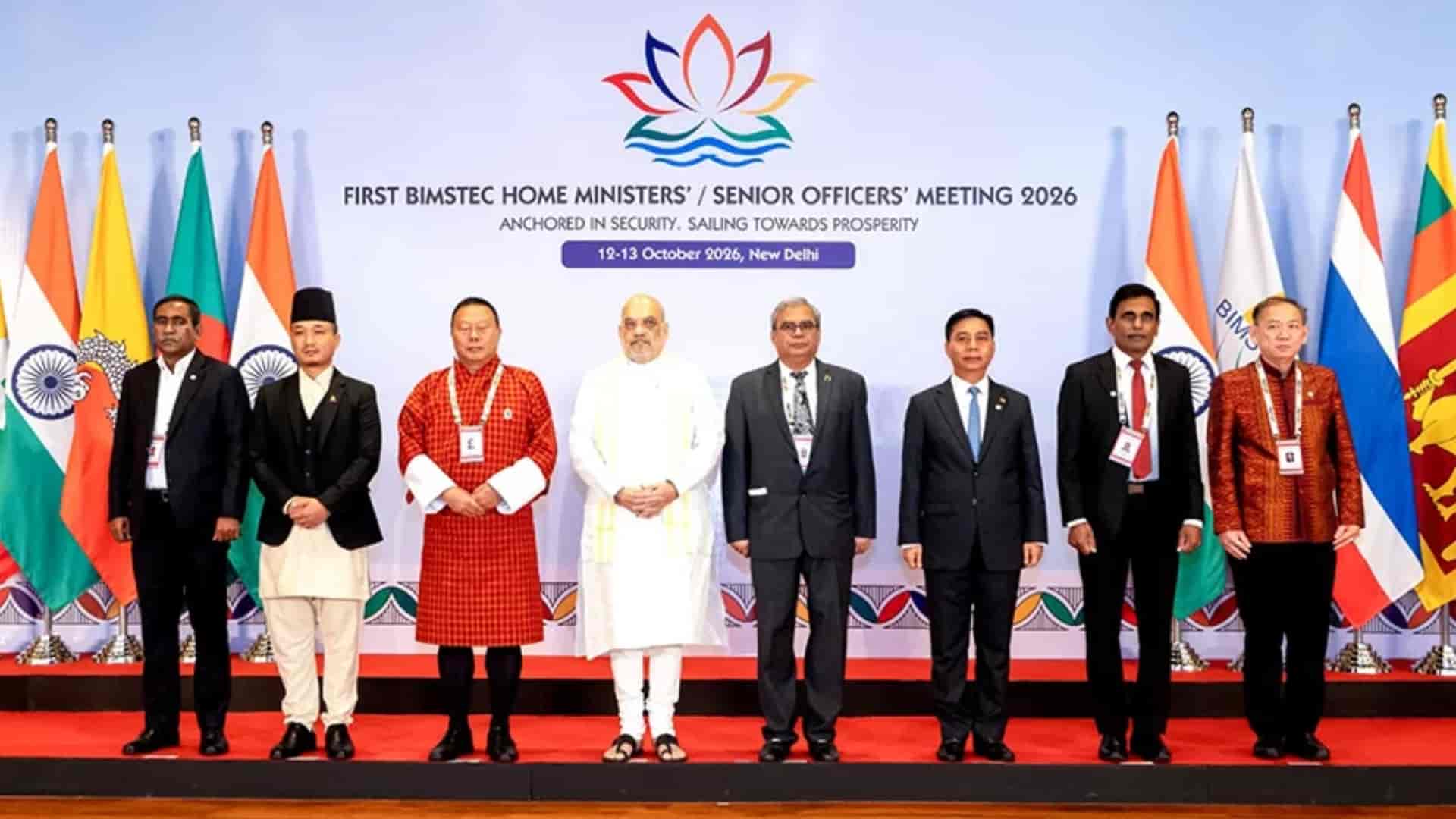
Home Minister Sudan Gurung has proposed a regional disaster preparedness and response framework under the Bay of Bengal Initiative for Multi-Sectoral Technical and Economic Cooperation (BIMSTEC), including a joint task force that could be mobilised across the region.
Speaking at the first BIMSTEC Home Ministers’ Meeting in New Delhi on October 13, Gurung said recent floods in Nepal had highlighted the need for stronger regional coordination to address climate-related disasters.
He proposed a task force capable of responding to emergencies “from the mountains to the sea”, according to media reports. Gurung cited flooding in the Bhotekoshi, Manang-Mustang and Budhigandaki areas as examples of the risks facing the region.
The proposal comes as Nepal continues to face recurring floods and landslides that damage infrastructure, displace communities and disrupt transport links. Regional cooperation could strengthen early warning systems, emergency information-sharing, rescue operations and the mobilisation of assistance when disasters overwhelm national capacity.
However, the proposed task force has not been established through the meeting’s formal declaration. The Delhi Declaration, adopted by home ministers from all seven BIMSTEC member states on October 13, focuses primarily on regional security, counterterrorism and transnational crime.
Strengthening regional security
The inaugural meeting of home ministers brought together representatives from Bangladesh, Bhutan, India, Myanmar, Nepal, Sri Lanka and Thailand. The gathering marked a step towards institutionalising security cooperation under BIMSTEC, established in 1997.
The Delhi Declaration calls for stronger cooperation against terrorism, violent extremism, drug trafficking, human trafficking, transnational organised crime, cybercrime, money laundering, terrorist financing and the illicit smuggling of arms.
It also highlights the growing use of technology by criminal networks to facilitate human trafficking and force victims into online fraud and scam operations. The declaration calls for cooperation among countries of origin, transit and destination, alongside a victim-centred approach that respects the rights of trafficked people.
Member states have called for the effective implementation of existing regional agreements, progress on legal instruments concerning extradition and the transfer of sentenced persons, and further work towards a convention against human trafficking.
The declaration also emphasises specialised training, institutional capacity-building and information-sharing among law enforcement agencies. It calls for regular meetings of home ministers and follow-up through the Joint Working Group on Counter-Terrorism and Transnational Crime.
Disaster management remains a challenge
Gurung’s proposal comes as BIMSTEC members seek to improve coordination on disaster management alongside their security agenda.
At a meeting of BIMSTEC senior officials of home ministries on October 12, officials reviewed progress in regional security cooperation and initiatives that included plans of action on disaster management, human trafficking, drug control and illicit financial flows.
For Nepal, a regional disaster-response mechanism could improve preparedness for emergencies affecting communities near international borders and strengthen the exchange of technical expertise, early warning information and rescue capabilities.
But translating Gurung’s proposal into an operational framework would require agreement among member states on responsibilities, financing, mobilisation procedures and coordination with national disaster management agencies.
No operational arrangements for the proposed task force have been confirmed in the published accounts reviewed for this report. Its implementation will therefore depend on further discussions and concrete commitments from participating governments.
Gurung raises trade barriers with India
On the sidelines of the BIMSTEC meeting, Gurung held bilateral talks with Indian Home Minister Amit Shah on security cooperation, border management, transnational crime and disaster preparedness.
Gurung also raised technical barriers faced by Nepali industrialists and traders seeking access to the Indian market, particularly certification requirements imposed by the Bureau of Indian Standards (BIS).
According to Nepal’s Ministry of Home Affairs, Shah responded positively to Nepal’s concerns. The available account does not indicate that a specific exemption or agreement resolving the certification issue was reached.
The issue is significant for Nepali businesses seeking to expand into India, Nepal’s largest trading partner. Any improvement, however, will depend on follow-up discussions and action by the relevant authorities.
Gurung also met BIMSTEC Secretary General Indra Mani Pandey, who briefed him on the organisation’s ongoing activities and priorities. He returned to Nepal on October 14 after his three-day visit to India.
The visit has placed regional disaster preparedness alongside security cooperation as an issue for Nepal’s engagement with its BIMSTEC partners. Whether the proposed task force advances beyond a ministerial call will depend on the willingness of member states to agree on a practical mechanism backed by clear responsibilities and resources.
A brief history of BIMSTEC
Established through the Bangkok Declaration, Bangladesh, India, Sri Lanka and Thailand formed a regional grouping to promote economic cooperation among countries bordering the Bay of Bengal.
Initially known as BIST-EC, the grouping expanded with Myanmar’s admission in 1997 and Nepal and Bhutan in 2004, becoming a bridge between South and Southeast Asia.
While its early agenda focused on trade, investment, technology, energy, transport, tourism and fisheries, its objectives gradually expanded to include poverty alleviation, public health, environmental protection, climate change, connectivity and regional security.
The establishment of a permanent secretariat in Dhaka in 2014 and the adoption of the BIMSTEC Charter in 2022, which entered into force in May 2024, strengthened its institutional framework.
Read More Stories

Market rises for sixth straight session, NEPSE closes at 2,625
The stock market extended its rally for a sixth consecutive trading session on...

Kathmandu Valley residents fear air pollution but lack information to act, survey finds
More than four in five Kathmandu Valley residents consider air pollution a health...

NEPSE on a rising spree pre-Dashain
The Nepal Stock Exchange (NEPSE) rose by 21.33 points (0.82%) on Wednesday, closing...