What we do is costly! Your support will help us dig more stories.
Yes, I'm Interested!Ignorance isn't always bliss | Don't stay foolish.
Keep informed | Read our news and analysis.
Youth protests in India | Electoral Transparency | Voter Registration | CJP Protests
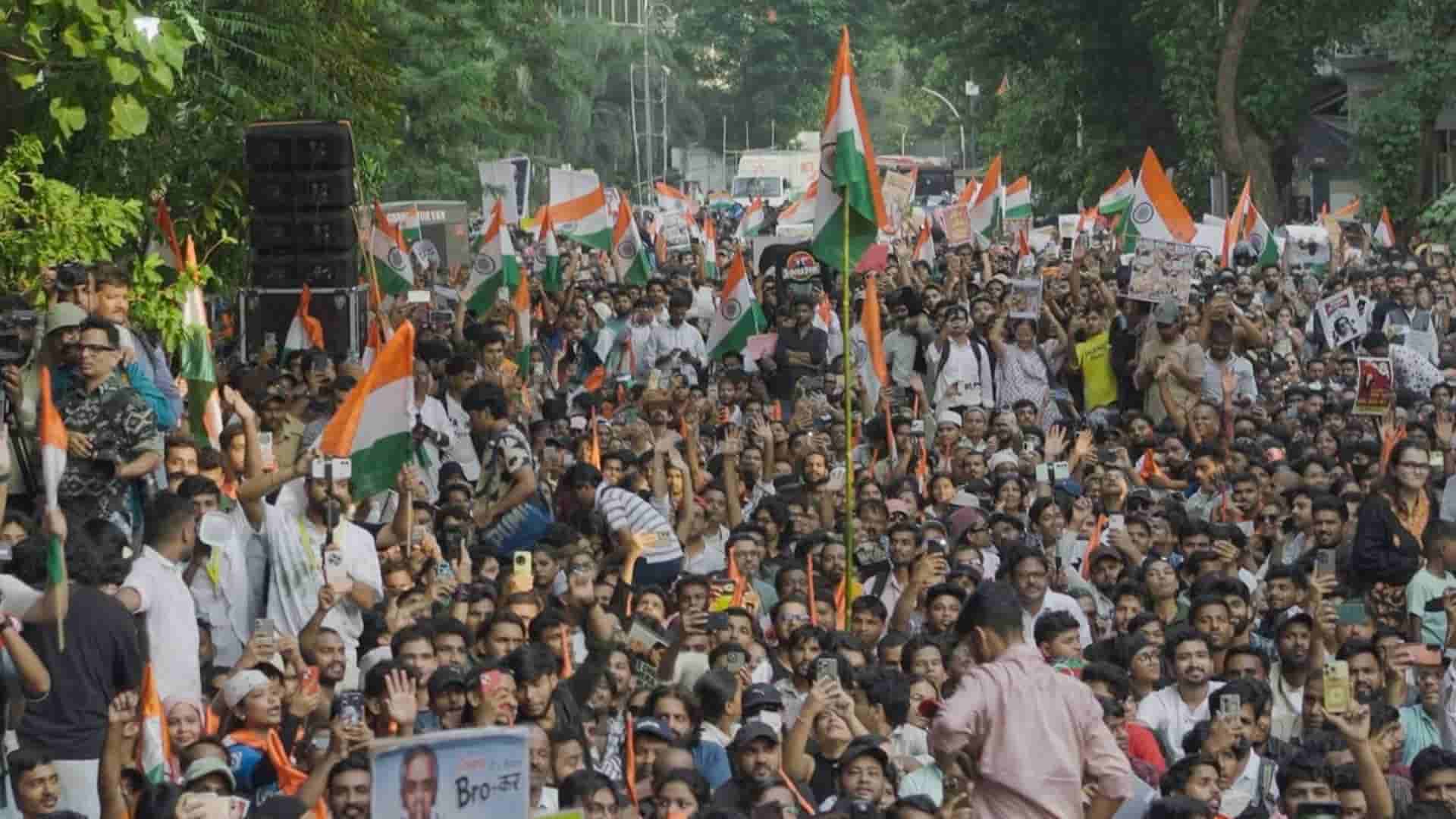
A dispute over voter registration in India reached the Supreme Court on Monday as opposition parties marched in the capital to challenge a controversial revision of electoral rolls and demand the resignation of Chief Election Commissioner Gyanesh Kumar.
The march, organised under the opposition INDIA bloc, marked an escalation in demonstrations that have brought together opposition lawmakers, student groups and supporters of the youth-led Cockroach Janta Party (CJP). Authorities restricted traffic and closed six metro stations in central Delhi ahead of the mobilisation, Reuters reported.
The immediate dispute centres on the Special Intensive Revision (SIR), an exercise by the Election Commission of India to verify and update electoral rolls. The scale of the deletions and concerns about the process have prompted opposition parties to question whether eligible voters risk losing their right to vote.
Media reports said more than 130 million names were removed from electoral rolls during the verification exercise. The reported categories include about 28 million entries for deceased voters, 63 million for people who had relocated and 30 million for people who could not be traced. The overall figure also includes duplicate entries.
The number of deletions has become a central point of contention, but it does not establish how many eligible voters may have been wrongly excluded. Opposition parties allege that the process disproportionately affects minorities and other communities less likely to support Prime Minister Narendra Modi’s Bharatiya Janata Party (BJP).
The Election Commission and the BJP reject allegations of political manipulation. They maintain that the revision is intended to remove duplicate and ineligible entries and that eligible voters whose names have been wrongly deleted can seek re-enrolment.
The controversy intensified after The Indian Express reported in September that Election Commissioners Sukhbir Singh Sandhu and Vivek Joshi had raised concerns internally about decisions involving voter-list revisions, registration procedures and digital systems. The newspaper reported that the commissioners had raised objections on at least 14 occasions over 10 months.
The reported disagreements have added to questions about the commission’s internal decision-making. They do not, however, independently establish that electoral-roll revisions were designed to benefit a particular political party.
On Monday, Congress leader Rahul Gandhi and other opposition leaders sought to take their concerns directly to Chief Justice of India Surya Kant. The chief justice reportedly declined their request for a meeting, advising them to pursue the matter through legal proceedings because related issues were already before the court.
The march followed a weekend of demonstrations led by the CJP, which has campaigned against Kumar over alleged irregularities in the revision process. The group emerged from an online initiative and subsequently mobilised supporters around issues including employment, education and government accountability.
On October 10, Delhi Police detained more than 2,000 protesters as authorities prevented demonstrators from gathering for a major rally. Indian media reported that CJP founder Abhijeet Dipke and other movement leaders were among those detained.
Security restrictions also affected public transport. The Indian Express reported that police initially sought closures at 57 Delhi Metro stations ahead of Saturday’s demonstration, but the Delhi Metro Rail Corporation ultimately shut entry and exit gates at 45 stations.
For Monday’s opposition march, the corporation announced closures at six stations from 6 am to 4 pm: Patel Chowk, Janpath, Rajiv Chowk, Mandi House, Central Secretariat and Barakhamba Road. Interchange facilities remained available at the affected stations, according to the corporation’s announcement reported by The Indian Express.
The restrictions and detentions have raised a parallel question about the limits of preventive policing during political demonstrations. Reuters reported that authorities deployed security personnel across central Delhi and warned of traffic disruptions as the opposition prepared to march towards the court.
The CJP has also sought permission for a further peaceful demonstration. Reports on Monday said that the movement had given authorities a 24-hour ultimatum to provide a date for a sanctioned protest, threatening to announce another mobilisation if its demand was not met.
The current dispute has its roots in a broader question facing election authorities: how to maintain accurate voter lists without excluding eligible citizens. Removing deceased, duplicate and otherwise ineligible entries is a legitimate administrative objective, but a verification process involving millions of records also requires accessible procedures for correcting errors and restoring valid registrations.
For people whose names have been removed, the consequences may extend beyond an administrative inconvenience if they cannot complete re-registration before an election. Establishing the extent of any wrongful exclusion requires evidence beyond the aggregate deletion figures, including information about appeals, reinstatements and the eligibility of affected voters.
With opposition parties now seeking judicial intervention and the CJP threatening further demonstrations, the dispute has expanded from a technical exercise in voter registration into a wider contest over electoral transparency and institutional accountability.
Read More Stories

Five missing as Gorkha floods destroy homes, damage bridges
Five people remain missing after a flash flood swept through settlements along the...
Houthi attacks on Saudi airports deepen regional tensions
Yemens renewed military offensive against Houthi rebels has escalated into a wider regional...

Market up by 4.01 points, turnover down to NRs 4.46 billion
The Nepal Stock Exchange (NEPSE) increased by 4.01 points (0.15%) to close at...