What we do is costly! Your support will help us dig more stories.
Yes, I'm Interested!Ignorance isn't always bliss | Don't stay foolish.
Keep informed | Read our news and analysis.
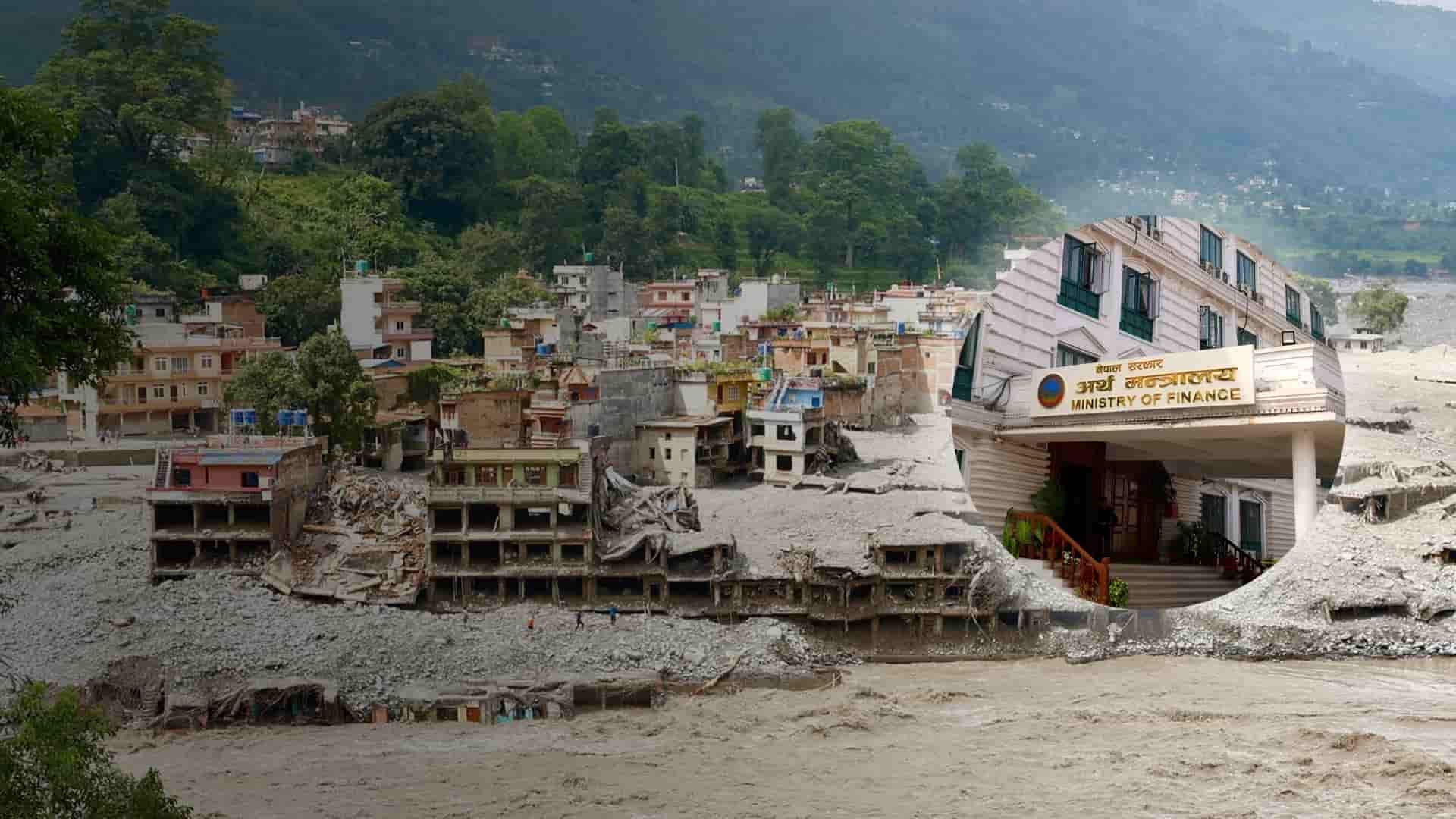
The government has approved a comprehensive relief and recovery package for industries, businesses and commercial establishments affected by the devastating Bhotekoshi floods, offering customs and tax concessions, loan restructuring, cheaper credit and faster insurance payments.
The Cabinet approved the package on Thursday following a proposal from the Ministry of Finance. The government has described it as the first phase of measures aimed at restoring businesses and economic activity disrupted by the floods.
Customs exemptions for damaged assets
Businesses whose commercial vehicles or freight carriers were destroyed beyond repair or swept away by the floods will be allowed to deregister the damaged vehicles and import replacements without paying customs duties.
Similar exemptions will apply to replacement imports of plants, machinery, tools and equipment that were completely destroyed. The replacement quantity cannot exceed the amount of equipment lost.
Importers whose goods had already been cleared and customs duties paid, but whose consignments were destroyed by the floods before reaching their destinations, will also receive relief. They will be allowed to import similar goods through any customs office within six months and adjust the customs duties previously paid against the replacement imports.
Tax relief and extended deadlines
Flood-affected taxpayers will receive additional time to file tax returns and pay taxes. Returns and taxes that would otherwise be due in September and October under Nepal’s VAT, income tax, excise duty and annual finance laws can be submitted and paid by November 11, 2026.
The government will also simplify the process for adjusting VAT claims related to damaged business assets.
Businesses will be permitted to deduct the full value of commercial assets completely destroyed by the floods as an expense for tax purposes. For partially damaged depreciable assets, repair and improvement costs will receive more flexible treatment when calculating taxable income for fiscal year 2026/27.
Individuals directly affected by the floods who file estimated income statements will receive a full income tax exemption for fiscal year 2025/26.
The government will also amend relevant laws and regulations to allow companies to count contributions made from their corporate social responsibility (CSR) funds to the Prime Minister’s Disaster Relief Fund during fiscal year 2026/27 as eligible CSR expenditure.
Provincial and local governments will be asked to provide temporary concessions on property taxes, business taxes, building permit fees and other local charges for businesses and properties directly affected by the floods.
Loan restructuring and cheaper credit
The government has directed Nepal Rastra Bank to introduce measures to ease the financial burden on flood-affected borrowers.
Borrowers whose goods imported through the Rasuwa customs point were damaged or destroyed will be eligible for loan restructuring or rescheduling, as well as extensions for principal and interest payments. Banks will consider the nature of the business and goods, the extent of the damage and insurance claims when providing the relief.
Flood-affected borrowers will also be allowed to restructure or reschedule their loans once, with banks and financial institutions permitted to extend the repayment deadlines for principal and interest.
For one year, all categories of flood-affected borrowers will receive a preferential interest rate. The applicable rate will be whichever is lower between:
Banks will also be allowed to provide additional loans to help businesses resume operations and protect jobs, with payments made directly to relevant third parties where appropriate.
Businesses seeking to replace flood-damaged commercial vehicles, transport equipment, machinery or other equipment will be eligible for financing based on the bank’s base rate plus the prescribed minimum premium. The government has also called for a review of the applicable loan-to-value ratio for such loans.
Faster insurance claims and advance payments
The Nepal Insurance Authority will introduce special measures to speed up insurance assessments and claim settlements.
Insurers will be permitted to deploy surveyors through a simplified process to assess flood-related losses more quickly. Policyholders filing flood-related claims will be eligible to receive advance payments of up to 50% of the estimated claim, based on preliminary assessment reports.
Reinsurers will similarly be required to provide insurers with advance payments of up to 50% of claims.
The Insurance Authority has also been instructed to ensure that insurers introduce simplified procedures for processing and settling flood-related claims. According to the NIA, the disaster has already triggered a claim of nearly 26 billion rupees.
Read More Stories

Stock market sees marginal gain as turnover rises
The stock market closed almost flat on Thursday, with the Nepal Stock Exchange...
Why are vacant local and provincial seats still waiting for elections?
When Balendra Shah resigned as mayor of Kathmandu Metropolitan City to contest the...

The ad that ran next to the body
Two days after the Bhotekoshi flood, a video circulated of a man trying...