What we do is costly! Your support will help us dig more stories.
Yes, I'm Interested!Ignorance isn't always bliss | Don't stay foolish.
Keep informed | Read our news and analysis.
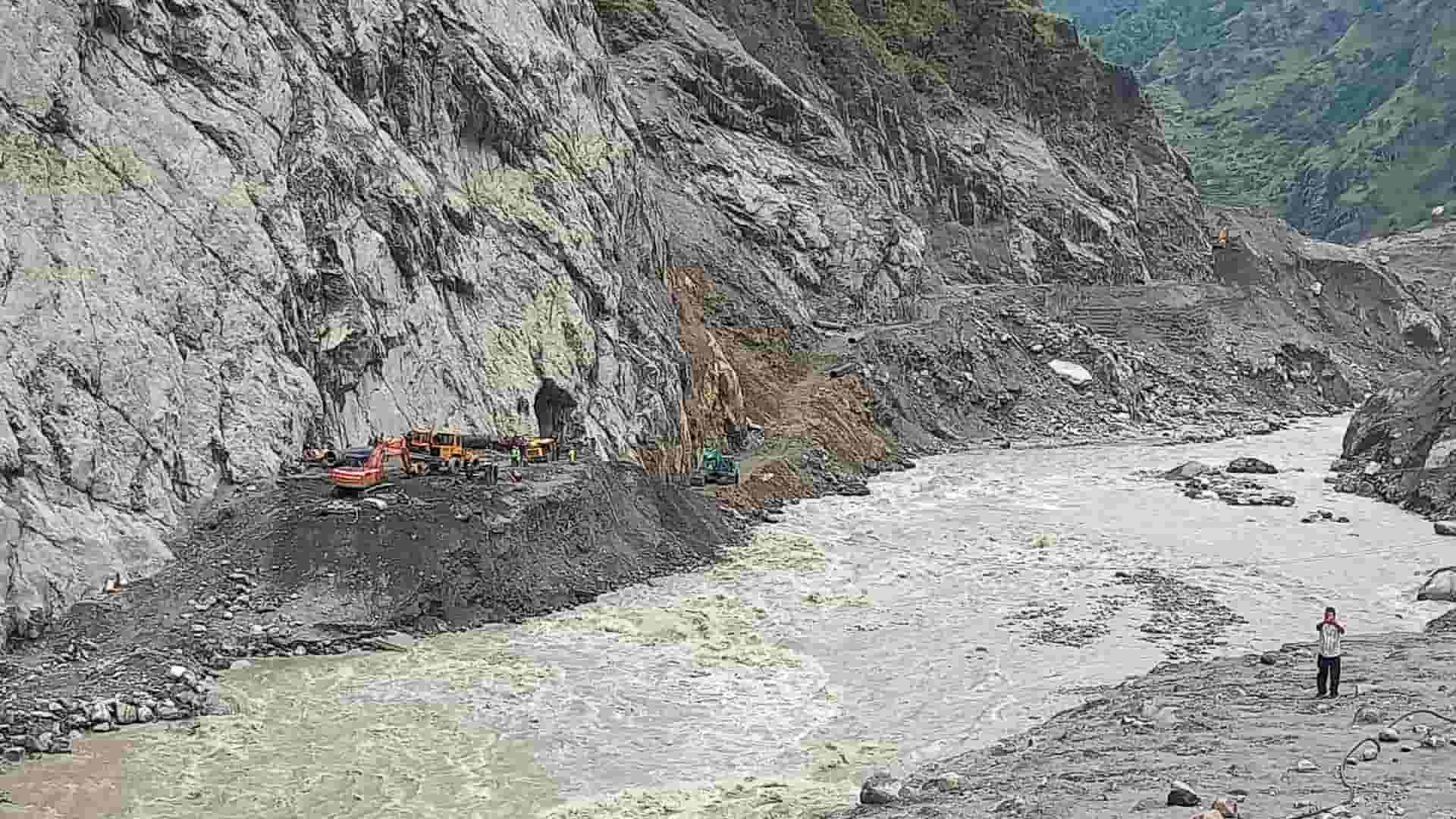
Search and rescue operations continued at six flood-hit hydropower projects in Rasuwa on Sunday, with difficult terrain, debris, flowing water and landslides continuing to hamper access to underground structures, according to the National Disaster Risk Reduction and Management Authority (NDRRMA).
Search and rescue operations at the 120 MW Rasuwagadhi Hydropower Project require heavy equipment to continue, however transporting them to the site remained difficult because of the geographical conditions, the NDRRMA said in its update issued at 7 pm on September 13.
A joint team comprising five Nepali personnel and four members of an Australian disaster assistance response team (DART) also conducted search operations and returned.
At the 22 MW Chilime Hydropower Project, rocky terrain has been blasted to facilitate the transport of heavy equipment to the tunnel, while an 85-metre access track to the site has been completed. Rescuers have removed debris from approximately 70 metres inside the tunnel.
At the 216 MW Upper Trishuli-1 project, water continued to flow out of the Audit-3 tunnel, increasing the risk of further entry.
A five-member Nepali Army team, accompanied by project representatives, previously searched up to 200 metres inside Audit-1 at Hakubesi but found nothing. On Sunday, a team comprising one Nepali Army personnel and nine Australian personnel conducted search and rescue operations at Audit-3. The search at Audit-3 remained ongoing.
At the 20 MW Langtang project, rescuers were clearing soil, rocks and boulders from an entrance leading towards the other side of the tunnel. The entrance was approximately 10 metres long, three feet wide and four feet high. Search teams entered the tunnel but did not find anything, while search and rescue operations continued.
At the 60 MW Trishuli-3A project, a landslide around the powerhouse’s tailrace tunnel following rainfall blocked the tunnel entrance. Teams worked to reopen the entrance while continuing search and rescue operations.
Excavation at the 37 MW Trishuli-3B project also reached significant depths but was yet to locate the building structure.
According to the NDRRMA, the excavation reached an elevation of 651 metres above sea level, while the river surface is currently at 653 metres. The building structure was still not found, while excavation continued.
The latest update highlights the continuing access challenges facing rescuers across the affected hydropower sites.
Read More Stories

Nepal needs to repeat to brand itself
Last year Nepal's goods exports jumped 81.8% to NRs 277.03 billion. That is...

Banking stocks gain momentum as dividend season begins
Dividend announcements by banks and financial institutions (BFIs) for fiscal year 2025/26 have...

Nepal’s challenge of building strong democratic institutions
Over the past few decades, institutional dysfunction and massive dissatisfaction with political establishments...