What we do is costly! Your support will help us dig more stories.
Yes, I'm Interested!Ignorance isn't always bliss | Don't stay foolish.
Keep informed | Read our news and analysis.
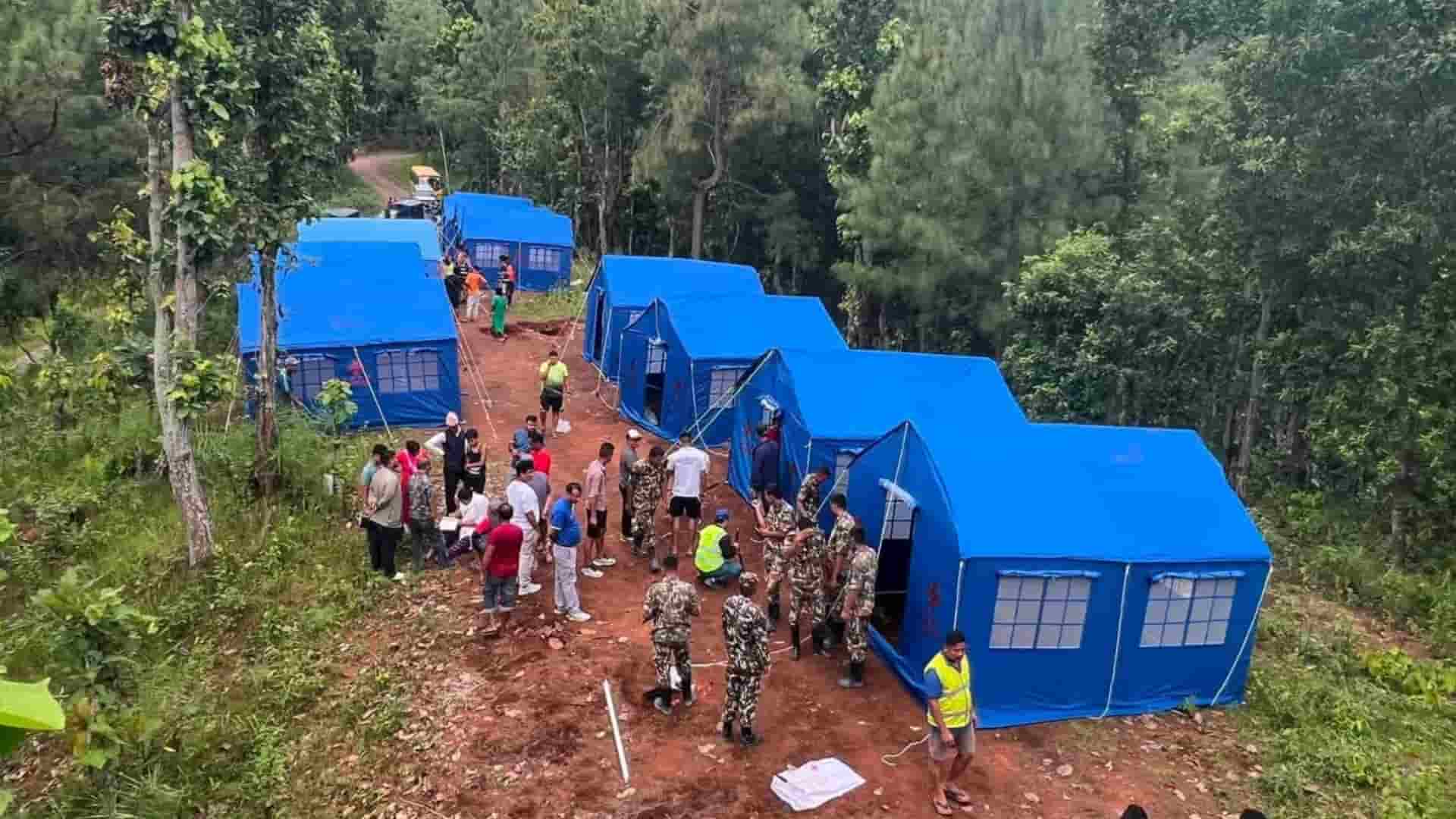
A month after the Bhotekoshi flood devastated settlements along the Bhotekoshi and Trishuli river corridors, the emergency has entered a new and more difficult phase.
The immediate search for survivors is gradually giving way to the recovery of bodies and human remains, identification of victims, temporary accommodation and the reconstruction of roads, bridges, homes and livelihoods.
But for thousands of survivors, the distinction between relief and recovery remains largely academic. Many are still living in temporary shelters and holding centres, while damaged roads and bridges continue to isolate communities from markets, schools and health services.
Police said on Wednesday that 1,454 bodies had been recovered from the flood-affected areas and that 4,718 people remained missing. Of the recovered bodies, 1,334 had undergone necessary procedures, including DNA sample collection, and had been managed, according to police. Search operations for those still missing are continuing.
The figures differ from those reported in earlier NDRRMA situation reports, particularly the number of missing persons, which it reported as 5,385 on Saturday, because the disaster’s casualty and missing-person registers have continued to be reconciled by different agencies.
The government is now preparing for a transition from a rescue operation to a longer recovery process.
The missing remain at the centre
For families whose relatives have not been found, the flood has not ended.
The recovery of bodies far downstream, sometimes hundreds of kilometres from where people were last seen, has made identification particularly difficult. Remains have been recovered across Rasuwa, Nuwakot, Dhading, Gorkha, Tanahun, Chitwan and the Nawalparasi districts.
DNA testing has therefore become central to the process.
As of September 30, the National Forensic Science Laboratory had received 1,796 samples linked to the disaster: 945 reference samples collected from relatives of missing people and 851 samples of bones and teeth recovered from unidentified human remains. The laboratory had obtained 1,552 DNA profiles, including 887 from relatives and 665 from human remains, while 243 samples were still being processed.
The laboratory has been receiving DNA samples from recovered remains and relatives of missing people since the disaster. The government has asked the closest available blood relatives, preferably parents or children, to provide fresh blood samples for comparison. Relatives elsewhere in Nepal can approach district police offices, while those living abroad can have their DNA profiled through an authorised laboratory in their country and send the profile to Nepal Police.
The system also applies to foreign nationals whose relatives remain missing.
Nepal Police has asked families abroad to submit DNA profiles, an INTERPOL DVI missing-person form and photographs so that recovered remains can be compared with reference samples.
The scale of the task has placed considerable pressure on Nepal’s forensic capacity. Earlier in September, laboratories had received more than 2,000 samples in a short period, far above their normal workload. Bodies that have decomposed after prolonged exposure to water can require DNA extraction from teeth or bones, making identification slower.
That means the conclusion of a search operation will not necessarily bring immediate closure to families.
A body may be recovered but remain unidentified. A person may be formally listed as missing while forensic teams continue to compare samples. And families may have to wait for identification before the state can provide a definitive answer.
Survivors are running out of patience with relief
For those who survived, the immediate priority has shifted from staying alive to rebuilding a life. The problem is that many of the physical links needed to do that no longer exist.
Roads and bridges were washed away across the affected districts, cutting settlements off from markets and essential services. In Rasuwa, residents of temporary shelters say they cannot return to work because the transport links to their villages have not been restored. At holding centres in Rasuwa, Nuwakot and Dhading, families are still waiting for permanent arrangements.
As of the latest reported figures, 805 people were staying in nine holding centres in Rasuwa, 183 in eight centres in Nuwakot and 121 in four centres in Dhading.
The government has approved monthly cash assistance for six months for displaced families in the three districts who arrange their own accommodation. Families of up to four members are eligible for NRs 15,000 a month, with NRs 2,000 for each additional member. Families without homes or arrangements for food and accommodation are to continue receiving relief based on need.
But the assistance is designed as a bridge, not a permanent solution. For displaced families, the larger question is what happens when the six months end.
Roads and bridges have become a recovery priority
In many communities, reconstruction begins with something more basic than a house: a road.
The government’s rapid damage and needs assessment estimated that the floods damaged 69 kilometres of roads, while 33 motorable bridges were washed away and four suffered partial damage. Of 64 suspension bridges assessed in the affected areas, 53 were damaged.
The consequences are already visible in farmers’ fields and local markets.
In Amachhodingmo Rural Municipality, for example, farmers have struggled to get vegetables to market because vehicles cannot reach the area. Local officials have warned that millions of rupees worth of cauliflower and beans could be lost. The municipality has had to rely on helicopters for some essential supplies.
The problem extends beyond agriculture.
Without roads, traders cannot restock shops, ambulances struggle to move patients, and the price of basic commodities rises. Local officials say restoring road connections has become more urgent than continuing relief deliveries by air.
Several local governments are also seeking temporary suspension bridges and tuins while permanent bridges are rebuilt. The government has estimated that rebuilding the transport network will require NRs 73.34 billion.
Housing presents a harder question
Rebuilding houses will not necessarily mean rebuilding them where they stood before August 26.
The flood destroyed or damaged 7,570 private homes, according to the government’s rapid assessment. Recovery of housing and essential services alone is estimated at more than NRs 103 billion.
But in some settlements, the flood altered the riverbanks and deposited large amounts of debris. Authorities have been examining whether areas destroyed by the flood remain suitable for habitation.
That creates a difficult policy question: whether to rebuild communities in place or relocate them to safer ground.
For displaced families, however, relocation is not simply a question of finding vacant land. It also involves access to roads, schools, markets, farmland, health facilities and existing social networks.
A settlement may be safer on a map but economically unviable if residents cannot continue farming, trading or working.
Schools and public services are still disrupted
The damage has also pushed recovery beyond houses and physical infrastructure.
The rapid assessment found that 19 schools serving 6,901 students in Rasuwa, Nuwakot and Dhading were affected. Eight were destroyed and another eight partially damaged. In Rasuwa, several schools remain closed, while authorities are trying to place displaced children in schools that remain accessible. The disruption is particularly severe for children who have lost parents or remain separated from their families.
The government has identified family tracing, reunification, temporary protection, psychosocial support, education, health and nutrition as priorities for children affected by the disaster. Its child-protection response has also included preparations for temporary protection facilities.
The government’s social protection response has extended beyond children. An official update reported that more than 5,500 people had received psychosocial first aid or counselling, while temporary shelter and protection measures were being coordinated for older people and other vulnerable groups.
The economic damage extends beyond destroyed homes
The flood has also disrupted the economic systems on which affected communities depend.
The government’s preliminary assessment estimates that the productive sector, including agriculture, businesses, trade and banking, will require about NRs 50.77 billion for recovery. Around 1,806 hectares of crops were damaged, along with approximately 4,800 commercial establishments and 17 bank branches.
For business owners who lost shops and stock, recovery also means dealing with debt. Some displaced traders and business owners have sought help with bank-loan repayments after losing their businesses in the flood.
The Nepal Insurance Authority has meanwhile introduced an abbreviated claims procedure for flood-affected policyholders in Rasuwa and neighbouring districts. Under the new arrangement, technically uncomplicated claims of up to NRs 500,000 can be settled without appointing a surveyor if sufficient evidence is available. Insurers can use photographs, videos, government records, financial statements and other credible documents when physical inspection is not possible.
The measure is intended to speed up one part of the financial recovery process.
Hydropower reconstruction will be a separate challenge
The flood also damaged a large share of the infrastructure that supports the national energy system.
The rapid assessment found that 13 hydropower projects with a combined generation capacity of 759 megawatts and five solar projects with 24 megawatts were affected. Damage to energy infrastructure, including the grid system, is estimated to require NRs 390.62 billion to restore.
The affected projects include Rasuwagadhi, Rasuwa-Bhotekoshi, Chilime, Langtang Khola, Upper Trishuli-1, Upper Trishuli-2, Upper Trishuli-3A, Upper Trishuli-3B, Mailung Khola and other projects along the Trishuli corridor. At several hydropower sites, the search for missing workers was also among the most difficult parts of the emergency response.
The eventual reconstruction of these projects will therefore have to proceed alongside the recovery of communities and transport infrastructure.
The bill for recovery is already in the hundreds of billions
The government’s Rapid Damage and Needs Assessment estimated that Nepal would need NRs 723.31 billion for reconstruction and recovery following the August 26 floods.
About NRs 473.57 billion, or 75%, is tied to infrastructure. The government estimated NRs 8.73 billion would be required for immediate relief and short-term reconstruction over six months, while long-term reconstruction could cost NRs 714.58 billion.
The figure is preliminary.
A more detailed Post-Disaster Needs Assessment is expected to refine the estimate, including the cost of relocation if some settlements cannot safely be rebuilt in their original locations.
The government has also begun seeking international support for reconstruction. Foreign Minister Shishir Khanal said on Wednesday that Nepal had sought additional assistance from the international community following the disaster, while thanking countries that had already supported search, rescue and relief operations.
Meanwhile, humanitarian organisations are moving from emergency relief towards longer-term recovery programmes in Rasuwa, Nuwakot and Dhading. Mercy Corps, for instance, has invited local organisations to participate in a Bhotekoshi-Trishuli Flood Response and Recovery Programme covering the three districts.
From rescue to recovery
The Bhotekoshi disaster is therefore entering a phase in which success will no longer be measured only by the number of people rescued.
It will be measured by whether missing people can be identified, whether displaced families can find safe permanent homes, whether roads and bridges reconnect isolated settlements, whether farmers can sell their crops, whether children can return to school and whether affected businesses can reopen.
For families still waiting for news of relatives, the search is not over. For those who survived, however, another clock has already started. The immediate relief operation may have carried families through the first month. The harder task now is to give them a way to live beyond it.
And that will require more than rebuilding what the flood destroyed. It will require deciding where it is safe to rebuild, how communities can remain economically connected, and how the next disaster can be prevented from producing the same losses again.
Read More Stories

Nepal needs to repeat to brand itself
Last year Nepal's goods exports jumped 81.8% to NRs 277.03 billion. That is...

Banking stocks gain momentum as dividend season begins
Dividend announcements by banks and financial institutions (BFIs) for fiscal year 2025/26 have...
Nepal’s challenge of building strong democratic institutions
Over the past few decades, institutional dysfunction and massive dissatisfaction with political establishments...