What we do is costly! Your support will help us dig more stories.
Yes, I'm Interested!Ignorance isn't always bliss | Don't stay foolish.
Keep informed | Read our news and analysis.
Art | Cinema | Editing | Filmmaking | Storytelling | Concept
Named after Soviet filmmaker Lev Kuleshov, the Kuleshov Effect is a storytelling technique leveraging the power of editing to influence the viewer’s interpretation by deliberate choice of shots edited together sequentially.
In Kuleshov’s experiment during the 1910s, he paired the same neutral facial expression with different shots eliciting different emotional responses and interpretations from the audience for the same expression. He showed a neutral face, then cut to something — a bowl of soup, a girl in a coffin, and a woman. Suddenly, the audience thinks the expression on the face has changed in reaction to what they are shown, although it was the same facial expression.
Movies like Se7en (1995), Silence of the Lambs (1991), Shutter Island (2010), and The Dark Knight Rises (2012) are a few examples that have the Kuleshov Effect. By tapping into the audience’s instinct to connect images, these films juxtapose shots to create new meanings.
Let’s talk about the Rashomon effect now!
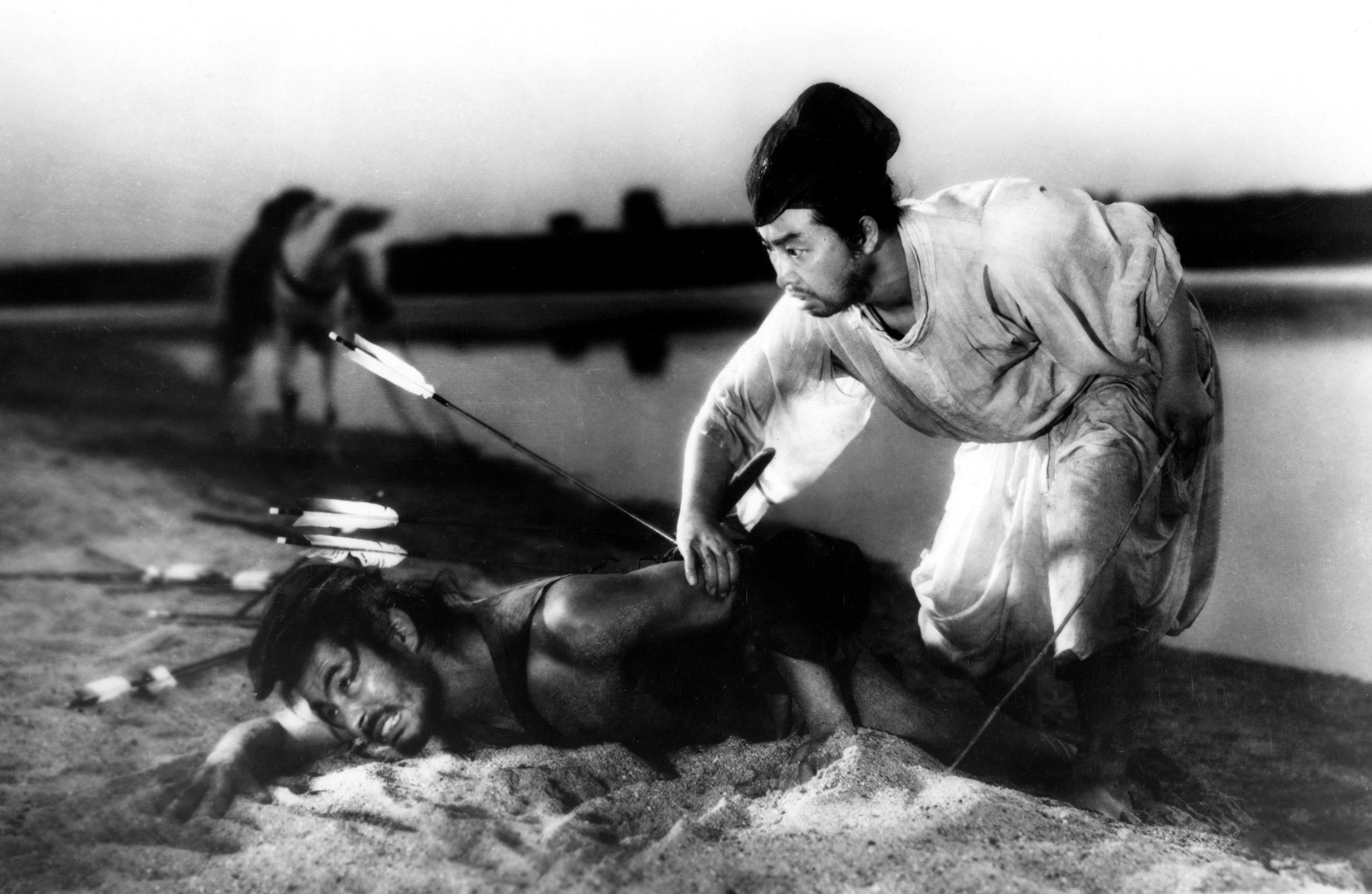
Named after the 1950 Japanese film Rashomon by Akira Kurosawa, it refers to the cinematic technique of presenting an event with varying and conflicting interpretations from different individuals but equally believable. It underscores the subjective nature of truth in storytelling.
The Usual Suspects (1995) and Gone Girl (2014) are films that take a page from the Rashomon effect. A powerful way to show that truth can be as varied as the people experiencing it.
And now ‘breaking the fourth wall’.
The fourth wall is a metaphorical construct in theatre and films, which represents the invisible boundary between the stage/screen and the audience.
By employing a narrative technique where characters momentarily engage with their audience through the stage/screen, it’s breaking that fourth wall.
Characters may glance at you through the camera, share their inner thoughts, talk with the audience, address them, or pass a commentary.
Fight Club (1999), Lord of War (2005), Deadpool (2016), Mardaani 2 (2019), and She-Hulk: Attorney at Law (2022) are a few examples that have used this cinematic device to break the barrier between fiction and the audience.
Read More Stories

NEPSE rises 28 points as trading activity improves
The stock market rebounded on Friday, with the NEPSE index gaining 27.94 points,...

Government estimates NRs 723 billion needed to rebuild flood-damaged areas
The government has estimated that NRs 723.31 billion will be required to rebuild...
Market falls by double digit for second session as turnover declines
The stock market extended its decline for a second consecutive session on Thursday,...