What we do is costly! Your support will help us dig more stories.
Yes, I'm Interested!Ignorance isn't always bliss | Don't stay foolish.
Keep informed | Read our news and analysis.
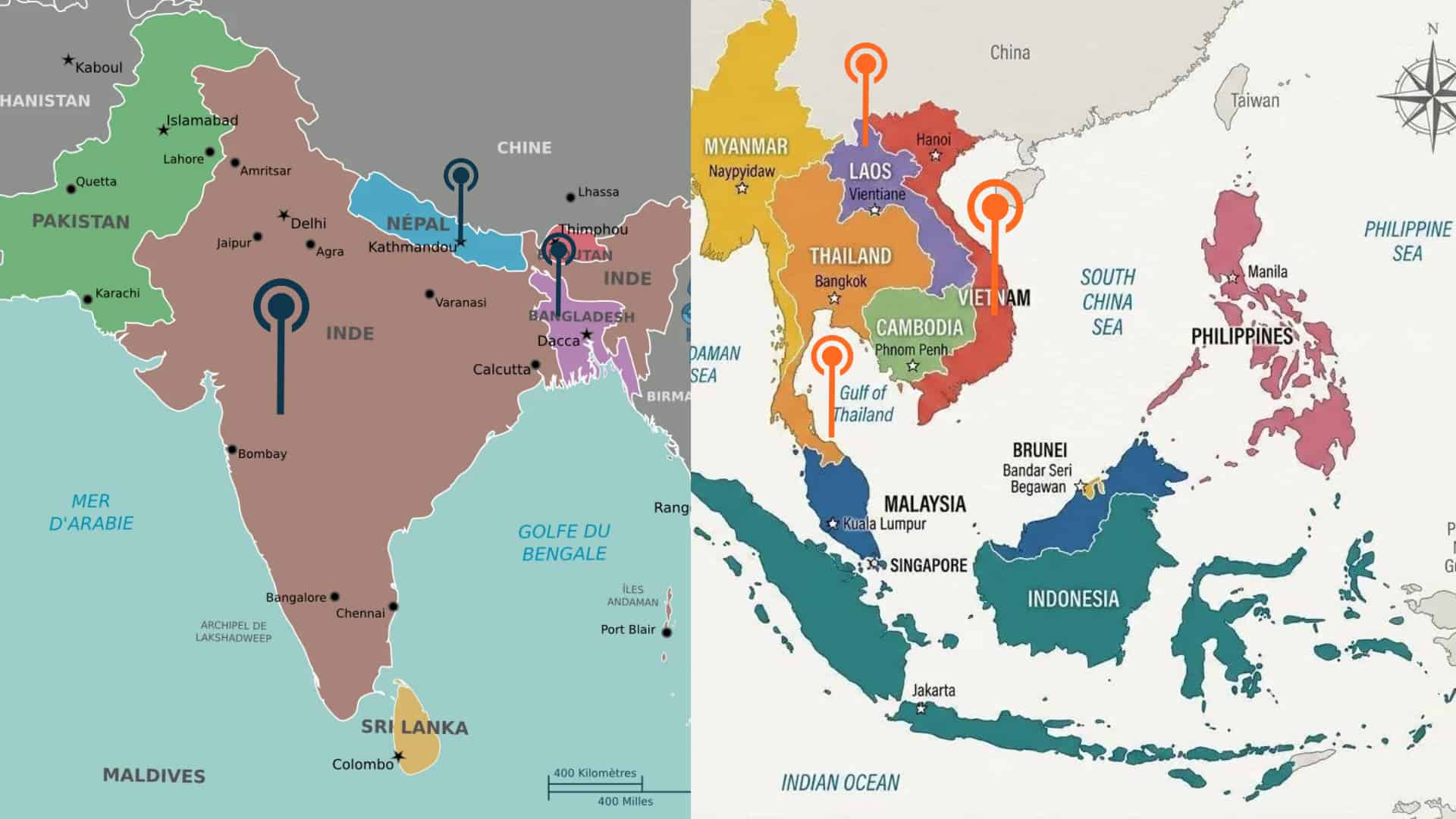
Digital payments are no longer merely about how people pay for goods and services. Amid growing cross-border trade, tourism, remittances, and the digital economy, payment systems have become part of the infrastructure of economic integration. For ASEAN and South Asia, this development creates an opportunity to build a financial corridor connecting two developing regions with relatively similar economic characteristics and geographical proximity.
ASEAN has already made considerable progress. Through the ASEAN Regional Payment Connectivity (RPC), ASEAN countries are developing interconnected cross-border payment systems, including QR payments and fast fund transfers. At the same time, the ASEAN Local Currency Transaction Framework (LCTF) encourages the use of local currencies in cross-border transactions. According to the IMF, the combination of payment connectivity and local currency transactions can reduce transaction costs while strengthening regional financial resilience.
Indonesia has also built a foundation through QRIS and Local Currency Transactions. Bank Indonesia recorded Indonesia's LCT transactions with partner countries at $14.1 billion through July 2025, an increase of 112% compared with the same period the previous year. This figure shows that the use of local currencies is no longer merely a policy experiment, but is beginning to become part of trade and investment activities.
In digital payments, ASEAN's experience also shows rapid growth. The IMF recorded QR transactions in Thailand increasing by more than 300% in 2024, while Malaysia experienced an increase of around 550%. This growth shows that payment interoperability can develop rapidly when domestic infrastructure is already available.
Read also:
Nepal-Thailand held first official state visit in 65 years relationship
South Asia has experienced similar dynamics. India has developed the Unified Payments Interface (UPI) into one of the world's largest digital payment systems, while Nepal has begun connecting its payment system with UPI for cross-border transactions. Bangladesh and other South Asian countries are also continuing to expand the use of digital payments. Both regions already have the basic components needed to build broader connectivity.
Geographical proximity and shared development characteristics
ASEAN and South Asia have characteristics that make this idea worth considering. Both consist of developing countries with large populations, relatively dynamic economic growth, and increasing use of mobile phones and digital financial services.
Geographical proximity is also important. India is directly connected to Southeast Asia through Myanmar. Bangladesh is located close to the Bay of Bengal trade routes, while Sri Lanka occupies a strategic position along Indian Ocean shipping routes. Indonesia itself lies at the intersection of trade routes between the Indian and Pacific Oceans.
However, geographical proximity does not automatically lead to financial integration. Transaction costs, differences in regulations, technological standards, identity systems, data protection, anti-money-laundering compliance, and limited financial access remain obstacles. Therefore, the more important question is not whether ASEAN and South Asia have connectivity potential, but whether that potential can be translated into an inclusive financial corridor.
From digital payments to a financial corridor
Under financial integration theory, the more connected a country's financial markets are with those of other countries, the greater the opportunity for more efficient capital allocation. However, integration can also increase the transmission of risks if it is not accompanied by adequate regulation and infrastructure.
Meanwhile, network effects theory explains that the more users, banks, merchants, and payment providers are connected within a network, the greater the benefits of that network. The problem is that fragmented networks can increase connection costs. Therefore, interoperability is key.
This approach is reinforced by research from the Asian Development Bank Institute, which argues that Asia's cross-border payment architecture is likely to consist of interconnected systems rather than being replaced by a single technology. Thus, ASEAN and South Asia do not need to build a single common payment system. A more realistic approach is to build an interoperable network that allows the domestic systems of individual countries to connect with one another.
This can be developed through several stages.
The first stage is to expand payment connectivity. Indonesia's QRIS, Thailand's PromptPay, Malaysia's DuitNow, India's UPI, and other national payment systems need to be developed through interoperability standards that allow consumers and merchants to conduct cross-border transactions easily.
The second stage is to connect digital payments with LCT. Digital payments do not necessarily have to be settled through the US dollar. Systems can enable direct conversion between local currencies based on mechanisms agreed upon by central banks and commercial banks.
The third stage is to expand the corridor from retail payments to trade and remittances. Small traders, migrant workers, tourists, and MSMEs should become the main users. If the system is used only by large banks and multinational corporations, such integration cannot yet be considered inclusive.
The fourth stage is to connect payments with digital identity, e-invoicing, trade documentation, and trade financing. The ASEAN Digital Economy Outlook 2026 places payment interoperability, digital identity, electronic signatures, data governance, and MSME support among the important foundations of digital economic integration.
Indonesia can play a role as a bridge between ASEAN and the Indian Ocean through QRIS, LCT, and its experience in building a digital payment ecosystem for MSMEs. India has a strategic position because UPI has developed into large-scale payment infrastructure and can become one of the main nodes of the South Asia–ASEAN corridor.
Thailand and Malaysia can serve as important connectors because of their experience with cross-border payment connectivity within ASEAN. Bangladesh can strengthen its links with Southeast Asia through trade and remittances, while Sri Lanka can leverage its strategic position within Indian Ocean trade networks. Countries such as Nepal can also benefit from payment integration that reduces transaction barriers for trade, tourism, and remittances.
At the next stage, these countries need to agree on common standards for cybersecurity, consumer protection, interoperability, transaction costs, dispute resolution, and data exchange. The objective is not to create dependence on a single platform or a single currency. On the contrary, the corridor should be built on the principles of interoperability and diversification, allowing each country to retain control over its domestic system.
Digital payments and LCT are ultimately not merely financial technologies. They can serve as instruments for building economic cohesion between ASEAN and South Asia. When tourists can pay easily, migrant workers can send money at lower costs, MSMEs can receive payments from overseas customers, and companies can settle trade using local currencies, economic relations between countries become more intensive.
Such integration can create increasingly stronger network effects. The more countries, banks, merchants, and users that are connected, the greater the economic benefits. However, these benefits must be accompanied by regulations that safeguard security, competition, and user protection. Ultimately, building an ASEAN–South Asia financial corridor does not mean creating an entirely new financial system. The objective is to connect existing systems so that trade, investment, tourism, and remittances can move faster, more cheaply, more securely, and more inclusively.
Its success should not be measured by how many digital transactions take place, but by how far such connectivity reduces economic costs, expands MSME access, increases cross-regional trade, and strengthens the financial resilience of developing countries. Digital payments and Local Currency Transactions are therefore not the end goal. They are infrastructure for building economic cohesion between ASEAN and South Asia so that two neighboring regions can grow and advance together.
Editorial Disclaimer: The publication of this article does not imply endorsement of the author's opinions or the positions and credentials expressed herein. The article is published for public discussion and editorial consideration.
Read More Stories

Banking stocks lead as NEPSE gains 31.54 points
The Nepal Stock Exchange (NEPSE) rose for the third consecutive day by 31.54...

Aani Chhoying’s appointment draws protests over past financial investigation
The appointment of Aani Chhoying Dolma as vice-chairperson of the Lumbini Development Trust...

Red vs blue: Who owns the CAN?
Ask for a Red Bull in a Nepali shop and watch what you...