What we do is costly! Your support will help us dig more stories.
Yes, I'm Interested!Ignorance isn't always bliss | Don't stay foolish.
Keep informed | Read our news and analysis.
Concerns of Unethical Appointment | Favouritism | Conflict of Interest
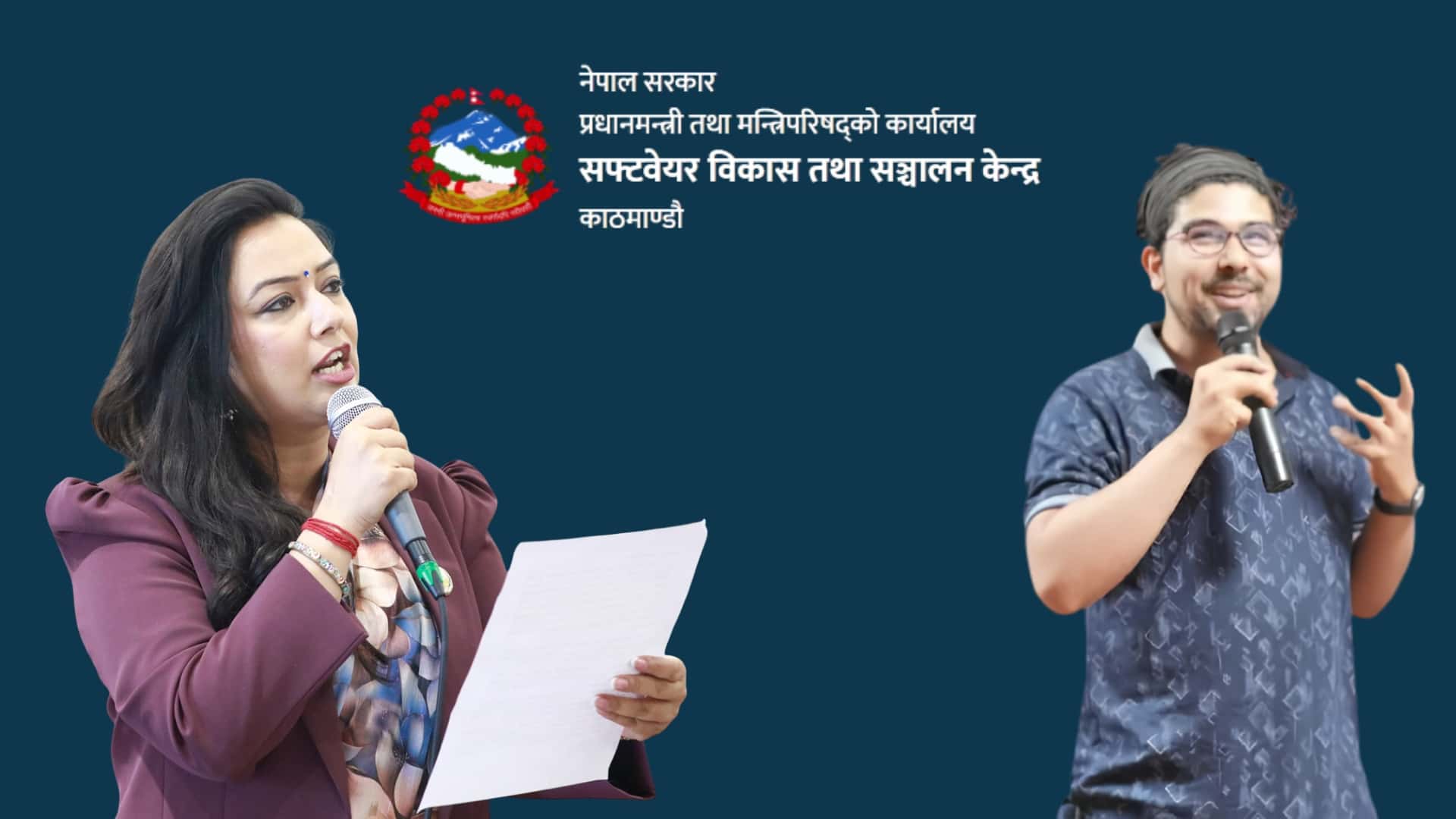
Kiran Timsina was involved in the government’s preparations for the Software Development and Operations Centre before applying for and eventually securing its executive director position, prompting questions about the extent of his role in shaping the institution and its recruitment process.
On May 26, the Office of the Prime Minister and Council of Ministers appointed Timsina coordinator of a subcommittee under an IT Study Task Force. According to the appointment letter, the subcommittee was responsible for designated work related to IT governance and implementation under the task force’s approved terms of reference.
The Cabinet approved the centre’s formation order on August 19 and opened applications for executive director on September 4. Twenty-seven people applied, six were shortlisted, and Timsina was selected after the candidates presented their professional work plans and attended interviews on September 18. The Cabinet appointed him the same day, with the formal appointment notice issued on September 23.
The government says the recruitment followed an open and competitive process. But Rastriya Prajatantra Party Chief Whip Khusbu Oli questioned the appointment in the House of Representatives on October 1, alleging that Timsina had been involved in preparing the rules and procedures for the centre before becoming a candidate for its top position.
Oli called for a parliamentary investigation into the roles of officials, advisers and others involved in the process.
Her allegations have not been independently established. But the sequence raises a narrower question: what role did Timsina play in preparing the framework for the centre, and did that work have any bearing on the rules under which he was later selected?
From task force to executive director
The OPMCM formed the IT Study Task Force as the government worked on plans to strengthen its information technology infrastructure.
Timsina, a technology entrepreneur and co-founder and CTO of UG Cakes, was appointed coordinator of one of its subcommittees on May 26. The appointment letter assigns the subcommittee designated work related to IT governance and implementation under the task force’s approved terms of reference.
Reports on the task force’s work say it was involved in preparing the work order for the proposed Software Development and Operations Centre. The government later formalised the centre through the August 19 formation order.
The executive director vacancy was then opened to applicants. Of the 27 applicants, six were shortlisted: Timsina, Narayan Prasad Ghimire, Dhruva Gyawali, Dr Bhoj Raj Ghimire, engineer Nirajan Panthi and Shridhar Marasini.
The official appointment notice says the candidates were assessed on their academic qualifications, experience, training, professional work plans, presentations and interviews under the Executive Director Selection Procedure, 2026. The selection committee then recommended candidates on the basis of their merit ranking.
What did his earlier role involve?
Bibek Mishra, prime minister’s IT expert, told Setopati that Timsina went through the same selection process as the other shortlisted candidates.
The question is what happened before that process began.
Oli alleged in Parliament that Timsina, as coordinator of the task force subcommittee, had helped prepare the qualifications and examination rules for the position he would later occupy.
The available documents do not establish that Timsina personally drafted the eligibility requirements or evaluation criteria for the executive director. Nor was the subcommittee he coordinated the same body as the selection committee formed by the Cabinet on September 3.
That distinction matters because the September 3 committee assessed the candidates under the Executive Director Selection Procedure, 2026 and submitted its recommendation to the government.
But the membership of that committee, along with documents showing how the selection procedure and criteria were prepared and approved, has not been publicly disclosed.
Those records would help establish whether Timsina’s earlier work was confined to developing the centre or extended to the recruitment framework under which he later competed.
A question of safeguards
The issue has a recent parallel in the appointment of Nepal Rastra Bank governor Biswo Poudel.
In March 2025, Poudel was appointed a member of the committee formed to recommend candidates for the central bank governor. When he later emerged as a potential candidate himself, he resigned from the committee on May 11. The then-KP Sharma Oli government subsequently reconstituted the committee, which recommended Poudel along with two other candidates. The Cabinet appointed him governor on May 20.
The circumstances are different from Timsina’s case. Poudel resigned before the final recommendation and a replacement was appointed. He was therefore not part of the committee that ultimately recommended him.
But the episode illustrates why safeguards matter when someone involved in designing or overseeing an appointment process later becomes a candidate for a position connected to that process.
The issue also sits uneasily with the image Timsina has publicly cultivated as a technocrat opposed to political favouritism and patronage in public appointments. He has advocated bringing technical expertise into government and has been critical of appointments based on political connections rather than competence.
This is not about questioning whether Timsina is qualified for the position. Nor is it about suggesting that every appointment involving a technocrat who has previously worked with the government is inherently improper.
The concern is about the integrity of the appointment process. An appointment can involve a qualified person and still raise legitimate questions if the process creates a perception of prior access, influence or preferential treatment.
That distinction is particularly important for a government that has presented technocratic appointments and good governance as alternatives to political patronage and favouritism. If the process surrounding such appointments appears inconsistent with those principles, it can undermine the very public confidence those appointments are intended to build.
Timsina’s appointment does not, by itself, establish political influence, nor does his support for the government establish that he was selected because of it. The government says he competed against other shortlisted candidates and was selected through a merit-based process.
But the standard should apply equally to those presenting themselves as technocrats. A merit-based appointment should not only produce a qualified candidate; it should also be transparent enough to withstand scrutiny over how the candidate came to be considered and whether any safeguards were necessary.
The relevant question, therefore, is not simply whether Timsina was qualified or whether he received the highest score. It is whether his earlier involvement in developing the centre created any access, influence or conflict that required additional safeguards once he became an applicant.
The cake-cutting event
The appointment has also drawn scrutiny over a cake-cutting event held after the centre’s formation order was approved.
A photograph from the event showed Timsina among those present. Lawmaker Oli cited the event and social-media activity by Timsina as part of her argument that the appointment may have been anticipated before the position was advertised.
The claim has not been independently established. A social-media post showing the event has since been removed from public view following criticism. The government has said the event marked the establishment of the centre and was unrelated to the recruitment of its executive director.
That explanation is consistent with the formal sequence of the process. The remaining question is whether those involved in establishing the centre had information about the forthcoming recruitment that was not available to other potential applicants.
If his earlier work was limited to developing the broader structure of the centre and he had no role in determining the executive director’s eligibility, evaluation criteria or recruitment procedure, that would substantially address the concern. If he did have a role in shaping those provisions, the government would need to explain what safeguards were applied once he became a candidate.
For now, the government points to the competitive selection process, while lawmaker Oli has called for scrutiny of how it was conducted. The records of how the centre and its recruitment process were developed should provide a clearer basis for assessing the appointment.
Read More Stories
Nepali Congress heads towards two conventions amid unresolved leadership dispute
The Nepali Congress entered 2026 with a new leadership and promises of organisational...

How does Bhotekoshi disaster compare with 2015 earthquake?
How big was the August 26 Bhotekoshi disaster compared with the 2015 earthquake?...
ADB, NEA advance transmission and battery storage projects under PPP model
The Asian Development Bank (ADB) and Nepal Electricity Authority (NEA) have signed two...