What we do is costly! Your support will help us dig more stories.
Yes, I'm Interested!Ignorance isn't always bliss | Don't stay foolish.
Keep informed | Read our news and analysis.
Supreme Court | Judiciary disputes | Judicial appointments | Constitutional Bench
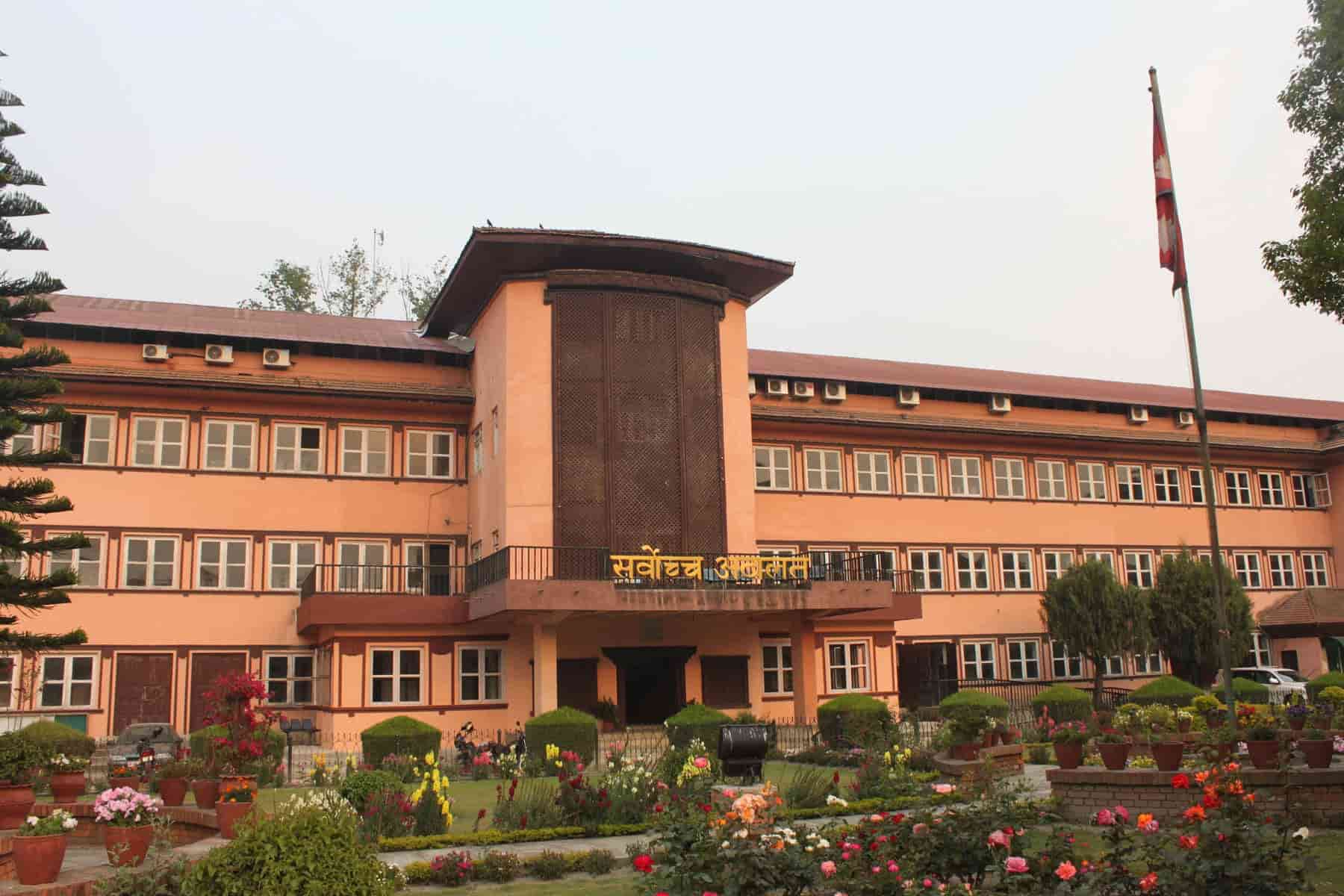
Supreme Court is facing renewed questions over judicial appointments and the formation of its Constitutional Bench, with disagreements among senior justices exposing tensions over seniority, transparency and the exercise of institutional authority.
The latest dispute surfaced on Wednesday after Justice Hari Prasad Phuyal declined to sit on a five-member Constitutional Bench formed by Chief Justice Manoj Kumar Sharma. The bench could not convene, reportedly disrupting hearings on 16 listed cases.
The confrontation came a day after the Judicial Council recommended four judges for appointment to the Supreme Court, despite objections from two of its members over the selection process. The recommendations have drawn criticism from the legal fraternity over seniority, inclusivity and the absence of publicly established selection criteria.
Although the two disputes concern different processes, both have brought renewed attention to how decisions are made within the country’s apex court.
The Constitutional Bench formed on Wednesday comprised Sharma and Justices Sapana Pradhan Malla, Phuyal, Nahakul Subedi and Abdul Aziz Musalman. Phuyal had not been included in previous Constitutional Benches formed during Sharma’s tenure.
Media reports say Phuyal questioned why he had been excluded previously but included on Wednesday. He called for the full court to discuss and agree on a clear procedure for constituting the bench before he would participate.
Sharma maintained that the Constitution gives the chief justice the authority to designate the four other members of the Constitutional Bench and that the process did not require a separate full-court decision. Phuyal, however, questioned the discretionary nature of the selection, arguing that the court needed a consistent basis for determining its composition.
The disagreement prevented the bench from proceeding. Other regular benches of the Supreme Court continued to function as scheduled.
Article 137 of the Constitution provides for a five-member Constitutional Bench comprising the chief justice and four other justices designated by the chief justice on the recommendation of the Judicial Council. However, it does not prescribe detailed criteria for selecting those justices or specify how seniority should be weighed.
Different practices have evolved over time, including selection based on seniority, a roster of eligible justices and the chief justice’s discretion. The Nepal Bar Association has also called for a lottery-based system to improve transparency in the selection of Constitutional Bench members.
The dispute has revived questions about whether the existing arrangement provides sufficient safeguards against arbitrary decision-making, even as the Constitution expressly assigns the chief justice the authority to form the bench.
Appointment process draws internal dissent
The disagreement over bench formation follows a contentious Judicial Council meeting on October 6, when the council recommended four candidates for appointment to the Supreme Court.
The nominees are Ratna Bahadur Bagchand, chief judge of the Pokhara High Court, and High Court judges Chandra Bahadur Saru, Janak Pandey and Gokarna Dangi.
Senior Supreme Court Justice Sapana Pradhan Malla and council member Mahesh Kumar Nepal registered dissenting opinions over the recommendations.
According to media reports, Malla raised concerns about the absence of transparent and objective selection criteria, the bypassing of senior judges and inadequate inclusivity. Nepal objected specifically to the nominations of Pandey and Dangi, while supporting Bagchand and Saru.
The recommendations have also drawn criticism from Nepal Bar Association president Bijay Prasad Mishra, who questioned the council’s decision to bypass several senior High Court judges. He raised concerns about the lack of representation for women, Madhesis and legal practitioners among the nominees.
Bagchand is the senior-most among High Court chief judges, while Saru ranks fifth, Pandey 12th and Dangi 15th among High Court judges. The council’s decision bypassed several senior judges, including High Court chief judges Rajan Prasad Bhattarai, Lal Bahadur Kunwar, Hari Prasad Bhandari and Rajeshwar Tiwari.
Five positions are vacant at the Supreme Court, but the council recommended only four candidates. Justice Binod Sharma is due to retire in November, leaving another vacancy to be addressed.
The nominees must undergo parliamentary hearings under Article 292 of the Constitution before their appointments can be finalised.
The latest controversy follows an earlier episode of dissent over the appointment of the chief justice. On May 7, the Constitutional Council, led by Prime Minister Balen Shah, recommended Sharma for appointment as chief justice by a majority vote, despite his fourth-place ranking on the seniority list. Two of the council’s six members opposed the recommendation. The parliamentary hearing process after the nomination was also expedited, led by the committee chair Bodhnarayan Shrestha, a lawmaker from the ruling Rastriya Swatantra Party (RSP).
Questions over institutional safeguards
The two controversies have renewed debate about the balance between the chief justice’s constitutional authority and the need for transparent, predictable institutional procedures.
The Constitutional Bench hears cases involving constitutional interpretation and other matters assigned to it under Article 137. Its composition can therefore have significant implications for the adjudication of constitutional disputes.
The disagreement is not over whether the chief justice has the authority to form the bench, but over how that authority should be exercised and whether the selection process should follow a clearly defined procedure.
The appointment controversy raises a related question about the criteria used to select judges for the highest court. The dissenting opinions within the Judicial Council indicate that concerns over the latest recommendations extend beyond criticism from the legal profession.
Neither dispute, by itself, establishes that the appointments or the formation of the Constitutional Bench are unconstitutional. But both have highlighted the importance of clear procedures and institutional accountability in maintaining public confidence in the judiciary.
Whether the full court will agree on a procedure for constituting the Constitutional Bench, and how the Judicial Council’s recommendations proceed through parliamentary hearings, will be important developments to watch.
Read More Stories

NEPSE posts double-digit gains at week’s end
The Nepal Stock Exchange (NEPSE) gained 17.15 points (0.67%) on the last day...

Nepal edges up in Global Economic Freedom score
Nepal has slipped one position to 90th among 165 countries and jurisdictions in...
70% of Nepalis struggle to afford housing costs: Report
Around 70% of Nepalis struggle to afford housing-related expenses, according to an international...