What we do is costly! Your support will help us dig more stories.
Yes, I'm Interested!Ignorance isn't always bliss | Don't stay foolish.
Keep informed | Read our news and analysis.
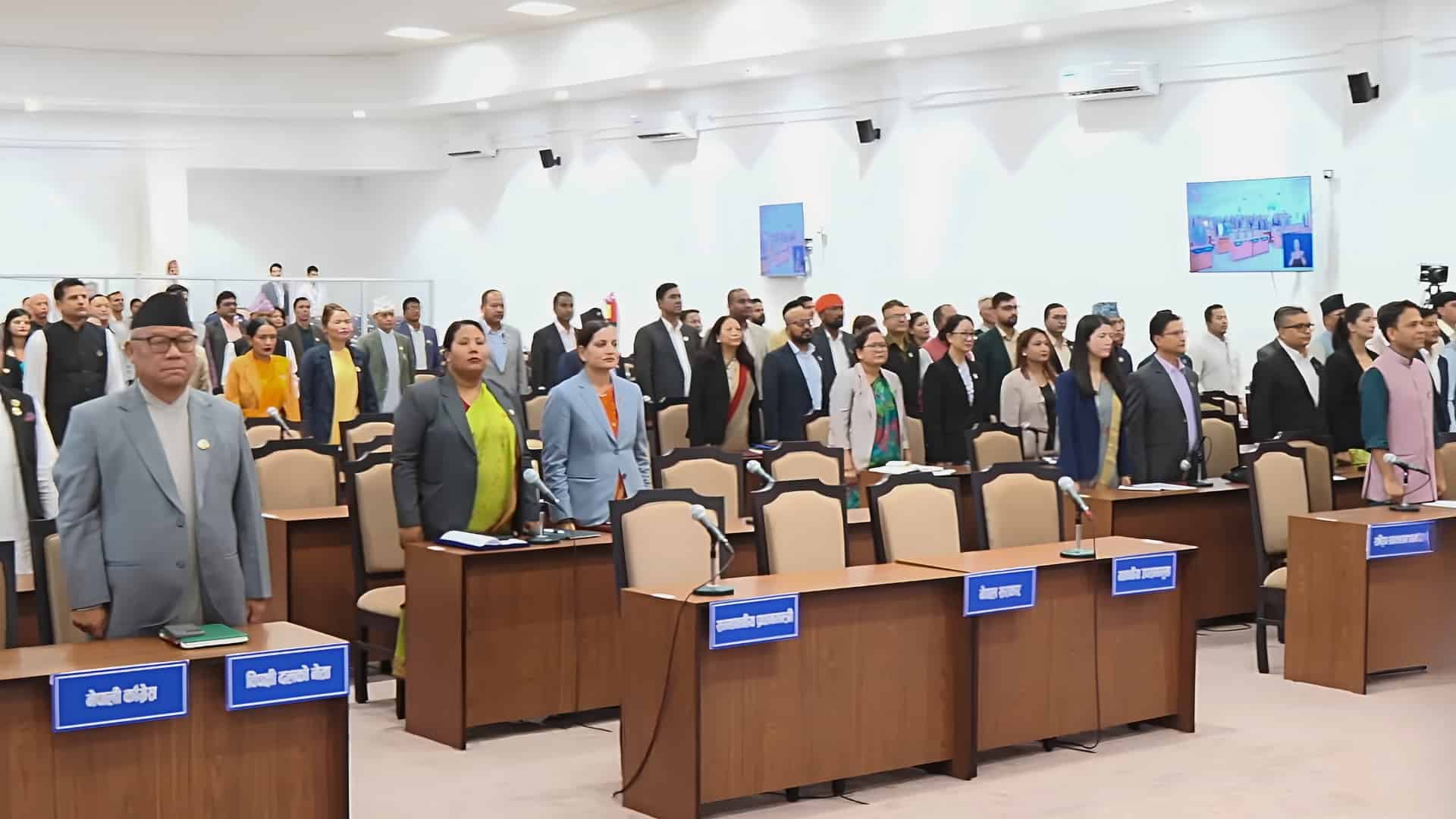
In a rare move in Nepal’s parliamentary history, the Speaker of the House of Representatives needed to issue an order to the sitting Prime Minister to face the parliament.
In Monday's parliamentary session, Speaker DP Aryal ordered Prime Minister Balen Shah to appear before the House of Representatives to answer questions from lawmakers, ending months of uncertainty over his absence from parliamentary question-and-answer session. The house has set the session for August 26.
Aryal issued the ruling early in the session after opposition lawmakers repeatedly protested Shah’s failure to appear in Parliament and respond to questions concerning his government and his controversial remarks on the Nepal-India border.
Under the House of Representatives Regulations, the prime minister is required to attend Parliament during the first week of each month to answer lawmakers’ questions. However, Shah has not taken part in the formal question-and-answer process since taking office.
Shah briefly appeared in Parliament on May 31, when he unexpectedly invited lawmakers to ask questions. During the session, he said that Nepal had also encroached on Indian territory in several places. The remarks triggered strong opposition criticism, with lawmakers demanding that Shah personally explain his statement and that it be removed from the parliamentary record.
Although Foreign Minister Shishir Khanal later attempted to clarify the prime minister’s remarks in Parliament, opposition parties insisted that Shah himself should provide an explanation.
Shah then attended Parliament briefly on June 30, and has remained since. His prolonged absence prompted opposition lawmakers to protest for 77 consecutive days.
Speaker Aryal also met Shah several times and urged him to attend Parliament. According to Aryal, Shah had only said that he would appear at an “appropriate time,” without committing to a specific date.
Under pressure to resolve the standoff, Aryal ordered the prime minister to attend the House and answer questions under Rules 56 to 60 of the parliamentary regulations.
The Speaker subsequently fixed August 26 for the direct question-and-answer session with the prime minister. At least one lawmaker from each of the six parties represented in the House will be allowed to ask a question, while up to 15 additional questions will be selected based on parliamentary representation.
Lawmakers must submit their questions to the House Secretariat by August 21, Friday.
The Speaker’s ruling brought an end to the opposition’s protest lasting two and half months. Opposition lawmakers, who had been standing during the opening of Monday’s session, returned to their seats after Aryal announced the ruling.
Opposition lawmakers welcomed the ruling and said they expected Shah to clarify his earlier border remarks as well as respond to questions about the government’s performance.
The upcoming session is expected to be closely watched as a test of executive accountability to Parliament and the implementation of the House’s rules governing direct questions to the prime minister.
Read More Stories
Inside Nepali Congress’s 15th General Convention
The Nepali Congress began debating its political and organisational direction for the next...

NEPSE continues downtrend, sheds another 20 points, turnover drops to NRs 3.27 billion
The stock market extended its decline on Monday, with the Nepal Stock Exchange...
National Medical College residents’ protest widens into scrutiny of PG programme
A dispute between postgraduate resident doctors and the administration of National Medical College...