What we do is costly! Your support will help us dig more stories.
Yes, I'm Interested!Ignorance isn't always bliss | Don't stay foolish.
Keep informed | Read our news and analysis.
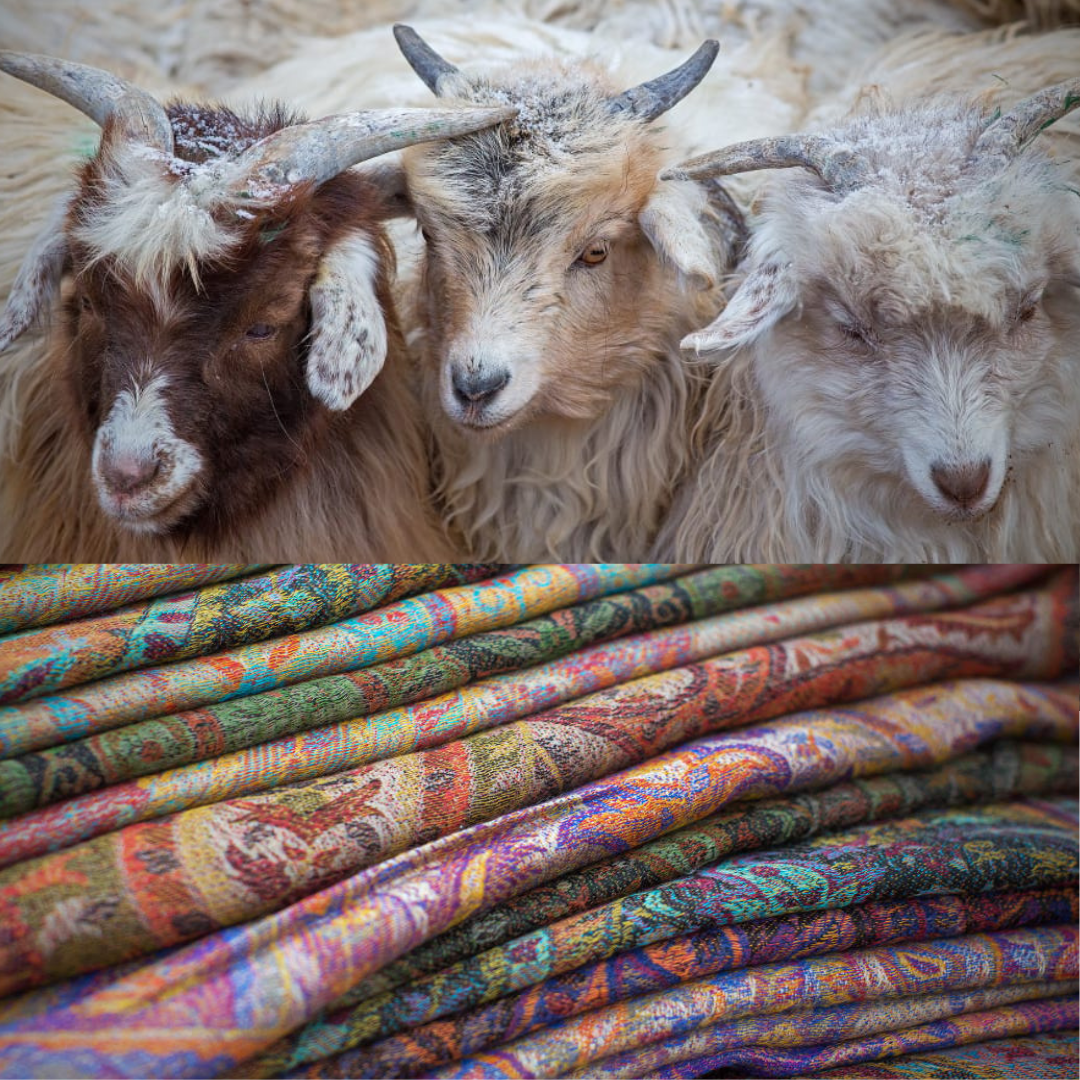
Last week, Nepal unveiled its National Pashmina Sector Export Strategy 2022-2026.
The strategy aims to increase its Chyangra Pashmina export to Rs 10 billion ($75 million) by the end of 2026.
In line with this goal, the International Trade Center, the Nepal government, and the European Union have jointly planned for the construction of a pashmina fiber processing center in Godavari, which is scheduled to be finished in the next three months.
The five years strategy will be implemented with a total budget of Rs 588.25 million — the private sector will contribute Rs 196.47 million, and the remaining Rs 391.77 million will be coming from the public sector.
In 2021, pashmina shawl exports were Rs 2.53 billion (USD 19.31 million), an increase of 18%, compared to 2020.
In 2019, Nepal’s exports of pashmina shawls made up 1.3% of all pashmina exports globally, placing it in the ninth rank.
Chyangra pashmina is the finest inner wool of the Himalayan cashmere goat, locally known as Chyangra (Capra hircus), residing over 3000 meters above sea level.
It is internationally recognized as high-quality cashmere and is one of the world's most sought-after fibers.
About 90 grams of pashmina are extracted annually from a single chyangra.
Several estimates place the number of Chyangra goats in Nepal at 131,695 (Official government data for 2015) to 325,435 (World Bank report for the Nepal Livestock Sector Innovation Project).
Afghanistan, China, India, Iran, Mongolia, Nepal, and Pakistan are some of the top countries for generating pashmina fiber.
The potential places for Chyangra rearing include 15 districts in Nepal’s high mountain regions, including Mustang, Mugu, Jumla, Dolpa, and Manang.
In Nepal, the challenges in boosting pashmina exports include the lack of a quality testing mechanism in the import of raw materials, the use of sub-standard raw materials, poor marketing strategy, and inadequate government support in the promotion.
Read More Stories

Market turns green by 11.97 points, turnover slips to NRs 3.13 billion
The Nepal Stock Exchange (NEPSE) climbed up Tuesday by 11.97 points (0.47%) to...
Inside Nepali Congress’s 15th General Convention
The Nepali Congress began debating its political and organisational direction for the next...

NEPSE continues downtrend, sheds another 20 points, turnover drops to NRs 3.27 billion
The stock market extended its decline on Monday, with the Nepal Stock Exchange...