What we do is costly! Your support will help us dig more stories.
Yes, I'm Interested!Ignorance isn't always bliss | Don't stay foolish.
Keep informed | Read our news and analysis.
Gen Z Martyrs’ Family Welfare Society | Threats of Violence
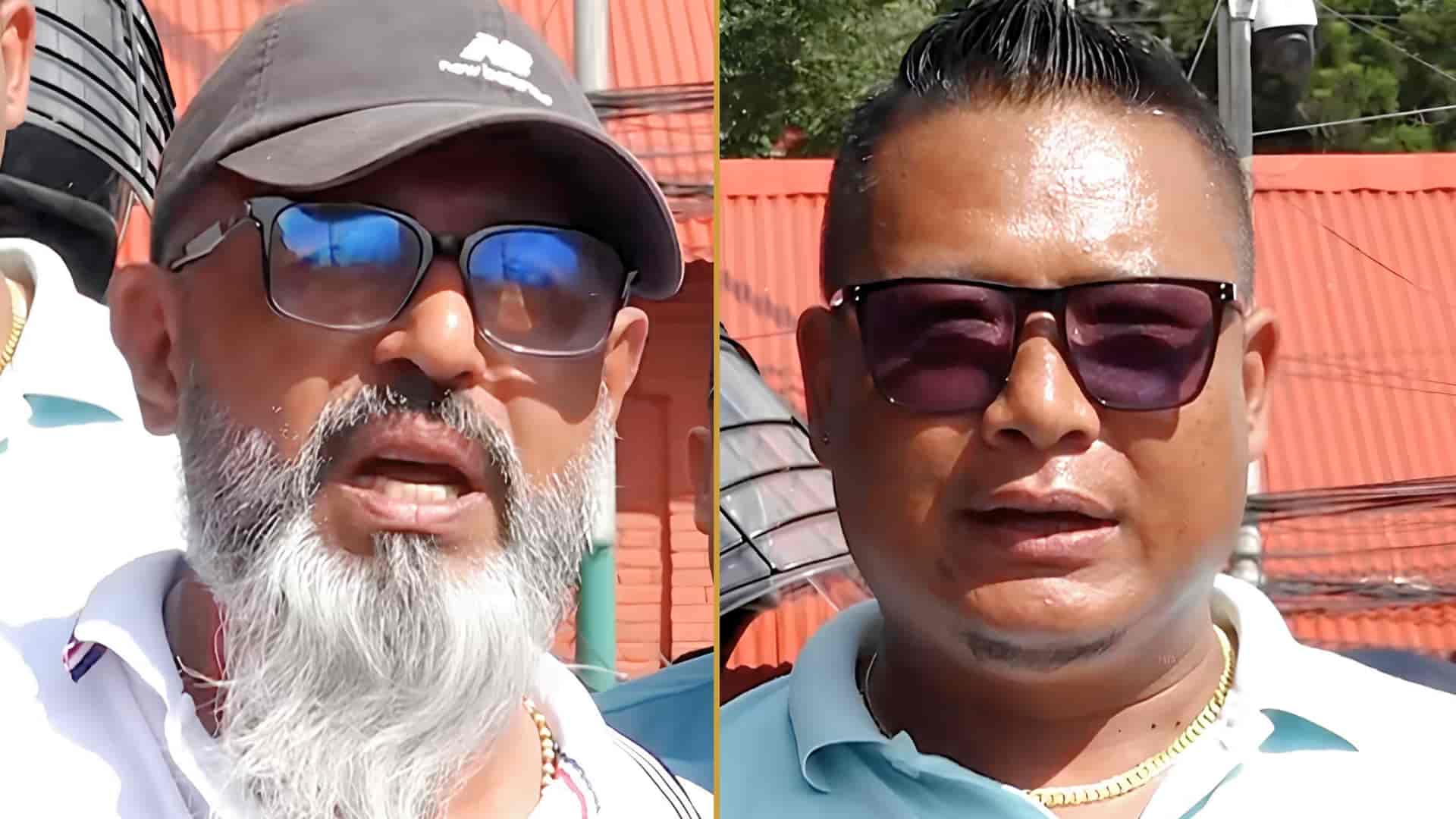
Ganesh Prasad Chaulagain, treasurer of the Gen Z Martyrs’ Family Welfare Society and father of a teenager killed during last year’s September violence, has issued a threat of violence against Rastriya Swatantra Party (RSP) whip Krantishikha Dhital and “two or three others” amid a remark over the movement’s first anniversary memorial programme.
In a video broadcast on September 9 outside Singha Durbar, Ganesh names Dhital and issues threats against her and others. Speaking in support of Home Minister Sudan Gurung, and warning that any attempt to remove Home Minister Sudan Gurung, Ganesh openly threatens to “cause bloodshed” saying the consequences could be “worse than the violence and destruction seen during September last year when houses were selectively burned.
“We would not even give time to flee,” he adds in his remarks laced with threats primarily targeting Dhital.
Society president Narayan Shrestha separately named Dhital and RSP General Secretary Bipin Acharya, warning that they could be dragged from the Parliament building if they did not apologise.
The remarks came after Dhital criticised the September 8 memorial event held at the Birendra International Convention Centre in Kathmandu, questioning whether the programme honoured the martyrs and injured protesters or instead insulted them.
Ganesh said that their protest is against anyone who is against the Home Minister Sudan Gurung.
The representatives of the martyr families demanded an apology from Dhital and issued separate threats against those they say have insulted the movement and its dead.
Ganesh is the father of Shreeyam Chaulagain, a teenage student killed during the September 8, 2025 Gen Z protests. Shreeyam, a student at Global College in Kathmandu, was among those killed as security forces opened fire on protesters. Reporting on the movement has identified him as one of its youngest victims.
Ganesh later became involved in organising the families of those killed in the protests and is now the treasurer of the Gen Z Martyrs’ Family Welfare Society.
His connection to the movement is therefore both familial and organisational: his son died in the uprising, while he now holds an office in an organisation representing the families of those killed.
What triggered the threats of violence?
Dhital, an RSP lawmaker and parliamentary whip, criticised the September 8 memorial programme in a Facebook post published the same evening.
She said she was disturbed after seeing the event and felt that the programme was, in some ways, disrespecting Gen Z martyrs and injured protesters. She questioned the design of the stage, the presence of controversial religious figures and whether the event adequately addressed the pain of families who had lost their children and people still living with injuries from the protests.
Dhital also questioned the broader political meaning of the programme, where Home Minister Gurung expressed his anger toward journalists. Among other provocative remarks made by Gurung on the occasion, he warned “three or four journalists” to mend their ways, although he did not specify whom he was referring to.
Dhital recalled, “The Gen Z movement had taken to the streets demanding press freedom, restraint on state power and accountability.” She then questioned why people were now using a language of threats and warnings against those who questioned them. Her criticism was also directed at the presence of controversial religious figures at the memorial programme.
Later, Home Minister Gurung and lawmaker Krantishikha Dhital’s arguments in Whatsapp over the matter surfaced where Gurung appears to be making mockery of Dhital as a lawmaker suggesting she has no stakes in the September events that toppled the then government, and is simply a beneficiary.
“[You] neither understand the spirit of the movement, nor did you come here after risking your life in the movement like our other lawmakers. You neither want to understand nor even ask. Yet you casually put up a status and try to make your own party and your own colleagues look weak?” he wrote.
Who is Ganesh Chaulagain?
Ganesh’s position within the dispute is rooted in the death of his son. Reports published after the September events last year recorded that Shreeyam had shown his father a social-media post by then-Kathmandu mayor Balendra Shah supporting the planned September 8 demonstration before joining the protest himself.
Shreeyam’s death subsequently became part of Ganesh’s public advocacy for the families of those killed. He has also taken an explicitly political position on who should inherit the Gen Z movement's political legacy.
During the 2026 parliamentary election campaign, he backed Ranjit Tamang, the Nepali Communist Party candidate in Jhapa-5, where Shah was contesting for the RSP. In supporting Tamang, Ganesh argued that the political figure who provoked young people onto the streets and the one who killed both were contesting from the same constituency, referring to Shah and then-prime minister KP Sharma Oli.
His claim then demonstrated his opposition to Shah’s attempt to present himself and the RSP as inheritors of the political agenda of the protests. The election subsequently brought Shah to Parliament from Jhapa-5.
A fight over who speaks for Gen Z
The confrontation with Dhital comes amid a broader dispute over the political meaning of the September events, widely described as a Gen Z uprising. The disagreement is reflected in the exchange between Dhital and Gurung.
Dhital’s September 8 criticism invoked the protests’ demands for freedom of expression and accountability and questioned whether the anniversary programme honoured its political legacy.
Ganesh and other representatives of the martyr families have approached the issue from the standpoint of those who lost their relatives. They have responded that any criticism of the memorial programme amounts to disrespect for the people who died.
The dispute has moved beyond the organisation of a commemorative event. It raises a broader question over who has the authority to speak in the name of Gen Z and whether the deaths of its protesters can become a source of political legitimacy for those who now hold power.
For Ganesh, that question is inseparable from the death of his son. For Dhital, her criticism was framed around whether the protests’ own demands for freedom of expression and accountability should continue to apply after its political representatives entered government.
The competing claims have now produced threats of violence from representatives of the very families whose losses remain at the centre of the protests’ political legacy.
Read More Stories

Nepal needs to repeat to brand itself
Last year Nepal's goods exports jumped 81.8% to NRs 277.03 billion. That is...

Banking stocks gain momentum as dividend season begins
Dividend announcements by banks and financial institutions (BFIs) for fiscal year 2025/26 have...
Nepal’s challenge of building strong democratic institutions
Over the past few decades, institutional dysfunction and massive dissatisfaction with political establishments...