What we do is costly! Your support will help us dig more stories.
Yes, I'm Interested!Ignorance isn't always bliss | Don't stay foolish.
Keep informed | Read our news and analysis.
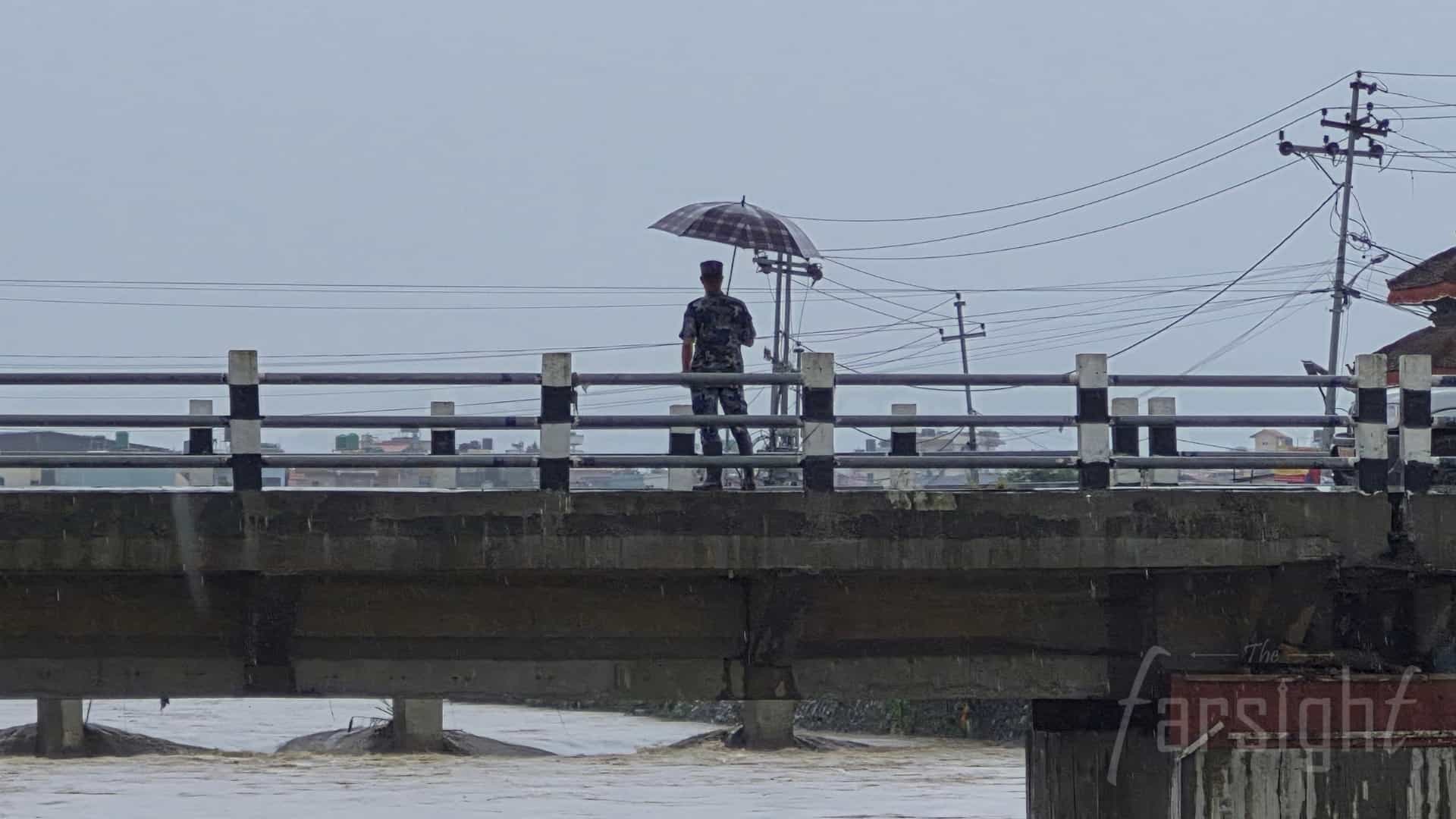
Four days of heavy rainfall triggered 542 disaster incidents across Nepal between September 24 and 27, killing 27 people, leaving four missing and injuring eight, according to the National Disaster Risk Reduction and Management Authority (NDRRMA).
The disasters affected 1,082 families and killed or injured livestock, with 114 animals reported lost or affected during the period, according to an assessment released by NDRRMA.
Landslides accounted for the largest share of the incidents. Of the 542 disasters, 304 were landslides, 87 floods and 151 incidents were directly associated with heavy rainfall.
Landslides killed 20 people, left four missing and injured seven. Floods killed four people, while incidents associated with heavy rainfall killed three and injured one.
The rainfall was linked to a low-pressure system that developed over the Bay of Bengal, which brought heavy rain to different parts of Nepal during the four days.
Rainfall exceeded 100 mm at 186 stations
The scale of the rainfall was widespread.
NDRRMA reported that 186 rainfall measurement stations recorded more than 100 mm of rain during the four days.
Dedgaun in Nawalparasi East recorded the highest total at 544.2 mm, followed by Panchase in Kaski at 500.2 mm and Atraulitar in Tanahun at 472 mm.
The intensity and distribution of the rainfall contributed to flooding and landslides across multiple districts, particularly in hilly and mountainous areas where saturated slopes and swollen rivers increased the risk of sudden disasters.
227 houses destroyed, 31 bridges damaged
The rainfall caused substantial damage to physical infrastructure.
According to NDRRMA, 227 houses were completely destroyed and 142 partially damaged during the four days. Floods and landslides also damaged 31 bridges, disrupting road connectivity and access to affected communities.
The damage to homes and transport infrastructure added to the disruption caused by landslides and flooding, with several communities facing difficulties accessing roads and essential services.
The physical damage assessment remains preliminary. Further losses to roads, agricultural land, public infrastructure and private property are expected to become clearer as local authorities complete their assessments.
More than 790 MW knocked out
The heavy rain also disrupted electricity generation and transmission across several parts of the country, exposing the vulnerability of power infrastructure to landslides and flooding.
In Myagdi, landslides damaged transmission structures along the Dana–Kushma section of the 220-kV Kaligandaki transmission corridor. The damage cut off 12 hydropower projects with a combined installed capacity of 358.2 MW from the grid. The Nepal Electricity Authority (NEA) also disconnected generation in other areas as a precaution, taking the total affected capacity to more than 790 MW.
The disruption had consequences beyond power producers. With available electricity reduced, the NEA curtailed around 300 MW of supply to industries in major industrial areas, including Birgunj, Amlekhgunj, Parwanipur, Sunwal and Butwal.
Flooding also caused direct damage at some power projects. At the 40 MW Rahughat Hydroelectric Project in Myagdi, which had only recently entered trial generation, floodwaters damaged the tailrace gate. Erosion around the project also posed a risk to its switchyard.
The shutdowns, however, did not necessarily mean that the generating facilities themselves had been damaged. In several cases, projects remained physically intact but could not transmit electricity because of damage to the transmission network. Other plants were taken offline as a precaution amid the disruption.
Nearly 2,000 people moved to safety
The disaster response began before the rainfall intensified.
NDRRMA said its Situation Room operated continuously for 76 hours, monitoring weather and disaster risks, disseminating information and coordinating among agencies.
The authority, working with telecommunications providers, sent more than 980,000 targeted flood-warning SMS messages to citizens. More than 5,000 people involved in disaster response and around 9,000 tourists also received weather and disaster-risk warnings.
NDRRMA also extended the forecast period for flooding in major rivers from three days to five days, while the forecast period for sudden flooding in smaller rivers and streams was extended from 24 hours to 48 hours.
The warnings were followed by evacuations. According to NDRRMA spokesperson Shanti Mahat, around 2,000 people at risk from rain-related disasters were moved to safer locations during the period. Security personnel from the Nepal Police, Armed Police Force and Nepali Army were deployed for search, rescue and relief operations.
In Myagdi’s Annapurna Rural Municipality-5, Paudwar, 78 people were evacuated by helicopter on September 27 after authorities identified them as being at risk. Four people stranded on an island in the Bheri River in Jajarkot were also rescued by air. People trapped by floods and landslides in remote districts including Jajarkot, Myagdi and Baglung were also rescued by helicopter.
River blockages raise fresh risks
The rainfall created additional hazards even after the immediate flooding began to subside.
On the evening of September 27, a landslide at Chame in Manang obstructed the flow of the Marsyangdi River, NDRRMA reported. A landslide at Thasang Rural Municipality-3 in Mustang also obstructed the flow of the Kali Gandaki River.
Authorities warned downstream communities and instructed local responders to move families living in high-risk areas to safety.
By September 28, however, water levels in the Narayani and other major rivers were gradually falling, with NDRRMA reporting that conditions were moving towards normal.
The cost is not yet fully known
The four-day assessment provides a clear picture of the human and physical toll, but it does not yet establish a consolidated national monetary estimate of the damage.
The known losses include 227 houses destroyed, 142 partially damaged, 31 bridges damaged and 114 livestock affected or lost. The disruption of roads and other infrastructure is likely to add to the eventual cost as detailed assessments continue.
For now, the figures point to a disaster episode measured not only in deaths and injuries, but also in the disruption of homes, transport links and livelihoods.
The four days of rain produced 542 recorded disaster incidents, but the response also demonstrated the role of early warning. Nearly 980,000 people received targeted flood-warning messages, while around 2,000 people were moved away from areas at risk.
As river levels recede, authorities face the next task: completing damage assessments, restoring damaged infrastructure and determining the full economic cost of the rainfall.
Read More Stories
Panchakanya exits Bhairahawa SEZ after failing to meet export requirement
Panchakanya S.S. Export has exited Bhairahawa Special Economic Zone (SEZ) after failing to...

NEPSE falls 9.62 points as trading turnover declines
The stock market fell for a second consecutive session on Tuesday, with the...

Supreme Court raises serious concern over former chief justice Rana’s detention
The Supreme Court has expressed serious concern over the detention of former chief...