What we do is costly! Your support will help us dig more stories.
Yes, I'm Interested!Ignorance isn't always bliss | Don't stay foolish.
Keep informed | Read our news and analysis.
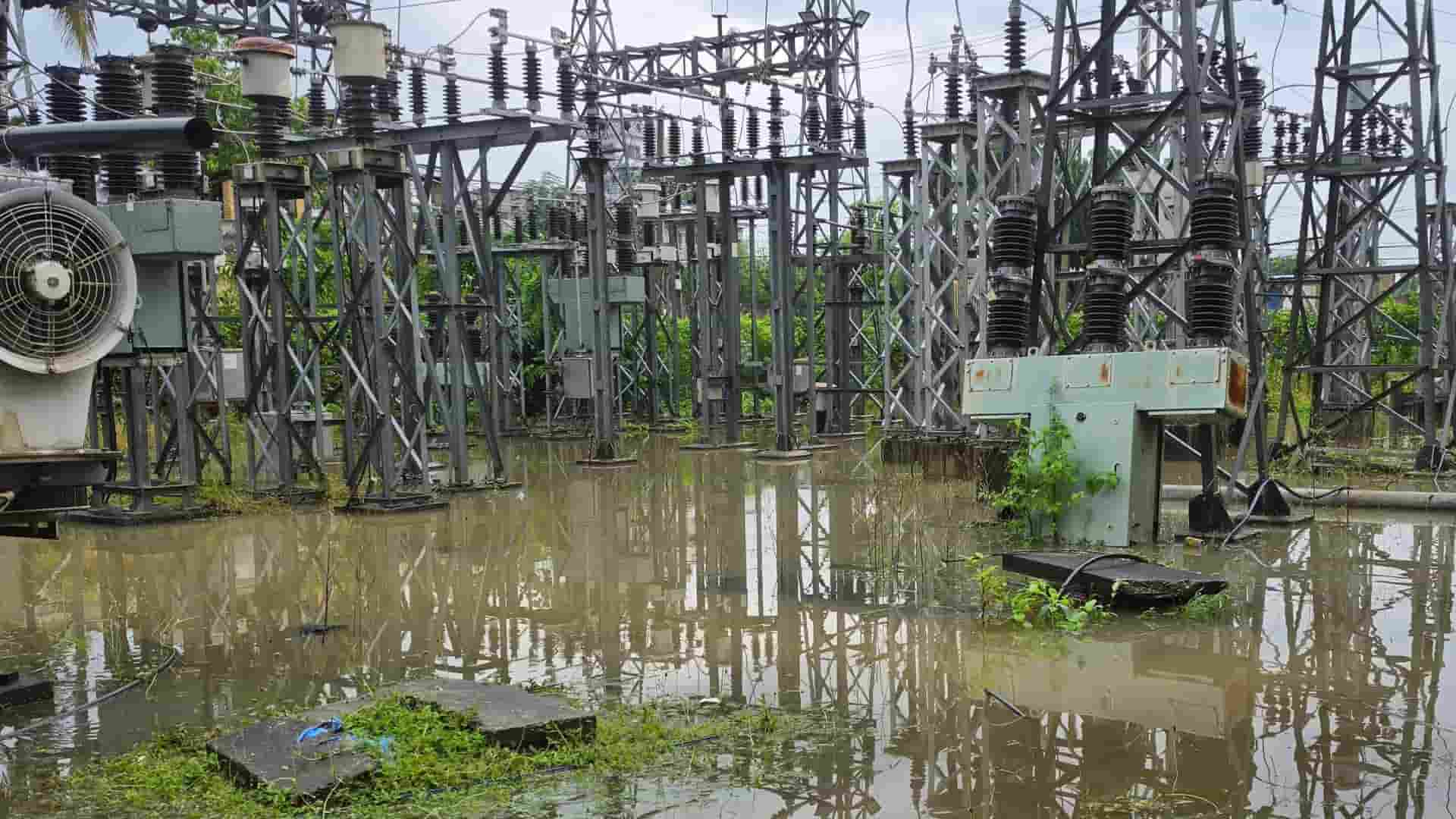
Floods and landslides triggered by incessant rainfall have disrupted hydropower generation and damaged electricity transmission and distribution infrastructure across the country, putting over 500 megawatts of generation capacity out of operation, according to the Nepal Electricity Authority (NEA).
At least 23 hydropower projects have stopped generating electricity due to direct damage, flood risks or disruptions to transmission infrastructure. The latest disruption comes about a month after floods in the Bhotekoshi-Trishuli river system knocked more than 400 MW of generation out of the national power system.
The NEA said continuous rainfall, strong winds, floods, landslides and lightning had damaged transmission and distribution infrastructure at several locations across the country. Electricity supplies have been disrupted in some areas, while flooding in rivers and streams has also affected the operation of several hydropower plants.
The 220 kV Kaligandaki Corridor has sustained significant damage. Towers 21 and 22 on the Dana–Kushma section in Myagdi and Parbat districts have been damaged, while a fault has developed on the Kushma–New Butwal section. According to the NEA, the disruptions have affected around 358 MW of generation connected to the corridor.
The NEA said hydropower plants including Kaligandaki, Upper Madi, Super Madi, Namargjun Madi, Seti River, Upper Dordi, Upper Marsyangdi, Middle Marsyangdi, Marsyangdi and Modi Khola have been shut down as a precaution because of the risk posed by flooding.
The 40 MW Rahughat Hydropower Project in Myagdi was also damaged just four days after it was connected to the national grid. The project, developed by Raghuganga Hydropower Ltd., a subsidiary of the NEA, had begun trial generation through its two 20 MW units when flooding damaged its tailrace.
The project had been scheduled to undergo a 15-day trial period before starting commercial generation. It is designed to generate around 247.9 million units of electricity annually, with about 34% of its output expected during the dry season. Its estimated construction cost, excluding interest during construction, is NRs 9.17 billion.
Damage to the Dana–Kushma section of the Kaligandaki Corridor has also halted generation from 12 projects connected to the line, including Nilgiri-1, Nilgiri-2, Mistri Khola, Gharkhola, Thapa Khola, Lele Khola, Ghalemdi, Upper Rahughat, Rahughat Mangle, Upper Thulokhola, Thulokhola and Rahughat.
Floods and landslides have damaged transmission and distribution infrastructure at the 220 kV, 132 kV, 33 kV and 11 kV levels in several locations. Electricity services have been disrupted in parts of Myagdi, Baglung, Manang and Mustang.
In Lamjung, rising water levels and heavy sediment in the Marsyangdi River have forced the 70 MW Middle Marsyangdi and 50 MW Upper Marsyangdi ‘A’ hydropower projects to suspend generation.
Middle Marsyangdi stopped generation early Sunday after mud, sand and debris accumulated at its dam, while Upper Marsyangdi ‘A’ halted operations on Saturday night after the river’s flow rose to around 1,500 cubic metres per second. Both projects opened their dam gates to reduce the risk from the buildup of sediment and debris.
In Manang, landslides caused by continuous rainfall have disrupted a 33 kV electricity line, affecting power supplies in parts of the district. Damage to roads and access routes has made it difficult for repair teams to reach some affected areas.
The NEA said it has mobilised technical and maintenance teams to collect details of the damage, identify affected areas, restore electricity through alternative arrangements and immediately repair damaged infrastructure. Where possible, electricity is being supplied through alternative feeders and available transmission and distribution networks.
However, heavy rainfall, floods, landslides and blocked roads are hampering access to some affected locations. The NEA said additional teams and equipment would be deployed and restoration work accelerated once roads and access routes are reopened.
The authority said it was mobilising all available resources on a high-priority basis to restore electricity supplies disrupted by the natural disasters as soon as possible.
The NEA has also urged consumers to remain cautious during the emergency and avoid approaching damaged electrical structures, fallen poles and power lines.
Read More Stories

Nepal needs to repeat to brand itself
Last year Nepal's goods exports jumped 81.8% to NRs 277.03 billion. That is...

Banking stocks gain momentum as dividend season begins
Dividend announcements by banks and financial institutions (BFIs) for fiscal year 2025/26 have...

Nepal’s challenge of building strong democratic institutions
Over the past few decades, institutional dysfunction and massive dissatisfaction with political establishments...