What we do is costly! Your support will help us dig more stories.
Yes, I'm Interested!Ignorance isn't always bliss | Don't stay foolish.
Keep informed | Read our news and analysis.
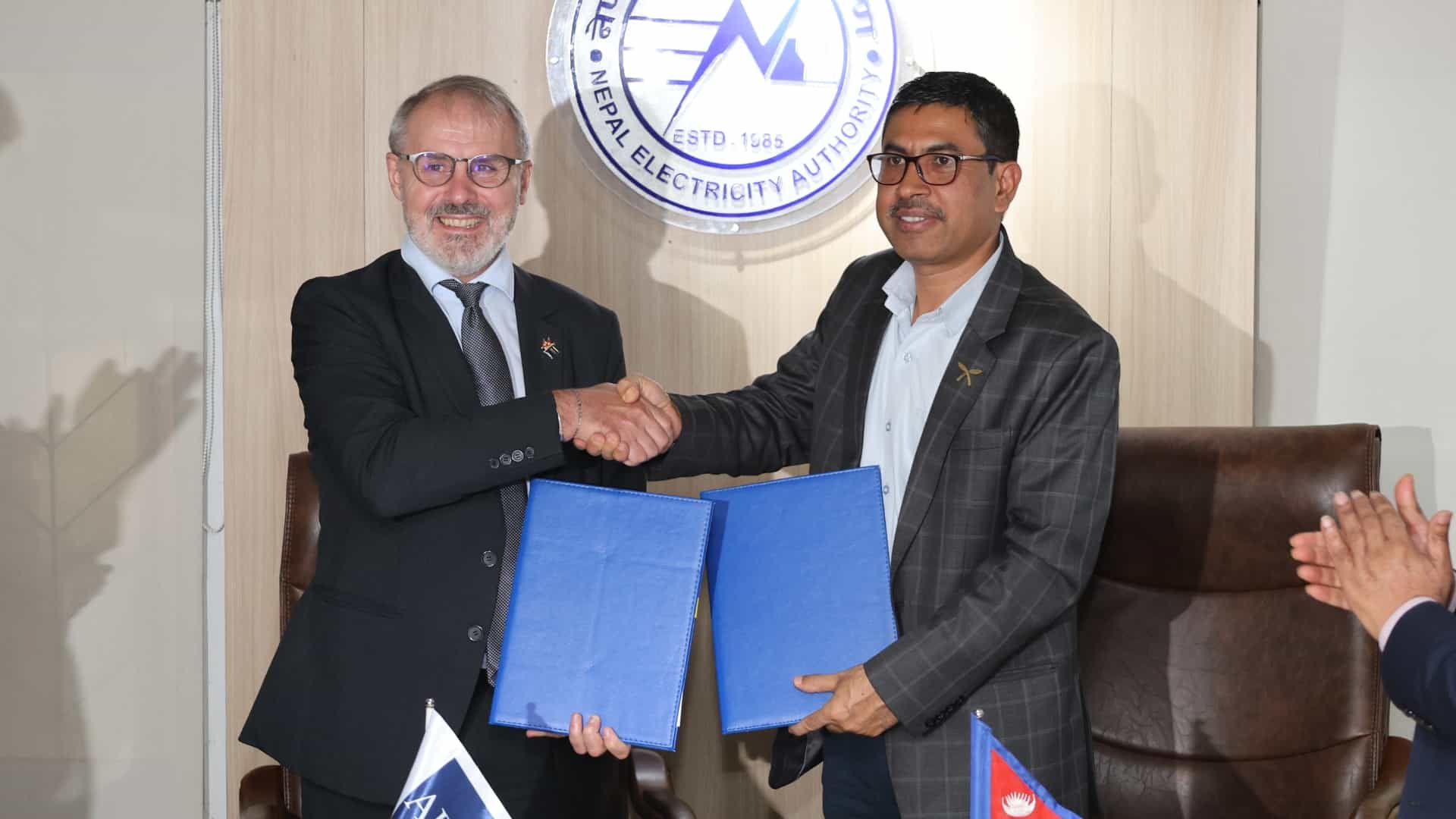
The Asian Development Bank (ADB) and Nepal Electricity Authority (NEA) have signed two transaction advisory agreements to develop major electricity transmission and battery storage projects under a public-private partnership (PPP) model, with more than $200 million in private investment expected to be mobilised.
The first project is a 134-kilometer, 400-kV double-circuit transmission line connecting Tingla Hub, New Khimti, Sunkoshi Hub and Dhalkebar. The line will pass through Solukhumbu, Okhaldhunga, Ramechhap, Dolakha, Sindhuli and Dhanusha.
The project is being prepared under a PPP structure in which a private partner would invest in the project and take responsibility for its design, construction, operation and maintenance for an agreed period. A tariff-based competitive bidding process is proposed to select the private partner.
The transmission corridor is intended to strengthen Nepal’s grid and improve the evacuation of electricity from generation areas to major demand centers. It will also support the integration of new renewable energy projects and future cross-border electricity trade.
The second project involves developing 100–150 megawatt-hours of utility-scale battery energy storage at multiple locations. Rather than installing the entire system at one site, the NEA plans to identify substations and demand centers where storage would provide the greatest benefit.
The batteries would store electricity when supply exceeds immediate demand and discharge it during periods of higher demand. The system is expected to help manage peak loads, accommodate fluctuations in renewable generation and improve grid stability and reliability.
Under the agreements, ADB will help the NEA conduct feasibility studies, structure the projects, prepare contractual documents, and manage procurement and competitive bidding. It will also provide institutional capacity-building support.
The PPP arrangements are intended to reduce the immediate financing burden on the NEA while bringing private capital and technical expertise into transmission and energy storage, areas where private-sector participation in Nepal has so far been limited.
The NEA is also discussing possible ADB financing for its own equity contribution to the projects, although the final financing structure has not yet been determined. The agreements signed with ADB are advisory arrangements and do not represent immediate financing commitments.
ADB said the two projects could establish a new model for mobilising private investment in Nepal’s power infrastructure as the country expands electricity generation, strengthens domestic supply and develops its capacity for electricity exports.
Read More Stories

Nepal needs to repeat to brand itself
Last year Nepal's goods exports jumped 81.8% to NRs 277.03 billion. That is...

Banking stocks gain momentum as dividend season begins
Dividend announcements by banks and financial institutions (BFIs) for fiscal year 2025/26 have...

Nepal’s challenge of building strong democratic institutions
Over the past few decades, institutional dysfunction and massive dissatisfaction with political establishments...