What we do is costly! Your support will help us dig more stories.
Yes, I'm Interested!Ignorance isn't always bliss | Don't stay foolish.
Keep informed | Read our news and analysis.
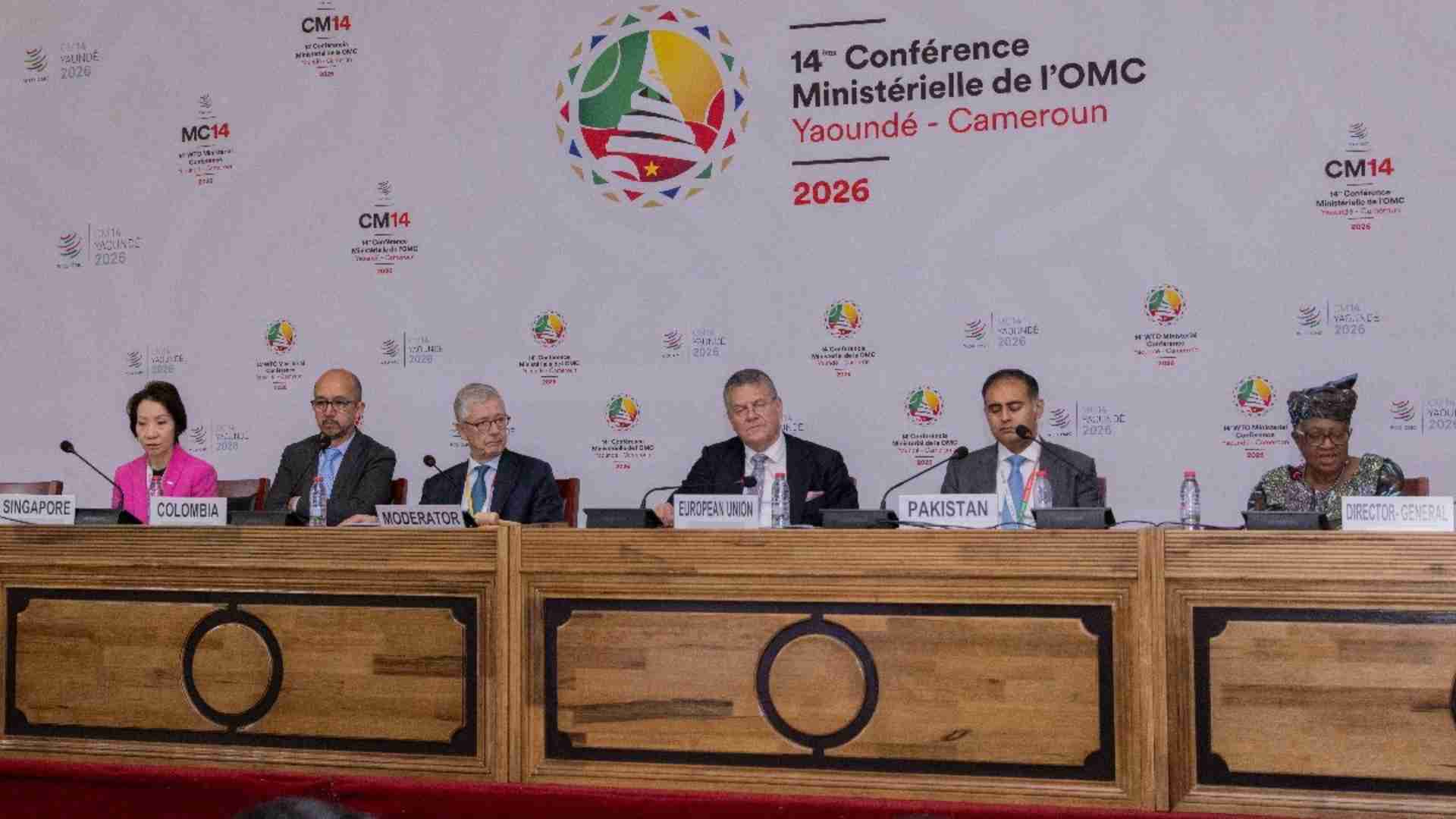
Today, Nepal faces an important trade policy decision. It joined the World Trade Organization in 2004, with the expectation that international trade disputes would be resolved through an institutionalised legal system. For smaller economies like Nepal, this system is particularly important because it helps ensure that larger trading partners follow agreed rules.
A key part of that system was the WTO Appellate Body, which reviewed dispute rulings and provided final, binding decisions. Unfortunately, the body has been paralysed since 2019 due to lack of adequate number of judges to review appeals. As a result, countries can challenge dispute rulings without receiving a final decision, creating what trade experts call “appeals into the void.”
To address this institutional deadlock, a group of WTO members created the Multi-Party Interim Appeal Arbitration Arrangement (MPIA), a temporary mechanism under Article 25 of the WTO's Dispute Settlement Understanding to resolve trade disputes through an appeal process while broader WTO reforms remain stalled.
Over 60 WTO members have joined the arrangement including many of the world's largest trading economies: the European Union (EU), China, Canada, Australia, Japan, Brazil, the United Kingdom, Singapore and Pakistan. Its membership spans developed and developing countries, demonstrating that support for the mechanism reflects a commitment to legal certainty rather than geopolitical alignment. The arrangement doesn’t replace the WTO or create new trade rules, but it does establish an identical legal obligation.
In the past two years alone, members have brought 22 new dispute cases before the WTO, as Director-General Ngozi Okonjo-Iweala noted at the 14th WTO Ministerial Conference. During this period, panel reports in five disputes were adopted without appeal, while eight other disputes were resolved by the parties themselves, including through mutually agreed solutions.
For Nepal, the question is whether remaining outside MPIA serves its interests. The answer increasingly appears to be yes.
As the country prepares for graduation to Least Developed Country (LDC) status, and is desperate to expand and deepen its integration into global markets, access to a reliable dispute-settlement mechanism may become increasingly important. The debate is therefore not only about trade law, but also about Nepal’s economic strategy and position in the international trading system.
Some may argue that joining MPIA is unnecessary since Nepal has no history of formal trade disputes, and the MPIA is just a temporary measure until full WTO reforms occur. However, even if temporary, the value of legal institutions lies in the credibility they provide. Such membership encourages compliance, reduces uncertainty and strengthens confidence among trading partners and investors alike.
Similarly, one of the most honest objections to MPIA participation is associated with Nepal’s institutional incapacity. There is a critical deficit in multilateral litigation, no direct experience in formal dispute proceedings, and there is a lack of specialised legal counsel, too.
Yet the same constraints ask for greater engagement than being absent. There are major trading nations that utilise high-level resources to withstand prolonged trade paradoxes. For a weak economy like Nepal, it remains highly vulnerable in the case of unresolved disputes. As such, building domestic expertise in trade law requires a forward looking approach, including active participation in international legal processes.
Nepal should also recognise the broader institutional signal associated with MPIA membership. Formalised recently on March 2, 2026, with the major composition of the MPIA member states, it requires a strategic interpretation rather than merely counting names.
The most interesting part of this arrangement is EU’s and China’s alignment: two actors, with diverse political systems that are usually locked in systemic friction, trade disputes, and regulatory clashes, have come together to preserve a functioning appellate process because they view enforceable rules as essential to international commerce. They are now the key pillars of this intermediate appeal system. It is far from coincidental. When longtime geopolitical rivals support a common institutional mechanism, it shows the mechanism has acquired a deeper and broader systemic importance than any individual member’s interest.
Similarly, Pakistan’s participation is noteworthy. As a developing South Asian economy facing as many structural constraints as Nepal, Pakistan’s participation reflects a pragmatic assessment that legal certainty remains valuable regardless of geopolitical considerations.
There are also criticisms that contend that MPIA is a deviation from the multilateral trade order. However, the arrangement exists entirely within the WTO legal framework and relies on provisions already contained in the Dispute Settlement Understanding. Joining this arrangement doesn’t weaken or fracture the global trade system. Rather, it actually follows the original architecture design of WTO rules to protect the interests, while the primary dispute system remains in limbo as negotiations on broader reform continue.
In this context, joining the MPIA shouldn’t be viewed as abandoning the WTO’s original dispute settlement mechanism. Nepal can support comprehensive WTO reform while simultaneously protecting its immediate legal interests through the interim arrangement. Waiting indefinitely for political consensus among major powers leaves Nepal exposed without contributing meaningfully to institutional reform.
The country’s approach therefore should be one of calibrated engagement.
First, Nepal should formally join the MPIA to protect its legal right in any potential disputes with the current and future MPIA signatories.
Second, it must strengthen its domestic legal capacity by investing in specialised legal expertise, improving institutional coordination and enhancing technical expertise of Nepal’s Permanent Mission in Geneva.
Third, Nepal must actively advocate for restoring the original dispute mechanism. Nepal’s decision to join MPIA must be presented publicly and diplomatically as a calculated strategic response to the WTO rather than just an acceptance of the incomplete system.
The absence of past litigation doesn’t protect Nepal from future conflicts, especially as Nepal faces the economic realities after leaving LDC status. Delaying the membership until an actual crisis occurs is a reactive approach that leaves Nepal entirely defenseless when a crisis hits.
Read More Stories

Nepal needs to repeat to brand itself
Last year Nepal's goods exports jumped 81.8% to NRs 277.03 billion. That is...

Banking stocks gain momentum as dividend season begins
Dividend announcements by banks and financial institutions (BFIs) for fiscal year 2025/26 have...
Nepal’s challenge of building strong democratic institutions
Over the past few decades, institutional dysfunction and massive dissatisfaction with political establishments...