What we do is costly! Your support will help us dig more stories.
Yes, I'm Interested!Ignorance isn't always bliss | Don't stay foolish.
Keep informed | Read our news and analysis.
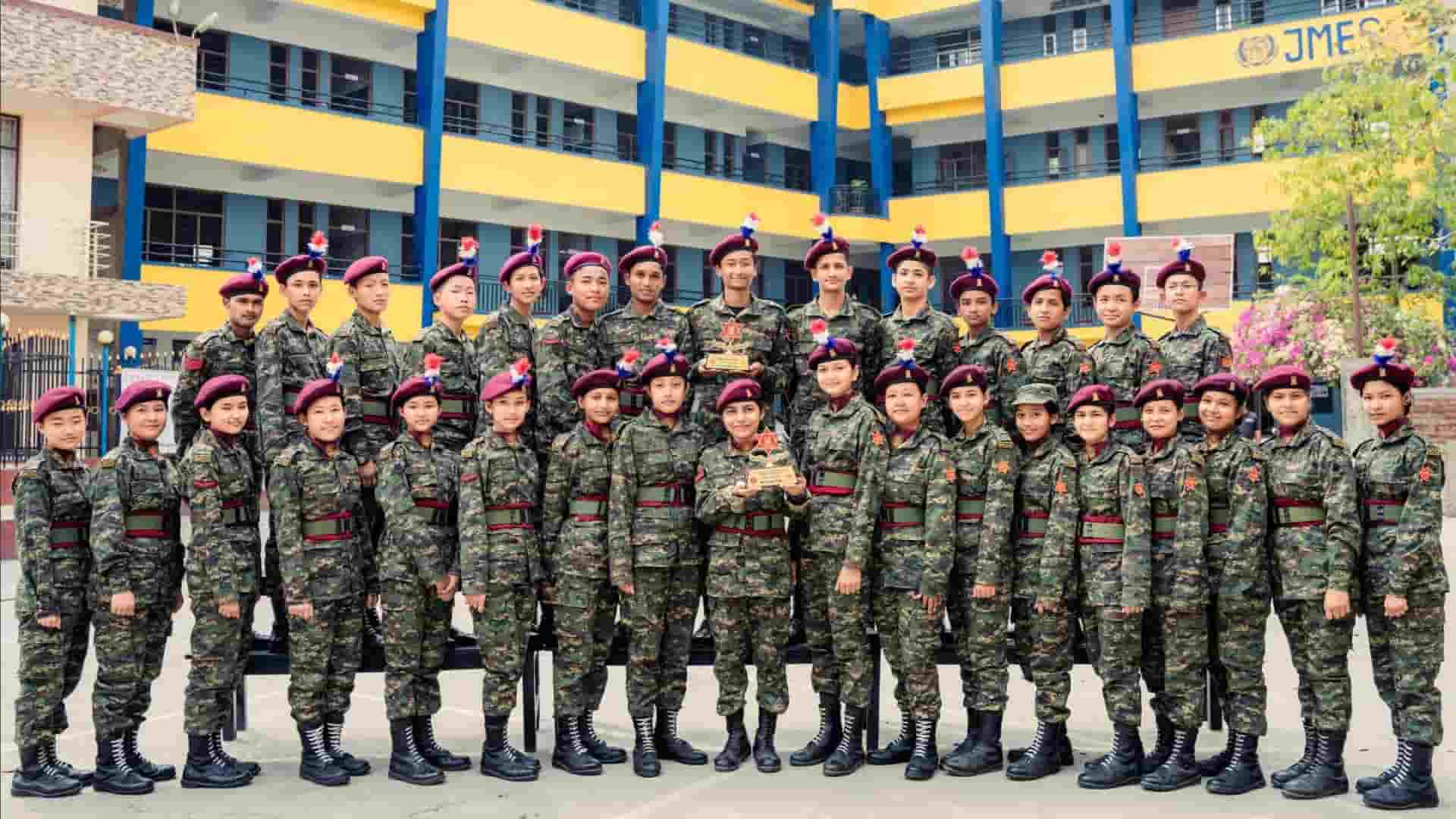
The House of Representatives recently passed the bill to replace and modernise the National Cadet Corps (NCC). The new bill replaces the 56-year-old National Cadet Corps Act of 2027 (1970), which has become outdated and difficult to implement for several specific reasons. Enacted during the Panchayat era without substantial revision, the old Act limited the NCC to school students only, and provided no clear legal authority to mobilise trained volunteers during national emergencies.
The government said that the 2027 Act was not enough to meet the requirement in Article 51(a)(6) of the constitution. The part of the constitution says the state makes citizens capable and ready for national service. New legislation aims to empower young people and inspire their dedication to the nation.
The NCC should be understood as a mechanism for channeling youth energy into national service, not as an attempt to expand the army's role. In the past, there were even rumours that the provision of compulsory military training would be incorporated in the constitution. This article examines the significance of the National Cadet Corps (NCC).
What is the National Cadet Corps?
The NCC, officially known as the Rastriya Sewa Dal, was administratively established in 1965 during the reign of King Mahendra. The youth service corp didn’t come into effect with an Act of Parliament, but with a cabinet decision. Five years later, the National Service Corps Act gave it a legal foundation. By 1974, it had reached beyond Kathmandu, and since 2018, the Nepali Army has extended it to all 77 districts.
The preamble of the Act stated that it was introduced to provide military training to students, instill loyalty to the country, develop a sense of national service, and help them become capable, disciplined citizens with strong leadership skills.
Embracing the motto “Discipline is the foundation of national service,” this programme conducts training for school and campus students under the special supervision and management of the Nepali Army. Currently, under the Army's direct oversight, students receive training in discipline, loyalty, and honesty, while building leadership skills and confidence, fostering respect for national unity and values, and preparing volunteer manpower for disaster management, rescue, and social service.
Origins and International Comparisions
According to the Nepali Army, the concept of the National Cadet Corps (NCC) originated in Germany in 1966, though its written history traces back to the Crimean War of 1856. British naval officers who participated in that war formed an organisation, the Naval Cadet Brigade, enrolling orphaned children of soldiers who had lost their lives. By 1914, it had fully converted into a service force.
Other countries have since learned from this practice, training their youth in their own ways. In neighbouring India, the National Cadet Corps was established in 1948 with goals to train youth in discipline, patriotism, and leadership development. Similarly, various countries have taught students aged 12–18 physical fitness, leadership development, and the qualities of good citizens.The trained youth are used as a reserve force at times of crisis.
The NCC Today, Scale, Selection, and Training
According to Nepali Army records, 89,894 cadets have successfully completed training through the NCC’s senior and junior divisions since its establishment. The programme has grown significantly from its initial annual intake of approximately 500 cadets in Kathmandu to 7,710 trainees nationwide in the current fiscal year. The government has set a target to expand annual training to 11,550 students.
As per the Commander-in-Chief Command Guidance, 2081 (2024), the army selects students based on population density and geographical structure. 60% of students are selected from government and community schools, and the remaining from private schools. Those wishing to join must pass a medical examination and obtain approval from their schools and guardians.
The training is offered at two levels: the Junior Division for class 8–10 students and the Senior Division for those at 11–12. The quota for male and female students is fixed at 50–50. Training is conducted at two phases: a 79-day institutional training at a specific school and a 21-day annual group camp at National Service Corps schools located in Morang, Mahottari, Nawalparasi, and Banke.
At camps, students learn basic military arts. They learn drill, khukuri drill, field craft, battle craft, and map reading. And, the Senior Division students receive weapons training, learn how to fire, and participate in adventure activities such as horse riding, swimming, and rock climbing.
The NCC’s 100-day training which most of it at the student’s own school, with 21 days at a residential camp, covers disaster management, first aid, and search and rescue. Cadets learn about Nepal’s disaster risks and volunteer when emergencies hit. In a country like ours, that training has real value. It builds a pool of young people who can step up when needed. We saw this during recent floods, when NCC cadets were out there helping with rescue and relief. That is service towards nations which have been instill in young people a sense of loyalty, hard work, and dedication to the nation by NCC.
The Nepali Army and the National Cadet Corps
The involvement of the army does not necessarily mean an organisation will become a military one. The bill clearly states that trainers do not have to be retired soldiers. Skilled civilians can also provide the training. It is non-military in nature. In Nepal, the army has experience, in disaster relief, first aid, leadership, discipline, search and rescue and crisis management.
The Ministry of Home Affairs and Nepal Police are already struggling to handle peace, security and and crime control. Given the shortage of human resources even in the National Cadet Corps, there is little scope for training a large number of youth. However, nationwide programmes of this scale can be conducted in a disciplined manner under the army's direct command and chain of command.
The question therefore should not be whether military expertise has a place. The real issue is whether that expertise can be used in a way that keeps institutions in control.Civilian institutions must remain in charge of policy decisions curriculum development, oversight and how things get carried out.
Cadet and youth defence programmes, in countries each have their own uniqueness. In, India, the UK, and the USA, cadet and youth defence programmes have been long established, with civilian policy control and voluntary participation. In countries like Estonia, Latvia, Norway, Finland, and Sweden, cadet and youth defense programmes have been adapted to fit each nation’s context.
Some are community-based, whereas others are school-linked. Some include basic military familiarisation; others are strictly non-combat. The common thread is not a single model but a shared principle: voluntary participation, civilian oversight, and a clear separation from operational military deployment.
Addressing Concerns
Some MPs have also raised concerns that “children are being taught military training and weapons,” citing a violation of Article 39 of the Constitution. Those concerns need attention yet participation in a cadet programme does not by itself turn students into soldiers. Article 39(6) forbids the recruitment of children or the use of children, in the army, police or armed groups.
The key question is whether the programme is designed and conducted as a youth development and educational initiative rather than as military recruitment or preparation for armed conflict. Cadet programmes that are structured teach discipline, leadership, physical fitness, teamwork, civic responsibility and disaster response skills, while maintaining clear safeguards for children's rights.
The bill passed by the lower house includes a provision allowing cadets to leave the training if they do not like it, and that the training is conducted without affecting the studies of the students. Its main objective is to teach discipline, leadership skills, physical fitness, love for the nation, and civic duty, while building self-confidence. The army conducts the programme on the complete voluntary will of students with the consent of parents and schools. Therefore, it is wrong to view this as a violation of child rights.
Another concern is that it risks “civilian supremacy and distorts the balance of power. Here, the prime minister is the patron of the NCC, and the board of directors includes civil officials such as the education secretary and the defence secretary.
Decision-making and budget control remain in the hands of the civil government. Similarly, the bill doesn’t have any provision stating that the volunteers will be mobilised to fight wars or carry out internal repression. The idea is to dedicate them to social service, which may also improve students’ mental health.
Recommendations for strengthening the NCC
The bill also states that, while selecting schools, priority will be given to community and institutional schools in remote, marginalised, and security-sensitive areas. The Nepali Army’s selection criteria must include schools in border areas, areas with indigenous and marginalised communities, and schools serving backward populations to secure inclusivity.
However, the number of young people completing NCC training remains limited compared with Nepal’s large youth population. Also, increasement of budget and mobilization of manpower are equally important for these kinds of trainings. The curriculum should focus on civic awareness, mental wellbeing, digital literacy, and community responsibility.
More importantly, NCC certification could be linked to a compulsory community volunteering component of one to two months, through which cadets participate in disaster response, health and sanitation campaigns, environmental protection, community service, or other locally relevant activities. This kind of approach would turn the NCC from a short-term training programme into a real and sustained platform for youth development, civic engagement, and community resilience.
In conclusion, it is important to view the National Cadet Corps from the perspective of a civilian youth development programme, not a military expansion. The NCC can serve its purpose only if civilian authority is real, voluntariness is guaranteed, and also through parliamentary monitoring. The Army's role should be to provide training support under civilian oversight. If the programme is designed this way, it can also strengthen democracy and national resilience.
Read More Stories

NEPSE on a rising spree pre-Dashain
The Nepal Stock Exchange (NEPSE) rose by 21.33 points (0.82%) on Wednesday, closing...
Why IPPAN opposes SEBON’s proposed IPO rules
The Independent Power Producers Association, Nepal (IPPAN) has urged the Securities Board of...

Market climbs by 4.12 points, turnover amounts NRs 4.68 billion
The Nepal Stock Exchange (NEPSE) climbed by 4.12 points (0.16%) to close at...