What we do is costly! Your support will help us dig more stories.
Yes, I'm Interested!Ignorance isn't always bliss | Don't stay foolish.
Keep informed | Read our news and analysis.
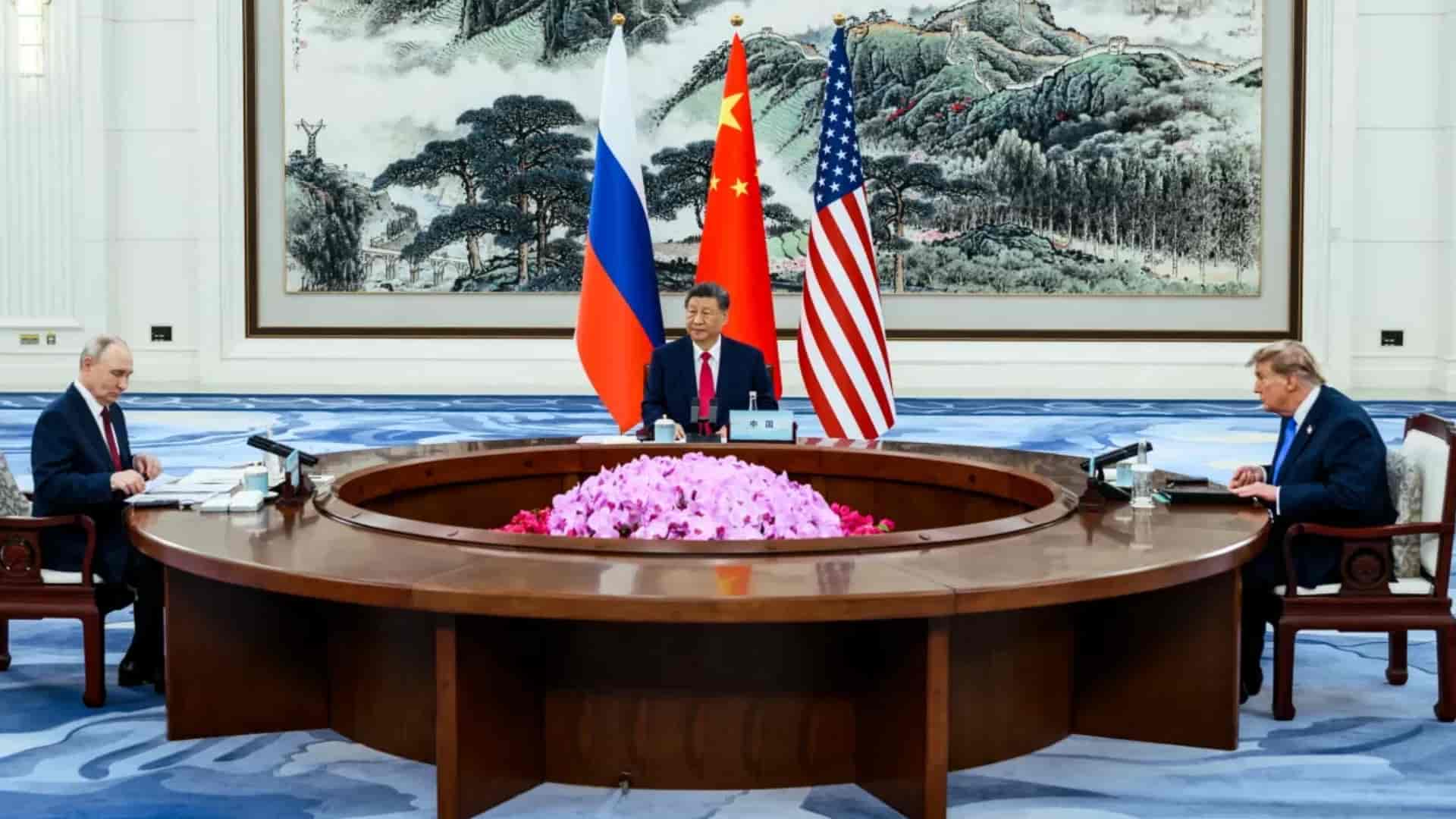
Last week was a mighty affair as three of the largest countries and global powers met to discuss global peace and nuclear weapons in Shenzhen, southeastern China, on the sidelines of the Asia-Pacific Economic Cooperation (APEC) summit. The meeting concluded with a four-point joint declaration. One of the key points was to reform the UN so that “it can respond more effectively to global challenges”.
This call for reform, however, is not new. But does it also entail a change to the structure of the UN Security Council, one of the most contentious aspects of reform long advocated by other powerful economies, even the P5 members?
A little over two months ago, on 22 September 2026, during his address to the 81st session of the United Nations General Assembly in New York, Turkish President Tayyip Erdogan raised similar concerns and criticisms of the veto powers granted to the permanent five members of the UN’s Security Council in the UN General Assembly.
“...a system where the will of more than 195 countries is subject to the whims of just five countries is not a fair system and it is not capable of fully inspiring or establishing trust either,” said Erdogan. The permanent five members include China, France, Russia, the United Kingdom, and the United States.
Erdogan is not alone in expressing these concerns. Leaders such as the Nigerian Vice President Kashim Shettima formally demanded Africa’s place on the council (UNSC), arguing that the post-Second World War order does not reflect current realities. The G4 consisting of India, Brazil, Germany, and Japan issued a joint statement claiming the current UNSC structure does not allow the body to fulfil its core function of protecting and upholding global peace. Similarly, the Singaporean Minister of Foreign Affairs Dr Vivian Balakrishnan, voiced the same concerns less than a year ago in his UN National Address.
It is no coincidence that these calls are gaining momentum at a time when wars are raging across the world. Among the most prominent are Israel’s genocidal assault on Palestine, the US war on Iran, and Russia’s continued war on Ukraine, along with armed conflicts, civil wars and insurgencies, in Africa and Asia. Currently, there are 65 active state-based conflicts across the world. However, inflammatory speeches by the US President Donald Trump contemplating on whether he should ‘annihilate Iran’, and Prime Minister Benjamin Netanyahu’s rationalisation of Israel’s military campaign in West Asia offer little indications these conflicts will subside anytime soon. Before the presidential election, Trump had vowed to end the Russia-Ukraine war in 24 hours after holding office, but the war continues to drag on.
The current situation in Palestine reflects the contradictions and double-standards of the global order, but it is hardly the first instance of such failures. Previously, it was France’s close ties with the Hutu government, the inaction of the US government, and the deliberate hollowing-out of United Nations Assistance Mission for Rwanda (UNAMIR) that allowed for a genocide of the Tutsi population in Rwanda. Declassified documents from the National Security Archive later revealed that US inaction and the Muse investigation report revealed that the French enabled a foreseeable genocide. While no direct veto was used in Rwanda, it is a failing of the P5 to effectively act on the genocide or the let the UN mobilise to manage it.
The veto power granted to the permanent five countries in the UNSC was in the aftermath of the end of the Second World War for their key roles in the war and the establishment of the UN 80 years ago. During negotiations over the structure, France and the UK vouched for a more democratic approach to the veto. The US and the Soviet Union, now Russia, pressed for what is now the current system. Under the arrangement, a resolution can only be adopted if none of the members votes against it.
The insistence for retaining the veto authority highlighted the then and continued political rivalry and tension between the democratic, liberal, capitalist USA and the communist and authoritarian Soviet Union, commonly known as the Cold War. While both supported the principle of granting veto powers to the permanent members, both were unwilling to let go of absolute power, fearing the political weaponisation of the veto by the other: one could use the veto to block decisions that threatened its political and strategic interests. The resulting arrangement institutionalised great-power privilege within the council.
The Cold War ended in the early 1990s with the US emerging as the victor and the dissolution of Soviet Russia. Russia has held the seat afterwards.Throughout the years, Russia and the US have continuously vetoed resolutions counting to 257 times, Russia 162 and US 95. The remaining three countries have used it a total of 66 times combined, China 16, UK 32, and France 18, which is less than what the US has used alone.
A frequent characteristic of the usage is the blocking of ceasefires in conflict-ridden countries, citing political reasons with no consideration of the civilian losses in those countries. In the 21st century conflicts, Russia and China have vetoed ceasefire resolutions concerning Syria, Sudan, Ukraine, and Zimbabwe. Similarly, the US has blocked ceasefire resolutions in the Gaza Strip in Palestine citing the resolution’s failure in condemning Hamas or recognising Israel’s right to defend itself.
Meanwhile, civilians in these regions, which include school-going children, pregnant women, teachers, doctors, and humanitarian aid providers, continue losing lives. Between 1 December 2024 and 28 November 2025, over 240,000 people were killed in conflict-related incidents. The Security Council is unable to mobilise its peacekeeping troops due to conflicting interests of the permanent five. Two prominent examples illustrate this deadlock. Russia’s ambition in the region, its retaliation against NATO’s eastward expansion, and Ukraine’s strategic value in the Eastern European region for Russia’s veto. On the other side of the North Atlantic Sea, the powerful Jewish lobby in the US and its close military alliance with Israel remain the core reason behind the veto.
Where does this leave the calls for reform within the UN then?
Firstly, the UK and France support limiting the veto power of the permanent five in cases of humanitarian crises. France, along with Mexico, a non-permanent member of the council, has led this effort since 2015, while the UK joined in 2016. Currently, this proposal has 128 supporters, one short of the UN majority. This remains a symbolic measure rather than a binding decision with tangible results on the ground. However, there is also pressure on the permanent five from various quarters to consider the need for a reform, particularly with regard to their veto powers.
Read More Stories
Trump, Putin and Xi sign joint peace declaration after historic trilateral summit
US President Donald Trump, Russian President Vladimir Putin and Chinese President Xi Jinping...

NEPSE starts the week on a positive note, gains 2.27 points
The stock market started the week on a positive note, with the Nepal...
India has announced NRs 240 billion in development assistance to Nepal and exchanged...