What we do is costly! Your support will help us dig more stories.
Yes, I'm Interested!Ignorance isn't always bliss | Don't stay foolish.
Keep informed | Read our news and analysis.
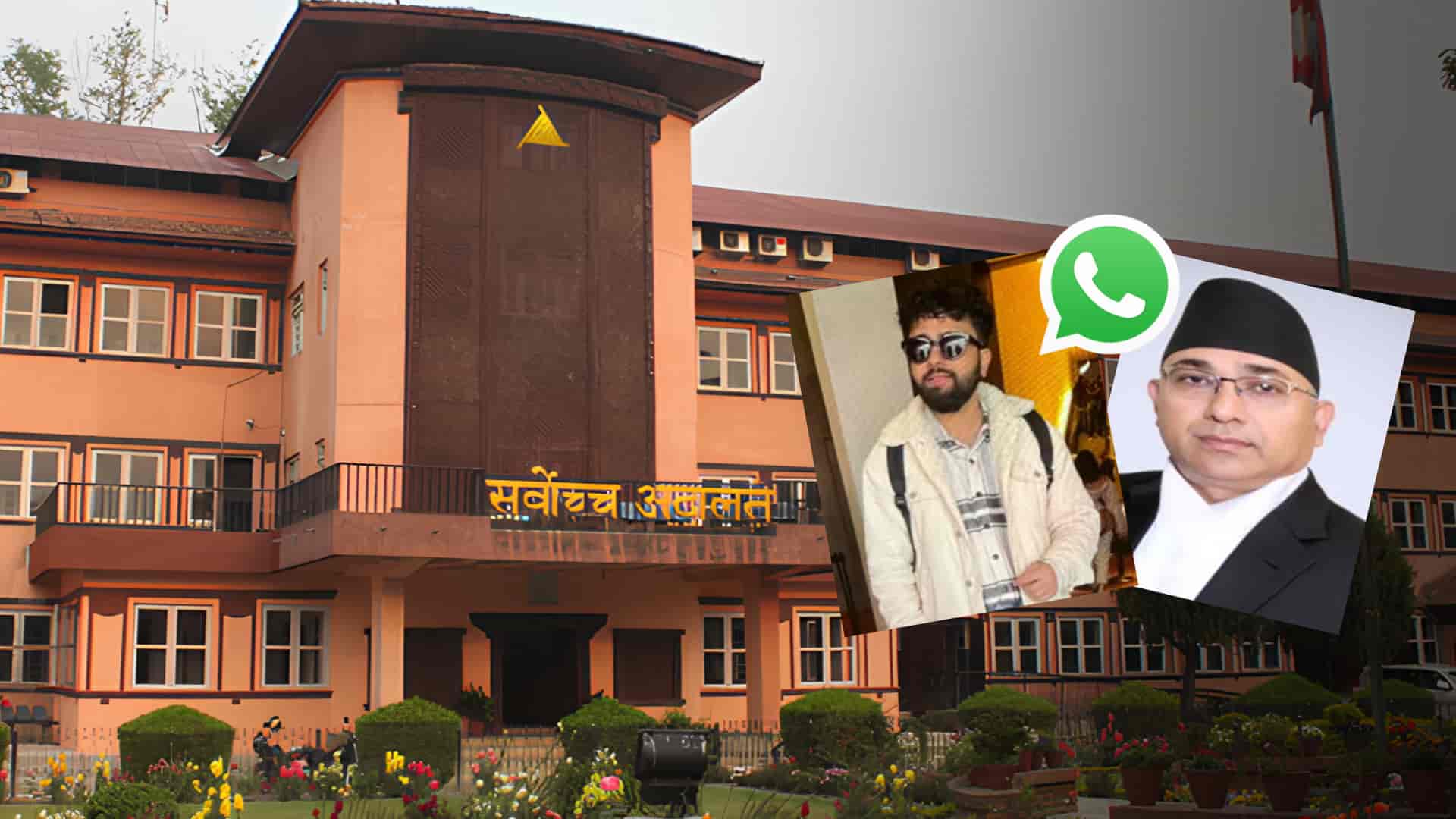
Supreme Court has called for an independent and impartial investigation into reports linking its chief justice and other justices with alleged intermediary Inam Sapkota, following growing questions about judicial conduct, case allocation and the court’s institutional credibility.
A full-court meeting on Monday, attended by all sitting justices, issued a five-point statement urging the relevant authorities to investigate the matters reported in the media and make their findings public as soon as possible.
The court reaffirmed its commitment to the Constitution, the rule of law and legal accountability, and said it would cooperate with investigations conducted in accordance with the law.
However, it also urged media organisations not to publish reports that could mislead the public, prejudice individuals or obstruct the administration of justice before an investigation is completed.
The statement marks the court’s first collective institutional response to disclosures that have raised questions about the conduct of senior members of the judiciary. But it does not establish who will conduct the investigation, how it will proceed or whether the court itself will initiate a separate inquiry.
The controversy has placed Chief Justice Manoj Kumar Sharma and Justice Hari Prasad Phuyal under scrutiny following the publication of WhatsApp exchanges, details of a meeting with Sapkota and documents purportedly showing financial transactions involving influential public officials.
Sapkota, who was arrested on September 27, is being investigated over his alleged links with serving and former judges, senior security officials, lawmakers and government officials.
Questions over a justice’s communication with an alleged intermediary
The controversy intensified after Naya Patrika published details of WhatsApp exchanges between Phuyal and Sapkota concerning a habeas corpus petition filed by businessman Rohit Gupta.
According to the published messages, Sapkota sent Phuyal a screenshot of Gupta’s petition and asked the justice to dismiss it, claiming that Prime Minister Balendra Shah was also interested in the matter.
Phuyal subsequently replied that there were grounds to release Gupta and that the court had ordered him to furnish NRs 20 million in bail. He also shared a link to the Supreme Court order and proposed meeting Sapkota at Hotel Himalaya the following evening.
The Supreme Court subsequently ordered Gupta’s release on bail on September 2, overturning the Special Court’s decision to keep him in custody pending trial.
Phuyal acknowledged communicating with Sapkota and meeting him but maintained that he had not compromised judicial propriety or attempted to influence the administration of justice. He also said he was prepared to cooperate with any investigation.
The exchanges have raised questions not simply about the outcome of the case but about why a sitting Supreme Court justice was communicating with an individual accused of acting as an intermediary in judicial matters while a case was pending before the court.
A separate set of documents circulated on social media has also drawn Chief Justice Sharma into the controversy. The documents purportedly detail deposits in bank accounts in Nepal and the United States, listing Sharma alongside Rastriya Swatantra Party lawmaker Bishwaraj Pokharel and senior security officials.
The records refer to deposits totalling 198,333 in unspecified currency over three months and a further request for $7,500.
The authenticity, context and purpose of the purported transactions have yet to be independently established. Sharma has denied knowing or having any contact with Sapkota.
The disclosures have also revived questions about Sapkota’s access to powerful figures across the judiciary, security agencies and political establishment.
Full court calls for investigation
Monday’s meeting followed growing pressure within the judiciary for a collective response to the disclosures.
A previous full-court meeting on October 30 had discussed four major issues: justices’ contacts with Sapkota, allegations involving the chief justice, the dispute over the formation of the Constitutional Bench and possible violations of judicial conduct rules.
Read also:
Supreme Court faces disputes over bench, appointments
During that meeting, Phuyal briefed his colleagues about his communications with Sapkota and their meeting at Hotel Himalaya. He maintained that he had acted without improper intentions and said he had agreed to communicate after Sapkota approached him through a relative.
Other justices reportedly argued that the controversy could no longer be treated as an internal matter and called for an investigation committee led by a sitting justice.
They also urged the chief justice to address questions surrounding the WhatsApp exchanges, the meeting and the stalled Constitutional Bench.
The October 30 meeting did not reach a clear decision on establishing an internal investigation committee.
Monday’s five-point statement instead called on the relevant authorities to conduct an independent and impartial investigation. It did not publicly identify a specific investigative body or announce the formation of a committee within the Supreme Court.
The court also urged judicial personnel across the country to continue their work without being distracted by the controversy.
A second cause list raises fresh questions
Even as the controversy over judicial conduct was unfolding, a separate incident involving the Supreme Court’s case-allocation system raised further concerns about transparency.
On Friday, a second cause list reportedly appeared after justices had already drawn lots to determine their benches and selected cases for hearing.
According to reports, the bench of Justices Sharanga Subedi and Shanti Singh Thapa was assigned another list of cases after the initial lottery process.
The second list included six habeas corpus petitions, including one filed by Chaturbhuj Bhatta, father of detained businessman Deepak Bhatta. None of the petitions was heard, and the cases were subsequently marked as not reached.
The development has raised questions about how a second list was added after the lottery process and whether the established case-allocation procedures were followed.
The lottery system was introduced to reduce allegations of manipulation in bench formation during the tenure of former chief justice Cholendra Shumsher Rana.
Under the system, justices draw lots to determine bench compositions and the cases assigned to them. Any unexplained alteration to the process therefore raises concerns about the transparency and predictability of judicial proceedings.
The questions are particularly significant for habeas corpus petitions, which concern the legality of a person’s detention and are generally accorded priority under Supreme Court regulations.
The Supreme Court administration has yet to publicly explain the appearance of the second cause list.
RSP weighs parliamentary action
The controversy has also moved into the political arena, with the ruling Rastriya Swatantra Party considering parliamentary action against justices facing questions over their conduct.
The party’s secretariat meeting on Saturday directed its parliamentary wing to initiate a process through Parliament to address the allegations.
Party leaders have indicated that impeachment is among the options under consideration. However, the parliamentary party has yet to settle on the course of action.
RSP spokesperson Jagadish Kharel said the party believed issues concerning the judiciary should be addressed through Parliament, while acknowledging that the final decision would rest with its parliamentary wing.
There are also differences within the party over whether to pursue impeachment immediately or first initiate an investigation into the allegations.
Under Article 101 of the Constitution, the chief justice and Supreme Court justices can face impeachment proceedings on grounds including serious violations of the Constitution or law, misconduct, incapacity or failure to discharge their duties honestly.
A motion requires the support of at least one-fourth of the total members of the House of Representatives to be registered. Its passage requires a two-thirds majority of the House's total membership.
The constitutional process also provides a route through the Impeachment Recommendation Committee, which can examine complaints submitted by at least three lawmakers.
The RSP has not yet formally initiated impeachment proceedings.
Accountability cannot end with a statement
The Supreme Court’s decision to call for an independent investigation acknowledges that the allegations are serious enough to require scrutiny beyond institutional assurances.
Its appeal to protect the administration of justice and avoid prejudging individuals also raises an important distinction: reporting on allegations involving public institutions is not the same as declaring those allegations proven.
The media has a responsibility to verify evidence, provide the individuals concerned an opportunity to respond and distinguish between established facts and unverified claims. Equally, calls to avoid prejudicial reporting cannot become a substitute for transparency or a reason to discourage legitimate scrutiny of the judiciary.
The controversy also exposes a broader institutional challenge. The judiciary is expected to uphold accountability across the state, but it must demonstrate that its own members are subject to credible scrutiny when serious questions arise about their conduct.
The immediate questions remain unanswered: Who will investigate the reported communications and financial dealings? Will the investigation be independent of the individuals and institutions under scrutiny? Will the Supreme Court explain the unexplained changes to its cause list? And will the dispute over the Constitutional Bench be resolved?
The full court has now called for an investigation. What remains to be seen is whether that call will translate into a transparent process capable of establishing the facts and restoring public confidence.
For an institution whose authority rests substantially on public trust, a statement of commitment to accountability will not be enough. The credibility of the response will ultimately depend on what is investigated, what is disclosed and what action follows.
Read More Stories

NEPSE plunges 32.65 points amid political uncertainty, turnover drops 19.25%
The stock market witnessed a significant decline on Monday, with the Nepal Stock...

FDI pledge plunges by 54% in Q1
Nepals foreign direct investment (FDI) commitments fell by 53.8% in the first quarter...
Four decades of pollution, another promise to revive Sirsiya River
SIRSIYA, RIVER, POLLUTION. If you come across these three keywords in the same...