What we do is costly! Your support will help us dig more stories.
Yes, I'm Interested!Ignorance isn't always bliss | Don't stay foolish.
Keep informed | Read our news and analysis.
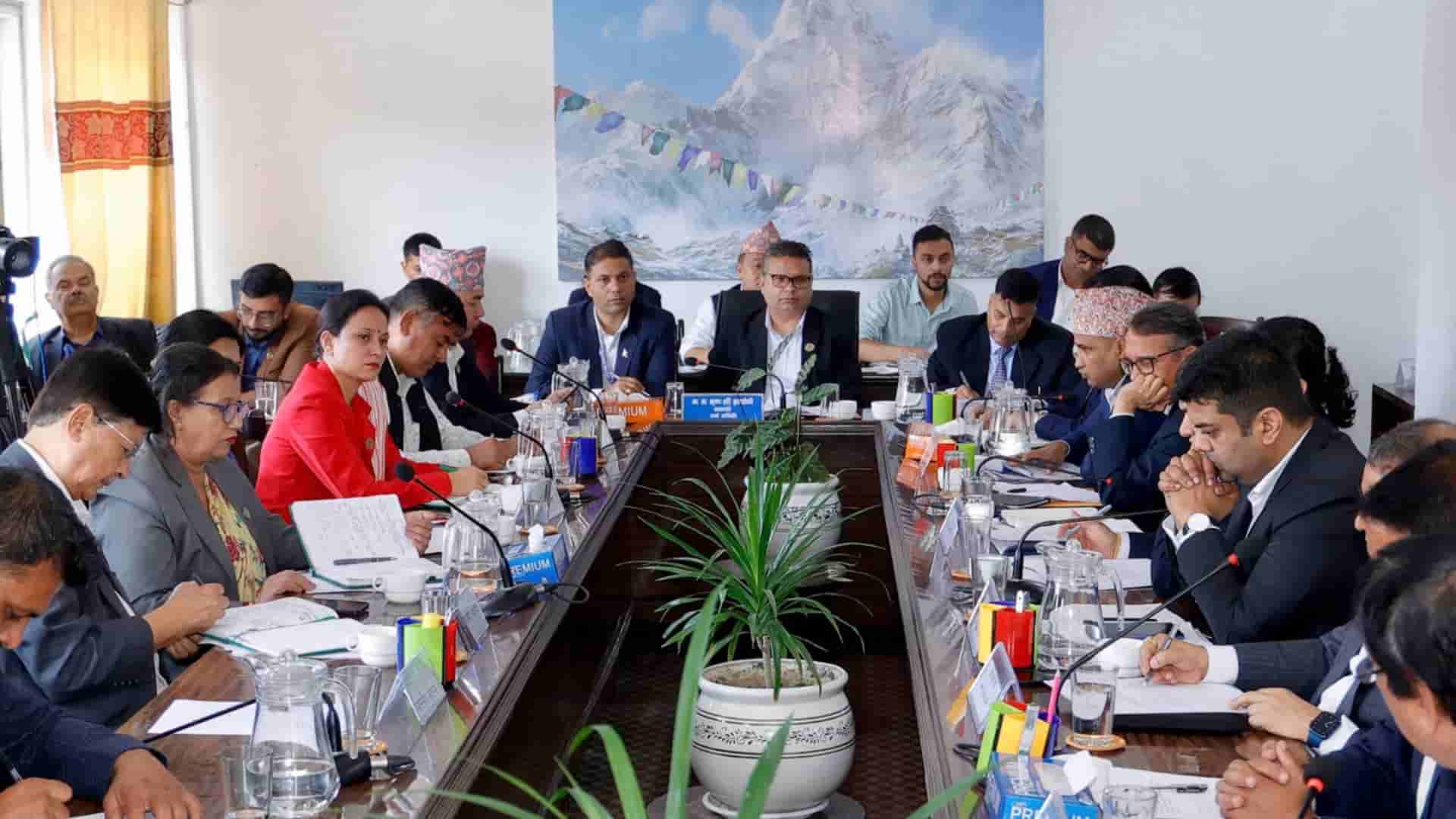
The Finance Committee of the House of Representatives has issued a five-point directive aimed at making the country’s capital market more transparent, orderly, technology-driven and investor-friendly.
The committee on Wednesday has called on regulators to strengthen oversight of the stock market, improve the IPO approval process, curb market manipulation and accelerate reforms at key market institutions.
Under the directive, companies seeking to issue shares to the public should be assessed and prioritised based on factors including capital adequacy, technology, net worth, balance sheets and returns. The committee has also asked authorities to review existing rules on the minimum shareholding that company founders are required to retain.
The committee has directed the Securities Board of Nepal (SEBON) and Nepal Stock Exchange (NEPSE) to step up surveillance against market manipulation. It specifically called for action against practices such as cornering, circular trading and pump-and-dump schemes, as well as attempts to create artificial demand, supply shortages or prices.
Companies and individuals found to be manipulating the market should face action under existing laws, the committee said.
The committee has also called for a new securities bill that clearly defines the respective roles and responsibilities of SEBON, NEPSE and CDS and Clearing Ltd. The move is intended to address overlaps and improve coordination among the institutions responsible for regulating and operating the capital market.
NEPSE technology upgrade
Modernising NEPSE’s infrastructure is another key component of the directive. The committee has called for the restructuring of NEPSE and an upgrade of its online trading system, while also urging closer monitoring of the market and prompt action against those involved in misconduct.
The committee also raised concerns over the prolonged vacancies of chief executive officers at NEPSE and CDS and Clearing. It has directed the government to initiate the necessary process to fill the positions, citing the importance of effective leadership for market operations and management.
The directive comes as SEBON works on broader reforms covering both the primary and secondary markets. SEBON Chairman Dr. Gopal Prasad Bhatt told the committee that the regulator is developing measures covering IPO approvals, price discovery, qualified institutional investors, share allotment, brokerage services and market infrastructure.
According to figures presented by Bhatt, the number of demat accounts in Nepal has reached about 8.1 million, with more than 5.1 million active Mero Share accounts. The number of investors with trading accounts exceeded 3.56 million by the end of the last fiscal year.
SEBON outlines three-phase reform plan
Separately, SEBON has outlined a three-phase strategy for reforming the capital market, focusing on policy improvements, infrastructure development and institutional strengthening.
Bhatt told the Finance Committee that SEBON has established separate reform committees for the primary and secondary markets. The committees include representatives from NEPSE, CDS and Clearing, the Federation of Nepalese Chambers of Commerce and Industry and the Merchant Bankers Association.
The board plans to develop reforms through a staged process: preparing concept papers, discussing them with relevant committees, seeking public feedback and then implementing the resulting policies.
For the primary market, SEBON is working on reforms covering IPO issuance, price discovery, qualified institutional investors, share allotment and mutual funds. Bhatt said implementation would take into account market readiness and the capacity of market participants.
For the secondary market, SEBON plans to restructure the brokerage industry and develop brokers from predominantly family-run businesses into more professionally organized institutions. The board is also considering a four-tier classification of brokerage firms based on their capacity and service capabilities, including a broader structure incorporating stock-dealing activities.
SEBON signals flexibility on proposed net worth requirement for IPOs
SEBON is also preparing a standardised procedure for IPO approvals to make the process more systematic and transparent.
The reform push comes amid debate over SEBON’s proposed eligibility criteria for IPOs, including a provision requiring companies issuing shares at a face value of NRs 100 to have a net worth above NRs 100 per share. Bhatt has indicated that the proposed threshold is not final and could be revised after considering stakeholder feedback.
Bhatt said that the proposed net-worth requirement is not final. Speaking at a meeting of the House of Representatives’ Finance Committee, Bhatt said the provision was included in a draft directive on eligibility requirements for public issuance and that the board is currently reviewing feedback from stakeholders.
The draft, made public on September 17, proposes that companies issuing shares at a face value of Rs 100 should have a net worth above Rs 100 per share. The provision has drawn opposition from businesses in the hydropower, manufacturing and processing, hotel and tourism sectors.
Businesses in capital-intensive industries have argued that their net worth can remain relatively low while they are raising capital for new investments. They have therefore raised concerns that the proposed threshold could restrict companies from accessing the capital market when they need funds for expansion and project development.
Bhatt said the proposed threshold was intended as a general eligibility standard to ensure that companies entering the secondary market meet basic quality requirements, rather than as an automatic basis for rejecting IPO applications.
He also said SEBON is working to make the IPO approval process more transparent and systematic. According to Bhatt, the board is developing a standard operating procedure (SOP) covering the review of IPO applications, including document checklists and the responsibilities of officials at different levels.
The chairman said the backlog of IPO applications predates his tenure but acknowledged that the board is now working to process the pending applications systematically. He added that a summarised version of the new SOP would be published on SEBON’s website.
Read More Stories

ADB, NEA advance transmission and battery storage projects under PPP model
The Asian Development Bank (ADB) and Nepal Electricity Authority (NEA) have signed two...

Market reform measures fail to lift sentiment as NEPSE extends weekly decline
The stock market extended its downward trend on Friday, with the Nepal Stock...

What is a ‘cancer gene’? How genetic mutations lead to cancer
An estimated 170,000 Australians were diagnosed with cancer in 2025. Many people know...