What we do is costly! Your support will help us dig more stories.
Yes, I'm Interested!Ignorance isn't always bliss | Don't stay foolish.
Keep informed | Read our news and analysis.
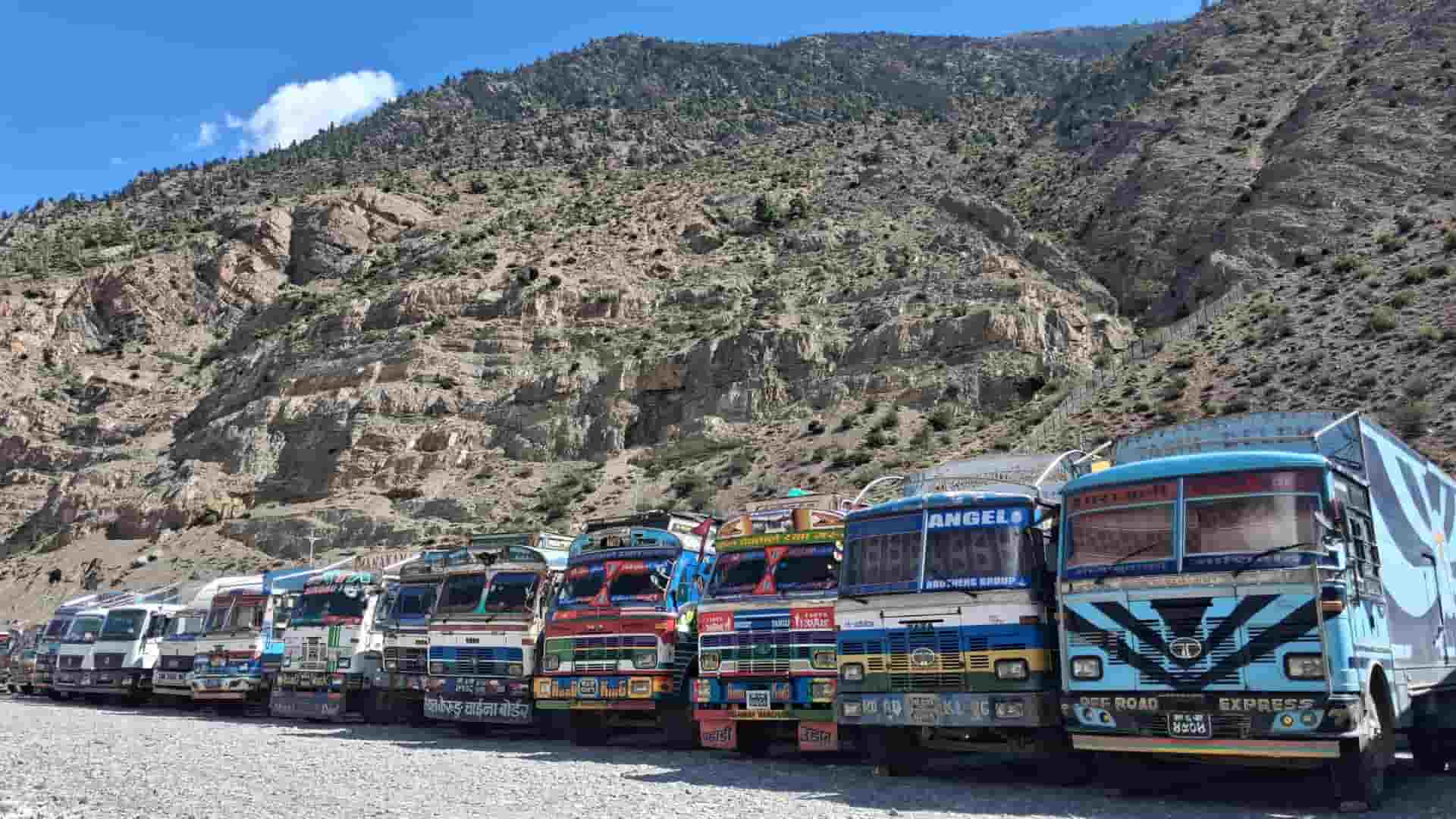
Nepal could increase its exports of goods and services by as much as 112% over the next five years if it can remove the financial, logistical, infrastructural and policy barriers holding businesses back, according to a new study by the Asian Development Bank (ADB) and South Asia Watch on Trade, Economics and Environment (SAWTEE).
But the report also exposes a deeper problem: Nepal has export potential, yet the domestic business environment makes it difficult and expensive for companies to turn that potential into scale.
High borrowing costs, taxes on imported production inputs, weak logistics and trade infrastructure, difficulties obtaining affordable land and shortages of skilled workers are among the biggest obstacles identified by exporters.
The findings come as Nepal seeks to shift away from an economic model heavily dependent on remittances and private consumption toward one driven by private investment, productivity, employment and exports.
The study, Nepal’s Exports of Goods and Services: Constraints and Enablers, was released in Kathmandu on Tuesday at a programme organised jointly by ADB, the Ministry of Finance, SAWTEE and the Society of Economic Journalists Nepal.
Researchers interviewed 50 firms, 38 of them exporters, while 45 firms completed a structured questionnaire. Almost all reported facing constraints to their operations and export expansion.
Finance is the biggest obstacle
For Nepali exporters, the first hurdle is often not a foreign market but the domestic financial system.
About 84% of surveyed firms identified access to finance as a constraint, while 54% rated it as a major or severe obstacle.
Interest rates were identified as the biggest problem, followed by fluctuations in borrowing costs and collateral requirements. Small and medium-sized enterprises are particularly exposed because they typically have fewer assets to pledge and less bargaining power with lenders.
Expensive credit directly undermines export competitiveness. Companies need working capital to purchase inputs, maintain inventories, invest in equipment and fulfil large orders. When borrowing is costly, the price of Nepali products rises before they even reach the border.
Taxes on imported production inputs compound the problem. 47% of surveyed firms considered such taxes a major or severe obstacle.
For manufacturers dependent on imported raw materials, components and machinery, the combination of expensive finance and costly inputs can make it difficult to compete with producers in larger and more integrated economies.
Logistics keeps Nepal tied to nearby markets
Poor logistics and trade infrastructure are another major weakness.
Exporters cited transportation problems, inadequate trade infrastructure, difficulties importing production inputs and the limited availability of affordable land as significant constraints.
The problem becomes particularly acute for firms trying to move beyond India.
Businesses exporting to markets other than India identified logistics and trade infrastructure as their biggest challenges, highlighting the disadvantage faced by a landlocked economy trying to serve distant markets.
Nepal’s merchandise exports are also highly concentrated geographically. Between 2022 and 2024, around 71.9% of average merchandise exports went to India, with an annual average value of about $958.7 million.
ADB Country Director for Nepal Arnaud Cauchois said Nepal’s goods exports had remained sluggish, with exports’ share of GDP falling from 15.4% in 2000 to around 5% in 2025.
For Nepal to move toward high-income status, he said, the country must transition from a growth model based largely on remittances and consumption to one driven by productivity, domestic and foreign investment, technology, skills and exports. RRising Nepal
The export opportunity is bigger than the current numbers suggest
The study's estimate that exports could rise by 112% in five years if major constraints are addressed offers a glimpse of what Nepal could achieve with a more competitive business environment.
But the country also faces a structural problem: exports remain concentrated in a relatively small number of products and markets.
That leaves businesses vulnerable to changes in demand, trade policies and production conditions.
Climate change is adding another layer of risk. Exporters reported that changing climatic conditions were already affecting production of important commodities such as cardamom and tea.
Businesses also cited limited government support, inadequate information about the consequences of Nepal’s graduation from least-developed-country status and barriers to e-commerce as emerging challenges. FFiscal Nepal
IT is growing fast, but Nepal remains at the lower end
Information technology offers a very different export opportunity because digital services can reach international customers without the physical transportation costs faced by merchandise exporters.
Nepal’s IT service exports were estimated at around $515 million in 2022, an increase of 64.2% from the previous year. More recent estimates suggest annual IT exports have now crossed $600 million.
Yet rapid growth has not necessarily translated into a stronger position in the global technology value chain.
Much of Nepal’s IT industry remains concentrated in lower-value and subcontracted work for foreign companies. Nepali firms and freelancers often depend on overseas clients obtained through personal connections, diaspora networks and Nepalis working abroad.
This has helped the industry grow, but it also exposes its weakness: Nepal has yet to build enough direct relationships with major international technology buyers.
The government has set an extraordinarily ambitious target of raising IT service exports to NRs 3,000 billion, or roughly $22 billion, while generating hundreds of thousands of jobs.
The SAWTEE study suggests that reaching that goal will require much more than announcing incentives.
Cybersecurity and skills could determine the next phase
Weak cybersecurity, inadequate data protection, unclear rules governing cross-border data transfers and insufficient intellectual-property protection are among the biggest constraints facing Nepal’s IT exporters.
These are increasingly important as international companies become more cautious about where they send sensitive data and outsource technology work.
Digital infrastructure is another weakness. The study cites survey findings showing that 56.8% of IT firms considered existing internet services inadequate, while 63.6% of freelancers reported connectivity problems.
A shortage of highly skilled workers presents another challenge
Nepal has a young technology workforce and a significant pool of freelancers, but many companies struggle to find experienced professionals with the practical skills demanded by international clients. At the same time, migration is reducing the pool of skilled workers available domestically.
The country’s relatively low wages nevertheless remain an important competitive advantage.
The challenge is to convert that cost advantage into higher-value software, technology and digitally delivered services rather than remaining primarily a low-cost subcontracting destination.
Tourism and services offer additional room for growth
Tourism is another area where Nepal could expand service exports, but it faces its own structural constraints.
The study identifies weak coordination among federal, provincial and local governments, insufficient targeted promotion, underdeveloped destinations, limited international air connectivity and shortages of skilled workers as key barriers.
At the same time, growing hotel capacity, religious tourism and emerging tourism activities provide opportunities for expansion.
Across both tourism and IT, the underlying message is similar: Nepal has products and services that international customers want, but the supporting ecosystem is not yet strong enough.
The diaspora may be one of Nepal’s biggest untapped assets
One of the more positive findings is the role of Nepal’s diaspora in helping businesses reach foreign markets.
Exporters cited overseas Nepalis and their professional networks as important channels for finding customers and establishing business relationships.
Trade fairs, digital marketing, export houses, personal contacts in destination countries and Nepal’s positive international image have also helped firms enter foreign markets.
The diaspora therefore represents more than a source of remittances. It can serve as a bridge between Nepali producers and international consumers, investors and companies.
The challenge for Nepal is to turn those informal networks into more systematic channels for trade and investment.
Read More Stories

Sino-American stability without trust
At the recent summit between US President Donald Trump and Chinese President Xi...

NEPSE makes a modest gain of 2.31 points
The Nepal Stock Exchange (NEPSE) recorded a modest gain of 2.31 points (0.09%)...
VAT on electricity raising business costs, says FNCCI calling for withdrawal
The Federation of Nepalese Chambers of Commerce and Industry (FNCCI) has urged the...