What we do is costly! Your support will help us dig more stories.
Yes, I'm Interested!Ignorance isn't always bliss | Don't stay foolish.
Keep informed | Read our news and analysis.
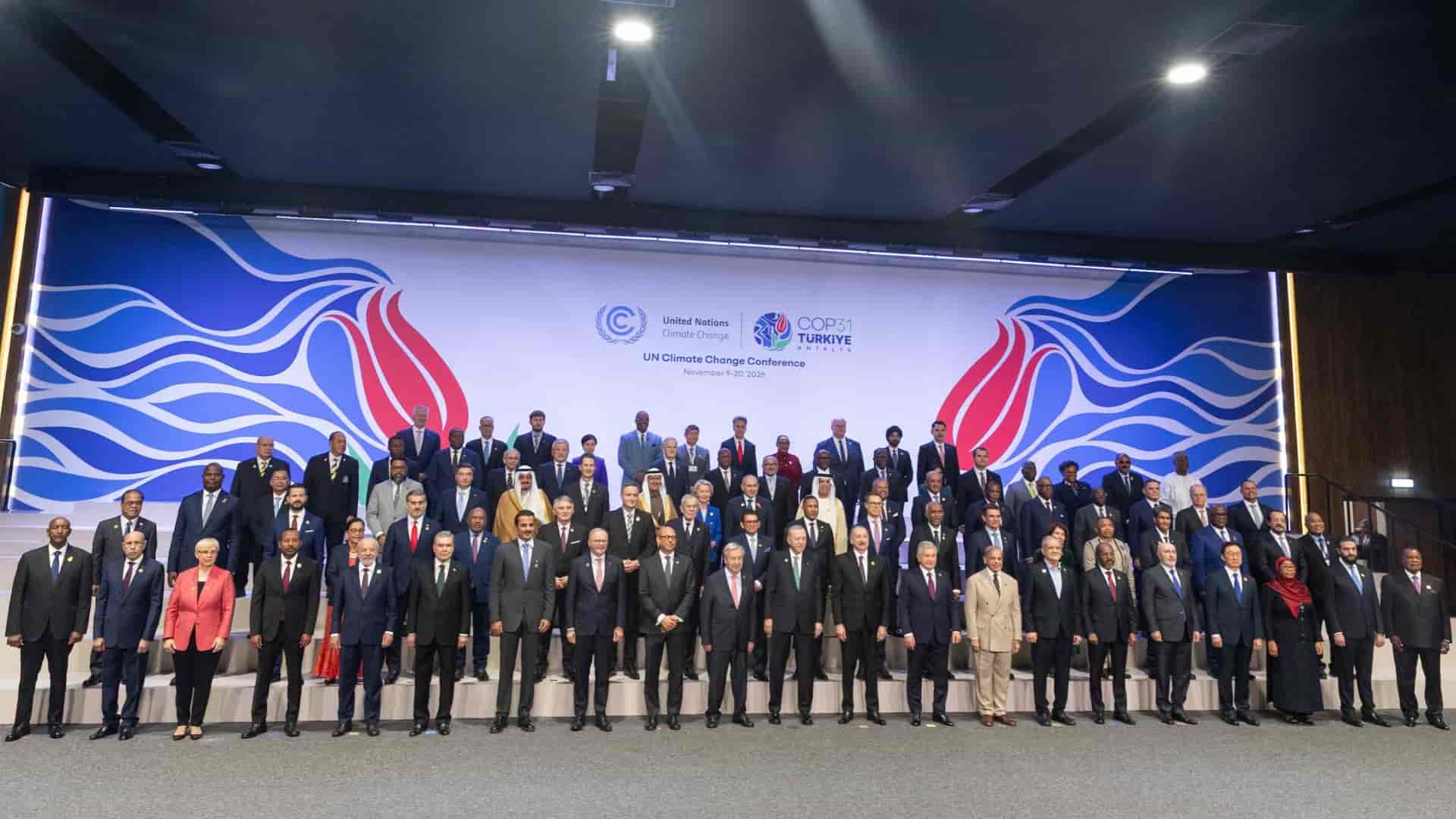
COP31 has announced more than $480 million in new philanthropic commitments to reduce methane and other powerful greenhouse gases, giving the summit a concrete emissions-reduction initiative as negotiations over climate finance and adaptation remain divided.
The funding was announced on Thursday at a leaders-level summit on non-CO₂ greenhouse gases, held alongside the UN climate conference in Antalya. It followed a renewed declaration of support for the Global Methane Pledge, an initiative launched at COP26 in Glasgow in 2021 to reduce global methane emissions by at least 30% from 2020 levels by 2030.
More than a dozen countries rallied behind the pledge at COP31. France has also called for methane reduction to be reflected in the conference's cover decision, a political statement intended to signal the presidency’s priorities and areas of agreement. Such a declaration does not carry the same status as a formally negotiated COP decision.
The funding includes an additional $25 million for the Climate and Clean Air Coalition’s Super Pollutant Country Action Accelerator. The programme is being expanded to seven more countries: Côte d’Ivoire, Ethiopia, Fiji, Morocco, Pakistan, the Philippines and Uzbekistan.
The commitments are philanthropic funding directed at methane and other super pollutants. They should not be confused with the climate finance that developing countries have been demanding from wealthier nations to support emissions reductions, adaptation and recovery from climate-related damage.
Methane remains a significant target for near-term climate action. Although it stays in the atmosphere for a much shorter period than carbon dioxide, it traps considerably more heat over the short term. Reducing methane emissions can therefore slow the pace of warming in the coming decades, but it cannot replace sustained cuts in carbon dioxide emissions.
UN Climate Change Executive Secretary Simon Stiell said at the summit that action on methane and other super pollutants could deliver rapid benefits for the climate, public health and economies. He also urged governments to use public and private finance to support implementation, noting that only a small share of climate finance for emissions reduction was directed towards super pollutants.
Climate finance remains contested
The methane announcement comes as negotiators continue to disagree over how climate finance commitments should be interpreted and implemented.
At COP29 in Baku, countries agreed that developed nations should take the lead in mobilising at least $300 billion annually for developing countries by 2035. The agreement also called on all actors to scale up finance from public and private sources to at least $1.3 trillion annually by the same year.
Developing countries have argued that the larger figure does not guarantee adequate public funding or clarify how much wealthier nations are expected to provide. They have also called for the implementation of Article 9.1 of the Paris Agreement, which requires developed countries to provide financial resources to assist developing countries with mitigation and adaptation.
At COP31, these disagreements have carried into discussions on the two-year Climate Finance Work Programme. The Least Developed Countries, landlocked developing countries, like-minded developing countries and South Africa have argued that the programme should focus on developed countries’ obligations under Article 9.1.
Other countries, including the European Union, Canada, the United Kingdom, Norway, Switzerland, South Korea and Japan, have argued for a broader interpretation covering the full scope of Article 9, including finance mobilised from alternative sources.
There is also disagreement over the role of private investment. Several developed countries have advocated mobilising private-sector finance and improving conditions for investment. Developing-country groups, including the Like-Minded Developing Countries, the Arab Group and the Alliance of Small Island States, have cautioned against allowing private finance to displace public funding obligations.
Switzerland, the EU, South Korea and Japan have also said the work programme should not reopen or prejudge the implementation of the new collective quantified goal on climate finance agreed at COP29. Developing countries, meanwhile, have argued that the existing goal does not resolve questions about how the money will be delivered.
A high-level ministerial dialogue on climate finance is scheduled for Friday afternoon in Antalya. Its outcome was not available at the time of publication.
Adaptation and just transition
Disagreements over finance have also affected discussions on adaptation. The African Group of Negotiators proposed a separate agenda item on tripling adaptation finance, seeking a dedicated space to address the issue. The proposal did not secure consensus for formal inclusion in the agenda.
That does not mean adaptation finance has been removed from the negotiations. The issue continues to be discussed under existing processes, including the Climate Finance Work Programme and the Global Goal on Adaptation.
Countries have also differed over how to assess progress on adaptation and the resources required to respond to climate impacts. Developing-country groups have pressed for stronger references to finance and other means of implementation, while several developed countries have argued that adaptation finance should be addressed through the relevant finance processes.
On just transition, negotiators have broadly supported extending the Just Transition Work Programme, but remain divided over its duration, scope and future modalities.
Nepal has called for greater investment in mountain regions, improved access to climate finance and the immediate operationalisation of the Just Transition Mechanism. It has also emphasised technology transfer and capacity-building as essential support for developing countries.
The discussions reflect a wider disagreement over how countries can move towards lower-carbon economies without placing disproportionate costs on workers, communities and developing economies.
Electrification push faces questions over safeguards
Electrification has emerged as another major theme at COP31. Türkiye and Australia have promoted the 35-by-35 pledge, which aims to increase electricity’s share of global final energy consumption from around 21% to 35% by 2035.
The initiative is intended to accelerate the shift towards electric transport, buildings and industry, alongside investment in renewable energy, power grids and energy storage. It is a voluntary pledge, not a binding decision adopted by the conference.
However, the proposal has also drawn scrutiny over the minerals required to expand electricity infrastructure. More than 120 civil society organisations have called for stronger environmental and human rights safeguards in the sourcing of materials used in batteries, power lines, wind turbines and other technologies.
The Associated Press reported that the Business and Human Rights Resource Centre recorded more than 300 allegations of human rights abuses linked to transition-mineral mining in 2025, a 73% increase from the previous year. Advocates have called for ecosystem protection, human rights and environmental due diligence, and safeguards for Indigenous communities.
The debate highlights a challenge facing the energy transition: expanding access to electricity and clean technologies must not reproduce the environmental and social harms associated with fossil fuel extraction.
From pledges to implementation
COP31 is also expected to carry forward discussions on the transition away from fossil fuels, deforestation and the financing required to implement climate commitments. These initiatives build on earlier agreements and roadmaps, including the Baku-to-Belém Roadmap, which outlines pathways to mobilise $1.3 trillion in climate finance annually by 2035.
But the negotiations have yet to resolve how responsibilities and financial contributions will be shared. Developing countries continue to demand predictable support, while several wealthier nations have emphasised the role of private investment and broader sources of finance.
With the conference scheduled to continue until November 20, negotiations are still underway. The methane funding announcement and the electrification pledge offer visible initiatives, but neither resolves the central disputes over who will finance climate action, how adaptation needs will be met and how existing commitments will be implemented.
The test for COP31 will be whether these initiatives translate into measurable action and whether countries can agree on the financial and political arrangements needed to support it.
Read More Stories

Nepal retains ‘BB-’ sovereign credit rating for third consecutive year
Nepal has retained its BB- sovereign credit rating for the third consecutive year,...

Indian national arrested at TIA with 5.5 kilos of heroin
An Indian national has been arrested at Tribhuvan International Airport in Kathmandu after...

Nepal’s mountain agenda struggles for recognition at COP31
The push to secure formal recognition of mountain-related climate vulnerabilities at the 31st...