What we do is costly! Your support will help us dig more stories.
Yes, I'm Interested!Ignorance isn't always bliss | Don't stay foolish.
Keep informed | Read our news and analysis.
BUDGET 2082/83 | PARTISAN SPENDING | STATE FUNDS | SYSTEMIC CORRUPTION | DEMOCRATIC EROSION
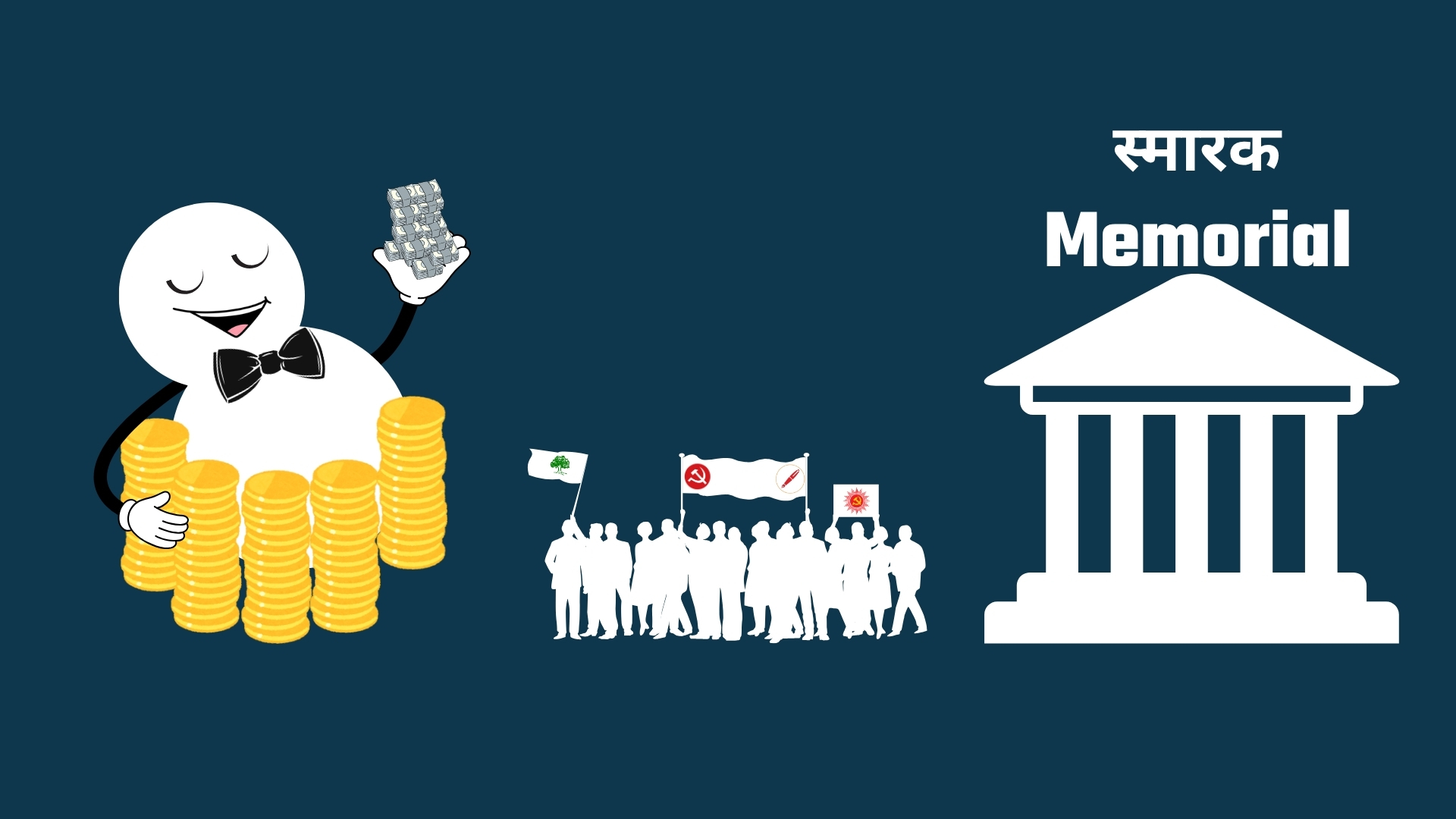
On June 7, Nepal Tarun Dal President Bidhwan Gurung wrote a post on Facebook mentioning Nepali Congress (NC) party comrade and presently the Minister of Urban Development, Prakash Man Singh, and the party President, Sher Bahadur Deuba. The message read gratitude to the two leaders for allocating a budget for the construction of a building for Nepal Tarun Dal, the youth wing of the ruling party.
What was just a simple thank you divulged a pattern of blatant abuse of state resources and political influence.
Obfuscation in plain sight
On May 29, Finance Minister Bishnu Paudel released the upcoming budget amounting to almost two trillion rupees against the backdrop of a struggling economy and a cash-strapped treasury.
A week later, Gurung posted the ‘thank you’ message—which was written in the letterhead of the wing he leads and shared it through his Facebook account, stating that the building, to be constructed in Ravi Bhawan, Kathmandu-13, will serve as a central office for the Dal.
After public backlash, Gurung quickly issued a clarification—just hours after his first post—stating that the budget was not intended for a Tarun Dal office per se, but for the Ganeshman Singh Memorial Building, funded at the ‘request’ of the youth wing.
Despite this blatant attempt at obfuscation, a broader discourse on how state funds are being unconscionably used and by whom has reignited.
National budget: A family affair
This fiscal year, the urban ministry led by Prakash Man, the son of Ganeshman Singh and Mangala Devi Singh, has channelled a sum of over NRs 850 million from the state funds to projects named after his parents. NRs 30 million allocation for the Tarun Dal building inside the Ganeshman Singh Memorial Compound is only one example of a national memorial that will allegedly turn into a partisan office space.
Other proposed projects include parks and memorials—many of which reportedly benefit NC-affiliated groups and are run by his family members.
Such budget under Ganeshman Singh’s name exceeds NRs 750 million—there’s 80 million for Ganeshman Singh Lok Marg in Shankharapur; 40 million each for park and building in Kathmandu, Panchthar, Jhapa, and Bara; another 30 million for memorial buildings and sports parks in Bhaktapur, Pokhara, and Parsa; and allocations ranging from NRs 2.5 million to 7 million for parks, schools, libraries, and roads in at least 15 other districts.
Similarly, NRs 92 million is allocated to six projects under the name of Mangala Devi Singh.
Prakash Man is a senior leader at the Nepali Congress who is also vying for the party leadership. In the last local level elections, Srijana Singh, his wife, was an NC contender for Kathmandu’s mayor. Prakash Man also serves as the president of Ganeshman Singh Foundation, while Srijana chairs the Mangala Devi Singh Foundation.
In his June 24 address to the House of Representatives, the urban development minister defended the allocations to his parents’ name, describing them as a tribute to national figures, who are the symbols of Nepal’s democratic struggle and sacrifice. He argued that such development projects are but a continuation of the country’s ongoing effort to honour those who fought for a free and sovereign Nepal—first against the autocratic Rana rule and later the monarchy.
Prakash Man further went on to frame the allocations as a national duty. He suggested that they not only serve as an expression of gratitude but also as a form of historical remembrance and as a source of inspiration for future generations.
Srijana echoed similar sentiments to justify the budget allocations. In an X post, she called for respect to Mangala Devi Singh and her pioneering role in the women’s rights movement in Nepal.
Similar ‘national duty’ runs deep
Another telling example centres on the late CPN-UML leader, Madan Bhandari, whose ideological legacy is still prominent in the party and the communist movement. His name is a recurring fixture in the country’s federal budget. This year alone, the ministry has allocated approximately NRs 210 million across various projects under his name.
Such allocations include NRs 30 million under the title of ‘Madan Bhandari Foundation Infrastructure Development’ and an additional NRs 60 million for its affiliate institutions—Madan Bhandari Memorial School and Madan Bhandari Memorial College.
Currently under the patronage of Prime Minister KP Sharma Oli, Madan Bhandari Foundation is chaired by Usha Kiran Bhandari, daughter of Madan and former President Bidya Devi Bhandari. The former president is now drawing renewed attention for her efforts to reenter active politics after serving two terms as the country’s head of state.
In FY 2021/22, the Bagmati government, led by CPN-UML, retracted a five million rupees grant to the Madan Bhandari Foundation after public protests. Then Chief Minister Dormani Poudel withdrew the proposed funds after CPN (Maoist Centre) obstructed the provincial assembly meeting and demanded his resignation through a no-confidence motion for the said budget.
The federal government seems to have overlooked the lessons from the past and continues to push similar agendas.
Similar allotments under the name of Madan Bhandari for this year include NRs 50 million in Triyuga Municipality of Udayapur district; and 30 million each for a planetarium in Urlabari Municipality of Morang, and commemorative buildings in Bara, Kapilvastu and Bardiya.
Similarly, NRs 80 million have been set aside for projects bearing the name of Bishweshwar Prasad or BP Koirala, Sushil Koirala and Mahendra Narayan Nidhi, among others—whose descendants and close family members remain active in NC party politics today and continue to pursue power.
A common feature of these beneficiaries, other than their reliance on public funds, is that they rarely maintain a basic level of transparency, disclosing their financial information through publicly accessible platforms such as their websites.
These practices raise pressing questions—how public coffers are used to advance ideologies, establish family legacies and reinforce influence in society, governance and politics. And how do they remain opaque and unchecked despite undermining fiscal discipline and effectiveness?
Defying fiscal discipline
A prominent issue regarding the country’s budget has been the continued fragmentation of allocations, despite repeated reminders and promises of fiscal discipline.
Yet the budget continues to contradict its own planning standards, evident from allocations such as in the name of Ganeshman Singh. In theory, the National Planning Commission’s National Project Bank Guidelines 2081 bars the inclusion of federal projects less than NRs 30 million to deter piecemeal spending on national plans.
Such allotments are often considered inefficient and ineffective and sometimes even irrational in the broader context of the country’s economic governance goals. Yet their continuity reflects a broader disregard for the policy and getting by with impunity.
The result is an uptrend in what the Office of the Auditor General (OAG) calls beruju (बेरुजु)—unaccounted expenditures or irregular expenditures, rising in billions every year and attributed to discretionary spending and a system of political clientelism.
In 2023/24, the country’s total beruju rose to an alarming NRs 733.19 billion, a 9.45% increase from the previous year’s NRs 669.86 billion. Of this, NRs 91.60 billion are newly flagged numbers from the audits of federal, provincial, local, and other institutional bodies for the fiscal year.
Auditor General Toyam Raya in the annual report notes that the very aim of public auditing is to ensure and promote public accountability, transparency, and integrity in public institutions, and that the issue of beruju is central to that.
The staggering beruju figures affirm that they are not an aberration anymore but an incessant feature of public expenditure due to the country’s political culture.
A pervasive pattern
It is not a new practice for public funds and other resources to be redirected towards the offices of political parties and their fraternal organisations in the name of memorials. It is neither limited to a single political party, a leader, nor simply the federal government.
The CPN-UML has occupied the office/space of Tulsi Lal Memorial Foundation as its de facto party office—a space originally allotted to the foundation for political and social research activities.
On July 7, 2022, a government directive by the Department of Land Management and Archive laid out a ‘lease’ policy that formalised renting the land. However, according to a report by Kantipur, the UML office operates through a rental agreement with the foundation, and not the state, bypassing lease regulations. The foundation itself should by now be operating under a lease agreement with the government, with the new lease policy in place.
Maoist and Congress-affiliated unions also have their offices set up on government land, including forest department buildings.
Another case of such allocations is Jhalanath Khanal Institute of Health Sciences, a foundation operating under the name of senior CPN (Unified Socialist) leader and former Prime Minister Jhalanath Khanal. In 2019/20, the government allocated a budget of almost 180 million rupees to the foundation when Khanal was a senior and an influential member of the then-ruling CPN (UML).
All three tiers of government had pledged grants worth millions of rupees to the foundation, located in Lalbandi Municipality in Sarlahi. However, the institute was found misusing the budget under the pretext of setting up an office without any evidence to back up the expenses.
CIAA, the country’s anti-graft body, had later filed a corruption case against five individuals, including Bijay Kumar Yadav, former Minister for Economic Affairs and Planning of Madhesh Province and the academy chair, Rewati Prasad Pant. The Special Court convicted the five accused in the case.
Established in 2014, the Jhalanath Institute is yet to produce any substantial work in antivenom production, even after a decade. Meanwhile, Nepal records around 20,000 snake bites annually with more than 1,000 fatalities. These estimates report the urgency in implementing initiatives to swerve this crisis and yet, public funds that could be directed towards more urgent solutions are being embezzled through partisan politics.
These federal allocations are only the tip of the iceberg. Similar sketchy allocations exist at the provincial and local tiers as well.
The Madhesh government allocated funds to build ‘Mithila Bhawan’ in Janakpurdham Sub-Metropolitan City-4 of Dhanusha. It has emerged as yet another case of partisan occupancy, this time for UML’s district office.
In 2024/25, a budget equivalent to NRs 4.5 million was allocated to complete its ‘unfinished construction’. After construction halted midway, the Ministry of Physical Infrastructure Development, presently under the leadership of UML member Saroj Kumar Yadav, had released additional funds of NRs 500,000 to resume the project.
Before that, NC’s Ram Saroj Yadav, holding the same portfolio, allocated NRs 4 million for 2022/23 to build a two-storey building and a meeting hall inside the premises of the Nepali Congress party office. Later, when another NC leader, Krishna Prasad Yadav, held the office, he allocated an additional NRs 2 million for the same project. Plans are underway to add two more storeys to the building, with party officials openly pushing more funds in the next budget cycle.
At the local level too, such malpractice is far from uncommon, and hardly a secret.
A glaring example is the adhoc spending of NRs 523 million over a decade by the local governments in Rolpa in collusion with other two tiers of the government in a grand ‘War Tourism’ project, as reported by Centre For Investigative Journalism Nepal (CIJ-N) in 2021. The investigative report highlights several examples of wasteful spending, all pointing to political influence and cadre enrichment.
Such misuse of budget happens despite a framework in place introduced in 2074, namely ‘User’s Group Formation, Mobilization and Management Working Procedure’, which outlines provisions for local participation in development projects amounting to up to NRs 10 million. However, in absence of strict enforcement and monitoring, the system often breaks down, irrespective of the budget size.
Within the grand war tourism project, they built a ‘people’s war memorial view tower’ commemorating the Maoist insurgency, atop Chuche Danda, Satdobato in Rolpa Municipality-3 at an altitude of 2,055 meters. It cost 60 million.
Although it has at least become a concrete “war tourism” project, the question remains: in a district with one of the lowest human development indicators (its HDI value was 0.395 in 2014), how would the public officials justify such use of public funds?
Read More Stories
ADB, NEA advance transmission and battery storage projects under PPP model
The Asian Development Bank (ADB) and Nepal Electricity Authority (NEA) have signed two...

Market reform measures fail to lift sentiment as NEPSE extends weekly decline
The stock market extended its downward trend on Friday, with the Nepal Stock...
Finance committee issues five-point directive with tighter oversight and modernisation
The Finance Committee of the House of Representatives has issued a five-point directive...