What we do is costly! Your support will help us dig more stories.
Yes, I'm Interested!Ignorance isn't always bliss | Don't stay foolish.
Keep informed | Read our news and analysis.
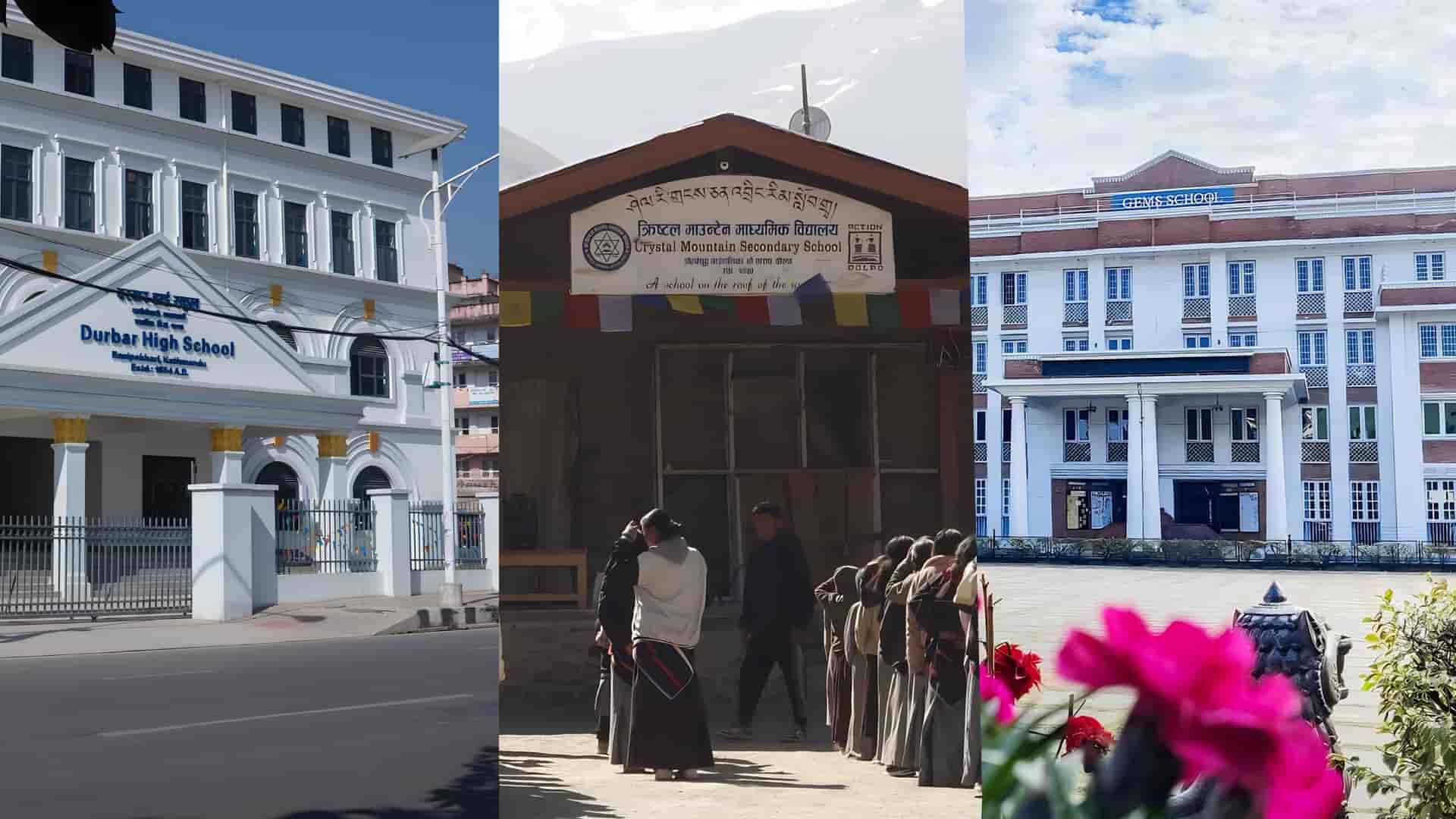
Nepal’s private and non-government education sector contributes an estimated NRs 160 billion annually to the country’s gross domestic product (GDP), according to the first nationwide economic survey of educational institutions conducted by the National Statistics Office (NSO).
The Nepal Education Institution Survey 2023/24 found that private, community-managed, cooperative and trust-run schools, colleges and technical and vocational training centres generated gross output of NRs 195.5 billion during the 2023/24 fiscal year. After accounting for intermediate consumption of NRs 35.4 billion, the sector added nearly NRs 160 billion in gross value added to the national economy.
The survey also found that non-government educational institutions hold fixed assets worth NRs 309.2 billion, underlining the sector’s growing economic significance.
Sector employs more than 311,000 people
Nepal has 10,411 non-government educational institutions, employing or engaging 311,516 people, the survey found. Of them, 300,021 are salaried employees, while 11,495 are proprietors or unpaid family workers.
Teachers account for the majority of the workforce, with 221,504 teaching staff, while 78,517 are non-teaching employees.
On average, each institution spends NRs 11.04 million annually, charges students NRs 3,305 in monthly tuition fees, and pays employees an average monthly salary of NRs 15,683.
During the survey year, the sector spent approximately NRs 74.6 billion on salaries, wages and employee benefits.
Bagmati dominates investment and economic output
Bagmati Province accounted for the largest share of investment and value addition.
Educational institutions in the province hold NRs 128.84 billion in fixed assets and contributed NRs 70.94 billion, or about 44%, of the sector’s total value added.
Madhesh ranked second, contributing NRs 22.9 billion, followed by Lumbini (NRs 21.24 billion) and Koshi (NRs 21.19 billion). Karnali recorded the lowest contribution at NRs 3.04 billion, with fixed investment of NRs 5.42 billion.
Bagmati is also home to the largest number of non-government educational institutions at 2,903, while Karnali has the fewest with 375.
More than 3.75 million students enrolled
The survey estimates that more than 3.75 million students are enrolled in non-government educational institutions across Nepal.
Of them, 932,000 are in pre-primary education, 1.86 million in basic education (Grades 1–8), 491,000 in secondary education, 466,000 in higher education, and 35,688 in technical and vocational diploma programmes.
Nearly 46% of all higher education students are enrolled in institutions in Bagmati Province. Management and commerce is the most popular field of study, with 236,581 students, followed by education, humanities and social sciences, science and technology, and engineering.
Tuition fees vary widely across provinces
The average monthly tuition fee at non-government educational institutions is NRs 3,305.
Bagmati records the highest average monthly fee at NRs 5,176, while Sudurpashchim has the lowest at NRs 2,067. By education level, technical and vocational institutions charge the highest average monthly tuition at NRs 11,498, followed by higher education institutions at NRs 5,814.
Extensive infrastructure
The survey found that Nepal’s non-government education sector operates 28,235 buildings and nearly 200,000 classrooms, averaging 2.7 buildings and 17.7 classrooms per institution.
Only 5% of classrooms are disability-friendly, while 4% are air-conditioned. Educational institutions collectively operate 16,379 school vehicles.
Around 1.08 million students use school transport services, 46,200 live in hostels, and 47,900 attend as day boarders.
Private capital-driven
The survey indicates that Nepal’s non-government education sector is predominantly driven by private capital.
Over half of all institutions, 5,421 schools and colleges operate as private limited companies. In addition, 2,163 institutions are individually owned, while 1,539 run under partnership models. Together, educational trusts and community-based institutions account for only a small share, representing just under 12% of the sector.
Small institutions dominate the sector
Most non-government educational institutions are relatively small. Nearly one-third employ between 10 and 20 staff, while another 2,386 institutions employ between 20 and 30 people. Only 259 institutions, or about 3% of the total, have more than 100 employees, indicating that Nepal’s non-government education sector remains largely fragmented and dominated by small and medium-sized institutions.
The NSO said the survey is the first comprehensive assessment of the economic contribution of Nepal’s non-government education sector since private investment in education resumed in 1980, providing the most detailed picture to date of the sector’s investment, employment, infrastructure and contribution to the national economy.
Read More Stories
At least 15 killed in four days as floods, landslides and avalanche hit the country
At least 15 people have died in floods, landslides and other disasters across...
Former chief justice arrested a day after PM’s return, released hours later
Former chief justice Cholendra Shumsher Rana was taken into police custody from his...
Floods disrupts over 500 MW of hydropower capacity across country
Floods and landslides triggered by incessant rainfall have disrupted hydropower generation and damaged...