What we do is costly! Your support will help us dig more stories.
Yes, I'm Interested!Ignorance isn't always bliss | Don't stay foolish.
Keep informed | Read our news and analysis.
Bangladesh Tribunal | Former PM Sheikh Hasina | Political Violence | Bangladesh Interim Government
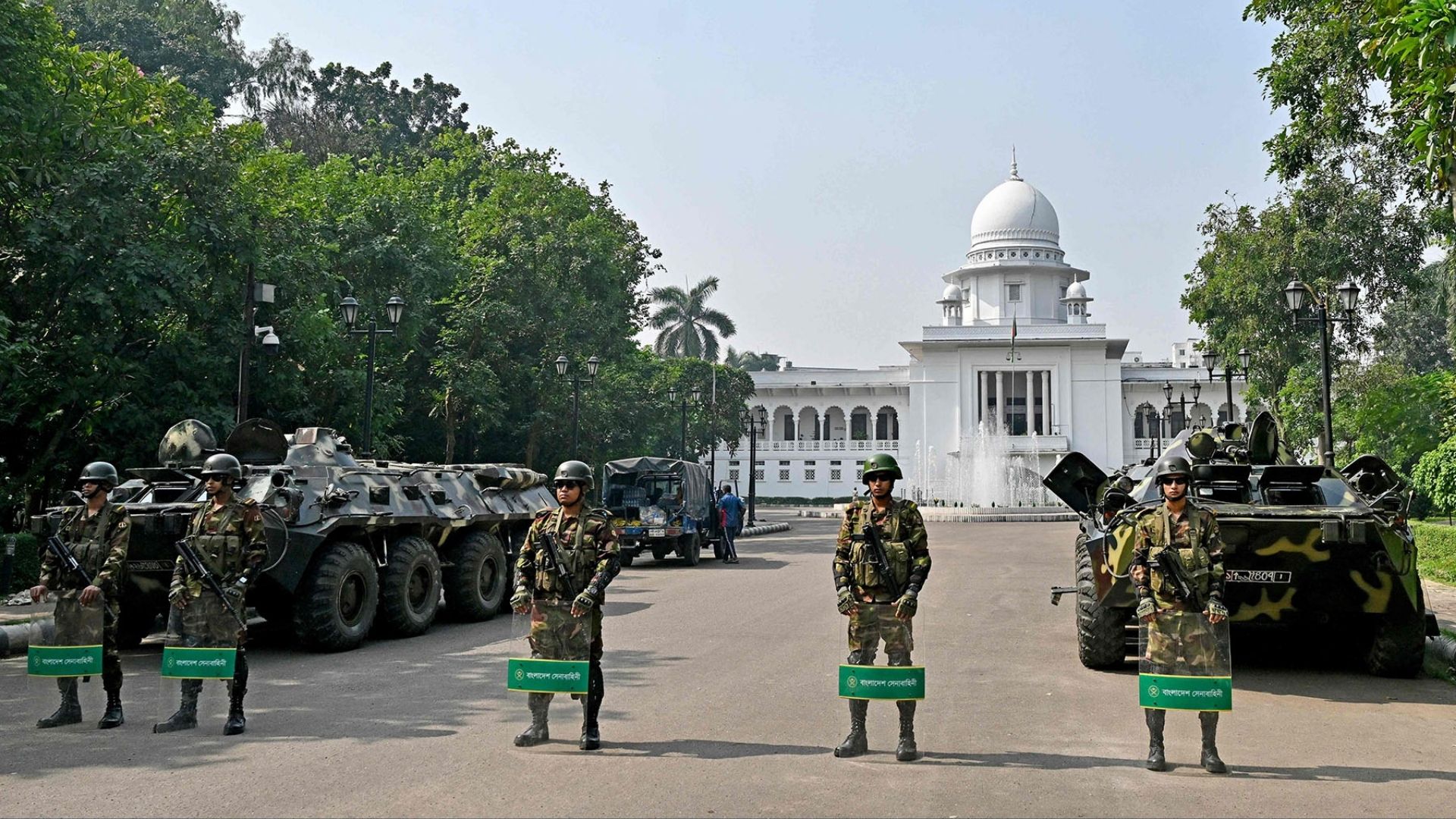
Bangladesh entered another day of political paralysis on Thursday as a countrywide “lockdown” called by the banned Awami League emptied Dhaka’s streets, shut down transport networks and forced schools across major cities to switch to online classes.
The opposition’s show of force comes ahead of the International Crimes Tribunal (ICT) verdict scheduled for Monday, 17 November, a decision that is expected to shape Bangladesh’s political trajectory for years.
The tribunal is trying former prime minister Sheikh Hasina in absentia for crimes against humanity over the deadly crackdown on the 2024 student uprising that helped catalyse her government’s fall. Prosecutors have sought a death penalty, alleging she orchestrated the violence that killed hundreds.
Hasina, in exile in India since August 2024, denies the charges. Notably, she has defied court orders to return from India to attend her trial.
A tribunal with new political weight
The ICT, originally constituted to try atrocities from the 1971 Liberation War, is now the central stage for Bangladesh’s most consequential political reckoning in over a decade. Amendments and reconstitutions by the interim administration have enabled it to prosecute the former premier and key members of her security establishment.
At the heavily fortified tribunal compound in Dhaka, soldiers, armoured vehicles and intelligence personnel maintain a tight cordon as co-accused, including former home minister Asaduzzaman Khan and ex–police chief Chowdhury Abdullah Al-Mamun, face trial. Al-Mamun has turned state witness; Khan is believed to be in India.
Awami League, banned from political activities under anti-terrorism regulations, has denounced the tribunal as a “kangaroo court”, accusing the interim administration of orchestrating a politically motivated verdict.
Street anger and symbolic targets
Tension has been building for days. Crude bombs, arson attacks and vehicle torchings have been reported in several districts.
A government office in Gopalganj, Hasina’s political stronghold, was attacked; a branch of Grameen Bank, founded by economist and current interim leader Muhammad Yunus, was set on fire earlier this week. The unrest has deepened fears that the verdict could trigger another nationwide flare-up.
Yunus pairs referendum with elections
In a nationally televised address, Chief Adviser Muhammad Yunus announced that a nationwide referendum on the July Charter of Constitutional Reform will be held on the same day as parliamentary elections scheduled for the first half of February 2026.
The Charter proposes wide-ranging reforms, including term limits for the prime minister, expanded fundamental rights and a stronger separation of powers.
Interviews from India, and a diplomatic stir brewing
Hasina, though officially considered a fugitive, has continued to give email interviews to media from Indian soil, including to the BBC and other international outlets. In these interviews, she denies wrongdoing, accuses the interim government of rights violations and claims the tribunal is “pre-ordained” to deliver a guilty verdict.
Dhaka has formally conveyed its displeasure to New Delhi over her ability to communicate with the global press while residing in India, an issue that could widen into a diplomatic irritant. For India—already navigating complex domestic and regional pressures—allowing a high-profile political exile to shape international narratives from its territory risks complicating bilateral relations should the interim government frame it as interference.
What’s at stake
The violence that precipitated Hasina’s fall is estimated to have killed between 800 and 1,400 people, according to varying government and UN assessments. For the Yunus administration, an unfavourable verdict could ignite renewed unrest; a favourable one could trigger backlash from groups who see the tribunal as compromised. Either way, Monday’s judgment is poised to become a pivot point in Bangladesh’s democratic trajectory.
(With inputs from agencies)
Read More Stories
Flood in Budhi Gandaki sweeps away homes, bridges and hydropower camp, at least 10 missing
A sudden debris-laden flash flood in the Budhi Gandaki River has caused widespread...
Supreme Court faces disputes over bench, appointments
Supreme Court is facing renewed questions over judicial appointments and the formation of...

NEPSE posts double-digit gains at week’s end
The Nepal Stock Exchange (NEPSE) gained 17.15 points (0.67%) on the last day...