What we do is costly! Your support will help us dig more stories.
Yes, I'm Interested!Ignorance isn't always bliss | Don't stay foolish.
Keep informed | Read our news and analysis.
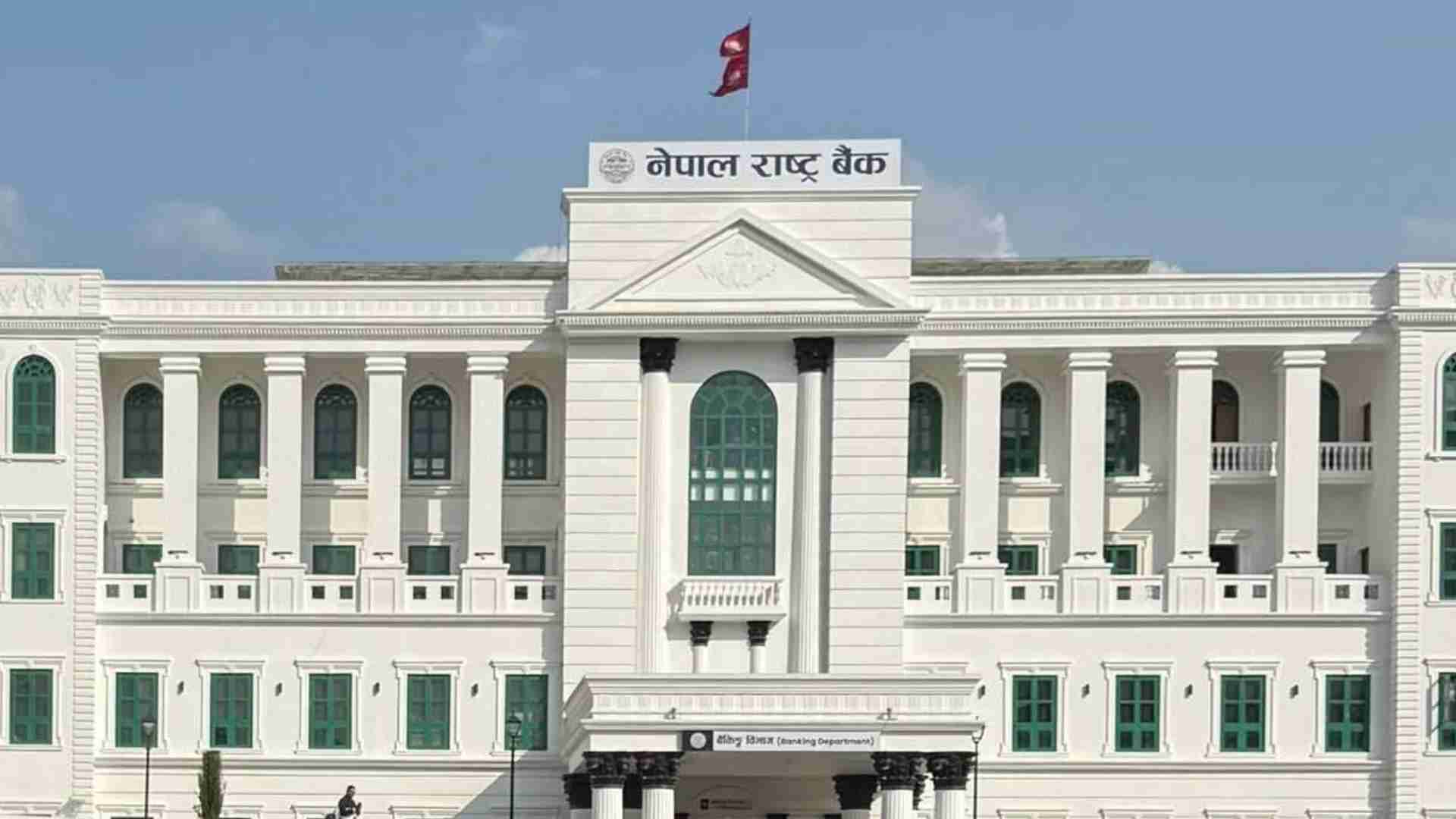
Nepal’s financial system continues to face excess liquidity as economic activity remains weaker than expected, limiting credit expansion and reducing banks’ investment capacity, according to Nepal Rastra Bank’s (NRB) annual monetary policy review for the ongoing fiscal year 2025/26.
The central bank said that although liquidity has increased significantly due to strong remittance inflows and higher money supply, demand for loans from the private sector has remained weak. As a result, banks are holding large amounts of surplus funds but have been unable to channel them into productive investment.
NRB had projected a 13% growth in broad money supply and 12% growth in private sector credit during the fiscal year. However, by May 2026, broad money supply had increased by 15.2%, while private sector credit growth stood at only 6.5%.
The central bank attributed the slower credit expansion to several factors, including a delayed monsoon, heavy rainfall in October 2025 that affected agricultural production, disruptions following the violent protests on 8–9 September 2025, and a sharp decline in private sector confidence thereafter. Together, these factors weakened aggregate demand.
The review also identified weak foreign trade, slow public and private construction activity, uncertainty over land plotting regulations, and delays related to Power Purchase Agreements (PPAs) as factors affecting investment and loan demand.
“Despite continued growth in remittance inflows, funds entering the financial system have not translated into expected growth in credit and investment,” NRB said in its review.
The central bank also noted that weaker economic activity and deterioration in the quality of previously issued loans have contributed to an increase in non-performing loans (NPLs), reducing banks’ ability to provide fresh credit.
NRB absorbs liquidity through monetary instruments
To manage excess liquidity, NRB has continued to use open market operations and other monetary tools.
During the first 10 months of the fiscal year, the central bank conducted 71 deposit collection auctions, 117 Standing Deposit Facility operations, and issued 9 one-year NRB bonds to withdraw excess funds from the banking system.
By May 2026, NRB had absorbed:
High liquidity levels pushed short-term interest rates towards the lower end of the interest rate corridor. In May 2026, the weighted average interbank rate stood at 2.75%, while the average yield on 91-day Treasury bills was 2.63%.
Deposit and lending rates continue to fall
Excess liquidity and weak credit demand have continued to reduce interest rates across the banking sector.
In May 2026, commercial banks’ average deposit rate declined to 3.35%, while their average lending rate fell to 6.73%.
Development banks reported average deposit and lending rates of 3.70% and 7.87%, respectively, while finance companies recorded average rates of 4.59% for deposits and 9.14% for loans.
Earlier in the fiscal year, NRB adopted a more accommodative monetary stance, reducing the policy rate from 4.50% to 4.25% and lowering the Standing Liquidity Facility rate from 6% to 5.75%.
The central bank also relaxed several lending provisions to encourage consumption and investment, including increasing limits for selected personal and retail loans.
Strong reserves and low inflation support external stability
Despite weak domestic demand, Nepal maintained a strong external position during the review period.
Average inflation during the first 10 months of the fiscal year remained at 2.66%, below NRB’s target ceiling of 5%. Year-on-year inflation in May 2026 stood at 5.04%.
Foreign exchange reserves reached a record level, supported mainly by continued remittance inflows. The reserves were sufficient to cover 19.2 months of imports of goods and services, significantly exceeding the central bank’s target of seven months.
However, NRB said managing excess liquidity, reviving credit growth in productive sectors, and addressing rising non-performing loans remain major challenges for monetary policy implementation.
Read More Stories

Nepal needs to repeat to brand itself
Last year Nepal's goods exports jumped 81.8% to NRs 277.03 billion. That is...

Banking stocks gain momentum as dividend season begins
Dividend announcements by banks and financial institutions (BFIs) for fiscal year 2025/26 have...

Nepal’s challenge of building strong democratic institutions
Over the past few decades, institutional dysfunction and massive dissatisfaction with political establishments...