What we do is costly! Your support will help us dig more stories.
Yes, I'm Interested!Ignorance isn't always bliss | Don't stay foolish.
Keep informed | Read our news and analysis.
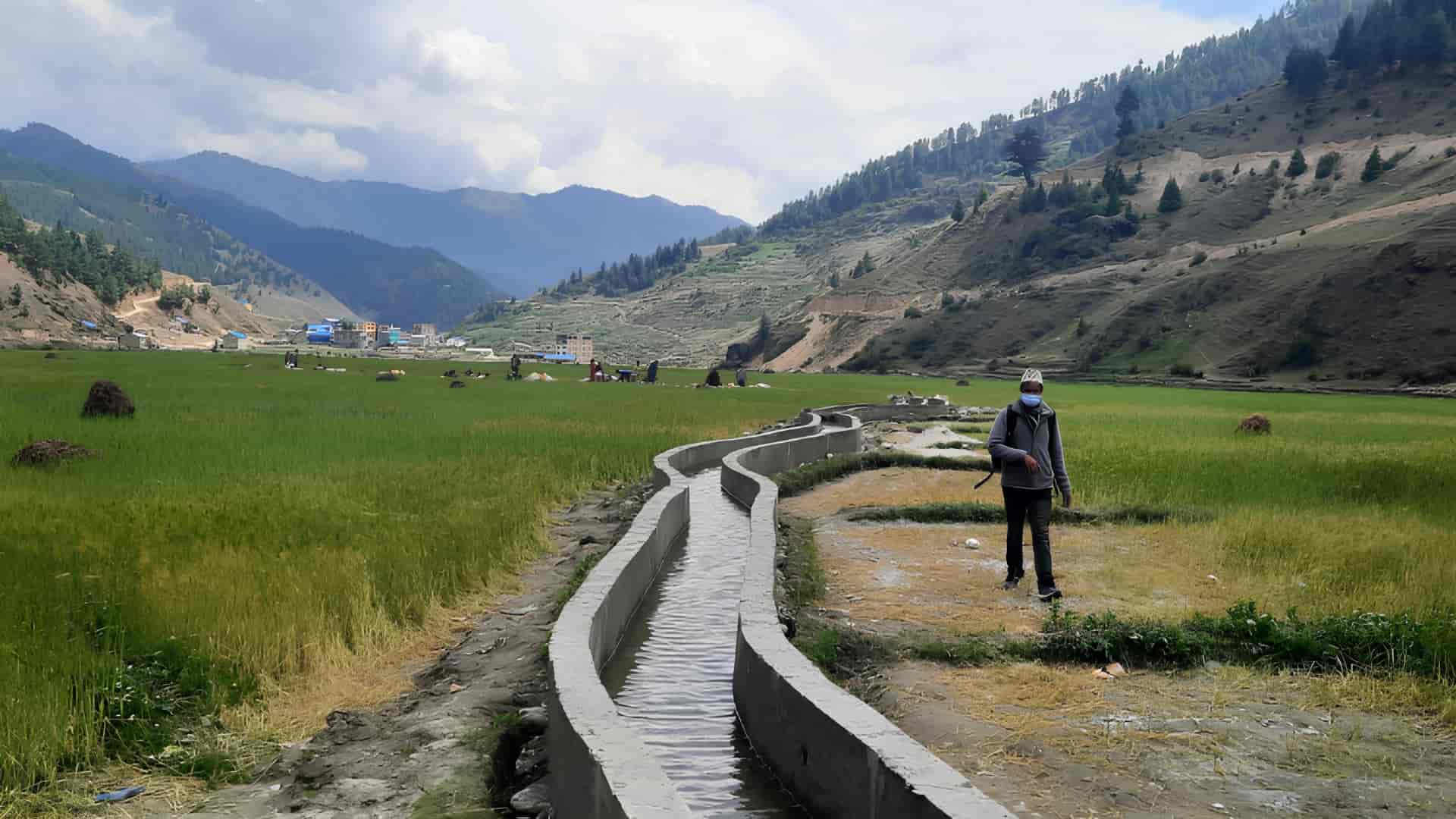
In a rural municipality in Karnali Province, a drinking water project was approved to address a chronic shortage. The contract went to a politically connected contractor. Though the local residents objected, the ward chair signed off under pressure.
The infrastructure was visible months later. Pipes had been laid and taps were built. But the storage tank stood half-built. More importantly, the budget, which was meant for the whole drinking water system, had been fully spent, and the project timeline had ended.
But there was no water flowing through the taps.
A three-member “user committee” existed on paper. It was only formed to meet the legal requirements. The community it was meant to serve had little say in how the project was designed or executed.
This is not an isolated failure. It is a pattern.
Nepal does not lack budgets for local development. It lacks systems that ensure those budgets translate into outcomes.
Over the past few years, Nepal’s public discourse has already shifted. The dominant message now is delivery. A capable state with efficient services and economic growth.
For years, we had rights and identity-based politics. It is time to focus on delivery.
However, for citizens still navigating elite capture at the local level, these questions remain. The water project mentioned above was captured by local elites, despite being led by elected representatives. The local citizens that needed water never got it. Did this fail because there was no inclusion?
What about justice in several areas where there is so much discrimination? After all, constitutional guarantees for women, Dalits, Janajatis, Madhesis, and other historically excluded groups were hard-won. These have yet to fully translate into everyday lived experience.
The real issue, however, might not be rights versus delivery.
It could be whether Nepal can build a state that does both, and in the right sequence.
From rights on paper to delivery in practice
Nepal does not suffer from a lack of frameworks. Federalism was designed to bring the state closer to citizens. It embedded inclusion into governance and aimed to improve responsiveness of the state. Yet, the experience of many ordinary citizens tells a different story.
In this context, the current new government’s push toward efficiency is not a rejection of rights. It is a response to a state that has struggled to execute. But there is a risk in stopping at that point.
Efficiency without inclusion can become exclusion. It can become a system that delivers, but only for some. This can, in return, deepen the very inequities it seeks to resolve, and ultimately even erode trust.
This is why sequencing matters.
In the short term, the new government needs to prioritise functional governance with administrative competence. It needs credible service delivery with visible and reliable outcomes. The government also needs administrative reform by fixing procurement, staffing, and planning processes.
But this cannot be the end state. These gains must reconnect with inclusion, representation, and justice. Otherwise, Nepal risks building a system that works efficiently but only for a few.
Federalism’s promise and its breakdown
Nepal’s federal system was designed to balance efficiency, equity, and participation across three tiers of government. In practice, that balance has not materialised. Power remains centralised in resources. Execution is fragmented across 753 local governments with uneven capacity and weak coordination.
The result is a system that is still centralised in many ways and disjointed. It is able to allocate funds, but far less able to turn them into outcomes.
Federalism’s promise and its breakdown
Nepal’s federal system was designed to balance efficiency, equity, and participation across three tiers of government. In practice, that balance has not materialised. Power remains centralised in resources. Execution is fragmented across 753 local governments with uneven capacity and weak coordination.
The result is a system that is still centralised in many ways and disjointed. It is able to allocate funds, but far less able to turn them into outcomes.
The spending reality at the local level
Recent records from the Office of the Auditor General and the Financial Comptroller General Office shows that local governments have become major fiscal actors under federalism. In the fiscal year 2023/24, they collected approximately NRs 641.76 billion and spent NRs 560.56 billion, which is 87% spending.
The issue however is not how much is spent. It is how it is spent.
A system built to sustain itself
According to a recently published work of Khim Lal Devkota, nearly two-thirds of local government expenditure, or 65.24%, goes to recurrent costs. Only 34.67% is allocated to capital investment. Within recurrent spending, almost half (48.76%) is absorbed by salaries and remuneration.
Local governments alone account for 44.84% of total salary spending across all three tiers. At the federal level, it’s 50.47% and just 4.69% at the provincial level. This challenges the narrative that provinces are a fiscal burden.
With recurrent spending at this level, our federalism is becoming a system that is consuming resources to sustain itself. It’s not investing in long-term outcomes.
Building what is visible
On the capital side, Devkota’s computation shows an equally revealing pattern. Nearly 64% of capital expenditure goes into public construction. Roads and bridges account for 33.71%, while ‘other public construction’ category absorbs 32.15%.
Meanwhile, sectors critical received minimal investment. They are:
This is not just a technical imbalance. It reflects political incentives. Roads are visible and they signal action. They win votes. Water systems, sanitation, and digital infrastructure may not necessarily do this.
Spending without outcomes
Even within this allocation, the outcomes are weak. Projects are frequently delayed or left incomplete. Most contractors are selected through rigged processes. Delays occur in site clearances preventing contractors from starting their work. Payments from the governments are inconsistent, and budget lines appear and disappear across fiscal years.
As a result, infrastructure becomes visible but not functional. Very similar to the drinking water project above where taps and pipes exist, but water does not flow.
A system problem, not just an institutional one
In Nepal, fiscal federalism is discussed without mentioning institutions meant to make it work. The National Natural Resources and Finance Commission (NNRFC) sits at the center of this system. It has a constitutional mandate to guide how resources are allocated across federal, provincial, and local governments based on need and equity.
In principle, this architecture is clear. Guided by the Constitution and the Intergovernmental Fiscal Arrangements Act, fiscal transfers are structured through a mix of equalisation, conditional, complementary, and special grants. This was designed to balance flexibility with discipline.
The NNRFC is meant to anchor this system. It was meant to do this by setting allocation formulas, estimating service delivery costs, and ensuring that transfers aligned with national standards and local needs.
Read also:
- Understanding federal grants in fiscal federalism
In practice, this never happened as NNRFC has remained weak. It has been hampered by delayed appointments, limited technical capacity, and insufficient institutional independence. But focusing on its underperformance alone misses the larger issue.
The problem is not just that the institution is weak. It is that the system does not enforce the discipline it was designed to uphold. As a result, fiscal rules are bent and conditional grants are used to pay salaries. Equalisation grants are diverted to administrative costs or small-scale projects. Transfers meant to correct inequities often reinforce existing patterns of spending.
These are not accidental deviations. They show a system where people are rewarded for controlling resources and spending on visible projects.
Three layers of dysfunction
1. Actors
Federal actors continue to dominate decision-making. Local leaders operate within systems driven by patronage. Citizens lack access to information and do not know how to make their leaders accountable.
2. Incentives
As mentioned above, this system rewards visible, short-term projects over long-term investments. It also rewards political alignment over performance, and spending volume over spending quality.
3. Purpose drift
The 2015 Constitution envisioned cooperative federalism rooted in equity and social justice. In practice, provinces continue to be treated as expendable. Local governments are reduced to delivery units, and coordination across tiers remains weak. This has resulted in a system where structure, incentives, and purpose are misaligned.
In this context, the NNRFC is a sign of a larger system problem. The system focuses more on control and visible actions than on coordination and real impact.
What needs to change: Sequencing reform
Nepal’s next phase of federalism does not require new structures. It requires making existing ones work. In the short term, the new government must strengthen procurement systems and oversight, build technical capacity at all levels, ending the fiscal year end spending cycle (Ashadhe kharcha) through more disciplined multi-year budgeting, and enforcing robust planning and budgeting practices.
Over the medium term, fiscal discipline must be reinforced. This requires strengthening institutions like National Natural Resources and Finance Commission (NNRFC) with technical independence and stable staffing. The government must also enforce clear rules on how grants are used. Fiscal transfers also need to become more predictable, transparent, and linked to performance.
At the same time, inclusion must deepen. It shouldn’t be an afterthought. At all levels, but most importantly at the local levels, participatory planning processes need to be strengthened, and investments must target underserved sectors and communities. Inclusion cannot remain symbolic. It must shape outcomes.
The real test of federalism
Nepal’s federalism is often described as a compromise. But the real issue is not its design, it is its implementation.
Although the constitution enshrines several rights, they have not fully translated into everyday reality for the ordinary public. A state that promises these rights, including inclusion, but cannot deliver loses trust. At the same time, a state that prioritises only efficiency and delivers, but excludes a part of the population risks deepening inequality and instability. Nepal cannot afford either outcome.
The next phase of federalism should not focus on creating more structures or expanding budgets. It should instead focus on discipline, incentives, and tangible results. The issue is not how much the state spends, but how effectively it spends and who ultimately benefits.
The real test is whether Nepal can deliver governance that is efficient, equitable, and inclusive for all.
Read More Stories

Nepal needs to repeat to brand itself
Last year Nepal's goods exports jumped 81.8% to NRs 277.03 billion. That is...

Banking stocks gain momentum as dividend season begins
Dividend announcements by banks and financial institutions (BFIs) for fiscal year 2025/26 have...
Nepal’s challenge of building strong democratic institutions
Over the past few decades, institutional dysfunction and massive dissatisfaction with political establishments...