What we do is costly! Your support will help us dig more stories.
Yes, I'm Interested!Ignorance isn't always bliss | Don't stay foolish.
Keep informed | Read our news and analysis.
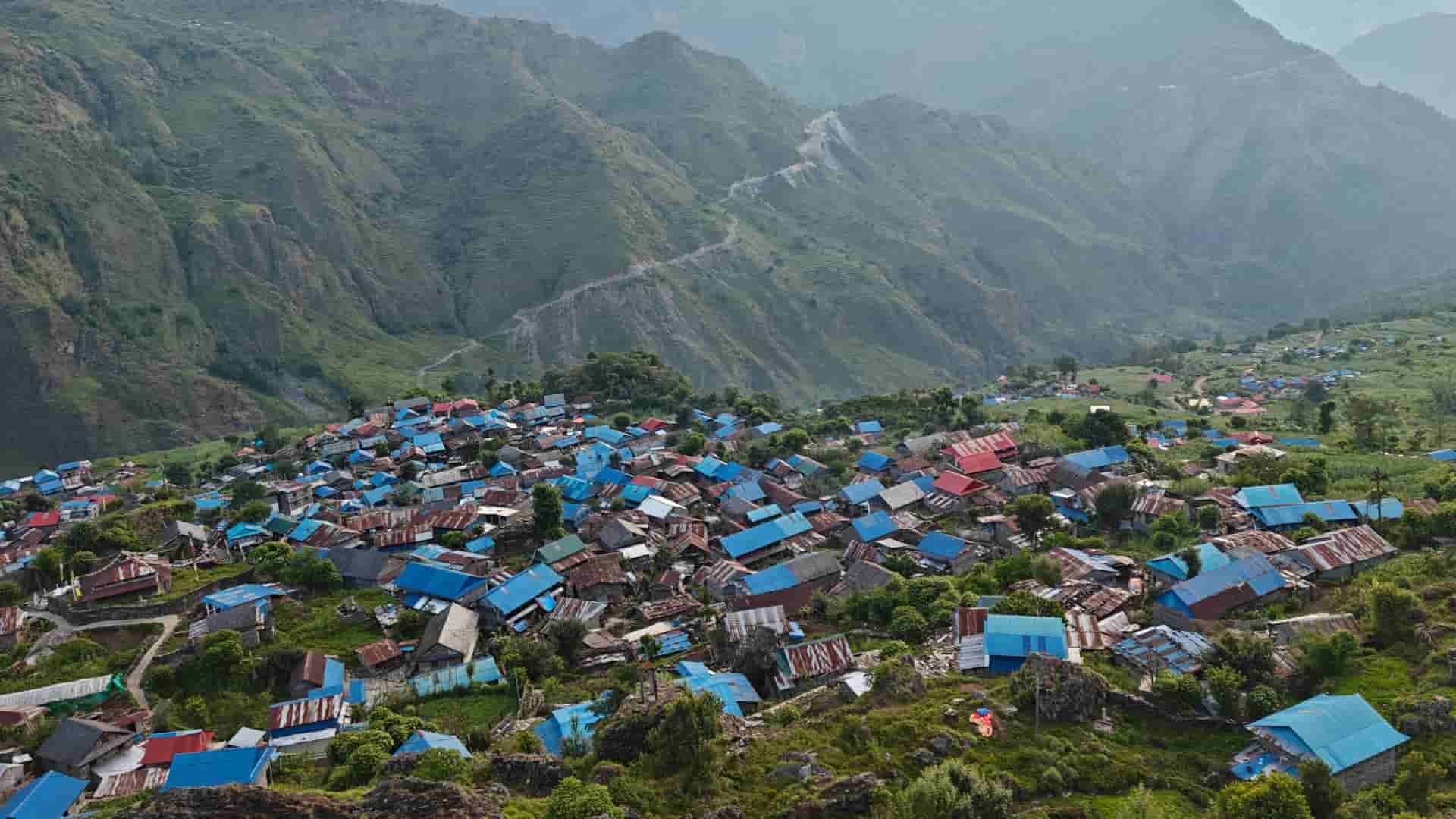
The road to Lapa did not arrive all at once. It revealed itself in fragments: patches of compacted earth, loose gravel clinging to hillsides, fresh cuts through rock where excavators had only recently passed and stretches where it seemed less like a road than an intention still under construction. Every bend carried the possibility of interruption: a landslide, a broken section, a vehicle stalled in mud, or simply a turn so sharp that everyone inside the jeep instinctively leaned toward the mountain, as if body weight alone could negotiate with gravity.
Far below, the river moved with a steadiness that made everything human feel temporary, even where hydropower diversions had begun cutting into its course.
I had come to Ruby Valley as part of a small team tasked with visiting six schools across the region to run workshops on upcycling discarded materials into useful products. On paper, it was straightforward work. We would meet schoolchildren, run sessions with child clubs, teach them how used PET bottles, cartons, multilayer plastics, and paper waste could be turned into usable products, and return with reports and photographs neat enough to fit into a spreadsheet.
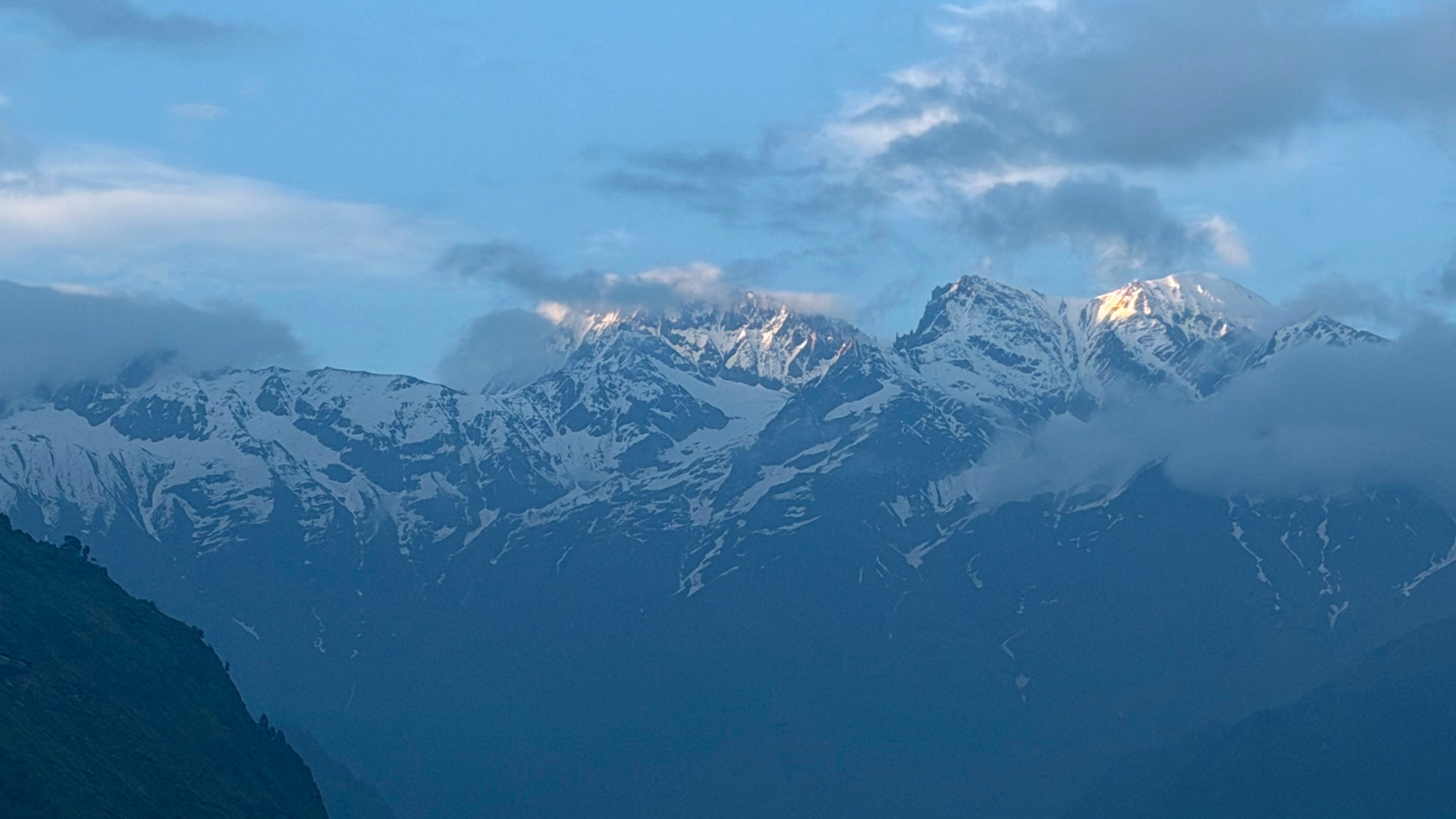
But, Ruby Valley had other plans.
Lapa appeared from across the hill almost theatrically. From a distance, the settlement looked suspended between slopes, its clustered homes catching light in a way that made it feel strangely unreal. Nearly twelve hundred households lie here, making it one of the busiest settlements in the region. For much of Ruby Valley, Lapa functions as a market, supply center, and meeting point all at once, the closest equivalent to the Newroad in Kathmandu.
And yet the motor vehicle reached Lapa only in late January 2026, according to the locals.
That detail stayed with me, though I did not yet know why. It seemed to contain a contradiction too large to ignore; roads and vehicles had only just reached Lapa, yet the internet had arrived much earlier. Electricity ran mostly in the evenings, except on working days, when it stretched from nine to five. High-speed 4G held up well across the valley enough for streaming until around ten at night, when the solar-powered tower ran out of charge and the signal weakened, then disappeared. Except on rainy or windy days, when it disappeared sooner.
The following morning our team split. I was sent with a colleague to Kapur Gaun in Timla, a two-to-two-and-a-half-hour walk away from Lapa, and it was on that walk that we met our porter.
At first, there was nothing particularly remarkable about him. He was soft-spoken, economical in movement, and carried himself with the ease of someone whose body had long stopped negotiating with mountain trails and had simply learned to obey them. But first impressions rarely survive long in the hills, and mine began to complicate almost immediately.
Early on, my colleague swung her walking stick a little too carelessly and nearly poked him in the eye; he dodged just in time, unbothered. Later, on the walk to Timla, it was my turn to give him something to notice, I stubbornly refused to sit at a resting point despite everyone's insistence, nursing a bag that felt heavier by the minute and an irrational determination not to rest, even as the climb steadily drained whatever pride had fueled the decision in the first place. He noticed. Looking at me, half amused, half annoyed, he said dryly, “There are several weird people in this world.” The remark landed harder than it should have. Maybe it was the bluntness of it, or maybe, by then, something between us had simply loosened enough for him to say it. Either way, that single sarcastic line revealed more of him than his silence ever had.
Some people reveal themselves slowly, through how they answer ordinary questions. Their stories do not unfold dramatically so much as they accumulate, until you realise you are no longer listening to one man but to an entire landscape speaking through him. So, when I asked him, somewhere along the trail, how Ruby Valley got its name, I didn't expect the answer to carry as much as it did.
“Gemstones!” he answered, and smiled before moving on. Long before roads, before hydropower projects, before municipalities and development committees, the rivers here would flood and leave rubies and other gemstones scattered along their banks, and people had spent generations since building livelihoods around chance, labor, and luck. Luck, he said, still governs everything. One man can dig for months and find nothing, another can strike fortune in minutes, he said it without bitterness.
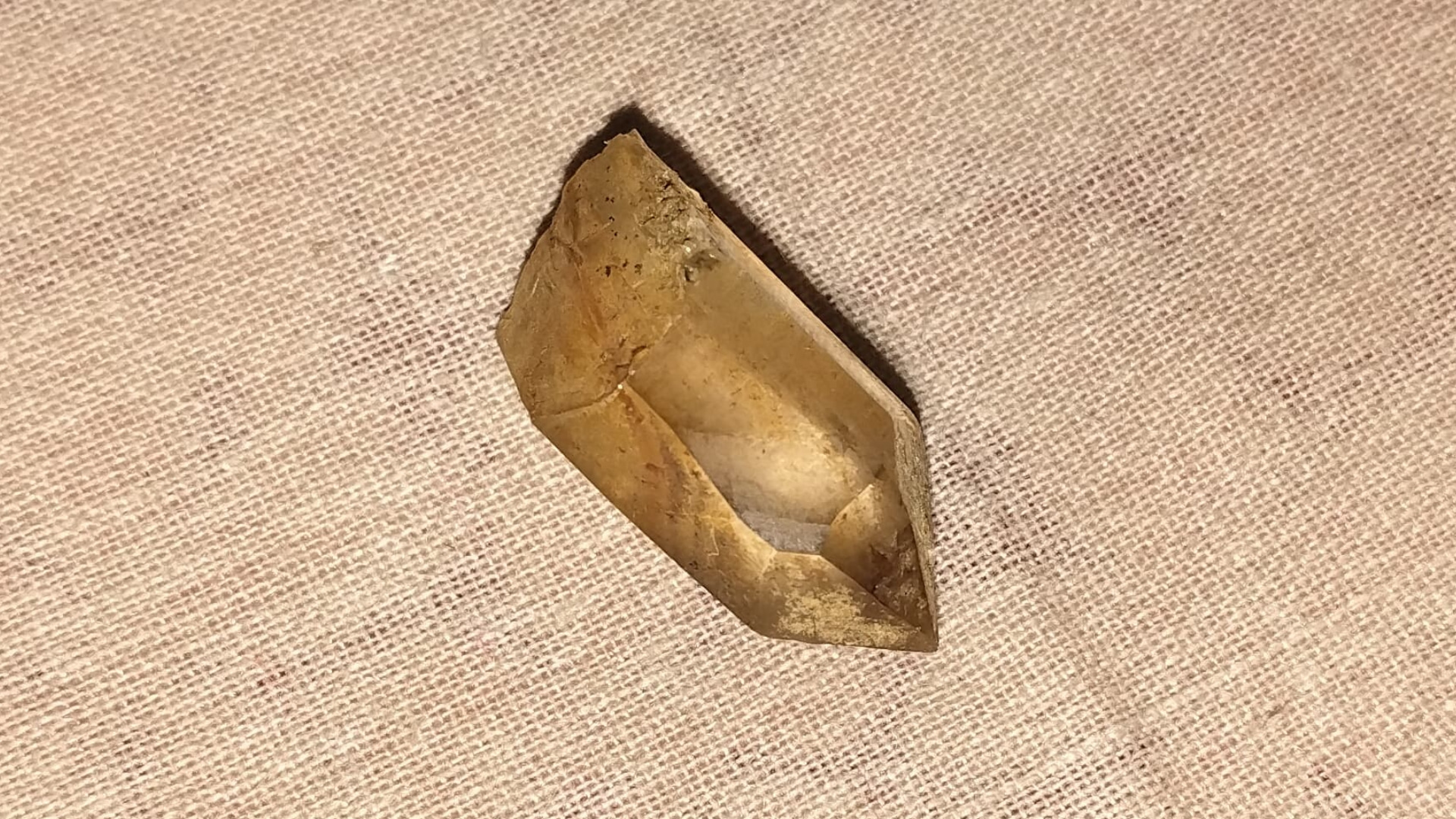
He himself was involved in this business for some time, and had once found crystals worth, by his own estimate, somewhere between three to five million. As per him, a broker from Bhaktapur had promised payment. The money never came. The broker disappeared. He went looking for the broker, anxious, restless, angry, but nothing came of it. He told this part of the story with a calm that felt less like resignation than like something that had simply hardened, over time, into part of his architecture.
There was silence. I couldn’t tell if the moment had simply grown awkward, or if he just didn’t want to say more, but it lingered.
Then he said something I could never have anticipated.
Because before the road had reached Lapa, the internet had, and through it, almost by accident, the porter had stumbled onto a second life. Not through agricultural extension officers, not through government outreach but through TikTok, yes TikTok. One day he came across videos on cardamom farming and watched, at first, only casually. Curiosity turned into research; research into workshops, seminars and training sessions; and eventually he committed to farming cardamom. It paid off. He sold cardamom worth around four hundred thousand rupees in one year, nearly one and half million the next, and had since begun expanding into kiwi. As he spoke, I found myself suppressing laughter, not because any of it was funny, but because of how effortlessly the whole sequence refused every neat model of development I had carried with me.
A gemstone hunter gets scammed by a broker. There’s a road yet to arrive, but the internet has. A set of algorithms recommends cardamom. A new livelihood is born out of the wreckage of an old one, and nobody involved in building the algorithm ever meant for it to land here, on this trail, in this man’s life.
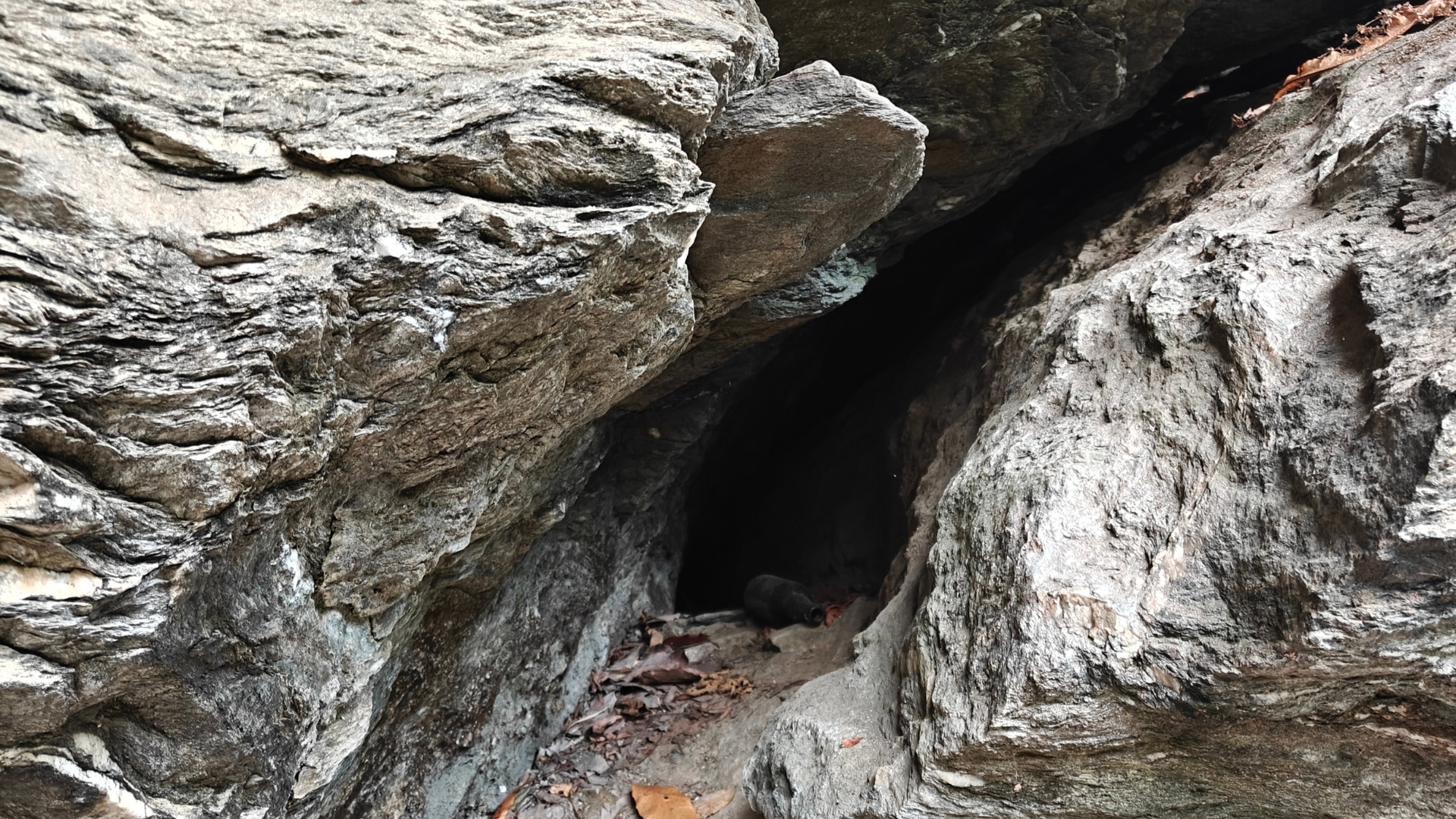
The porter adjusted the load on his back and kept walking, unbothered, as though he hadn’t just upended an afternoon’s worth of my assumptions. At one point the trail flattened briefly and he slowed, and it was then that he admitted something I still remember for how strange and unintentionally poetic it sounded: he disliked flat roads. Uphill was fine. Downhill was fine. But straight roads, he said, exhausted him. I didn’t know what to do with his admission except store it away, the way you store away a line of a song whose meaning you suspect will only arrive later.
By the time we reached Timla, hunger had overtaken punctuality, and the school session could wait, the food could not. Our host, a woman in her thirties who ran a small lodge, moved with the practiced efficiency of someone accustomed to doing five things at once: serving tea, cooking meals, managing supplies, responding to guests, keeping a household running without ever appearing rushed. Conversation drifted toward her children. All three studied outside the village. When she spoke of them, something softened in her. Her eldest daughter, only eleven, could already cook dinner for all her siblings, and she said this with unmistakable pride. Then, smiling, she told us that her nine-year-old son had once impressed a school principal simply by signing his name in English. “He can sign in English,” she repeated, savoring it. No metric I knew of had a category for the particular pride in that sentence.
By evening, rain arrived violently. The hills disappeared behind sheets of grey, and with the rain went the electricity. No one treated this as unusual. Scarcity here had a routine built into it, the way weather does. Over the next two days, several stories surfaced during our conversations, some practical, some strange, occupying that uneasy territory where belief, rumour, memory, and fear become difficult to pull apart. There was the local frog, Paha, prized as both food and medicine, its value rising the farther it traveled from the village. We were told children who were in sessions with us, hunted for it after school, selling whatever they caught to buyers willing to pay surprisingly well.
Then there was a different frog altogether, one nobody sold, but feared. Its intestines, people said, carried something close to poison, and that single distinction seemed to shape an entire layer of the valley's folklore: one frog fed you, the other could be slipped into your food to harm you. There were stories of poisoning, tampering of food, intestines dissolved unnoticed into meals, causing severe illness, sometimes worse. Had I heard any of this in Kathmandu, skepticism would have arrived automatically. But distance changes listening. Stories in villages rarely present themselves as folklore so much as warning. The shop owner narrated a story of possession with such calm and candid, it unsettled me more than dramatics ever could. A father, allegedly possessed, attempting to harm his own son the same way. She described similar incidents recurring across villages and even within families: people falling mysteriously ill after the frog's intestine had been mixed into their food, finding no remedy in medicine, and recovering only after visiting a local guru, whose powers she spoke with a certainty usually reserved for fact. I did not know what to make of such stories, and perhaps that uncertainty was the point.
The next day, while returning to Lapa, we met our porter again. When asked about black magic, he laughed. “Every village in Ruby Valley has the same story about another village,” he said. “I don’t know if it is true or false, but I’ve eaten in every village here and I have never fallen ill.” It was such a characteristically a response from a man who has wandered around tough trails, lifting weights and guiding around: practical, unsentimental, entirely unimpressed by panic. He trusted experience over rumour, and somehow that felt like the most grounded explanation of all.
By the third day we began walking back to Lapa, and the trail felt different, not because the terrain had changed, but because the way I was looking at it had. The village hardly felt distant the way it had on arrival. It had begun resisting the conclusions I instinctively reached for remote, rural, underdeveloped, traditional, and none of them sat comfortably anymore.
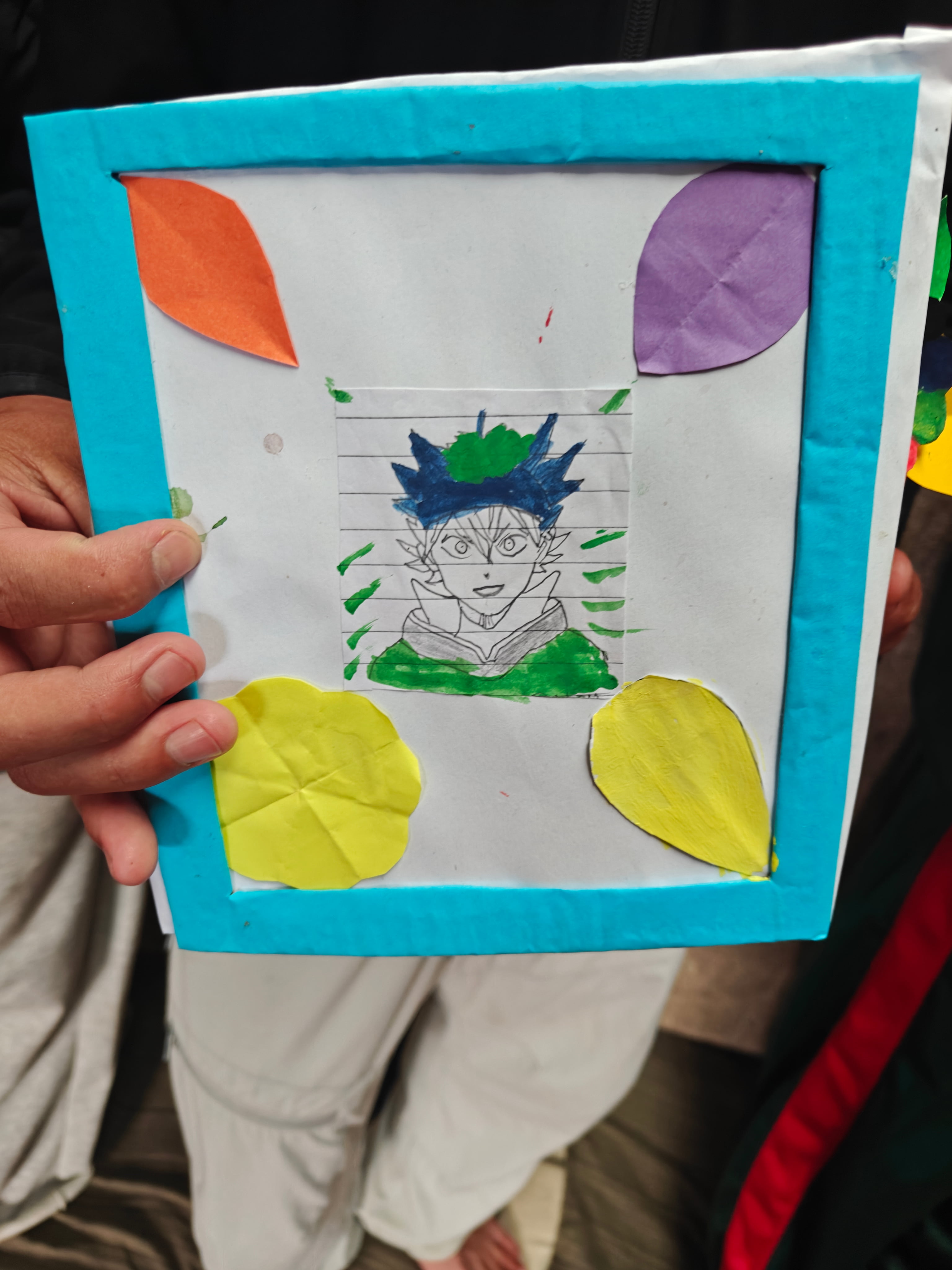
Back in Lapa, the sessions continued. Children gathered around the materials with the seriousness children often reserve for things adults underestimate, cutting and folding and pasting waste into something new, and conversations drifted the way they do when small hands stay busy and attention wanders elsewhere. At first, I only half-listened. Then one word caught my attention: ANIME. I looked up to see a group of boys engaged in a serious debate. Two of them had drawn pictures of Satoru Gojo from Jujutsu Kaisen and Asta from Black Clover on photo frames they had made from waste cartons and paper, which they were now using as they argued passionately about who would win in a fight. One insisted Gojo could defeat nearly anyone. Another strongly disagreed. Predictably, someone brought up Goku, as usually happens in such a discussion.
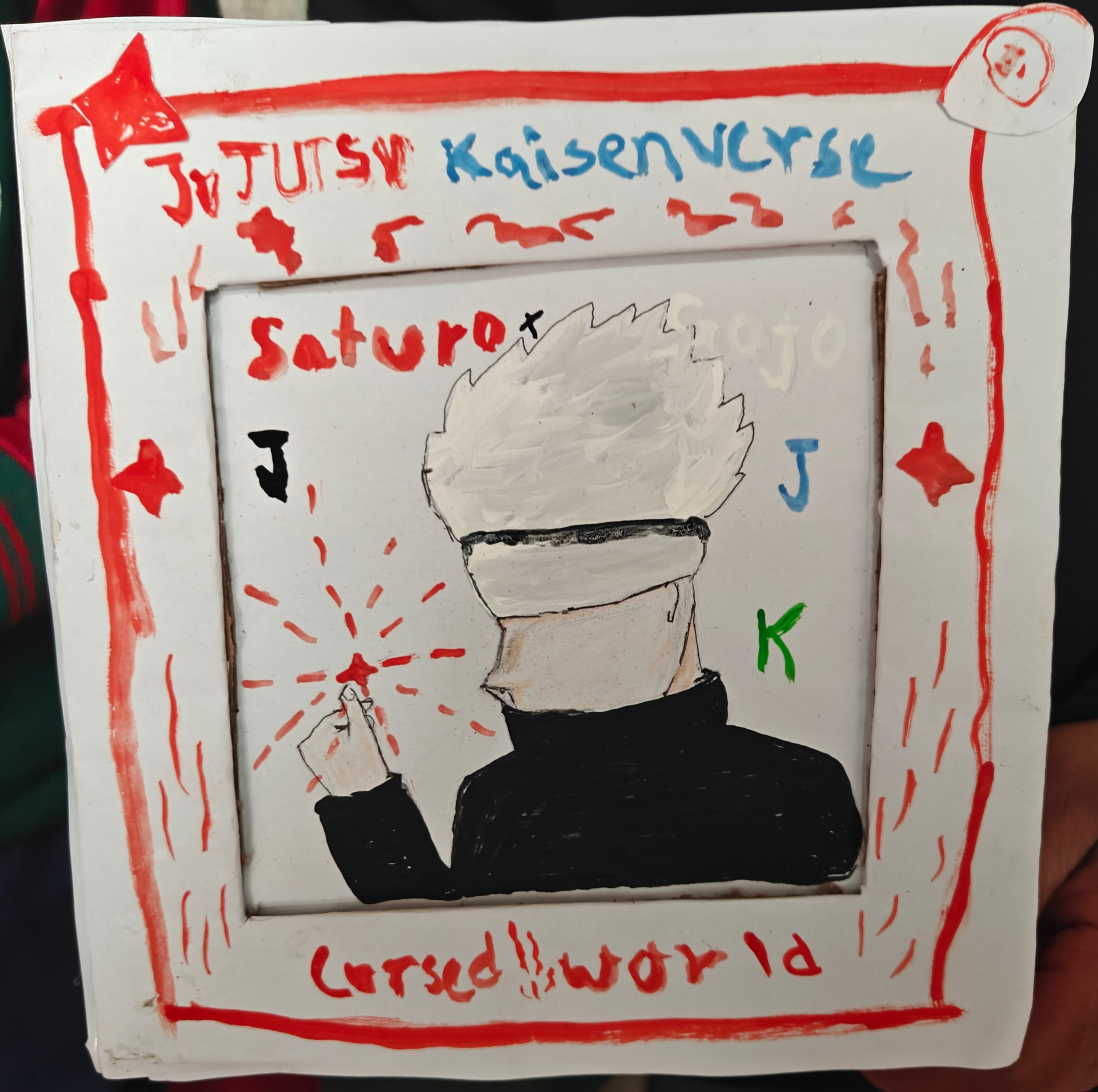
For a moment, I simply sat there, watching. These were children growing up in a place where roads remained unfinished, electricity was rationed, and travel still depended on long hours of walking. Yet they were fully immersed in global digital culture, debating Japanese fictional universes and trading internet slang with the same fluency as any teenager in Kathmandu. If a distance still existed between them and the capital, I was beginning to suspect it lived mostly in my imagination, though I could not yet tell whether that realisation belonged to this place or to me. Perhaps I am, once again, too quick to draw conclusions.
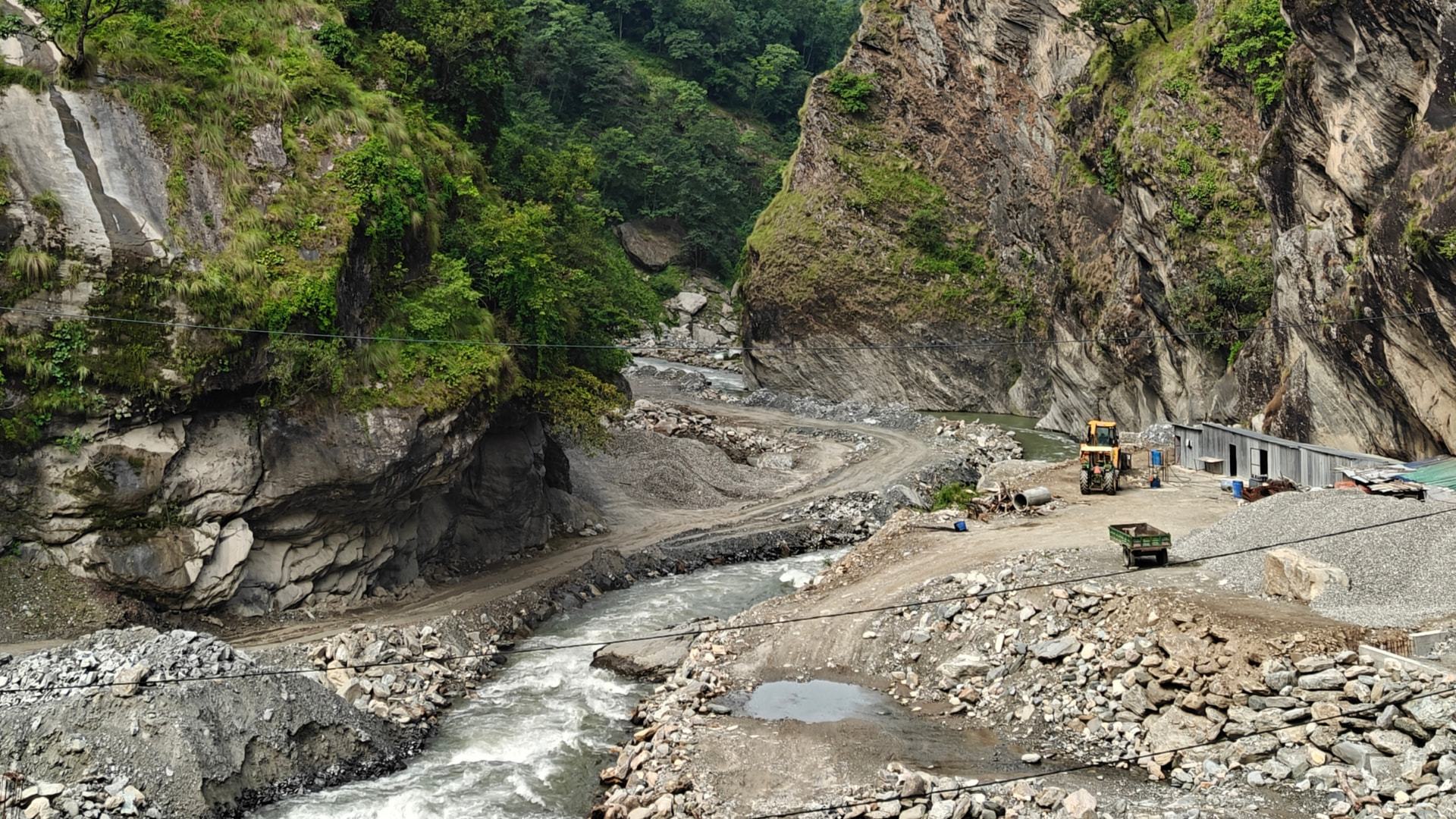
By the sixth day we were moving again, this time from Lapa toward Sertung, and the porter returned to walk with us. There was something oddly reassuring about seeing him again, as though the valley had quietly assigned him the role of a guide, not merely through terrain, but through its contradictions. Somewhere along the climb, the conversation again touched upon roads, as it often did with him. His view was disarmingly straightforward: hand over the construction to hydropower companies instead of the government doing the job, because they build faster, and durably, with delays costing them money directly.
Government projects, he argued, had a habit of stretching time, opening before they were finished, needing repairs before completion, permanently trapped in a state of becoming. He said all this without ideological conviction, less like a political argument than a fact. Roads mattered to him and to the entirety of people I have interacted with across Ruby Valley, less as symbols of development than as solutions to immediate problems of time, mobility, and access. That, I was starting to realise, was one of the recurring lessons of Ruby Valley: abstraction belonged mostly to outsiders like me. Locals spoke in consequences.
Later that same day we continued toward Tipling, and somewhere along the way, his path diverged from ours. There was no dramatic farewell, no ceremonial ending. At some point we noticed he was no longer beside us, and it felt appropriate. He had done what he needed to do.
By the time we reached Tipling, the region had sharpened. The air felt colder, the ridgelines longer, the quality of life here harsher and less buffered. Gemstones still shaped conversations. Older men spoke about mining with nostalgia and frustration; nobody romanticised the work, which was dangerous and exploitative, but it had once made sense. Older livelihoods don’t vanish because people become enlightened enough to abandon them or new approaches arrive, they vanish when they stop functioning. Extraction here had grown increasingly precarious, and not only because the stones were harder to find, trust had become harder to find too.
Earlier, one broker had dominated most transactions; now there were several, which should have meant better bargaining power. Instead, competition introduced new instability: brokers who lost out on a deal sometimes reported rival transactions to the police. Suspicion and trust deficit had made the whole affair more risky. And the law had only complicated things further, as mining existed in a grey space, neither formal nor hidden, while the policing hadn’t ended the trade so much as made every transaction more fragile.
Listening to this, I found myself thinking again about luck. Not simply geological luck, but institutional and political too. The luck of finding the right broker, of not being reported, of digging in the right place at the right time. Modern systems, it seemed, hadn’t removed uncertainty from people’s lives so much as it has redistributed.
The following day, we began returning toward Sertung. The walk back to Sertung gave me time to do what mountain trails are good for, turn a thought over until it loses its urgency.
Sertung arrived without spectacle. If Lapa had announced itself through contradiction and Tipling through struggle, Sertung felt quieter, almost reluctant to become a material for narratives, no dramatic first impression, no striking visual hook demanding description, unless one counts the leeches that seemed capable of appearing anywhere, even inside bedrooms. Yet some places stay with you not because of the landscape but because of a single conversation, and for me, Sertung became that place because of a boy from Chyamra Devi School. Not that we didn’t have memorable experiences elsewhere. In Timla, a boy handed us nearly two kilos of plums unprompted just because he liked us, another who never once put his school bag down for two whole days, as if removing it might violate some natural order, and the familiar sarcastic edge children in grades eight to ten so often carry, old enough to question authority but not yet old enough to fear consequence.
This boy felt different, or perhaps that is just my bias. He was old enough to speak with confidence and young enough that confidence had not yet learned restraint, answering questions with the peculiar seriousness of children who had only recently become aware that adulthood was approaching. He wanted to become a doctor, he said, so he could treat people in his village. Then, after a brief pause, he reconsidered, maybe an engineer instead. An engineer could build roads, bridges, houses. A doctor heals people, he reasoned. An engineer changes the village. He said this with striking certainty, no irony, no awareness yet of the systems standing between aspiration and achievement, and I found myself smiling, not at him, but at memory, because somewhere in his confidence I recognised something embarrassingly familiar. Maybe I was like that once. There is an age when ambition still feels morally uncomplicated, when becoming useful feels less like a struggle against systems than a simple matter of effort and intent. You don't dream merely of success; you dream of meaningful success, of returning, building, repairing the world that raised you. Then life happens.
Some of us make it, some of us continue trying, and some of us quietly learn to live with dreams smaller than the ones we began with. That boy did not know this yet, and perhaps that was the point. He still inhabited the brief age where roads and bridges and medicine all felt solvable by capable hands, and for a moment, listening to him, development stopped sounding like policy and returned to something more intimate: a child imagining usefulness, spoken in the present tense.
When I first arrived in Ruby Valley, I kept reaching for familiar categories: remote, rural, traditional, underdeveloped, hoping they would impose some coherence. But the longer I stayed, the less useful those words became. The porter spoke about black magic in the same practical tone he used to explain TikTok. A mother measured achievement through her nine-year-old son’s English signature. Children debated Gojo and Goku while roads remained unfinished outside. None of these realities canceled one another out; they simply coexisted. What unsettled me was never the contradiction itself, but my own expectation that it needed resolving.
By the final days in the valley, the workshops had settled into their rhythm: children arriving, materials distributed, scissors and glue and cartons and wrappers and paper turned into the familiar mess of collective making. Life continued around us with its usual indifference to philosophical clarity. As our work came to an end, I found myself returning once more to that first detail that had stayed with me back in Lapa: the road had reached only recently; 4G had arrived earlier still. When I first heard that, it felt ironic. By the end, it felt almost obvious. Perhaps the contradiction had only ever existed because I’d arrived carrying a certain sequence of thinking: roads first, then connectivity, then change. They valley disobeyed that order. Physical access lagged. Digital access did not. Cultural participation did not. A child without reliable road access could still argue about Gojo and Goku with the intensity of any teenager in Kathmandu. A porter could reinvent his entire livelihood through an algorithm that had no idea it was changing a life on a mountain trail. This place did not feel caught between tradition and modernity, the way that word implies a kind of suspended tension. It felt instead as though both had simply arrived together and, without asking permission from theory or policy.
As we prepared to leave, the road appeared once more in fragments, still unfinished, still interrupted, still negotiating its place against mountain and weather, exactly as it had on the day we arrived. Far below, the river moved as it always had: steady, indifferent, ancient, entirely unconcerned with whatever conclusions I had managed to draw from two weeks of walking beside it. And somewhere in Ruby Valley, I imagined all of them continuing on with lives that no article could fully contain: my guide, perhaps already on another trail, still moving faster than any road could reach; the mother in Timla, still carrying pride in the small wins of her children; the boy in Sertung, still certain that bridges and roads could be built by capable hands; the children in Lapa, still arguing with great seriousness about fictional battles fought in universes oceans away.
For some reason, that final image stayed with me longest: not because it resolved anything, but because it refused to. And perhaps that was the lesson the valley had been offering all along, quietly, the entire time: not every place waits patiently to fit the stories we bring to it. Some places simply go on, unbothered, and quietly undo those stories instead.
Read More Stories

Sino-American stability without trust
At the recent summit between US President Donald Trump and Chinese President Xi...

NEPSE makes a modest gain of 2.31 points
The Nepal Stock Exchange (NEPSE) recorded a modest gain of 2.31 points (0.09%)...
VAT on electricity raising business costs, says FNCCI calling for withdrawal
The Federation of Nepalese Chambers of Commerce and Industry (FNCCI) has urged the...