What we do is costly! Your support will help us dig more stories.
Yes, I'm Interested!Ignorance isn't always bliss | Don't stay foolish.
Keep informed | Read our news and analysis.
When Economic Affairs and Planning Minister Rajiv Bikram Shah stood before the Karnali Provincial Assembly to table this year's 35.39 billion rupees budget, the lights in the hall briefly went out. It was an accidental metaphor but a precise one. Financial planning for Nepal's most structurally isolated province has long operated in a deliberate darkness. Each year, the budget is presented in the language of inclusion and development. Yet one reality remains unchanged; those who write the budget are not the people the budget is supposed to serve.
On paper, the numbers perform well. Over 58% of the outlay of NRs 20.74 billion is capital expenditure. Administrative overhead is nominally trimmed. The annual incentive for Female Community Health Volunteers has been doubled to NRs 24,000 per year, a modest but symbolically meaningful acknowledgment of the women who hold Karnali's rural health system together. There is funding for maternity nutrition, cancer screening, suspension bridges, and strategic roads. Taken in isolation, each line item sounds responsible.
But a rights-based reading of this budget does not ask what is funded. It asks who benefits and who is, once again, left out.
Who holds the pen
Karnali's political leadership is overwhelmingly male, overwhelmingly upper-caste, and overwhelmingly drawn from a narrow network of elite families whose hold on the province's governance structures has survived every wave of democratic reform. Across the municipalities and wards of Kalikot, Jumla, Dolpa, Mugu, and Humla, meaningful Dalit representation at executive decision-making levels is not merely rare, it is functionally absent. Women hold seats where the constitution requires them to but they rarely hold power.
This is not incidental to the budget. It is the budget's architecture.
Consider the flagship agricultural intervention program, where a 100% interest subsidy is granted to commercial farming operations exceeding five hectares. In a province where the terrain is vertical, where centuries of caste discrimination have left Dalit households either completely landless or farming tiny, fragmented terraces inherited from a system designed to exclude them, the question of who actually qualifies for this subsidy answers itself. The state is using public money to subsidise the landholding elite under the language of agricultural modernisation. The land-poor, who are disproportionately Dalit, are offered small cooperative handouts, which are themselves politically distributed.
This is elite capture. It is not accidental, but structural.
Isolation is not merely a geography problem
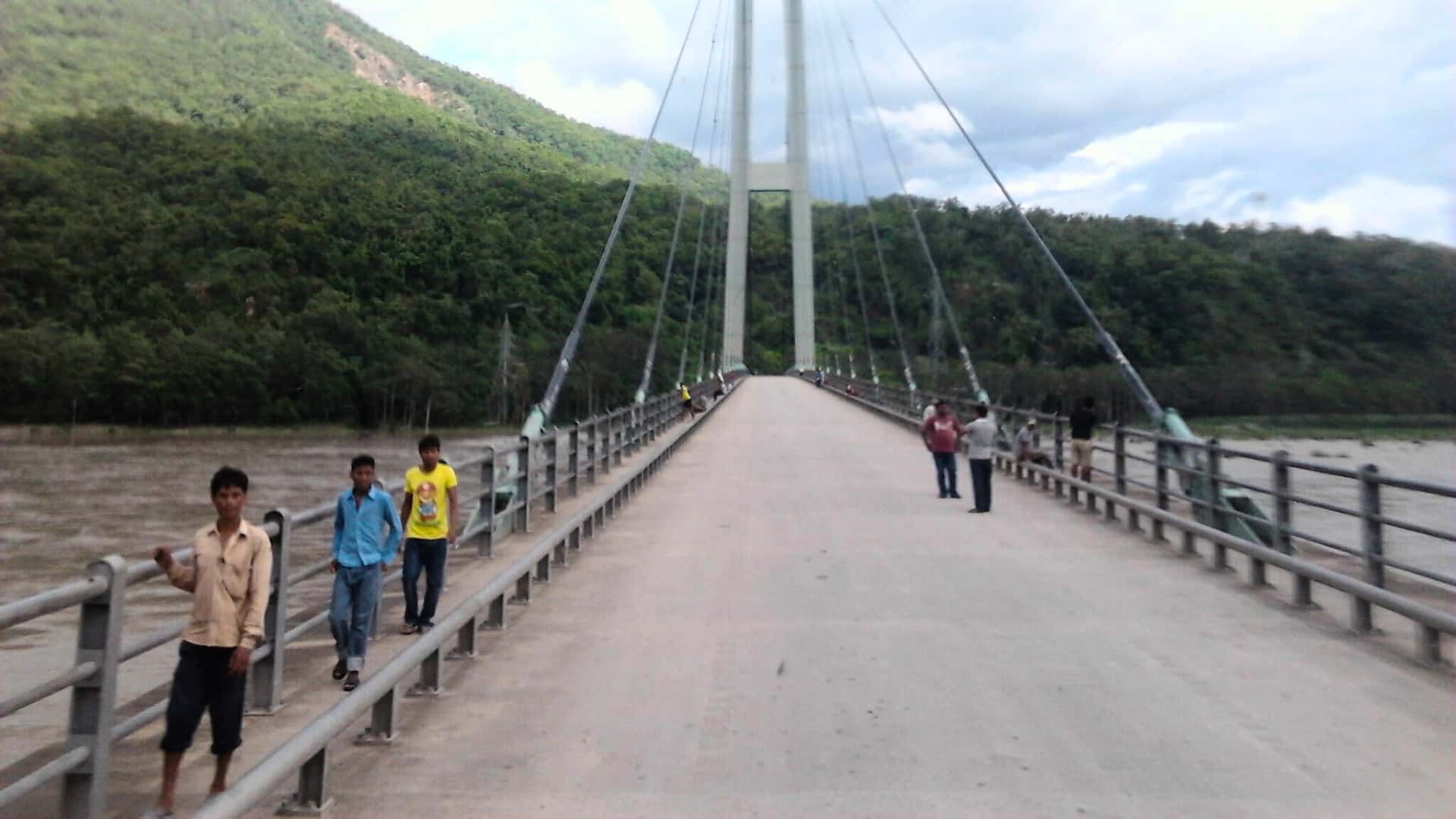
The budget allocates NRs 10.93 billion to physical infrastructure for roads, bridges and connectivity. This is necessary. But the framing is purely technical, where it says for laying gravel, spanning rivers and connecting district headquarters. What is absent is any recognition that in Karnali, physical isolation and social oppression are the same problem wearing different faces.
The province has the mandate and the resources to invest in provincial connectivity, like roads, digital infrastructure, and communication networks. Recognising that local governments cannot solve provincial connectivity gaps alone, this should be treated as not only an engineering task but also a deliberate strategy for breaking the information isolation that keeps oppressive social norms in place.
When a village is cut off each monsoon with washed-out roads, phone networks that drop to nothing beyond the district town, and the absence of reliable 4G, it is not just economically isolated, but socially frozen too. Information does not move and ideas do not spread. A young Dalit woman who has never heard that the law protects her, and who has never spoken to anyone outside her village, has no reference point to question what she is told is natural.
Connectivity, when it reaches the right places, does not just move goods. It moves possibilities. The budget treats infrastructure as an engineering challenge. It should treat it as a right intervention.
The dignity deficit
Karnali’s young people are not migrating only because of poverty. They are also driven by the daily, grinding indignity of a society whose institutions signal that they do not fully belong. A Dalit youth leaving for Kathmandu or the Gulf is not only seeking higher wages, but a context where caste is not the first thing others see.
When these young people return, and many do, with skills, savings, and a changed perspective, they often find a market too small, constrained and controlled to absorb them. The budget has set aside NRs 41 million in startup loans. But a loan without market infrastructure, digital payment reliability, cold-chain logistics, access to buyers outside the valley, is not an opportunity. It is a debt trap. The elite-controlled local economy either pulls returning migrants back into the same hierarchy they left or pushes them out again.
Welfare is not rights
The social interventions in this budget, like nutrition allowances, cancer screenings, health stipends, are all welcome. But they reflect a paternalistic logic that positions marginalised communities as passive recipients of state charity rather than rights-bearing citizens with claims on public resources.
A genuinely rights-based budget for Karnali would look different. It would fund legal empowerment programmes so that Dalit communities know their rights and have institutional support to enforce them. It would allocate meaningful resources to caste-based violence prevention and accountability, not as a line item buried in a social welfare ministry, but as a named, visible, funded priority. It would direct economic asset-building specifically to Dalit and female-headed households, not through means-blind subsidies that flow to whoever has the most land, but through targeted mechanisms that acknowledge who has been systematically excluded.
None of this is in the budget. Because the people who would demand it are not in the room where the budget is written.
What a different budget would say
A provincial government that took discrimination seriously would not hide in footnotes. It would open the assembly session by naming the problem that Karnali's development failure is inseparable from its discrimination failure, structuring its fiscal response accordingly.
It would invest in provincial connectivity not only as infrastructure but as a deliberate strategy for breaking the information isolation that sustains the existing oppressive social norms. It would build accountability into every line item, with quarterly milestone requirements, transparent public reporting on provincial spending disaggregated by geography and beneficiary group, so that citizens, local governments, and civil society can hold the province accountable for where the money actually goes. It would stop funding the comfortable fiction that Karnali's problems are a matter of geography alone, solvable by enough roads and bridges alone, if only we could get the procurement moving before Ashar ends.
It would recognise that the province has its own levers, conditional grants to local governments, targeted provincial programmes, transparent accountability systems that can be used deliberately to reach the most excluded, rather than defaulting to mechanisms that reward whoever already has the most.
The lights going out in the assembly hall was a metaphor, but Karnali does not need metaphors. It needs a budget that sees, names, and confronts the power structures that have governed this province long before it was called a province.
That budget has not yet been written.
Read More Stories

Nepal needs to repeat to brand itself
Last year Nepal's goods exports jumped 81.8% to NRs 277.03 billion. That is...

Banking stocks gain momentum as dividend season begins
Dividend announcements by banks and financial institutions (BFIs) for fiscal year 2025/26 have...
Nepal’s challenge of building strong democratic institutions
Over the past few decades, institutional dysfunction and massive dissatisfaction with political establishments...