What we do is costly! Your support will help us dig more stories.
Yes, I'm Interested!Ignorance isn't always bliss | Don't stay foolish.
Keep informed | Read our news and analysis.
Lately, I have been thinking about sunrise. I cannot remember my first sunrise. The golden flare breaking across the eastern sky does not arrive in my memory as a single, decisive moment. There are fragments, faint impressions of orange light lodged somewhere in childhood, but no complete image. Perhaps this is because, for most of my life, sunrise carried no philosophical weight for me. It was merely a daily recurrence. Unremarkable. Inevitable. Unexamined.
Our house stood west of a north–south road, facing south. To the east, beyond the road, stretched two to three hundred meters of cultivated land before the Ninda River, coming down from the hills of Ilam to the north, already widened and unhurried by the time it reached us, spread into a broad floodplain and moved on toward the Mechi and eventually India. The plain was flat and open, uninterrupted until it dissolved into the eastern horizon. From our courtyard, one could see the sun rise cleanly. No buildings. No interruptions. And yet, despite this abundance, I do not remember being aware of it.
Awareness came later.
* * *
It arrived during my final year of school, when I was preparing for my twelfth-grade examinations and our family was building a new house some two hundred meters south of the old one, east of the road and close to the river. The foundation and roof were complete, but the walls had not yet been built. Construction materials lay exposed, and I was tasked with guarding them at night. A bed was placed inside the roofed but wall-less structure. A single light bulb hung overhead. My books became my companions.
Because there were no walls, sunrise had nothing to stop it.
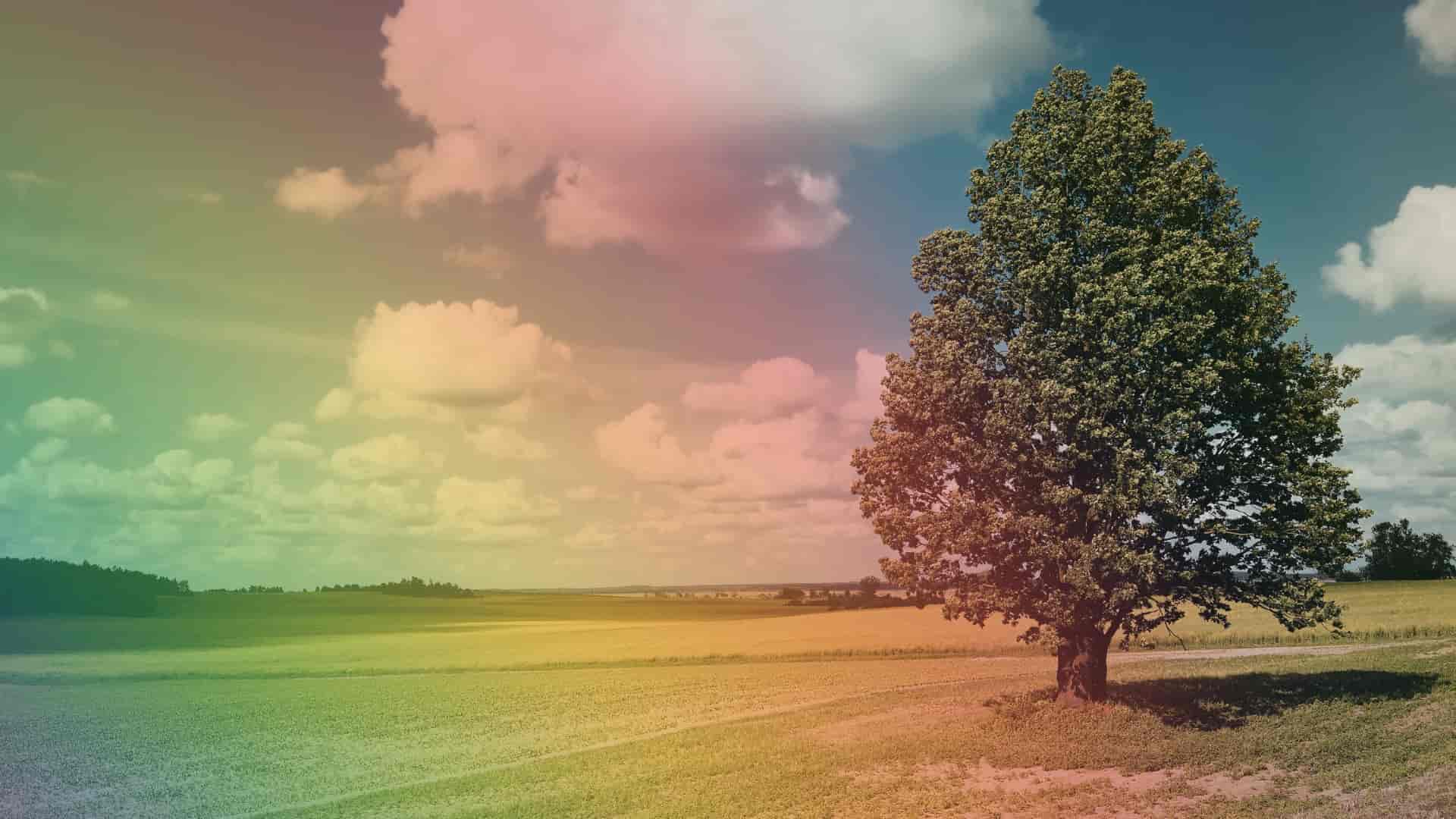
Morning light entered without permission. The eastern sky revealed itself fully. Darkness reddened. The horizon turned gold. Birds gathered and dispersed in sound. The river flowed steadily behind it all. The floodplain stretched outward, seemingly without end. And there, at the edge where farmland surrendered to the riverbank, stood a Siris tree, tall and solitary while its broad canopy spread flat against the brightening sky. I had not noticed it before. It appeared to me now not as a tree exactly but as a marker, a threshold between the cultivated and the unclaimed. Some mornings the sun rose directly into its canopy, resting there a moment before climbing free.
What I experienced then was not merely a view, but a form of openness. A spatial generosity that made room for thought without demanding it.
At the time, I did not know this openness had a name.
* * *
Life moved on. The house gained walls. My exams ended. I left for Kathmandu. The disorder of the city dissolved my habit of waking early. Late nights replaced dawn. Yet each time I returned home, something returned with me as well. The instinct to rise before morning fully arrived. To turn east. To look.
During the pandemic, when I spent an extended period at home, this relationship deepened. For nearly a year and a half, I began my days with sunrise. Sometimes I read. Sometimes I filmed time-lapse videos on my phone, letting the light move from dawn to day. In doing so, without quite intending to, I was also documenting what I could not yet see was ending. The horizon remained open. The river remained visible. The Siris tree remained unmoved.
Then things changed.
To the northeast, a new settlement emerged along the riverbank. A few months later, to the southeast, construction began on a plywood factory. Factory buildings rose quickly, their scale out of proportion with the land they occupied. Chimneys followed. The eastern horizon began to shrink.
I left for Kathmandu again.
* * *
When I returned months later during the festival season, the village had transformed. The factory now stood fully formed along the riverbank. Our house had changed too. A new truss roof of red tin sheets capped it like a helmet. On my first morning home, I woke early out of habit, picked up a book and my phone, and climbed the metal staircase to the rooftop veranda.
The roof above me cut off the sky.
The factory before me erased the horizon.
The river was gone. The floodplain was gone. A white chimney rose and exhaled black smoke into what remained of the sky. The sun still rose, but not where I could see it. The openness that once framed the day had been replaced by structures. Solid. Intentional. Unmoved by my presence.
I went downstairs without thinking. I put the book away. I put the phone away. “Development” after all arrives sooner or later.
But the absence lingered.
* * *
Days passed, and with them a quiet unease. What had I lost? It was not merely a view, nor a routine, nor even the sunrise itself. It was something less tangible. And therefore harder to name.
I kept returning to a peculiar confusion. It wasn't that something I expected was missing. It was that something had arrived where nothing had been, and in arriving, had taken something with it. The floodplain had not been empty in the ordinary sense. It had been permissive. It allowed sight to travel without interruption. It allowed thought to drift without obstacles. When structures occupied it, they did not simply add presence. They removed a freedom I never had consciously learned to defend. The factory itself wasn’t uncanny. Factories are ordinary. But that something I had never consciously possessed had been taken from me. You cannot grieve, it turns out, what you never knew you owned.
I later found language for this disturbance while reading Jean-Paul Sartre. Sartre writes of how certain absences announce themselves sharply, how the missing presence of a particular person can reorganise an entire space. What I experienced felt like the inverse of that insight. A presence so forceful it erased an absence. A field of possibility collapsed into fixed form.
Space no longer met me as it once had. Attention, which had previously moved outward and rested gently on the horizon, now stopped short. It collided. Returned. Narrowed. The openness I remembered was not a lack of things, but a way of encountering the world. An orientation that had quietly shaped how mornings began.
There is another way to read this discomfort. Perhaps what I had been attached to was not the sunrise, not the river, not even the tree, but the condition of openness itself. The possibility of it. I had not known this was something one could lose, because I had not known it was something I held. In Zen philosophy, even emptiness is impermanent, and suffering comes not from loss itself but from the expectation that what we have been given will remain.
Still, what was lost does not feel like an illusion. It had a duration. It had consequences. The openness had held space for breath, for attention, for unclaimed awareness. In Japanese aesthetics, there is a word for this kind of interval. Ma. The floodplain had been such a pause. It did not demand looking. It permitted it.
Robert Rauschenberg's White Paintings, plain and unmarked, were once described by John Cage as "airports for light and shadow", surfaces that receive the world without insisting upon themselves. The floodplain had been my white canvas. My sunrise. My ambient sound.
* * *
There is one more thing to say, and it is the thing I did not know how to say until recently.
The Siris tree is still there.
When the factory was built, a boundary wall went up along the property line. The wall was drawn through the land with the decisiveness that all such lines are drawn, without hesitation. But the Siris tree stood exactly at the edge. Its roots spread into open ground. Its trunk rose inside the factory boundary. The wall, when it came, had to accommodate this. There is a small gap where the tree passes through, a concession in the masonry, an acknowledgment that the tree was there before the line existed.
I think about this often. The tree was not cut down. It was not absorbed. It was not moved. It simply occupied both worlds simultaneously, roots in the unclaimed, trunk in the claimed, and the factory, for all its scale and intention, could not resolve this. It was built around the tree instead.
The tree that first appeared to me in that wall-less dawn, standing in silhouette against the brightening sky with the sun resting in its canopy, now stands in a gap in a factory wall. It marks a different threshold now. Not between the cultivated and the unclaimed, but between what development takes and what it cannot quite reach.
I find I am still turning east each morning, still looking. The chimney exhales. The horizon is closed. But the tree stands in its gap, roots in open ground, and something that refuses to be only a loss.
What development took from me cannot be rebuilt. But in naming it, in understanding that what I mourn is not a thing but a condition, I have come to see that the tree already knew what I am still learning: that to stand at a threshold, claimed on one side and free on the other, is not a compromise. It is its own kind of presence.
Read More Stories

NEPSE rises 28 points as trading activity improves
The stock market rebounded on Friday, with the NEPSE index gaining 27.94 points,...

Government estimates NRs 723 billion needed to rebuild flood-damaged areas
The government has estimated that NRs 723.31 billion will be required to rebuild...

Market falls by double digit for second session as turnover declines
The stock market extended its decline for a second consecutive session on Thursday,...