What we do is costly! Your support will help us dig more stories.
Yes, I'm Interested!Ignorance isn't always bliss | Don't stay foolish.
Keep informed | Read our news and analysis.
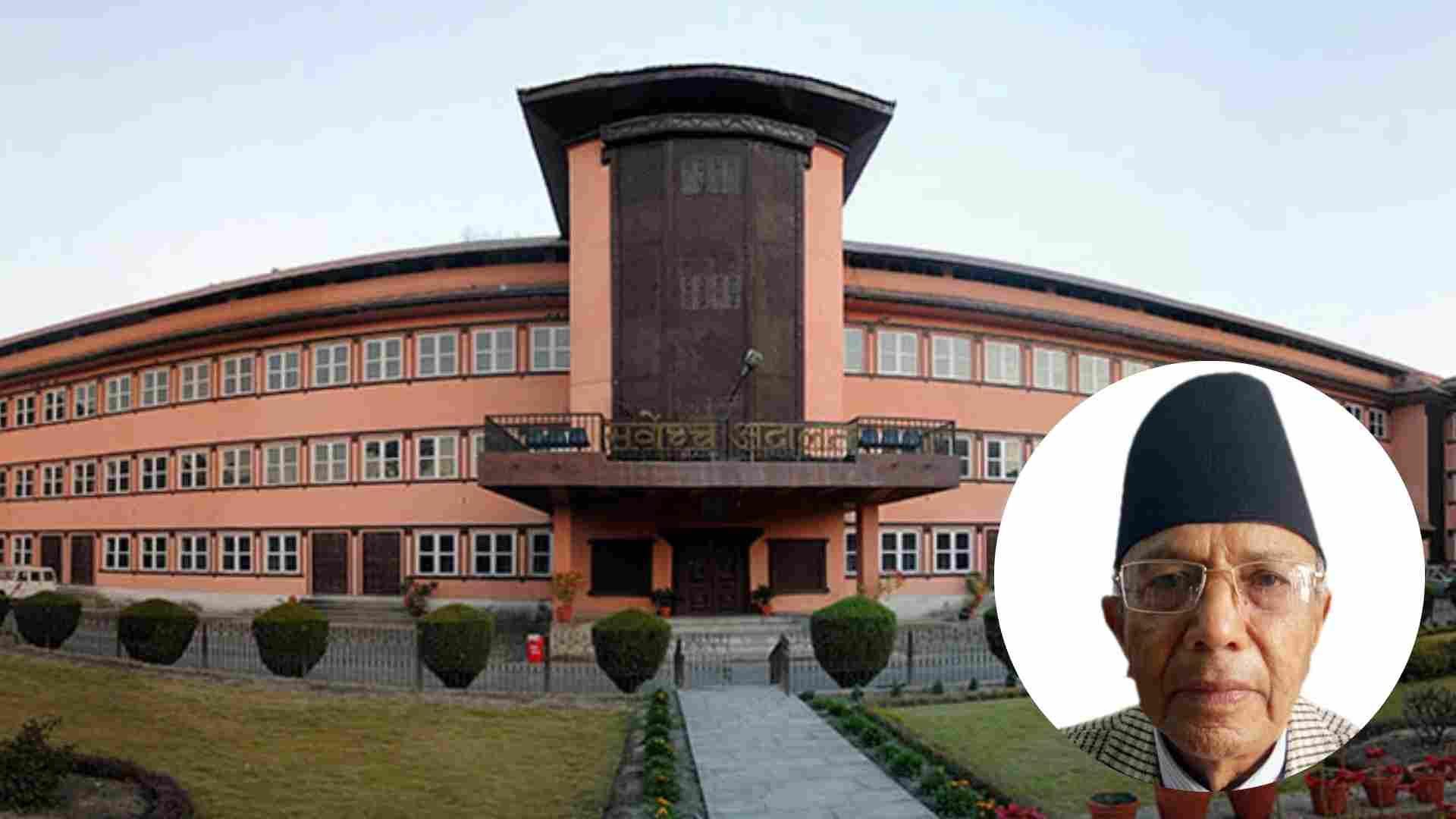
The Supreme Court has ordered the government-appointed Property Inquiry Commission to suspend its activities relating to property declarations and refrain from recommending legal action against any individual until the court reaches a final decision on the commission’s constitutional validity.
A division bench of Justices Tek Prasad Dhungana and Shrikanta Paudel on Friday issued an interim order halting the commission’s activities while referring two writ petitions challenging the commission’s legality to a three-member full bench. The court said the petitions involve complex constitutional and legal questions that require authoritative interpretation.
The interim order directs that no individual be compelled to submit property declarations until the full bench delivers its verdict. It also bars the commission from examining property declarations already received or making recommendations for legal action against anyone during the pendency of the case.
According to the order, allowing the commission to proceed under Clause 2(e) of the April 15 Nepal Gazette, could cause irreparable harm if the provision is ultimately found to be inconsistent with the Constitution and prevailing laws. The bench issued the interim order under Rule 49(2)(a) of the Supreme Court Regulations, 2017.
The court also ordered the Nepal Bar Association and the Supreme Court Bar Association to nominate senior advocates to appear as amicus curiae to assist the full bench in resolving the constitutional issues raised by the petitions.
The writ petitions, filed by advocates Prem Raj Silwal and Man Bahadur Lamichhane, argue that the commission was established in violation of constitutional provisions, including Articles 28, 132 and 239 of the Constitution. The petitioners contend that the commission duplicates the constitutional mandate of the Commission for the Investigation of Abuse of Authority (CIAA), exceeds its jurisdiction by examining categories of officials protected under the Constitution, and unlawfully appoints a former Supreme Court justice to a government office.
The commission was constituted on April 15, under the chairmanship of 83-year old former Supreme Court Justice Rajendra Kumar Bhandari. The five-member panel was tasked with examining the assets of senior public officials and employees who served in public office during the past two decades, from 2005/06 to 2025/26.
Before the Supreme Court’s order, the commission had begun collecting property declarations and conducting preliminary reviews. It reported receiving property declarations from 13,660 individuals and registering approximately 1,500 complaints. The deadline for submitting declarations had been set for the end of the ongoing fiscal year, with around half of the estimated 25,000 individuals required to file having done so.
Commission officials had said preliminary scrutiny of complaint files and property declarations had already begun and that cases involving suspicious or unexplained assets would be recommended for further investigation and legal action. Friday’s interim order, however, suspends those activities until the full bench determines whether the commission itself is constitutionally valid.
The commission is exempted from the inquiry of sitting Prime Minister, the Chief Justice and Supreme Court justices, sitting office-bearers of constitutional bodies, the Nepali Army, or first-time Members of Parliament (MPs) and ministers.
Read More Stories

Market turns green by 11.97 points, turnover slips to NRs 3.13 billion
The Nepal Stock Exchange (NEPSE) climbed up Tuesday by 11.97 points (0.47%) to...
Inside Nepali Congress’s 15th General Convention
The Nepali Congress began debating its political and organisational direction for the next...

NEPSE continues downtrend, sheds another 20 points, turnover drops to NRs 3.27 billion
The stock market extended its decline on Monday, with the Nepal Stock Exchange...