What we do is costly! Your support will help us dig more stories.
Yes, I'm Interested!Ignorance isn't always bliss | Don't stay foolish.
Keep informed | Read our news and analysis.
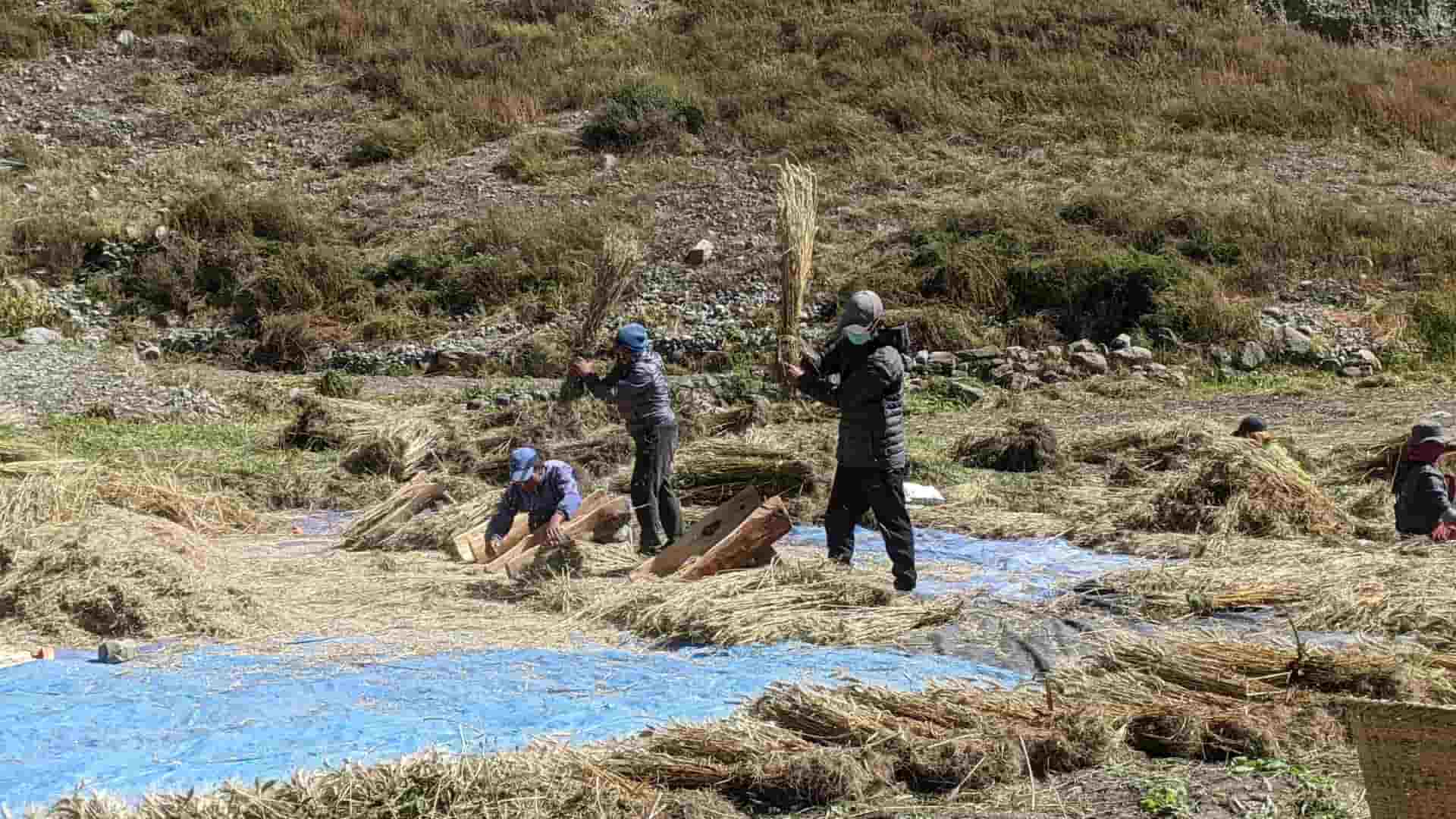
In Manang, where villages cling to the upper reaches of the Marsyangdi river, she arrived years ago, carrying what she could. Among those few belongings was an apple seed whose origin she no longer remembers clearly. All she knows is it was a parting gift when she left her home after she got married. It might have come from a neighbor, or from her family, but what stayed with her was the act of planting it, pressing it into the soil few yards away from her home with the quiet certainty that something, given enough time, would take root.
“The tree grew slowly. Most of the villagers told me it won’t survive because it was too dry. After some time, it started to bear fruit, and when it did, the apples were first small, then gradually fuller, settling into a rhythm of their own,” she remembers. Each season she would gather them into baskets, some to sell, some to store, some to give away, and without ever naming it as such, the tree became a measure of continuity in a place where very little stays the same for long.
Life continued, and like others in the village, she had only a few ways to earn a living: farming when the land permitted and climbing into the high hills to collect Yarsagumba (Ophiocordyceps sinensis), a rare and valuable fungus that grows from caterpillars and eventually became worth far more than the land itself could reliably provide. “There weren’t as many tourists here as there are now. Those coming to this place were mostly foreigners, very few were Nepalis,” she says. “The village was never crowded, but it was not empty either. There were enough people for voices to carry across the slopes, for evenings to fill with quiet conversation, and for life to feel shared.”
As time passed by, she gave birth to three children: two sons and a daughter. They grew up, got married and moved out. Life passed by.
And in 2021, the flood in the Marsyangdi River upended everything.
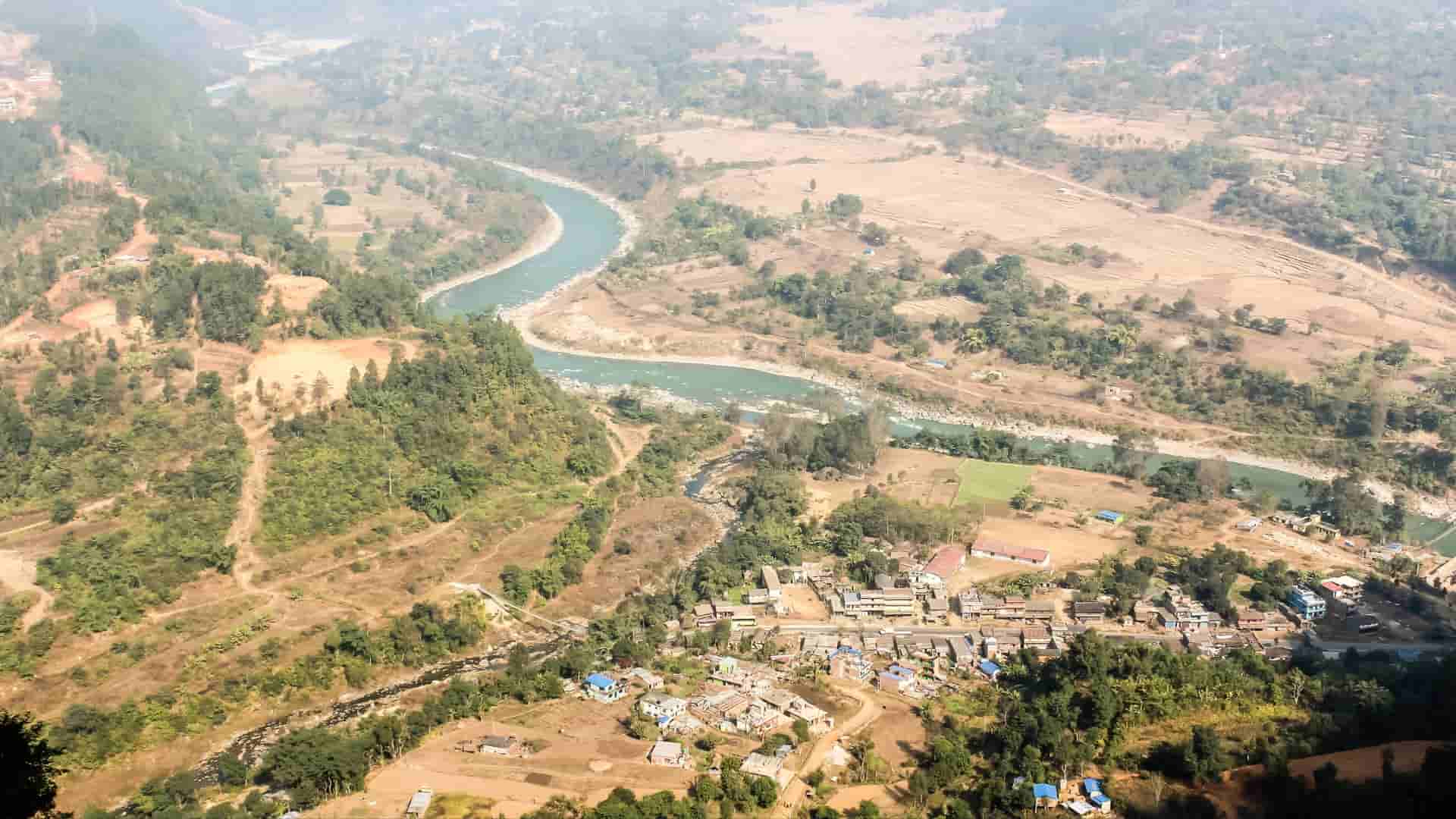
According to villagers, it’s a moment hard to describe because it had no clear beginning, only a sudden appearance of water where it did not belong, moving with enough force to carry away everything in its path. “There was intense rainfall, something I had only seen in Kathmandu and Pokhara and had never heard of or seen here in Manang,” one respondent said. “The water rose so high that villagers feared it would enter their homes.” Fortunately, because the village sits on top of a cliff, it was spared.
But the flood swept the apple tree away.
I was there when the flood swept the tree away, and there was nothing I could do,” she recalls. “Holding an umbrella my son had given me earlier that year, I stood in the pouring rain and watched the river swallow the land, where the tree stood.” In the days that followed, she kept returning to the place where it had stood, perhaps trying to understand how something that had taken so long to grow could vanish in a matter of hours.
******
These are not isolated events. Nepal’s highlands are undergoing a climate-driven shift, with rainfall increasing and snowfall declining since the 1990s. In Manang, recent studies show a rising share of rainfall during monsoon and post-monsoon seasons as snowfall steadily decreases. Warming trends are altering the rain–snow balance, accelerating glacier retreat, reshaping water availability, and heightening landslide and flood risks.
In Langtang, rainfall now accounts for 57–78% of annual precipitation, while snowfall has dropped to 22–43%. Data from the Everest Pyramid Network (1994–2023) confirm warming, reduced snowfall, and rising rainfall fractions, especially in post-monsoon months. Similarly, the frequency of glacial lake outburst floods in the Himalayas is now nearly five times higher than it was before 1950, and in Nepal alone, forty-seven glacial lakes are currently classified as potentially dangerous, with a single outburst capable of causing losses exceeding millions of dollars, including human lives.
******
Shortly afterward, she started to make her way to the ward office, and then further to the municipal office, carrying with her the story of the tree, the harvest it once yielded, the income it quietly supported and her land that the river claimed. She carried her account from desk to desk and along office corridors, where it was received with nods and reassurances, with language implying that administrative processes were in motion and that compensation would follow in due time.
Time, as it turned out, did not.
The visits became another routine, one that did not follow seasons or harvests but the uncertain logic of paperwork and waiting. Then the elections came. A candidate stopped at her house, listened as she described the flood and the tree, and the land and the income that vanished with both. He spoke of responsibility, of what would be done once he was in office, and assured her the compensation would come.
She voted for him. “I heard he won the election. My son told me,” she says with frustration.
The compensation did not come.
What has changed more visibly, beyond the river's altered course, is the village itself. Houses that once held families now stand closed, their doors open only during certain months when someone returns. The younger people left first in small numbers, then in a steady stream that became difficult to track. Kathmandu is often the first stop but rarely the last. Beyond it lie other places whose names circulate in conversation with a familiarity that comes not from experience but from repetition: USA, UK, the Gulf, Malaysia, Korea, Japan.
This trend is not just limited to Manang. It has been unfolding across Nepal. In 2023 alone, over 800,000 Nepalis left for work abroad, nearly 3% of the population, and almost half of Nepali households now have a family member who is either working overseas or has recently returned.
Her younger son had tried to follow that path. He prepared his documents, applied for a visa to the United Kingdom, and waited in the way that so many others do, suspended between expectation and uncertainty. When the application was rejected, he stayed. The simplicity of that outcome conceals the shift it brought to both their lives. Now, except during the Yarsagumba season when he moves higher into the hills, he is here most evenings.
She speaks of the ones who left without emphasis, as if describing a landscape that altered gradually without ever announcing it was doing so. There are moments, she admits, when she wonders about those lives in places she has never seen. It is not quite regret, not quite longing. It sits somewhere between the two, a quiet awareness of paths not taken.
And yet, in the evenings, when the work of the day recedes and the village settles into its own silence, her son is there. They sit across from each other, sharing a meal that is often simple, sometimes sparse, but always accompanied by conversation that moves without urgency from one small detail to another. In a village where absence has become more common than presence, this feels significant in ways that are difficult to measure.
“That is not a small thing,” she says.
******
The road south and down from Manang leads eventually into the mid-hills, where the terrain softens and the distance from the fragile geology like in the transboundary regions creates an impression of stability. Here, the disruptions are less sudden. They unfold across seasons rather than hours, accumulating quietly until the weight becomes hard to ignore. In the mid-hills of Gandaki Province, where terraced fields step down hillsides, rhododendron forests thin into farmland, and small market towns serve as hubs for a dozen surrounding hamlets, the signs of disruption are quieter but no less corrosive.
A man in his mid-thirties received us at his home near a small market town. After seven years in the Middle East, saving what he could and growing weary of life there, he returned home with a plan to give back. In Nepal, he attended several training courses on modern agricultural methods, studied inputs, read what he could find, and invested his savings in land, seeds, and livestock. In the early years, it worked. Harvests were strong, returns were steady.
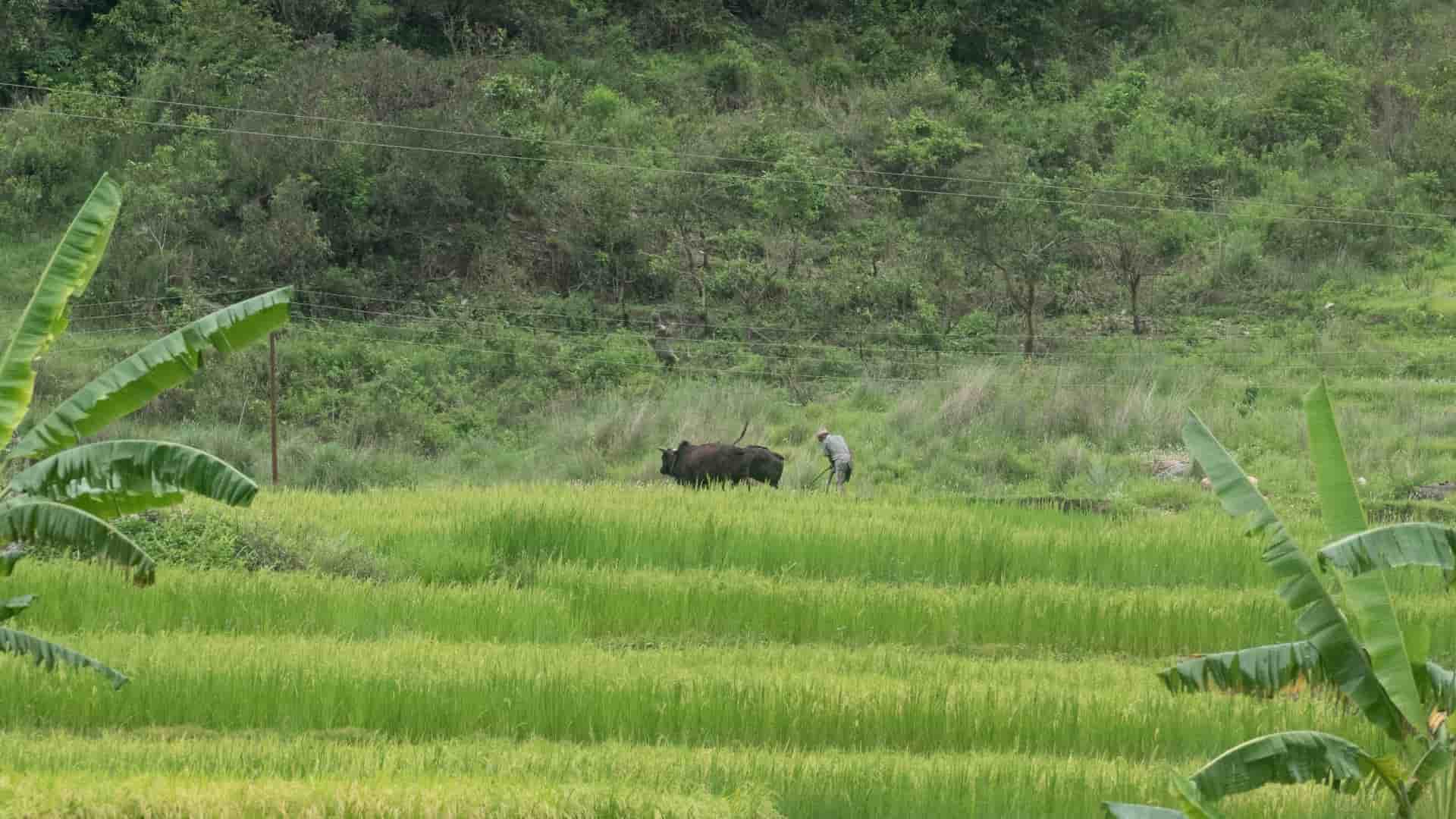
“As things progressed, I leased additional land, hired others from the village, and even opened a small vegetable shop nearby to serve local customers. Hotels in the area contacted me directly with their requirements,” he elaborated. For a time, the plan seemed to validate something he had believed, that the land, if approached carefully, could still sustain those willing to invest in it.
But the seasons did not hold.
“Rain began arriving at the wrong times, sometimes too early, sometimes too late, occasionally not at all. One year it came heavily when the crops were right about to be harvested, flooding fields and reducing what could be harvested to a fraction of what had been sown. I lost contracts to several hotels that year.”
He continues, “Then another year, a hailstorm cut through just before harvest, undoing months of work in minutes. Winters passed without the rainfall that had once been taken for granted, leaving the soil dry when it needed moisture most.”
Unfazed by this, he returned to the workshops. He sat through sessions on climate-resilient crops, on adaptation strategies like crop calendars, and on water management. He did not dismiss them entirely, but the gap between what was discussed in enclosed rooms and what met him back in the fields grew harder to ignore. “You sit and listen, he said. “Then you return and the problem is the same. Attending training and workshops here require political networks. When you somehow get to attend one, those are always held behind closed doors, mostly in lavish hotels. Only a few trainers visit the field and provide hands-on training.”
There were insurance schemes meant to offset losses but accessing them required time and repeated travel to an office far from his farm, and the process rarely led anywhere definitively. Each visit meant stepping away from work that could not wait, incurring costs that added to an already growing strain. Eventually, he stopped going.
“Last year a significant amount of my own land got buried in the landslide,” he shared looking towards the sky. “That was the end of agriculture for me.”
“Maybe it is karma. The god is now acting upon the sins we have accumulated over time. And this will continue unless we cleanse ourselves,” he said when asked about what he knows about climate change.
Now he is preparing to leave again. The land remains but its predictability has diminished to a point where planning becomes guesswork, and he has run out of appetite for guesswork. He is applying for a visa to Eastern Europe this time, a destination he would have struggled to locate on a map a few years ago.
“I should have studied,” he shared at one point, not with bitterness but with the clarity of a man who has thought it through many times. “My parents put me in school. I failed Class 10. Had I made it to Class 12, I could be earning two lakhs a month where I'm going.” He said this without self-pity, as a simple observation about a road not taken, and about where the road he took has brought him.
His story does not carry the drama of the mountainous region. But the uncertainty it describes is no less total.
********
Further south, past the hills and into the flat heat of the Terai, in the low-lying plains of Madhesh, where mustard fields stretch to the horizon and the air sits thick and still even before the sun has fully risen, the changes take on yet another form, defined less by excess than by absence.
The day here often begins with water. Or rather, with the effort required to find it.
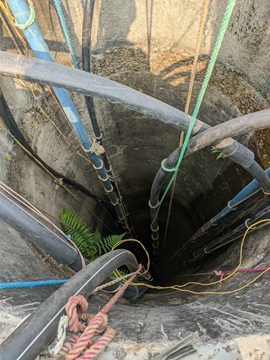
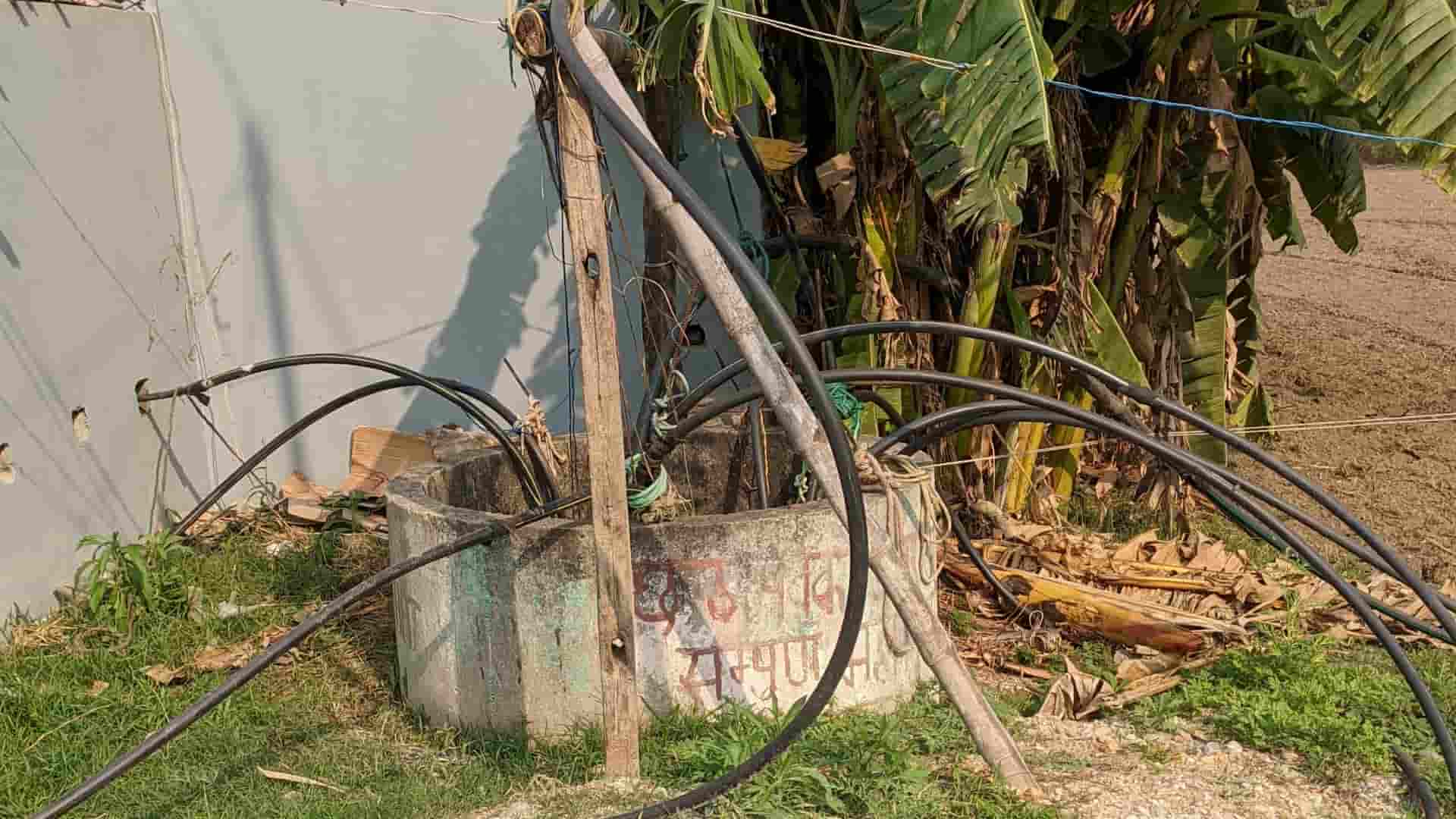
A woman in her forties wakes before sunrise. The well nearest her household dried up the previous week. The replacement is a short walk away, but she is not permitted to use the motor. It belongs to a neighbor. She could pay to use it, but most days the water must be drawn up by hand, lowered and lifted, bucket by bucket, until there is enough for the household’s needs. This is what the pre-monsoon means here. Before the day has properly begun, two hours of her every morning are spent fetching water. What once took minutes now stretches into hours, reshaping the rest of the day.
After the water, there is cooking. After cooking, children to send to school, livestock to tend, and a literacy class to attend, if only time permits. Then the farm, which waits with its own set of problems.
Crops are more vulnerable now. Pests appear more frequently, diseases spread faster, heat lingers longer. The rainfall that farmers have long depended on for timing their planting and harvesting no longer follows those timings. When the rains do arrive, they come hard and fast, flooding the field in an afternoon and then vanishing for weeks. Loans taken at the beginning of the season accumulate against returns that increasingly fall short. The farmers described recovering between 40% and 70% of what they once expected.
This is not an isolated hardship. Nationally, almost 90% of crop losses in Nepal are attributable to weather and climate-related events, according to the Food and Agriculture Organisation. A 2023 survey found that over the previous 25 years, more than half of farming households had observed new insects or pests on their crops, and half had seen new diseases emerge in their fields. The Terai’s farming households sit at the sharp end of both trends. The deficit carries forward into the next season, and the one after.
In the hope of better harvests, some farmers travel across the border to India, looking for seeds that might perform more reliably in conditions that no longer resemble what their forefathers farmed. Government offices meant to provide seeds, fertilisers, and technical guidance are frequently too far away, too inefficient, or shaped by competing priorities to offer consistent support. Training on even basic fertiliser/pesticides applications is seldom available.
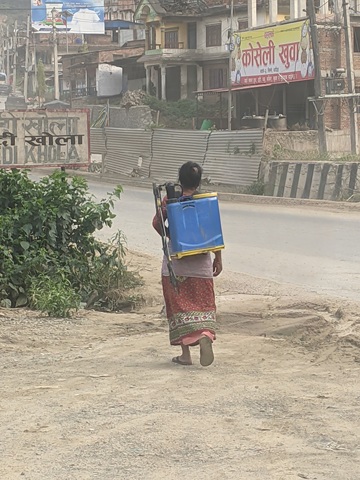
With no dependable extension services to turn to, farmers follow the advice of the shops that sell them fertilisers and pesticides, quietly increasing the amounts they use each year, hoping more will compensate for what the land no longer gives.
Studies suggest the water table now sinks lower each pre‑monsoon season, revealing itself most starkly at the moment when water is needed most. When the monsoon is delayed, the shortage moves quickly, from wells to fields to kitchens, spreading with little resistance to slow it.
There is something else, too, that is harder to categorise and become a grave concern in this area. Eucalyptus trees. The farmers all around Madhesh unanimously claim that having Eucalyptus trees alongside the fields significantly reduces soil moisture.
“I had a dispute with my neighbor over land boundaries. The case has been in court for several years now. A few years back, out of spite, he planted the Eucalyptus tree on his own land that borders mine. Now my field has significantly lost its productivity,” a farmer claims. “He sacrificed his own land to deny me my harvest.”
“I was already tired of the changing weather, and now that my children are planning to go abroad, I’m thinking of giving up agriculture,” the farmer says, rubbing tobacco between his fingers. “My elder child has already received a visa for Australia and the younger one plans to follow the similar footsteps.”
“Another neighbor has sold part of his land and moved to the capital. I may have to sell nearly 80% of mine but that’s okay. I will lease out the remaining 20% of land. There are many landless people here who earn a daily wage working on others’ farms. Leasing won’t be difficult. At least there will be food on the table, I won’t have to work the fields, and hopefully, within a few years, my children will start sending money home.”
********
All these stories point to climate change. But the reality is more complex. Climate change, often framed as a problem, is rather a force multiplier that does not create new pressures out of nowhere, but intensifies the existing ones, deepening poverty, weakening the systems people rely on, and shrinking the space for viable choices. Where water was once scarce, it became scarcer. Where land was already fragile, it became even more vulnerable. And where the line between a good season and a disastrous one was already thin, it grew thinner still.
********
Back in Manang, the light was already slipping off the slopes as we finished speaking with the old woman. Evening settled into the village with the particular stillness that high places hold, when the wind dies down and the warmth of the day slowly loosens its grip. Since the road was built, the journey has become easier. Tourists now often drive straight from Chame to Manang Bazaar in jeeps. As a result, fewer of them linger here the way they once did. The trekking days to Tilicho lake have been cut by half.
She did not dwell on what was lost. The tree, the flood, the compensation that never came. She mentioned these with the same evenness she brought to everything else, as if they were simply part of the account of a life lived in a place that has never made things easy. Outside, the village was still. Most of the houses that neighbors once were dark but the hotels on the edge of the village glimmered with lights.
Her son will be home soon.
Whatever else had changed, and much had, that part remained the same. Every evening, there was someone across the table, and the conversation between them moved without urgency through the small details of the day. In a village shaped as much by those who have left as by those who remain, she appeared to understand that this was not a small thing. Yet, for now, it was enough.
This article is based on field interviews conducted across Manang district, mid-hill communities in Gandaki Province, and the Madhesh plains. Respondents' names have been withheld at their request.
Photos captured by: Madhav Upadhaya & Diwakar Adhikari
Read More Stories
Nepal needs to repeat to brand itself
Last year Nepal's goods exports jumped 81.8% to NRs 277.03 billion. That is...

Banking stocks gain momentum as dividend season begins
Dividend announcements by banks and financial institutions (BFIs) for fiscal year 2025/26 have...
Nepal’s challenge of building strong democratic institutions
Over the past few decades, institutional dysfunction and massive dissatisfaction with political establishments...