What we do is costly! Your support will help us dig more stories.
Yes, I'm Interested!Ignorance isn't always bliss | Don't stay foolish.
Keep informed | Read our news and analysis.
artificial intelligence | art | artist | originality | purist | conversation | young talents
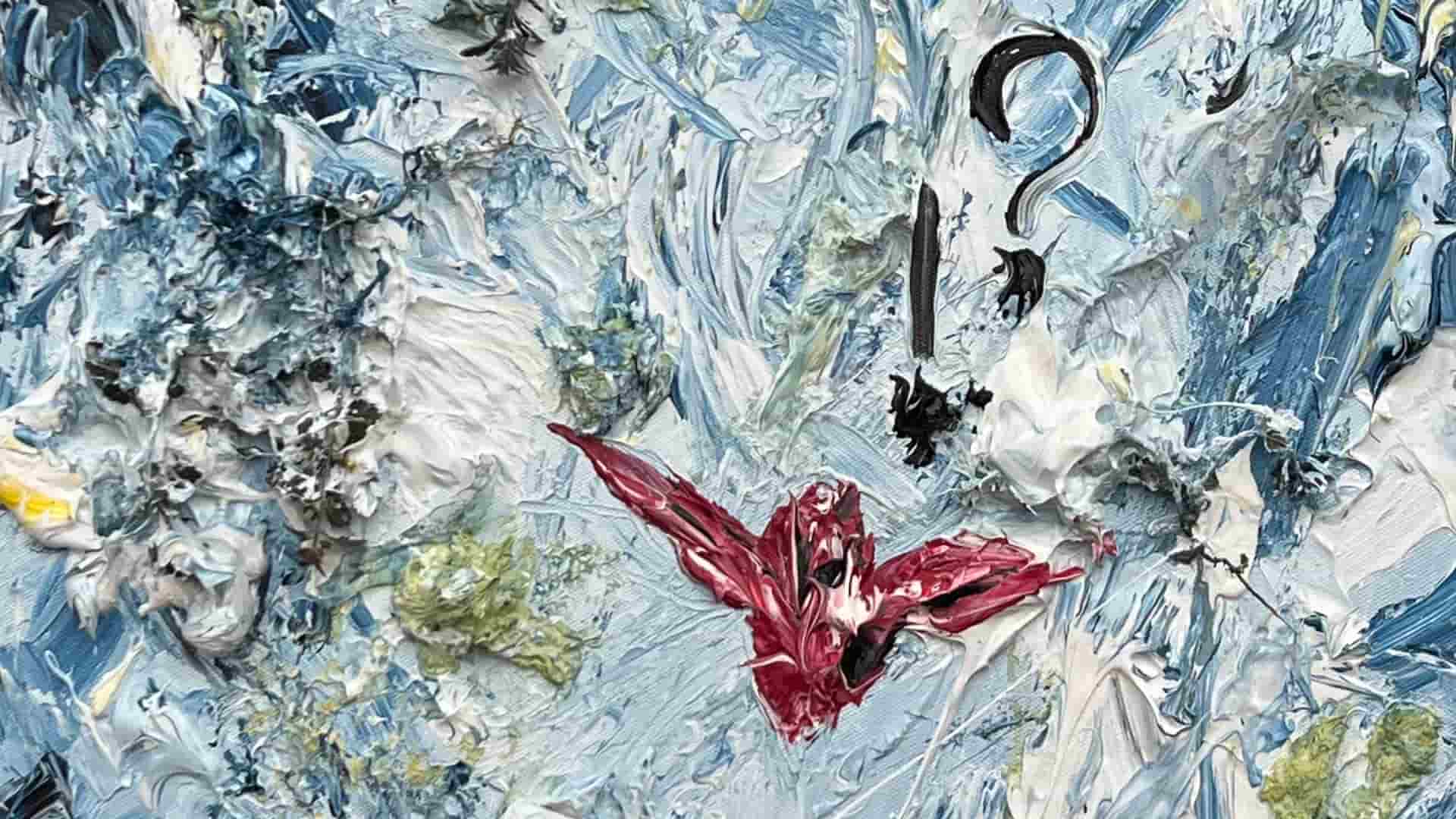
Hayao Miyazaki, an Oscar winning animator and creator of Studio Ghibli, once feared that we were nearing the end of times.
“We humans are losing faith in ourselves,” he said in 2016 referring to a demonstration of an AI generated animation of a zombie-like creature moving by its head without feeling any pain. The demonstrators suggested that AI could develop movements in characters that humans couldn’t imagine.
That is when Miyazaki seemed unimpressed and explained that he had a friend with disability who had a hard time doing even a high five with his stiff arm reaching out to Miyazaki’s. “Whoever creates this stuff has no idea what pain is and whatsoever. I am utterly disgusted,” he added, expressing that he could never incorporate such “technology” in his work.
Nine years later, a trend took over the internet with people generating memes and images in the aesthetic of Studio Ghibli using the OpenAI GPT 4.o. The virality of the trend compelled the CEO of Open AI to urge users to slow down. Around the same time, the 2016 video clip of Miyazaki resurfaced online, especially his quote “It’s an insult to life itself.” The viral quote is since considered as the artist’s stance on AI.
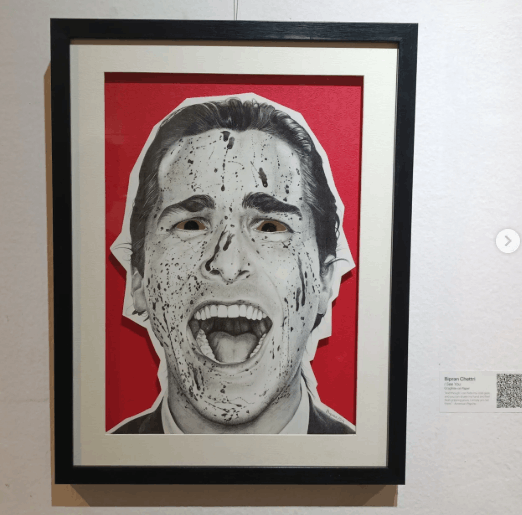
Reflecting on this trend, Bipran Chhetri, a graphics student from Darjeeling pursuing his studies in Kathmandu says, “Miyazaki worked for decades, dedicating his whole life to his art. Seeing people recreate a man's lifelong work in seconds using AI saddened me as an artist.” Bipran, who is open to AI assistance in his practice, firmly believes that AI will not be able to replace artists.
Ranjit Kunwar, a third year undergraduate student in fine arts at Lalitkala Campus, describes what distincts human made arts from machine generated visuals. During the work of painting, we express emotions, through brush strokes, sometimes exactly as we feel it, says Kunwar who is specialising in painting and also works as an art instructor through Kathmandu Metropolitan City’s “Book Free Friday” initiative.
“Feelings such as anger, for example, can manifest directly in the strokes themselves. Even choices like colour selection take place within the emotional state. As emotion is attached in the process, the artist and the painting forms a connection, which also translates to the audience. AI does not interweave this process,” he further explained.
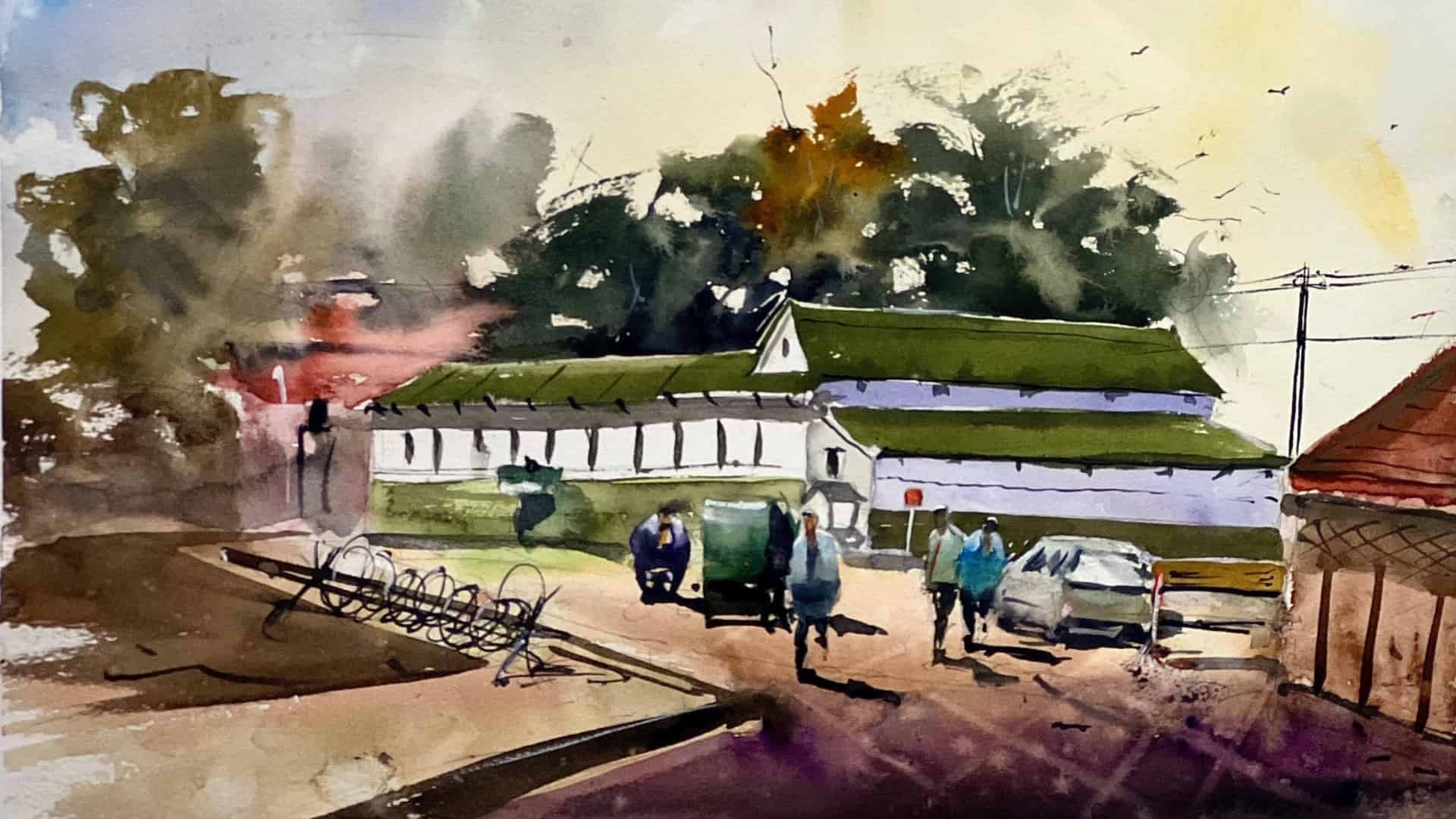
Kunwar doesn’t see AI as a threat, rather an opportunity. He shared a recent experience involving a mural project in which a client requested a design featuring an alcohol imagery. After listening to the concept, he fed details into the Leonardo AI, which generated four to five strong visual concepts. “We showed those images to the client and they approved.”
For him, AI is useful when it meets client demands and is used more wisely than feared. Otherwise, we would’ve had to create a digital mock up from scratch which could’ve taken days. AI did it in a few seconds.”
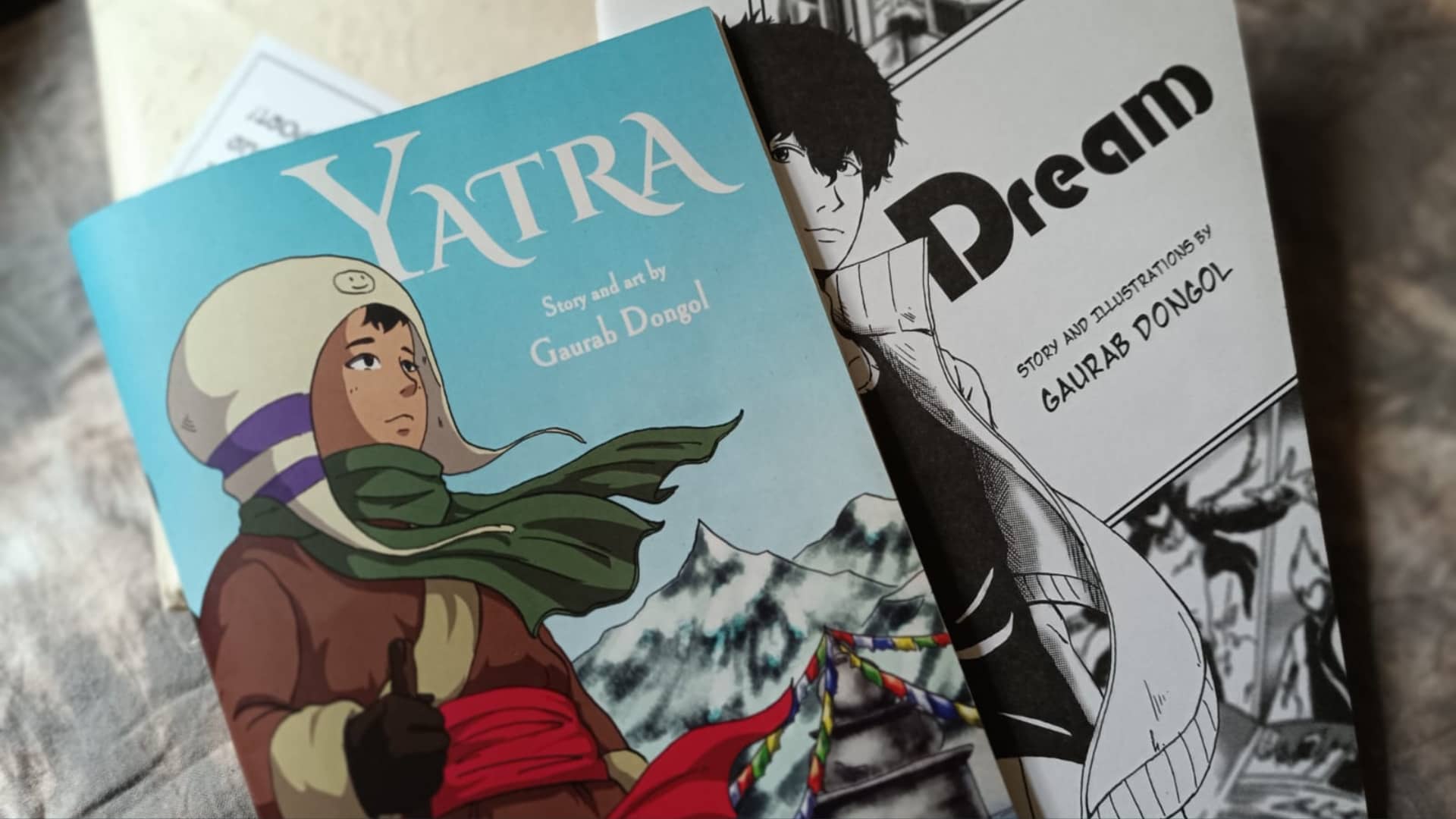
Having witnessed the changes AI has introduced in the industry, Gaurab Dongol, an illustrator and comic artist of “Dreams” and “Yatra”, doesn’t quite think the same way as Ranjit and Bipran. He talked about his friends who work in game studios, where in the past they would design and build game assets themselves. Now, AI is preferred to build them. In an animation workplace where he worked, AI executed 90-95% of the tasks, with only final editing done by people.
Gaurab’s interest in art began in middle school when he discovered a senior’s manga. His family, however, doubted prospects of the field and were scared that he’d end up in some low-paying jobs. Still, he persisted.
While Gaurab acknowledges why businesses choose AI, because it is less costly, saves time, and serves faster productions, he also argues that AI lacks versatility. “It may not be able to give exactly what users want,” he says, adding that artists can customise things and adjust them later if changes are desired. For him, who is strictly trying to avoid using AI tools now, one major concern lies in the spread of misinformation among older generations due to hyper-realistic AI content.
He also has a clear stance on the ongoing debate regarding originality and copyright of AI generated work, asserting that those who prompt AI to generate art cannot be called artists. They’re simply prompters since the actual artwork is not made by them but by a machine. Artists study their field, practice their craft, and build skill over years.
When confronted with the argument that artists also copy, he draws a clear distinction: “AI is flawless. We are flawed. If we are to copy, we can never copy it 100%. But it is within those flaws, a unique piece is created. Those flaws, including the styles of an artist in painting, is what sets them apart from AI.”
Contrary to Gaurab, Bipran thinks the work belongs to the one who prompted it since it’s the user’s prompt and AI only generates. However, drawing a line, he explains that when you depend on AI from the very beginning of your task: from concepts to end output, it stops belonging to the artist.
Originality, for him, is not about purity or pure creation. It lies in the effort. “No work is original. There is always an influence from somewhere. The beauty lies in the level of effort an artist puts in.”
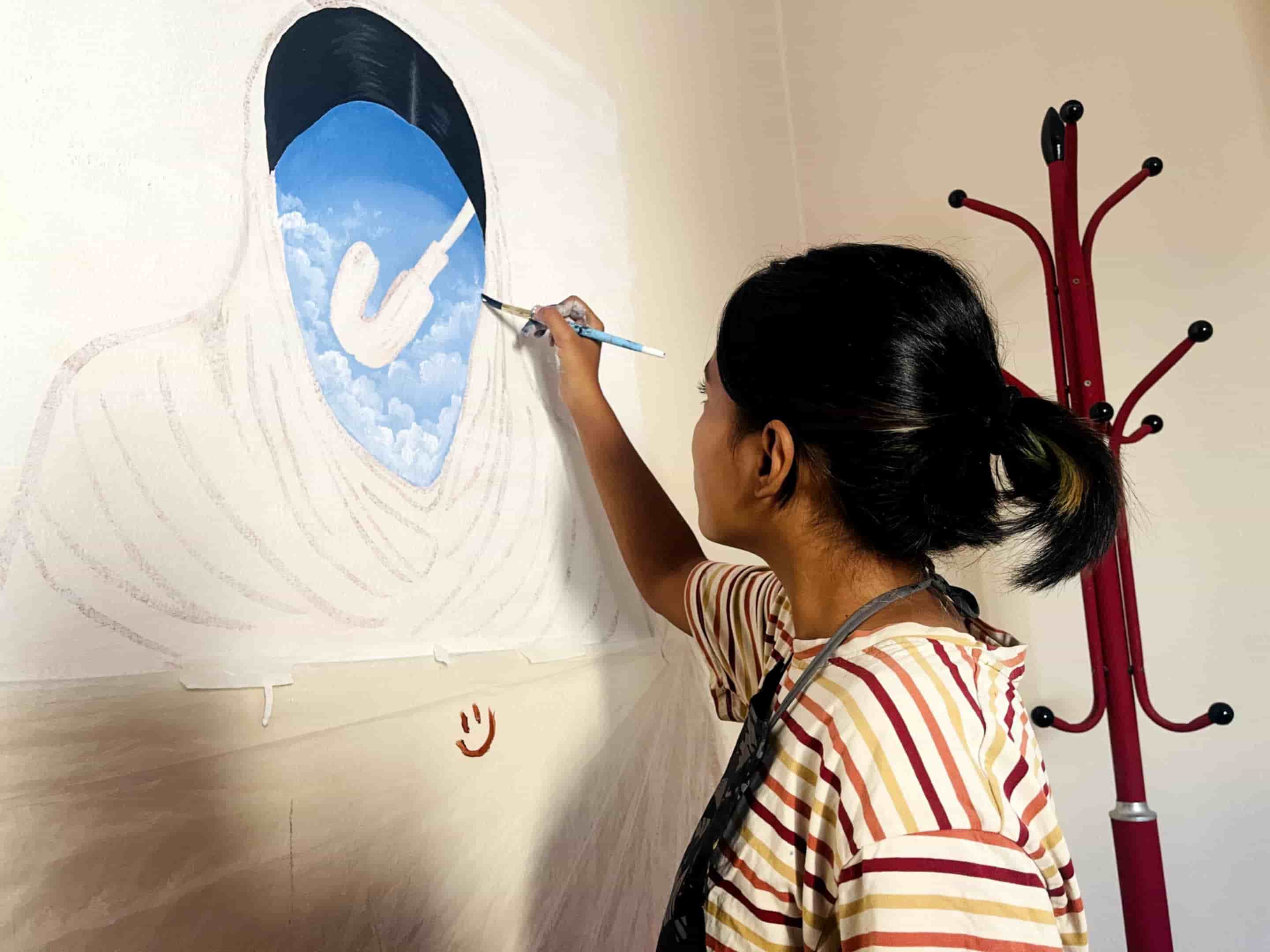
The rapid growth of AI has spammed millions of feeds. For an artist, it impacts differently than regular users. When Prativa Khadka, an art student working across illustration and poster design, looks for references, searching genuine work by other artists, she ends up finding random AI generated images. This disrupts the organic exchange between artists, the process of studying, connecting with and drawing inspirations from real creators.
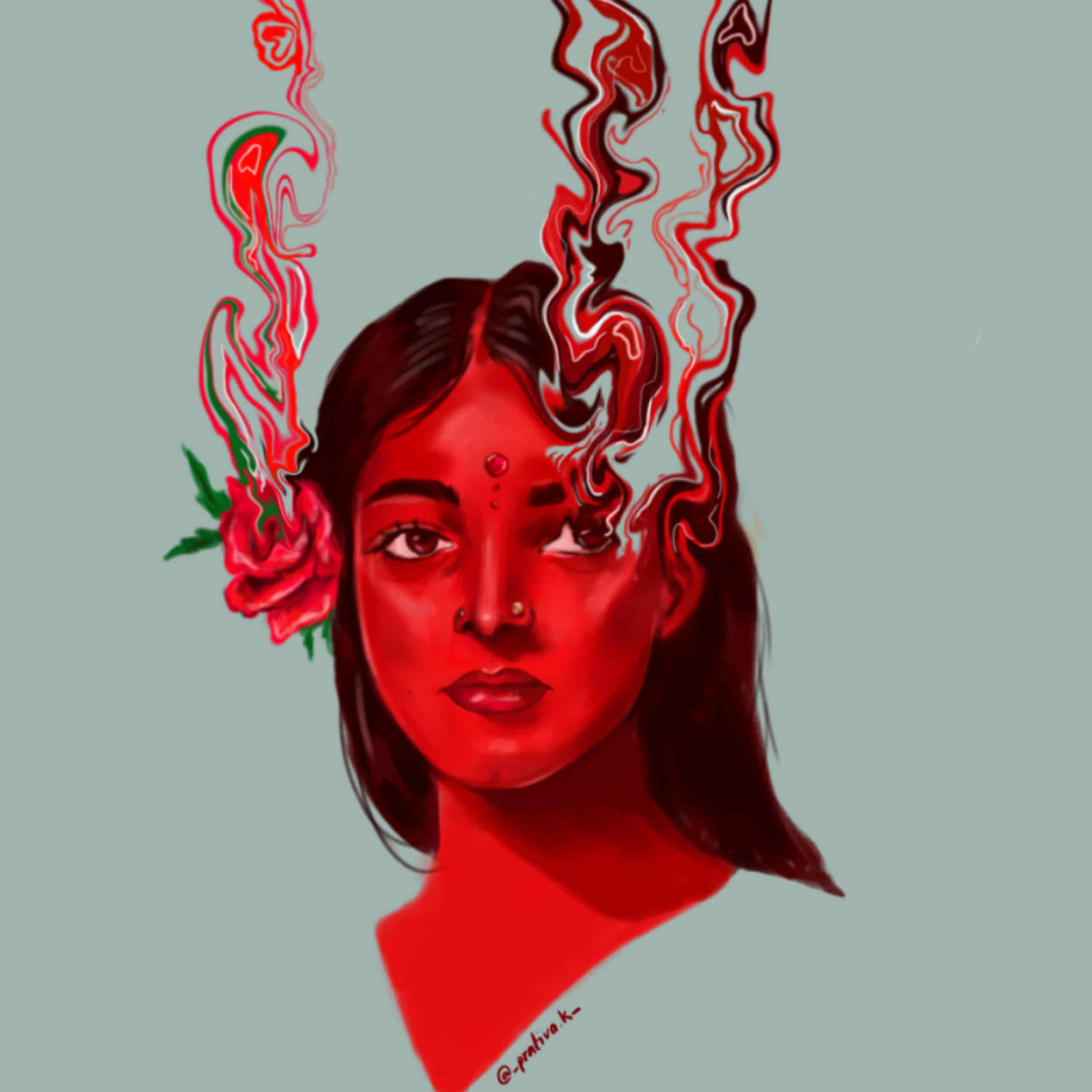
Though she hasn’t personally lost a commission, she recalls a friend’s experience who does portraits. She had lost a customer to AI when she quoted a customer between a range of 20,000 to 30,000 rupees for a commissioned portrait. The customer declined and chose AI-generated portraits. “Perhaps, I too will lose work to AI in the future,” wonders Khadka.
Not long ago, Richene Singh, professionally known as Kalaami, a digital artist and illustrator, stopped working for five months as she began to question whether her works mattered at all where machines generate “art works” in seconds.
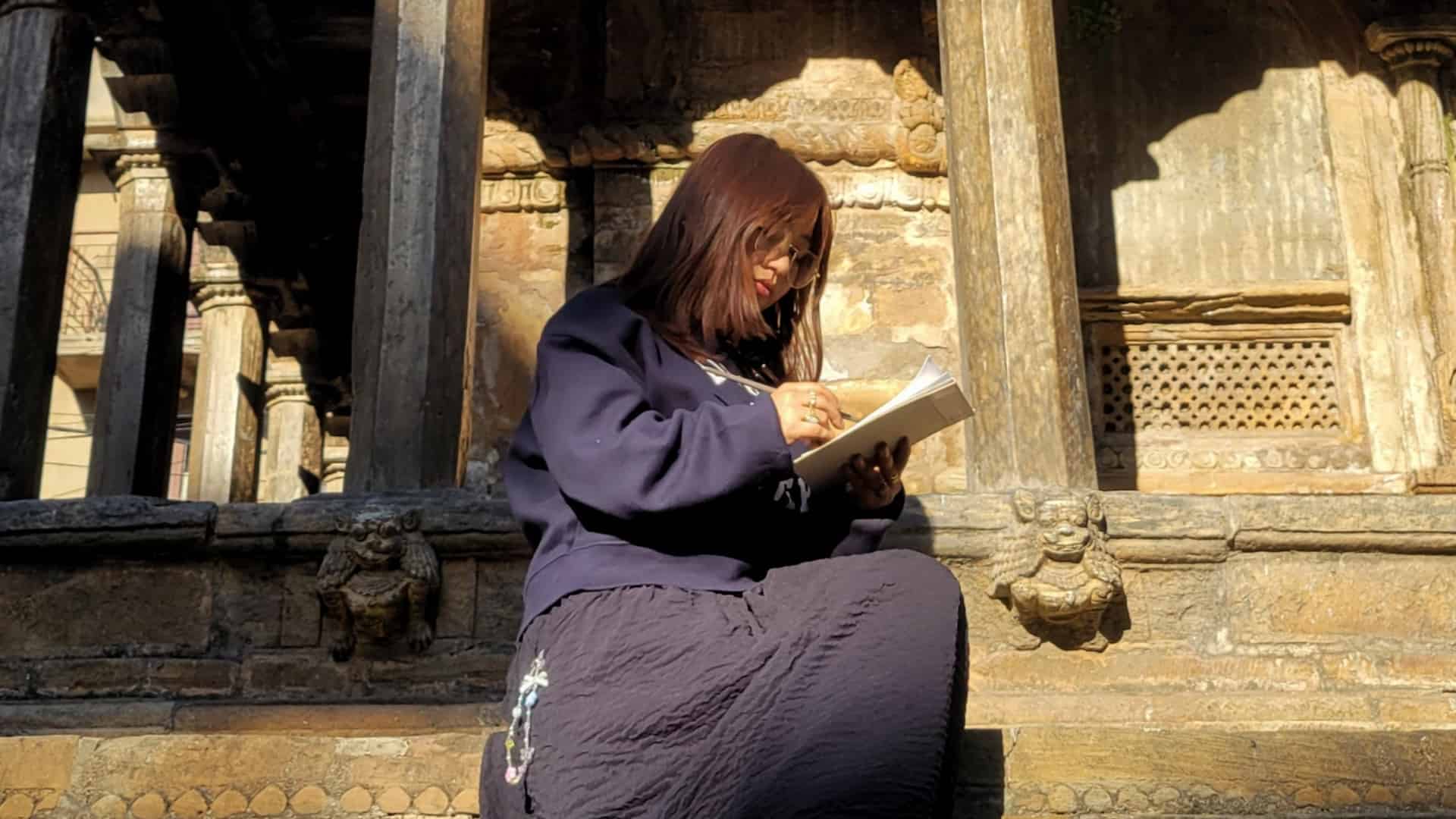
“I was overwhelmed. There were works piling up but a question, ‘what’s the point if everything is going to be replicated, reused and stolen by AI?’ lingered my mind,” Kalaami recalls. ‘People may not appreciate my art or even compare it to AI’, these thoughts overwhelmed me. So, I decided to stop my work, take a break, and went out to draw for myself for a change.”
“Scary” adds Kalaami, reacting to the growth of AI.
“You just type prompts instructing what you want and multiple images show up. It’s like a zombie mix of other people’s work.” The freelance artist has started using social media less now because everywhere she goes, she’s bombarded with AI-generated work and finds it almost impossible to distinguish.
The artist has been working primarily in digital illustration, with publishers, and print media ever since she graduated in 2021 from Kathmandu University with a BFA (Bachelors in Fine Arts).
In terms of AI’s impact, Kalaami divides artists into three tiers: beginners, mid-level and top tiers, one who are established/well known. Although AI impacts nearly all artists, it tends to affect the beginners and well known artists the most, according to her. Beginners suffer because they get discouraged. If it takes them five months to learn a skill, it may take AI five minutes to do that task, which is disheartening.
Top tier artists suffer because their work gets stolen and replicated. She also highlights imposter syndrome among Nepali artists, explaining how AI intensifies self-doubt and leads to undercharging. She points to a growing pattern where clients reach out to emerging artists and ask them to replicate AI generated images. These artists are then underpaid as the clients argue they “only copied” the artwork.
When asked why clients would even reach out to artists instead of using AI generated images directly, she suggests low quality AI images and requirement of a premium version for better quality being reasons or also due to ethical stand point where instead of letting AI print it directly, they let the artist copy it and claim it as an artist’s work.
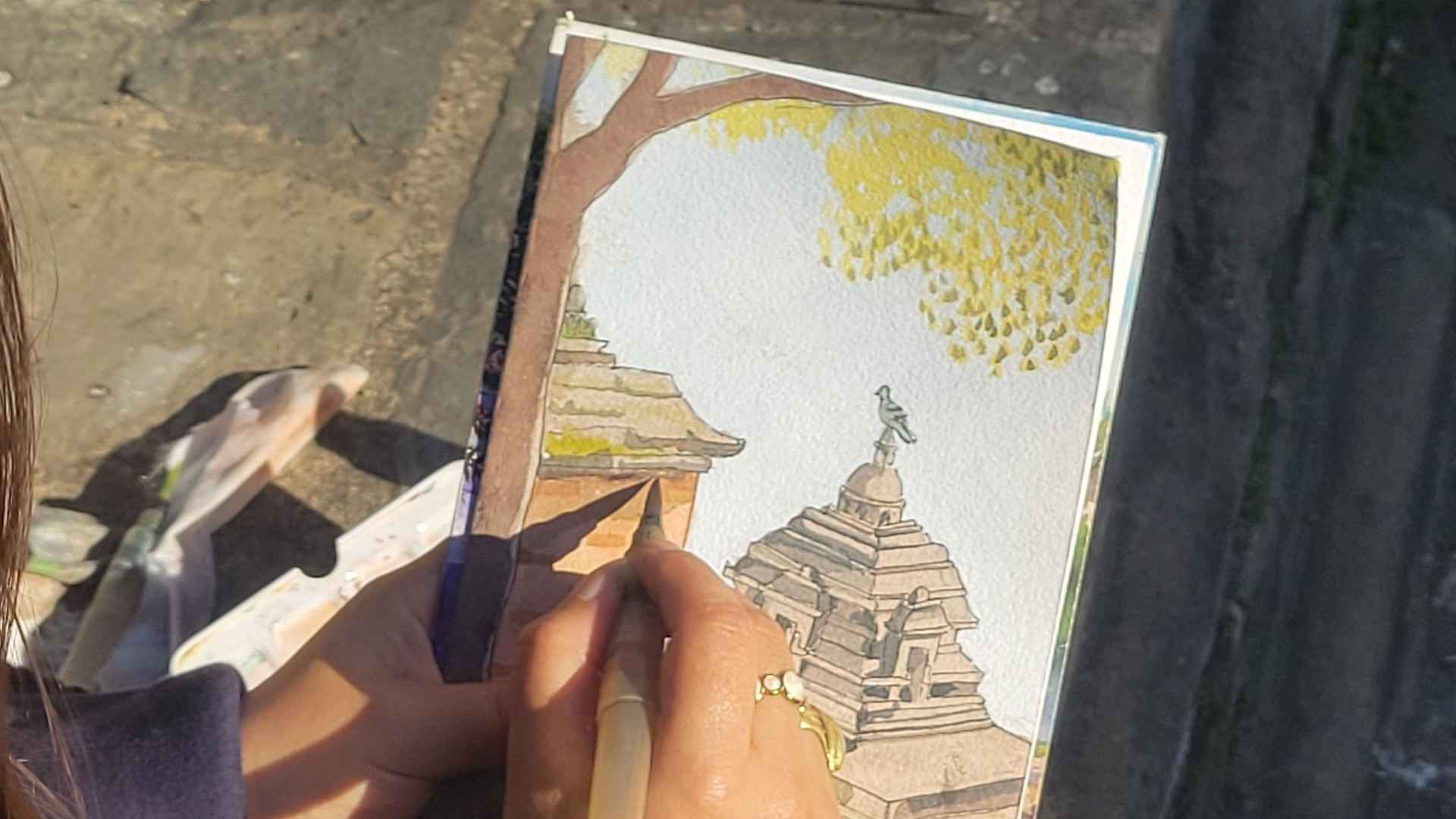
“The future is very dystopian,” says Kalaami anticipating more art theft, mounting pressure on artists, and growing difficulty in distinguishing human made art and AI generated work. On the bright side, artists, however, possess remarkable resilience. She believes those who have fought family doubts, financial instability, and societal pressure have cultivated resilience, which will help them to navigate the extremes of AI.
While some of these artists are looking forward to what lies ahead, others are preparing themselves, Kalaami being one of the latters. She has branched out into learning tattooing, urban sketching, traditional watercolors and is now working on a fiction. “I’m now trying to do things where AI can’t touch me.”
Read More Stories

Nepal needs to repeat to brand itself
Last year Nepal's goods exports jumped 81.8% to NRs 277.03 billion. That is...
Banking stocks gain momentum as dividend season begins
Dividend announcements by banks and financial institutions (BFIs) for fiscal year 2025/26 have...
Nepal’s challenge of building strong democratic institutions
Over the past few decades, institutional dysfunction and massive dissatisfaction with political establishments...