What we do is costly! Your support will help us dig more stories.
Yes, I'm Interested!Ignorance isn't always bliss | Don't stay foolish.
Keep informed | Read our news and analysis.
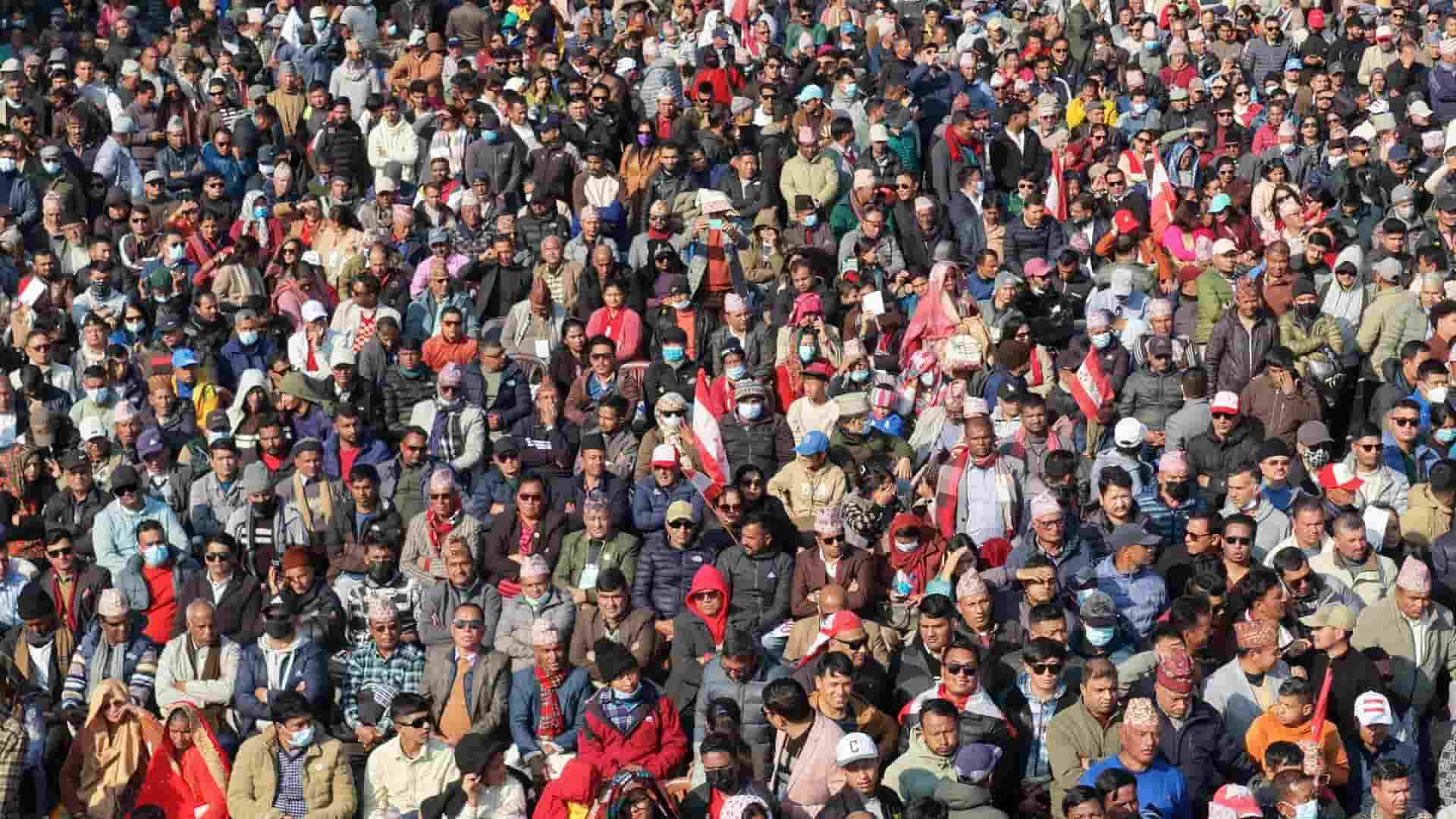
For a long time, Nepal’s political parties spoke the language of democracy, but have failed to consistently practice it internally. Over time, they developed centralised power structures, weakening participatory decision-making.
While the country’s laws attempt to reinforce democracy: the constitution requires political parties to hold internal elections every five years, with the Political Parties Act 2017 providing a framework for party governance, terminal decay of internal democratic norms persist.
Beyond its structural dimensions, this decay is fundamentally a crisis of mindset and political consciousness. Thoughtful policy reforms however can strengthen intra-party democracy and make accountability easier.
The challenge is balance: ensuring state oversight of political parties remains minimal, proportionate and confined to what is strictly necessary, and not intrusive risking party autonomy. At the same time, some trade-offs must be confronted and consensually pursued for better health of democratic institutions.
Legal framework for limitation of central committee members
On paper, a large central committee provides space for inclusion. This has meant elite capture and stagnancy in decision making in Nepal, partly due to its logistical implications.
Major parties previously had their central committees small and compact. Decisions were made through collective discussions and all members had relatively equal ownership. However, post demands for broader representation in 2006, parties chose to retain elites and add positions under the banner of representation rather than restructuring to ensure inclusiveness and efficiency.
Due to the extended size of central committees, regular inclusive meetings are rare and space for diverse voices limited. Meetings last for a couple of days and are held only after long intervals, that too without adequate time and space for divergent opinions. For instance, Nepali Congress’s statute requires central committee meetings to be held at least once every two months. In practice, meetings in recent times have been held only once or twice a year.
Deep ended factionalism within party structures has also reduced central committees to rubber stamp spaces to approve top leaders’ decisions. Take the case of K. P. Sharma Oli, who expanded his party’s central committee to 1,501 members during a period of political turmoil. Moves like this illustrate how institutional structures can be manipulated to consolidate power during his 2020 dissolution of the House of Representatives.
A targeted reform could see amendments to the Political Parties Act to introduce a proportional statutory ceiling on central committee size, based on the number of active members of the party. Such a measure would not intrude upon ideological, policy, or administrative autonomy of the parties, and reduce the inflation of leadership bodies for patronage and power consolidation.
One person, one responsibility
Power tends to concentrate when lines are blurred.
In Nepal, party leaders often also lead the government when in power. When the same individual serves as both party head and Prime Minister, internal checks and balances weaken dramatically. Criticism within the party becomes politically costly, and loyalty is rewarded with access to state power.
A similar dynamic emerges when the idea of ‘state party’ dominates as the lines between the state and party are blurred, enabling those at the top to leverage state resources for political and party benefits.
A policy fix to avoid this concentration of power is to clearly define segregation of party and government (or Parliament) responsibilities by law. Separating these roles could restore internal accountability. Legal provisions could ensure that party leadership and parliamentary leadership are held by different individuals, and that those in key government roles: Prime Minister, Speaker, or committee chairs—do not simultaneously occupy top party positions.
Such separation wouldn’t fragment leadership, but strengthen it by distributing responsibility and encouraging internal debate.
Mandating primaries with party autonomy in design
Political parties have been plagued by their leadership’s grapple over authority to distribute tickets to electoral candidates. Across major parties, influential leaders at the helm have historically distributed election tickets in line with either factional interests or for political patronage. This has led to marginalisation of deserving candidates at the cost of those who cozy up to power structures within parties. It has also opened pathways for social elites with vested interests to ‘buy’ their candidacy. Centralized authority to distribute tickets has proliferated a culture in which aspiring candidates remain silent on erosion of democratic norms within parties.
In Nepal’s context, primaries for elections within political parties can be institutionalized via legislative tools to mandate democratization of the candidate selection process and subsequently strengthen intra-party democracy. Amendments to the Political Parties Act 2017 to include a dedicated section on Primaries for Candidate Selection is required to mandate and set out basic standards for Political parties to hold internal primaries for selecting their candidates.
A key consideration while designing the legislative framework for the basic principles of primaries for parties to adhere to is to ensure that the party leadership does not maintain ‘veto’ control over the eligibility criteria for primary candidates. If the leadership retains excessive power over who can enter the primary contest, the introduction of primaries may make little substantive difference to internal democracy as it risks running the ‘illusion of choice’ within the parties themselves.
Additionally, reforms designed for primaries without careful consideration for inclusiveness can reinforce existing power imbalances and marginalizing structures within political parties. Amendments to the act must state that parties design their primaries with appropriate safeguards to implement constitutional provisions on representation in their internal elections. If not, these interventions can have a perverse effect of further excluding underrepresented groups or entrenching existing hierarchies within the party.
Hence, the legislative framework introduced must require eligibility criteria for participating in primaries to not be elite centric within parties while simultaneously promoting inclusiveness. However, it is important to ensure that state intervention remains minimal, and that political parties retain the autonomy to design and implement primaries as they see fit - while adhering to basic standards of transparency, fairness, and inclusiveness. Furthermore, provisions should be in place to appropriately empower the Election Commission to exercise a limited regulatory and oversight role.
In a factionalised political culture as in Nepal, primaries may lead to selection of candidates outside normalised informal ‘factional quotas’ within parties. Furthermore, transparent and structured internal competition could mean tickets being distributed to candidates who are inclined towards the margins of the party's larger political ideology rather than conformist ones. While primaries are initially introduced, these potential outcomes do risk alienating a certain party voter/cadre base. However, attempts at institutionalising any form of a profound shift in political culture is bound to disrupt a certain status quo within a party and that is a potential tradeoff parties have to reconcile with, and politically manage, in this case, for the sake of strengthened intra-party democracy.
Establishing tenure and term limits for leaders and committees
Article 269(4)(b) of the constitution mandates that party constitutions include provisions for the election of office bearers at the federal and provincial levels at least every five years. Neither the constitution, nor the Political Parties Act 2017 define tenure limits for party members or term limits for leadership. It is left up to the parties to decide the same via their statute.
Reliance on these loosely defined provisions has led to legal formalism, symbolic compliance, and ultimately democratic fatigue within parties. It has historically resulted in deeply entrenched gerontocratic structures where the same leadership is extended.
This has come at the cost of young leaders who are stifled due to lack of opportunities for leadership and growth within their parties.The ladders for climbing hierarchies within parties are often controlled by centralised leadership, making advancement dependent on patronage rather than merit or democratic participation while reinforcing the dominance of established leadership.
Amendments to the Political Parties Act under “Chapter 3: Membership and Organisational Structure” should introduce clear provisions establishing tenure limits for active party members holding executive committee positions and term limits for senior party leadership roles.
Tenure limits for active membership should be set longer than senior leadership term limits, allowing individuals sufficient time to grow within the party, take on different responsibilities and contribute meaningfully before transitioning out of active party politics. These limits can be consensually defined. After completing these limits, members may remain within the party in advisory, mentorship, or other non-executive capacities, contributing to the party’s larger vision as an ordinary member.
These provisions would incentivise senior party leaders to actively mentor and empower younger members, helping create clear pipelines for leadership renewal and the transfer of power. Additionally, it would also bring an end to the culture of ‘politician for life’ wherein politics has become the primary profession for many individuals leading to them pursuing undemocratic means to remain politically relevant. It would allow leaders to plan for and eventually explore other spaces for engagement where they can build on their political experiences and make substantive contributions to society.
Read More Stories

Nepal needs to repeat to brand itself
Last year Nepal's goods exports jumped 81.8% to NRs 277.03 billion. That is...

Banking stocks gain momentum as dividend season begins
Dividend announcements by banks and financial institutions (BFIs) for fiscal year 2025/26 have...
Nepal’s challenge of building strong democratic institutions
Over the past few decades, institutional dysfunction and massive dissatisfaction with political establishments...