What we do is costly! Your support will help us dig more stories.
Yes, I'm Interested!Ignorance isn't always bliss | Don't stay foolish.
Keep informed | Read our news and analysis.
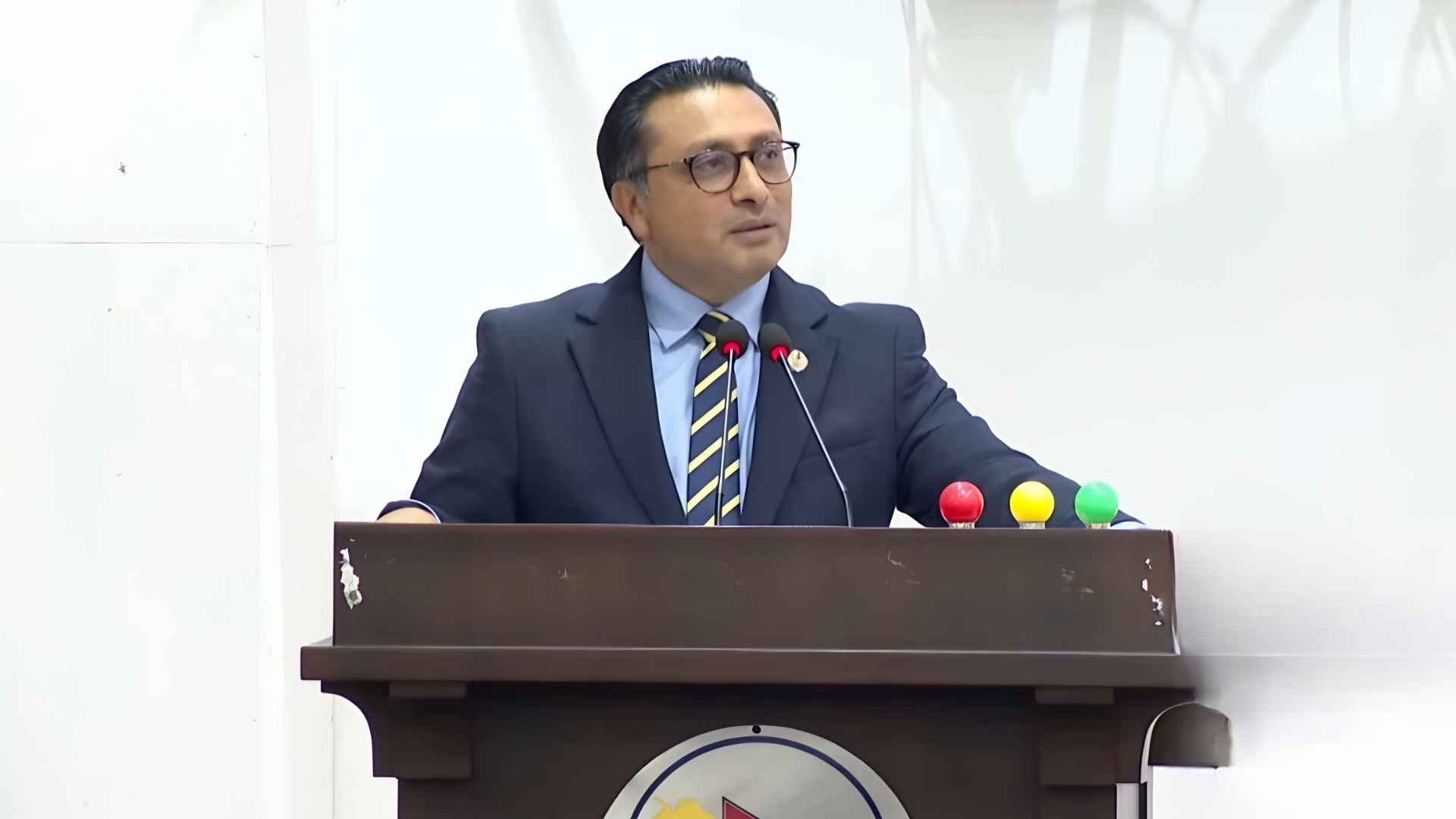
Finance Minister Dr. Swarnim Wagle on Thursday presented the principles and priorities of the upcoming national budget in the House of Representatives, outlining the government’s plan around five core principles and five key priorities.
The proposal, tabled for parliamentary discussion, focuses on good governance, economic reform, connectivity, human capital development, and strengthening Nepal’s soft power as the foundation of the new budget.
Presenting the document in Parliament, Wagle said the government aims to improve public service delivery through digital systems, reduce bureaucratic delays, and eliminate unnecessary middlemen. He also pledged stronger action against corruption, money laundering, revenue leakage, misuse of public resources, and organised crime.
The government plans to introduce a new phase of economic reform aimed at restoring private sector confidence and creating a more predictable and investment-friendly environment. Wagle said unhealthy competition, syndicates, cartels, and monopolies would be discouraged to strengthen a socially oriented market economy.
The budget will also prioritise simplifying the tax system, encouraging innovation and production, and improving aviation, telecommunications, and logistics services. The government said protection of private property would remain a state responsibility.
Infrastructure development in roads, energy, urban planning, and digital systems will be advanced in an integrated manner. Equal access to education, healthcare, nutrition, and skills training has also been placed among the government’s priorities.
Wagle said the government would mobilise financial tools to connect innovation, entrepreneurship, and startup culture with production and employment opportunities. Nepal’s international presence will also be promoted through economic diplomacy, tourism, technology, and cultural identity.
Institutional reforms, expansion of information technology, and accelerated implementation of large infrastructure projects are other major priorities for the next fiscal year. The government also plans to digitise processes ranging from business registration to tax administration, payments, and regulation.
The proposal further states that procedures related to forests, environment, land acquisition, public procurement, and construction materials will be simplified to speed up strategic projects under a “mission mode” approach.
The government announced plans to focus public investment on high-return projects while mobilising long-term capital through infrastructure bonds, green bonds, diaspora investment, and public-private partnerships.
Wagle also said the government aims to develop Nepal into a regional “tech hub” by integrating startup and innovation programs. Instead of introducing many new projects, priority will be given to completing unfinished projects with high economic returns.
Projects highlighted by the government include the Pushpalal Highway, Hulaki Highway, North-South Highway, and the Kathmandu-Tarai Fast Track. Tourism circuits linked to Lumbini, Janakpur, and Himalayan tourism are also set for development, alongside restructuring of the national airline corporation.
Agricultural transformation is another key component, with plans to promote commercial farming, expand irrigation, storage and processing infrastructure, and link farmers with finance, insurance, markets, and technology through cooperatives and producer companies. Forest-based industries, medicinal herb processing, carbon trading, and climate-resilient agriculture are also included in the growth strategy.
The proposal was presented amid continued protests by opposition parties demanding Prime Minister Balen Shah’s presence in Parliament. Despite the protests and boycott by some opposition lawmakers, the House endorsed the government’s policy and program unanimously.
Read More Stories

Nepal needs to repeat to brand itself
Last year Nepal's goods exports jumped 81.8% to NRs 277.03 billion. That is...

Banking stocks gain momentum as dividend season begins
Dividend announcements by banks and financial institutions (BFIs) for fiscal year 2025/26 have...
Nepal’s challenge of building strong democratic institutions
Over the past few decades, institutional dysfunction and massive dissatisfaction with political establishments...