What we do is costly! Your support will help us dig more stories.
Yes, I'm Interested!Ignorance isn't always bliss | Don't stay foolish.
Keep informed | Read our news and analysis.
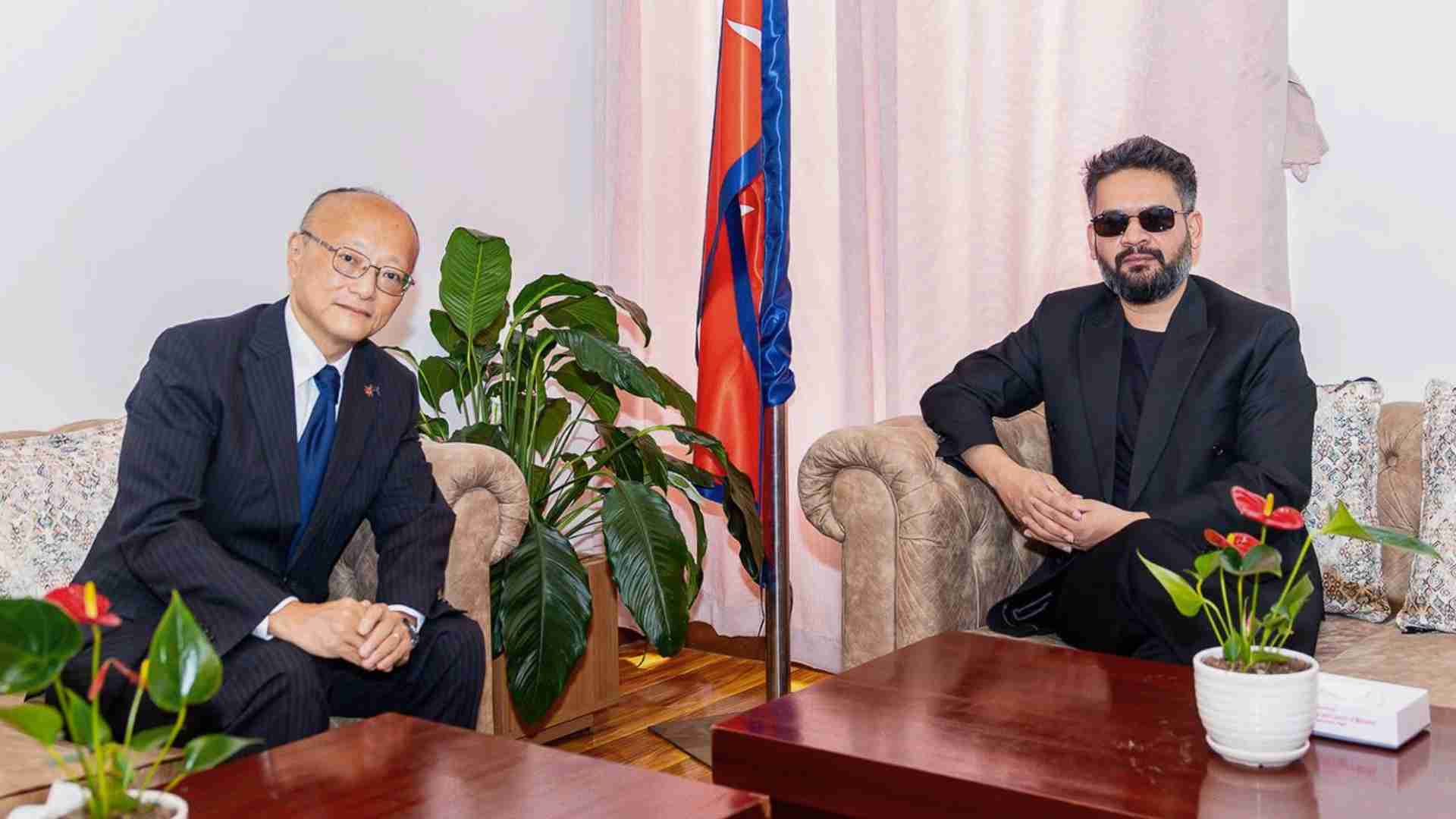
Nepal and the Asian Development Bank (ADB) on Monday signed two concessional financing agreements worth $165 million (approximately NRs 25.2 billion) to improve urban water and sanitation services and modernise the country's customs and logistics systems.
The agreements were signed in the presence of Finance Minister Swarnim Wagle and ADB President Masato Kanda, who is on his first official visit to Nepal since assuming office. Finance Secretary Ghanshyam Upadhyaya and ADB Nepal Country Director Arnaud Cauchois signed the agreements.
Under the financing package, ADB will provide $115 million for the Integrated Water Supply and Sewerage Management Project, which will strengthen climate-resilient drinking water, sewerage and urban sanitation services in 12 municipalities across Nepal.
The remaining $50 million will finance the second phase of the South Asia Subregional Economic Cooperation (SASEC) Logistics Reforms Programme, supporting customs modernisation, logistics improvements and trade facilitation to enhance Nepal's trade competitiveness.
Speaking at the signing ceremony, Wagle expressed appreciation for ADB's continued partnership in Nepal's development, while Kanda reaffirmed the bank's commitment to supporting the country's long-term economic priorities.
During his visit, Kanda also launched an AI literacy and digital skills module for teachers at an ADB-supported school, visited the Nepal Electricity Authority's Distribution Command and Control Centre, and virtually inaugurated the Markichowk and Mulpani substations. He said the energy investments would strengthen Nepal's electricity network and help pave the way for future cross-border power trade.
On Tuesday, Kanda met Prime Minister Balendra Shah, where the two discussed Nepal's economic reforms, investment climate and the country's long-term development priorities.
“Nepal is at a defining moment, with an opportunity to build a more dynamic and resilient economy,” said Mr. Kanda in a press release. “ADB is stepping up as Nepal’s largest multilateral development partner, and our support is expected to reach $2.4 billion by 2029. Our focus is on results for people: more jobs, stronger businesses, and better livelihoods for communities across Nepal.”
Under the new Country Partnership Strategy, annual lending is projected to rise to as much as $660 million this year. The programme will prioritise job creation, private sector development, sustainable infrastructure, improved public services, climate resilience, digital transformation, women's economic empowerment and support for disadvantaged communities, while mobilising additional resources through co-financing and innovative financing mechanisms.
ADB currently has a portfolio of over $3.9 billion in Nepal, making it the country's largest multilateral development partner.
Read More Stories

Nepal needs to repeat to brand itself
Last year Nepal's goods exports jumped 81.8% to NRs 277.03 billion. That is...

Banking stocks gain momentum as dividend season begins
Dividend announcements by banks and financial institutions (BFIs) for fiscal year 2025/26 have...

Nepal’s challenge of building strong democratic institutions
Over the past few decades, institutional dysfunction and massive dissatisfaction with political establishments...