What we do is costly! Your support will help us dig more stories.
Yes, I'm Interested!Ignorance isn't always bliss | Don't stay foolish.
Keep informed | Read our news and analysis.
Nepal energy sector | Foreign direct investment (FDI) | Electricity Regulatory Commission (ERC)
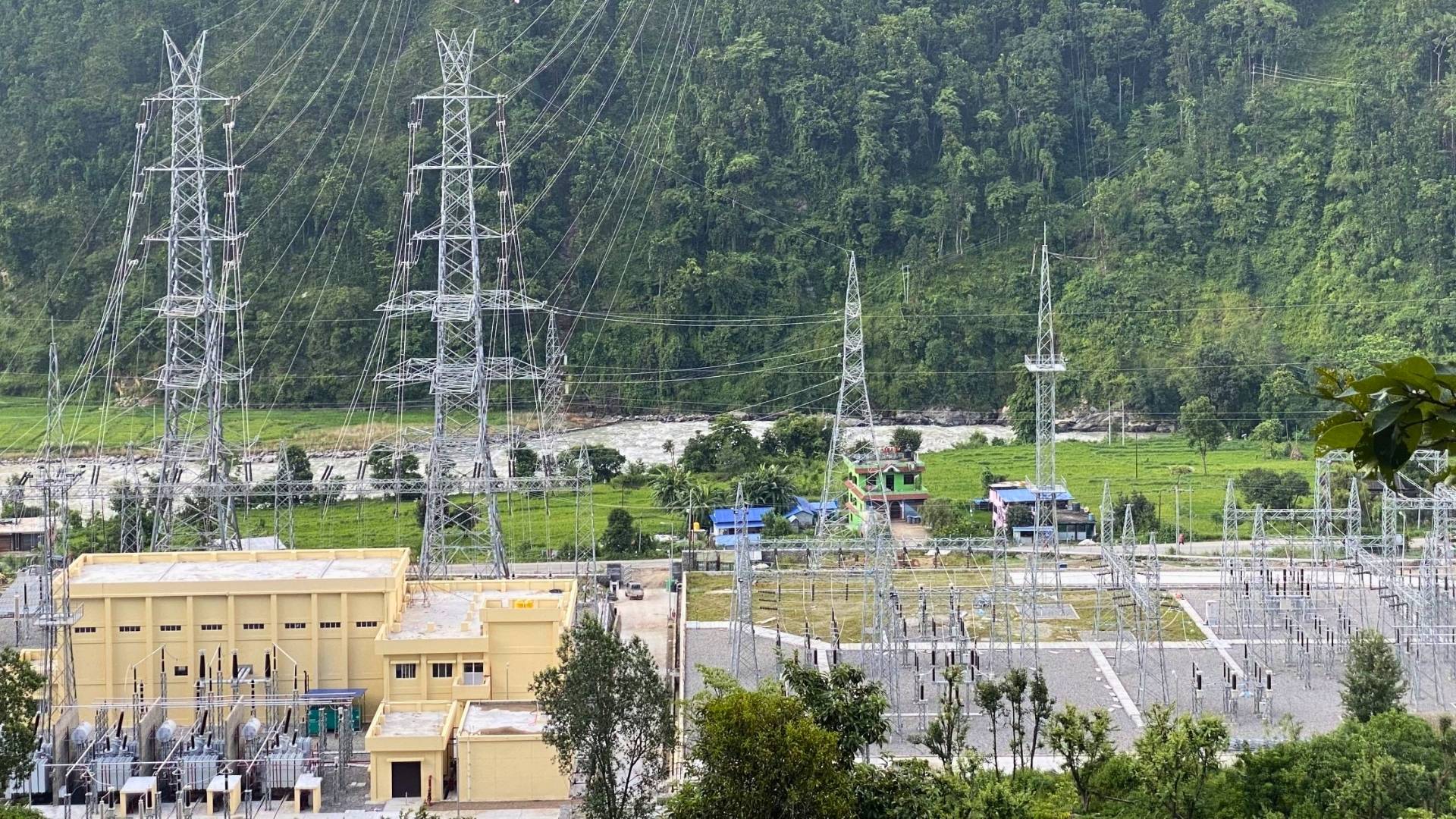
For many Nepalis, the memory of 12–18 hours of daily load-shedding still feels recent. A decade ago, factories relied on diesel generators, students studied under candlelight, and the economy suffered from a chronic electricity deficit.
In FY 2015/16, Nepal consumed just 3,720 GWh of power. Consumption has tripled today to 11,319 GWh—a remarkable shift in under ten years. Yet, per capita consumption remains only 465 kWh, eight times lower than the global average. Roughly 3,900 MW is connected to the national grid, almost all of it hydropower, although Nepal is endowed with more than 6,000 rivers and an estimated 83 GW of hydropower potential, of which around 43 GW is economically viable.
As domestic demand grows and export opportunities expand, Nepal stands at a pivotal energy moment. Ending load-shedding was a significant milestone, but the next challenge is building a resilient, diversified, and future-ready power system supported by stronger infrastructure, policy reforms, and sustained investment.
Nepal at energy crossroads
Despite contributing to just 0.027% of global greenhouse gas emissions, Nepal is among the world’s most climate-vulnerable countries, with risks from extreme rainfall, droughts, glacial melt, floods, and landslides. They are already reshaping the country’s livelihoods and migration patterns while hurting the economy badly. The Asian Development Bank estimates annual GDP losses of 2.2% by 2050 due to climate impacts.
With an ambitious goal of 28,500 MW installed capacity by 2035, Nepal plans 25,800 MW through hydropower plants and 2,700 MW from alternative sources—13,500 MW for domestic use and 15,000 MW for export, requiring a total of USD 46.5 billion.
Achieving the goal demands upgrades and regulatory reform not only in generation but also in transmission, distribution, and electrification of sectors currently fossil-fuel dependent.
The existing project pipeline remains hydro-centric, with 95% of the 11,436 MW of signed Power Purchase Agreements (PPAs) being Run-of-River (RoR) or Peaking RoR, with another 16,027 MW in process, including only 5,117 MW of storage and 790 MW of solar. This leaves Nepal seasonally exposed—dumping surplus monsoon power at low prices while importing expensive winter electricity. It highlights the urgent need to diversify toward a resilient, year-round energy system.
Diversifying generation mix a must
Since FY 2023/24, Nepal has become a net exporter of electricity. In FY 2024/25, the country exported approximately 2,380 GWh of power to India, earning NRs 17.47 billion, while importing 1,681 GWh worth NRs 12.92 billion. But this achievement overshadows a deeper structural issue. Every winter, when river flows drop and production plunges due to a reliance on RoR projects, Nepal goes back to importing electricity.
Addressing this energy imbalance requires investment in storage and reservoir hydropower, ensuring year-round supply, strengthening grid stability, enabling peak-hour exports to India, and reducing costly winter imports. While these projects require higher upfront capital, they are essential for long-term energy security.
Simultaneously, Nepal should rapidly scale solar energy, which is increasingly affordable, quick to deploy and less vulnerable to floods, landslides, and climate shocks affecting hydropower. Combined with battery energy storage and off-grid solutions, solar can diversify supply, enhance resilience, and lower the dependency on rivers.
Embracing foreign capital
Nepal’s recently reaffirmed sovereign credit rating of BB– signals progress and clarity in its financial position, helping to attract more commercial capital, especially as the country prepares for LDC graduation. But, graduation also brings new challenges that both the government and private sector are carefully assessing.
Nepal’s ambition to realise its 28,500 MW generation roadmap faces a fundamental constraint: the domestic capital base is too limited to finance infrastructures of this magnitude. While the national blueprint envisions contributions from various sources totalling USD 46.5 billion: six billion from the government, 10 billion from domestic banks and financial institutions, two through climate finance, 12 from diaspora and migrant workers, eight through NEA reinvestment, and 8.5 billion from FDI, grants, and loans. In practice, this financing mix remains unrealistic.
Reliance on commercial banks is unsustainable, as large hydropower and transmission projects pose concentration risks, and banks’ short-term, collateral-driven lending models are ill-suited for high-capex, long-tenure infrastructure financing.
Nepal has attracted some foreign investment in projects such as Bhotekoshi, Khimti, Khudi, Lower Solu, Upper Trishuli, Kaligandaki, and Kulekhani, but these remain modest. Unlocking the next wave of investment will require mobilising far greater foreign capital and deploying blended-finance instruments: grants, guarantees, concessional loans, equity, and technical assistance to de-risk early development, improve bankability, and create the proof points needed to crowd in commercial investors.
This is especially critical for storage, reservoir, and PRoR projects, which are significantly larger in scale, more technically complex, and require far higher upfront equity and longer development timelines. DFIs typically provide debt, which supports construction but hesitate supplying patient, risk-bearing capital, causing delays or stalled projects. Equity from DFIs and climate-focused funds is crucial, bringing governance, ESG standards, technical expertise, and credibility.
At the same time, Nepal has demonstrated bold domestic financing leadership finalising investment modalities for two of the country’s largest projects: the 1,200 MW Budhi Gandaki reservoir project (US$2.77 billion) and the 1,063 MW Upper Arun semi-reservoir project (US$1.75 billion), both through domestic resources. They mark an important milestone, showing Nepal’s ambition to mobilise domestic capital at scale. However, achieving long-term energy security and developing many more large storage and reservoir assets will require significant FDIs alongside domestic efforts.
Transmission bottlenecks and a credible regulator
Nepal’s generation ambitions will remain constrained unless transmission infrastructure expands at the same pace, requiring strong private sector participation. Mechanisms like wheeling charges can enable private developers to finance and operate transmission lines, easing pressure on NEA.
Although the government has allocated significant resources, the scale of investment needed far exceeds public capacity. By 2030, roughly USD four billion will be required to modernise and expand transmission and substation infrastructure. Currently, many hydropower plants operate below capacity or remain stalled because transmission lines are incomplete, contributing to seasonal inefficiencies and wasted production.
Strengthening transmission and distribution is therefore critical for both reliability and financial stability. Promising developments include the 50–50 India–Nepal joint venture cross-border lines, which secure long-term export access, and the U.S. Millennium Challenge Corporation’s expanded $747 million grant, enhancing grid reliability, connectivity, and electricity access. Together, these efforts create a resilient, integrated, and investment-ready energy system, enabling Nepal to maximise hydropower potential while supporting domestic consumption and exports.
In all this, a stronger, empowered Electricity Regulatory Commission (ERC) is key to addressing energy-sector gaps. The ERC is enabling private electricity trade, reducing NEA’s dominance, modernising PPA and distribution standards, and conducting studies on demand-supply mix, resilience, and carbon pricing. Tariff reforms, open-access rules, and strengthened legal frameworks aim to improve competition, market efficiency, consumer protection, and cross-border trade, laying the foundation for a more robust, reliable, and investment-ready energy system.
A decade on, Nepal stands at a pivotal moment, where the challenge is no longer scarcity, but seizing new possibilities. Achieving this will require bold policy action, greater private-sector participation, and a strategic embrace of foreign capital. Blended finance, stronger regulation, clearer investment rules, and accelerated solar, storage, and reservoir hydropower development can build a resilient, future-ready system, positioning Nepal as a clean energy hub in South Asia.
The views expressed here are the author’s own and reflect his personal interest in advancing dialogue on energy policy, investment, and infrastructure in Nepal.
Read More Stories

Nepal needs to repeat to brand itself
Last year Nepal's goods exports jumped 81.8% to NRs 277.03 billion. That is...

Banking stocks gain momentum as dividend season begins
Dividend announcements by banks and financial institutions (BFIs) for fiscal year 2025/26 have...

Nepal’s challenge of building strong democratic institutions
Over the past few decades, institutional dysfunction and massive dissatisfaction with political establishments...