What we do is costly! Your support will help us dig more stories.
Yes, I'm Interested!Ignorance isn't always bliss | Don't stay foolish.
Keep informed | Read our news and analysis.
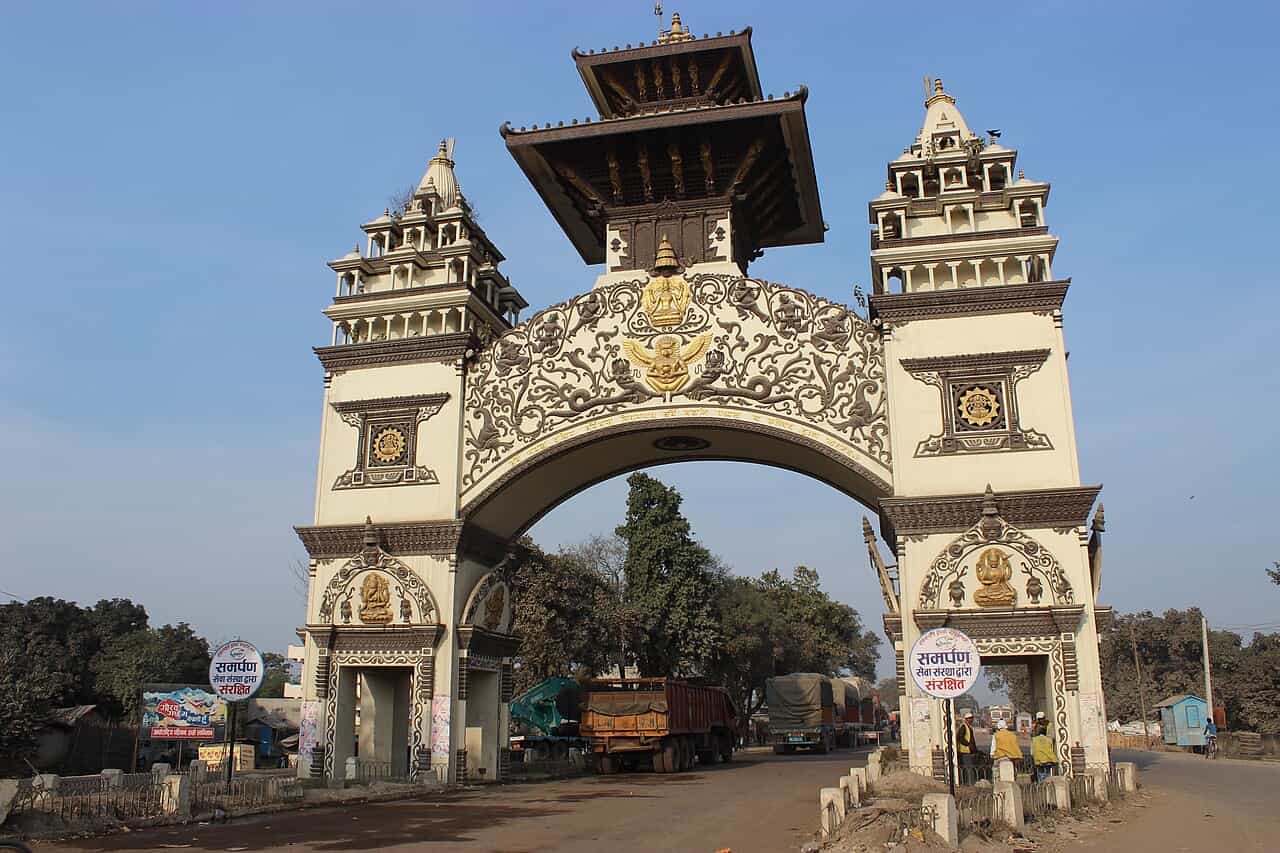
Lately, a striking scene has become common at the southern border crossings between Nepal and India. Armed Police and Nepal Police are jointly seizing goods that ordinary Nepali citizens bring back from nearby Indian markets for their daily household needs. The manhandling and mistreatment of sovereign citizens at their own border crossings by government servants is, without question, not the character of a decent state.
A ban has been placed on bringing goods worth more than NRs 100 from across the border to boost government revenue. There is a significant price difference for the same goods on either side.
Sugar that costs NRs 100 per kilogram in Nepal is often available in Indian markets for NRs 60–65 per kilogram. What Nepali citizens bring back from Indian markets is nothing extraordinary, they are modest quantities of daily essentials, such as a few kilos of sugar, lentils, rice, onions, spices, soap and detergent, and a couple sets of clothing.
Cross-border exchange between Nepal and India has existed for generations. Nepal and India share a relationship of blood and bread, commonly referred to as roti-beti. The government’s ban, along with the imposition of customs duties on goods valued above NRs 100, has significantly and directly affected the daily lives of people living in border regions.
According to Finance Minister Dr. Swarni Wagle, who assumed office only a few months ago, the policy is intended to boost revenue collection. In doing so, however, the minister appears to have overlooked the practical and social realities of the issue. Many decisions made in Kathmandu for the Tarai-Madhes region often prove to be misguided and disconnected from ground realities. When policymakers in the capital draft laws and policies, why do they so often overlook the fact that Nepal extends far beyond the valley?
Any law only comes alive when they align with public needs and the society accepts it. According to sociological tradition, a law that society neither wants nor accepts becomes effectively dead. Take, for example, the Social Reform Act of 2033, which set a limit on the number of guests allowed in wedding processions, which was never accepted, and till date remains confined to paper. It failed because the human and practical dimensions were never considered when drafting it. The current provision also goes against public expectations and needs, and there is a real danger that it could breed resentment and conflict in society, widening the gap between the government and the people of the border regions even further.
When making policy for ordinary people, the state should always adopt a bottom-up approach. Yet once again, a top-down approach has been chosen. There are precedents where such policies, introduced without coordination with stakeholders and without any socio-economic assessment, have had to be rolled back. When the state tries to impose its decisions unilaterally on the people, the people are left with no choice but to push back. People create governments; governments do not create people. Every decision a government makes must serve the maximum interest of its citizens.
When people come to power, they sing songs about poverty. During elections, they make promises to these very poor people, the laborers, the cart pushers, the street vendors. They pose for photos with them. Once in power, they make life impossible for those same people. This is nothing new. For every ruler, the poor and poverty have become nothing more than a ladder to climb to power by trading emotions.
The government must understand, deploying police and soldiers will not increase revenue. The finance minister must understand, goods are cheaper on the other side of the border. That is precisely why people cross the border to buy everyday necessities.
Have the wealthy and powerful followed tax rules themselves? Can the Finance Minister honestly say that every item he uses daily reached his home in full compliance with the law? It makes no sense to let those who break rules wholesale go free, while spending the entire nation's energy inspecting a two-kilo bag of sugar and a packet of cumin. The government has far more important work to do. Or does the Finance Minister, like the Home Minister, also crave cheap, fleeting popularity and applause? Trucks get their arrangements sorted, while people's bags get checked. These are common questions being raised by the public today. For many, this is simply not acceptable.
The relationship across the Nepal-India border is something different altogether. There is closeness, trust, faith, culture, religion, emotion, livelihood, shared joy and sorrow, family. It is woven into life itself. The psychology of cross-border communities is completely different from how an international border is understood from Kathmandu. It must be analysed with heart, with empathy, with an emotional lens. The legitimacy of any law rests in the hands of those who are expected to follow it. When people rebel against a law, that law loses all meaning.
Reasoning such as “domestic production needs a market” sounds as sweet as it is challenging on the ground. Consider this: a farmer from our village sells 50 kilos of potatoes for NRs 1,000. Across the border, the same quantity of goods is available for NRs 550. Yet, even with cheaper goods coming from across the border, the produce of our Nepali farmers continues to sell in the villages, because the balance between consumer and producer is something life itself has worked out — not any government regulation.
There’s also a broader economic context. Nepal's domestic production cannot meet its total demand, and production costs remain high. These high production costs for farmers, including longstanding gaps in fertiliser and irrigation, is a failure of the state. Without addressing these issues or investing in productivity, restricting cheaper imports may simply increase the burden on household budgets. While tightening the border without providing any alternative will only lead to shortages, black markets, and artificial inflation, also making space for middlemen and corruption.
The truth is, border policy cannot be made sitting inside Singha Durbar in Kathmandu. What is needed is a high-powered commission, which also shares lived experience, and conducts a thorough, ground-level study of the social and economic realities. In a situation where cross-border markets are part of everyday lives, any regulation introduced without grassroots study will bring nothing but inconvenience and harassment, rather than meaningful reform.
There are also concerns about inconsistency in practice. Reports of differential treatment, where some are able to bypass scrutiny while ordinary citizens face strict checks, highlight the importance of fair and transparent enforcement. Without it, even reasonable policies lose credibility.
Ultimately, the people crossing the border with small quantities of goods aren’t smugglers. They are managing household expenses in the face of rising kitchen budgets and price differences. A more balanced approach would be to focus on making essential goods affordable within Nepal while ensuring that enforcement is fair and respectful.
How exactly will the relationship between Kathmandu and the border regions grow stronger this way, Prime Minister?
Read More Stories

ADB, NEA advance transmission and battery storage projects under PPP model
The Asian Development Bank (ADB) and Nepal Electricity Authority (NEA) have signed two...
Market reform measures fail to lift sentiment as NEPSE extends weekly decline
The stock market extended its downward trend on Friday, with the Nepal Stock...
Finance committee issues five-point directive with tighter oversight and modernisation
The Finance Committee of the House of Representatives has issued a five-point directive...