What we do is costly! Your support will help us dig more stories.
Yes, I'm Interested!Ignorance isn't always bliss | Don't stay foolish.
Keep informed | Read our news and analysis.
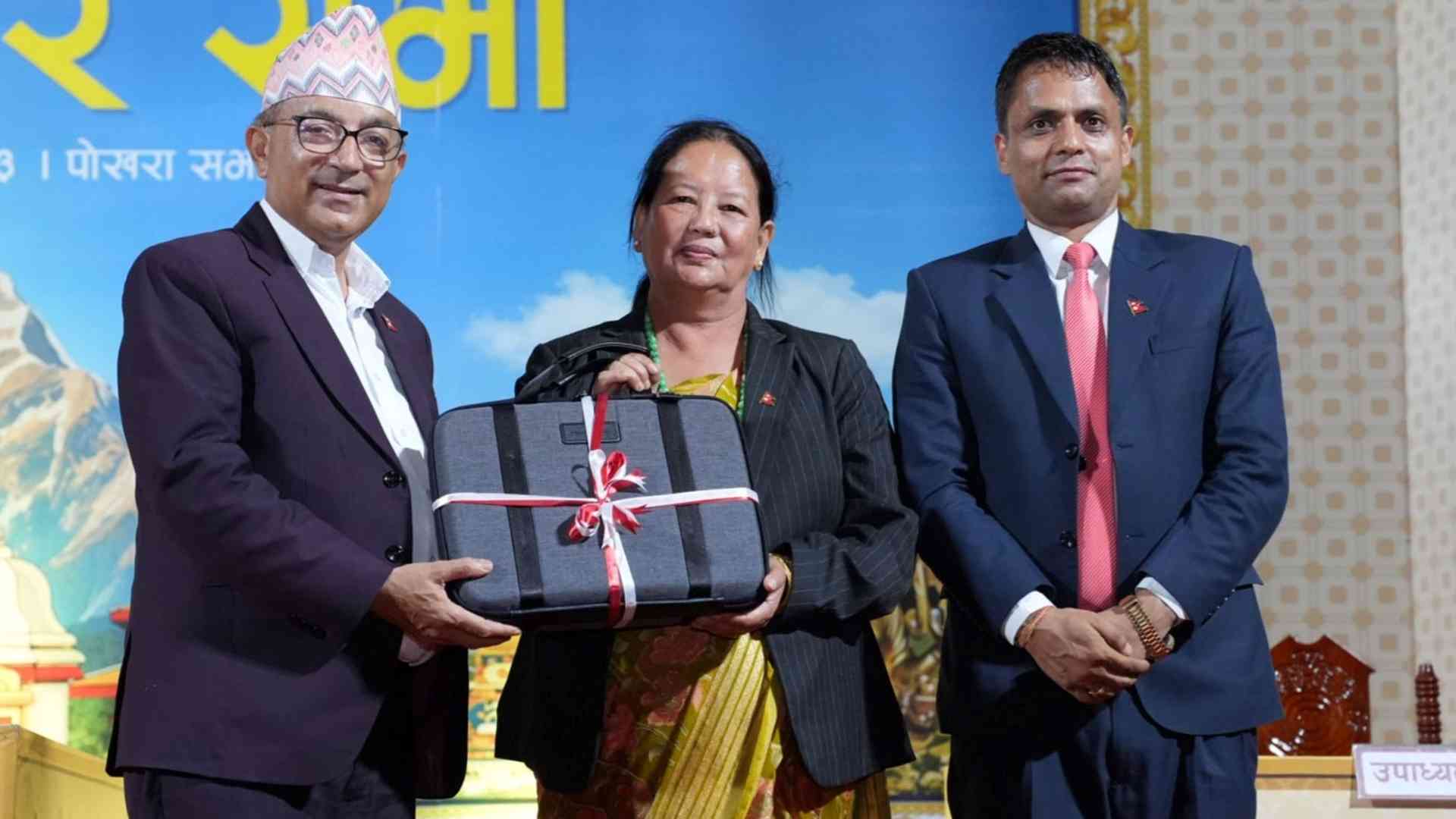
Nepal's six metropolitan cities have unveiled a combined budget of more than NRs 54.03 billion for fiscal year 2026/27, with infrastructure development, urban management, education, health, waste management and local economic development emerging as the common priorities. While most metropolitan cities have increased or maintained their budgets, Pokhara and Biratnagar have reduced spending due to declining revenues and lower federal transfers.
The budgets reveal differing local priorities shaped by fiscal capacity and development needs. Kathmandu has allocated the largest share to infrastructure and urban management, Pokhara has continued to prioritise tourism and environmental management despite a smaller budget, Bharatpur has expanded investment in agriculture and sports infrastructure, while Biratnagar, Lalitpur and Birgunj have placed greater emphasis on education, healthcare and social development.
Kathmandu dominates metropolitan spending
Kathmandu Metropolitan City has proposed a NRs 25.88 billion budget for FY2026/27, up slightly from NRs 25.76 billion in FY2025/26. The allocation accounts for nearly half of the combined metropolitan budget.
Of the total allocation, NRs 15.32 billion (61%) has been earmarked for infrastructure development, NRs 4.72 billion (18.8%) for administration and office operations, NRs 2.42 billion (9.6%) for social development, NRs 2.13 billion (8.5%) for governance and intergovernmental relations, and NRs 541.8 million (2.1%) for economic development.
Read also: Kathmandu Metropolis unveils NRs 25.88 billion budget for 2026/27
The city has prioritised urban infrastructure, waste management, school education, governance reforms, expansion of urban health promotion centres and the "One Ward, One Enterprise" programme. It has also proposed a 10% discount and waiver of penalties for taxpayers clearing outstanding dues within the first quarter of the fiscal year.
Lalitpur maintains steady spending
Lalitpur Metropolitan City has announced a NRs 7.49 billion budget, virtually unchanged from NRs 7.47 billion in 2025/26.
The budget allocates NRs 4.24 billion (56.6%) for capital expenditure and NRs 3.25 billion (43.4%) for recurrent expenditure. The city expects to generate NRs 3.36 billion from internal revenue while financing the remainder through federal and provincial grants and cash reserves.
The budget focuses on ward-level infrastructure, including roads, drainage, drinking water systems and community buildings, while also supporting heritage conservation, environmentally friendly urban development and improved public service delivery.
The metropolitan city has also committed to completing procurement and tender processes within the second quarter of the fiscal year to accelerate project implementation.
Several tax incentives have been introduced. Property and land taxes paid by the end of October will receive a 10% discount. Businesses operated by single women, Dalits and persons with disabilities will receive a 50% registration fee discount. Tax concessions have also been announced for nurseries, fruit and vegetable farming, heritage-compliant houses within the World Heritage zone, parking facilities developed by the private sector and business tax renewals.
Pokhara cuts budget by more than 14%
Pokhara Metropolitan City has reduced its budget to NRs7.15 billion, down from NRs 8.35 billion in 2025/26, a decline of NRs1 .20 billion, or 14.35%.
The city has allocated NRs3.94 billion (55.1%) for recurrent expenditure and NRs 3.21 billion (44.9%) for capital expenditure.
It projects NRs 2.49 billion in internal revenue while expecting NRs 3.19 billion, or 44.5% of the total budget, through federal fiscal transfers, underscoring increasing dependence on central government support.
The city has increased allocations for education and healthcare but sharply reduced tourism promotion funding from NRs 55 million to only NRs 6 million. The budget continues financing several incomplete projects, including the administrative building, digital house numbering, community hall rehabilitation and 61 ongoing road projects, for which NRs 555.1 million has been allocated.
Employee salary increments, restoration of local allowances suspended during the COVID-19 pandemic and extension of inflation allowances to contract employees have increased recurrent expenditure, limiting fiscal space for new development projects.
Pokhara also reported weak budget implementation during 2025/26, spending only 40% of its annual budget by the end of May, while internal revenue collection reached just 46.02% of the annual target.
Bharatpur increases investment in agriculture and sports
Bharatpur Metropolitan City has proposed a NRs 5.52 billion budget, compared with NRs 5.22 billion in 2025/26.
The city aims to mobilise NRs 2.18 billion in internal revenue, although collections have consistently fallen short of annual targets.
The budget includes NRs 140 million for the under-construction Rampur Cricket Stadium, NRs 600 million for completing ongoing projects and settling outstanding liabilities, NRs 60 million for road maintenance, NRs 949 million for ward-level development programmes, NRs 117.5 million for education programmes, NRs20 million to subsidise household drinking water, NRs 12.5 million for disaster management and NRs 10 million for ambulances and emergency response vehicles.
The city has also continued dairy subsidies, landfill construction and introduced a Cycling Act aimed at developing Bharatpur into a "Cycle City."
Birgunj records largest budget increase
Birgunj Metropolitan City has unveiled a NRs 4.42 billion budget, up from NRs 3.22 billion in 2025/26, representing an increase of approximately NRs 1.20 billion, or about 37%, the largest increase among the country’s metropolitan cities.
The budget allocates NRs 2.40 billion (54.3%) for recurrent expenditure, NRs 1.97 billion (44.6%) for capital expenditure and NRs 50 million (1.1%) for financial management.
Revenue sources include NRs 1.98 billion in federal fiscal transfers, NRs 1.48 billion in internal revenue and NRs 450 million from land registration fees. The city aims to increase revenue from land registration fees from NRs 250 million to NRs 450 million.
It will continue subsidising improved wheat seeds at 50%, strengthen dengue and malaria control programmes, upgrade birthing centres and expand community nursing and home-based healthcare services.
Biratnagar posts smallest budget
Biratnagar Metropolitan City has proposed the smallest metropolitan budget at NRs 3.56 billion, down from NRs 4.40 billion in 2025/26 as federal grants and internal revenue projections declined.
Infrastructure development receives the largest allocation at NRs 1.60 billion, followed by NRs 762.9 million for administration and office operations, NRs 265 million for social development, NRs 32.6 million for economic development, NRs 29.3 million for governance and institutional development and NRs 26 million for environment and disaster management.
The city projects NRs 1.27 billion in internal revenue, NRs 1.07 billion in federal grants and NRs 143 million from the provincial government.
New initiatives include a NRs 10 million matching fund for community infrastructure, paid internship programmes, school-to-work transition schemes, entrepreneurship support for women and youth, and waste-to-energy projects.
Biratnagar will also continue its flagship Mega School initiative by upgrading three community schools into institutions capable of accommodating between 5,000 and 10,000 students each.
Budget execution remains weak. By the end of May 2025/26, the city had spent only 45% of its annual budget.
Revenue constraints and implementation remain key challenges
Despite announcing ambitious spending plans, metropolitan cities continue to face significant implementation challenges. Most have retained ongoing multi-year projects while introducing relatively few new initiatives because of limited fiscal space.
Budget execution has also remained weak. By the end of May in 2025/26, most metropolitan cities had spent only around 40–50% of their annual budgets, raising concerns over implementation capacity.
The effectiveness of the budgets will ultimately depend on improved revenue mobilisation, stronger capital expenditure and timely execution of development projects. Continued reliance on federal grants and slower-than-expected growth in internal revenue remain the principal fiscal challenges facing the country’s metropolitan governments.
Read More Stories

Nepal needs to repeat to brand itself
Last year Nepal's goods exports jumped 81.8% to NRs 277.03 billion. That is...

Banking stocks gain momentum as dividend season begins
Dividend announcements by banks and financial institutions (BFIs) for fiscal year 2025/26 have...
Nepal’s challenge of building strong democratic institutions
Over the past few decades, institutional dysfunction and massive dissatisfaction with political establishments...